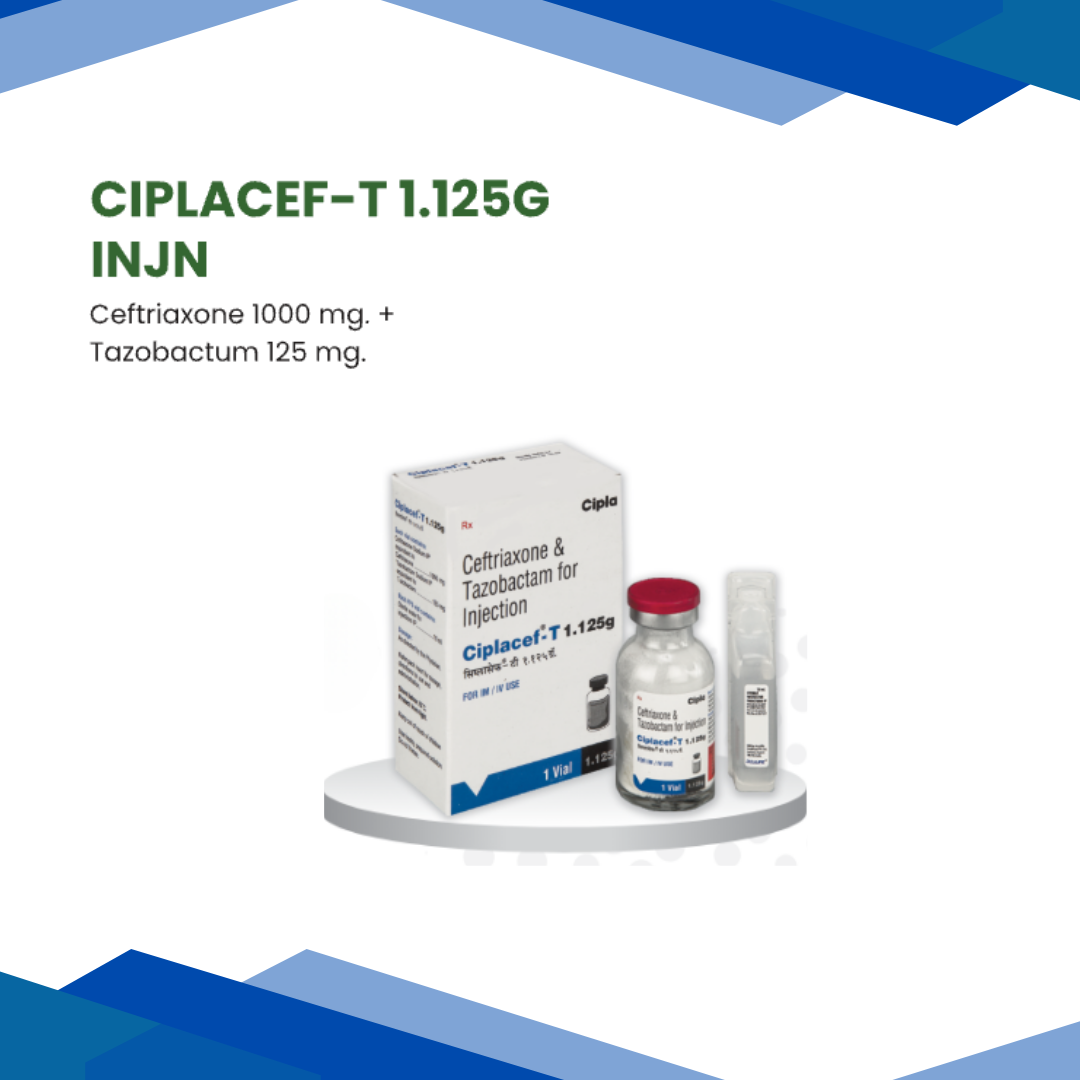
Ciplacef-T 1.125
No Prescription yet? Don’t worry! Click Here to Get Online Consultation
Ciplacef-T 1.125 injection is a combination medicine. It is prescribed to treat various types of bacterial infections. It fights against the microorganisms to prevent their growth and further spread of the infection.
Ceftriaxone
Uses of Ceftriaxone Injection, Drug Interactions, and Side Effects
Ceftriaxone is a versatile broad-spectrum, third-generation cephalosporin antibiotic invaluable in treating a wide range of severe bacterial infections. Unlike other antibiotics that are often metabolized quickly upon oral intake, Ceftriaxone remains for a longer period in the body, and hence can be administered once a day when necessary.
What the Medicine Is Used for
Ceftriaxone acts by interfering in the synthesis of the bacterial cell wall, leading to the lysis of the bacteria that cause the illness. It is often the first choice for:
Meningitis: One of the few antibiotics crossing the blood-brain barrier with great success.
Community-acquired pneumonia: Weaving risk for severe infection.
Bones and Joints infections: For the treatment of osteomyelitis and worsen surgical site infections.
GR: Standard recommendations for the treatment of uncomplicated gonococcal infections.
Precautions and Contraindications
Advice of Medication
Alcohol: Usually harmless with respect to both. Hydration is the critical precaution here with Ceftriaxone where Cefoperazone usually does not provoke a disulfiram reaction.
Pregnancy: Category B. Generally safe under medical supervision; used when the benefits outweigh potential risks.
Gallbladder: A caution needs to be heeded as Ceftriaxone has a potential risk of causing "sludge" or stones inside the gallbladder (biliary pseudolithiasis).
Calcium Risk: Critical: Do not place any calcium-based intravenous solutions like Ringer's Lactate with Ceftriaxone as they are at risk for precipitants.
Possible Side Effects
There is a high degree of tolerance for Ceftriaxone by most people, but a few may develop:
Digestive: Loose stools, nausea, or abdominal discomfort.
Local: Tenderness or a lump in a patient's muscle following intramuscular (IM) injection.
Laboratory: Minor fluctuations in liver enzymes or blood cell counts.
Rarely; prolonged use has been known to cause "oral thrush" or vaginal yeast infections.
Camper Tip: Should you experience a persistent fever or severe abdominal pain after taking this medication, then inform your physician immediately.
Frequently Asked Questions (FAQs)
1. Can Ceftriaxone treat viral infections?
No. This drug is strictly for bacterial infections; it may cause antibiotic resistance when used against viral infections like flu or COVID-19.
2. How long does Ceftriaxone remain in the body?
It has an elimination half-life of approximately 6–9 hours. This gives it a sustained presence in the bloodstream for a full 24 hours, allowing it to be an effective once-a-day IM injection.
3. Why is Lidocaine mixed with the injection sometimes?
Injecting it directly into the muscle is the most painful part of giving Ceftriaxone therapy. Thus, Lidocaine will always be added into pure powder for redilution. Lidocaine is a numbing agent that is used to retard the pain till when the procedure is complete.
4. Can Ceftriaxone be used by patients who have Penicillin allergies?
It's hard to say. If your allergic response is severe, there is a small chance that there could be some "cross reactivity". If your allergic reaction to Penicillin was really severe (i.e., anaphylaxis), you must first notify your doctor before considering using Ceftriaxone.
5. Can you eat as usual on Ceftriaxone therapy?
No, there are no special foods to avoid. However, patients are advised to take lots of water to help their kidneys and liver flush the drug from their system in time.
Tazobactam
Tazobactam
Tazobactam is a specialized pharmaceutical agent classified as a beta-lactamase inhibitor. It has minimal intrinsic antibiotic activity when used alone, but it plays a crucial role in blocking bacterial enzymes (beta-lactamases) that would otherwise break down beta-lactam antibiotics. This protective action allows companion antibiotics to effectively kill bacterial cells and overcome resistance.
Indications
Used almost always in combination therapy to treat moderate to severe infections, including:
Respiratory tract infections: e.g., hospital- or community-acquired pneumonia
Intra-abdominal infections: e.g., appendicitis or peritonitis
Skin and soft tissue infections: e.g., cellulitis or diabetic foot ulcers
Urinary tract infections (UTI): especially complicated cases like pyelonephritis
Febrile neutropenia: infections in patients with low white blood cell counts
Mechanism of Action
Many resistant bacteria produce beta-lactamase enzymes that inactivate antibiotics.
Inhibition: Tazobactam binds irreversibly to these enzymes, blocking their action.
Synergy: This enables companion antibiotics such as Piperacillin to act effectively against bacteria without being degraded.
Administration & Dosage
Form: Available as a sterile powder for reconstitution
Route: Administered via intravenous (IV) infusion by healthcare professionals
Infusion Time: Typically 30–60 minutes
Duration: Usually 5–14 days, depending on infection severity
Common Side Effects
Most side effects are related to the partner antibiotic and may include:
Diarrhea or constipation
Nausea and vomiting
Headache or insomnia
Skin rash or itching at the injection site
Oral thrush (white patches in the mouth)
Precautions and Warnings
History of Allergy: Inform your doctor if you are allergic to penicillins, cephalosporins, or other beta-lactam antibiotics.
Kidney Function: Dose adjustment may be needed in renal impairment.
Electrolyte Balance: High doses may cause potassium or sodium imbalances.
Pregnancy or Lactation: Use only if clearly needed and under specialist supervision.
Frequently Asked Questions (FAQs)
Q: Is Tazobactam an antibiotic?
A: It is a beta-lactamase inhibitor. It does not directly kill bacteria but enhances the effectiveness of antibiotics used alongside it.
Q: Why is it given as an injection and not tablets?
A: Oral absorption is poor, so IV administration ensures maximum bioavailability and rapid action in serious infections.
Q: Can I stop treatment once I feel better?
No. You must complete the full course to prevent resistance and ensure complete eradication of infection.
Q: Does it interact with other medicines?
Yes. Drugs like Probenecid, Methotrexate, and Warfarin may interact. Always inform your doctor about current medications.
Q: What is Piperacillin-Tazobactam?
It is a commonly used combination therapy (often called "Pip-Tazo") that provides broad-spectrum antibacterial coverage.
At Gem Pharmacy, we make every effort to provide accurate, expert-written, and thoroughly reviewed information related to medicines. However, this information should not be considered a substitute for professional medical advice, diagnosis, or treatment from a qualified doctor.
The purpose of this information is to educate users and improve communication between patients and healthcare professionals. It should not be used to diagnose or treat any condition.
Always consult a certified healthcare professional before taking any medication.


Related products

Milibact 1.5gm Injection 1’S