





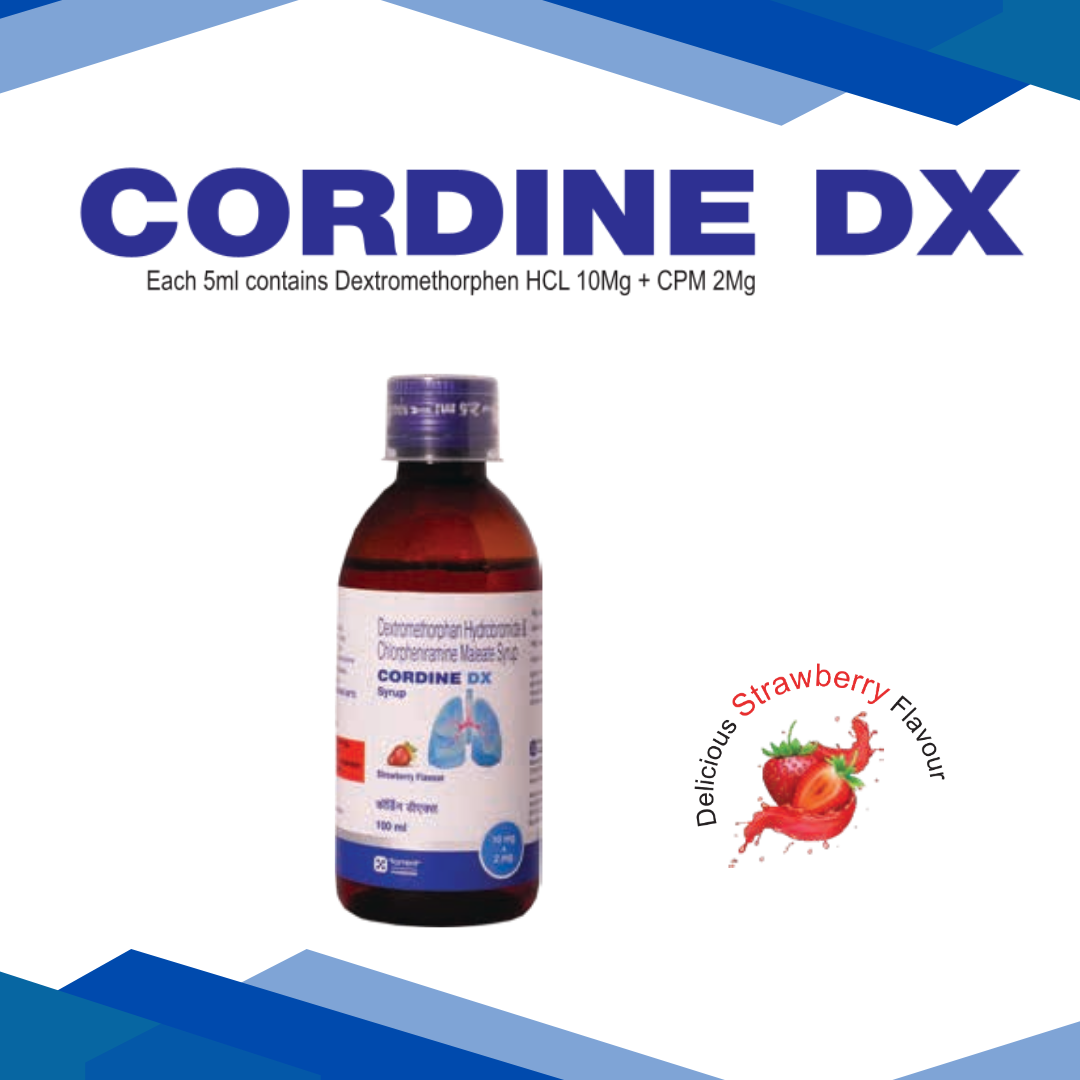
Cordine dx
Dextromethorphan Hydrobromide
Dextromethorphan Hydrobromide: Essential Relief for Annoying Dry Cough Dextromethorphan Hydrobromide is an established antitussive (a cough suppressant) designed rigorously to bring about a rapid alleviation in nonproductive, dry coughs. This kind of dry coughing makes nothing but irritation to the sufferer in the presence of colds, influenza, and air pollutants, for instance. In such circumstances, Dextromethorphan behaves by lessening the cough stimulus to some extent in the brain, hence giving the throat and chest much-needed rest. Primary Uses of Therapy Dry Cough Suppression: It has specific action against tickling sensations in the throat and subsequent semipurposeless fits of cough. Cold & Flu Symptom Management: Used extensively in both nighttime and daytime multisymptom products. Elimination of Rest: Reducing the impulse to cough, it gives way to deep and calming slumber, allowing patients more rest to aid in quicker recovery. How It Works It is a centrally acting cough suppressant. By crossing the blood-brain barrier, it acts upon the cough center in the medulla oblongata. In this way, the threshold for coughing is raised, which means the patient coughs less frequently and with less intensity and does not suppress respiratory drive or cause central sedation at standard therapeutic doses. Practical Usage and Guidelines Ways in Which Medication Can Be Given: Liquid preparations should be measured with the calibrated dosing cup or syringe, and they must be administered accurately at all times; household spoons or cups are too inaccurate to measure medication appropriately. Stay Hydrated: It is a good idea to keep consuming water throughout the day while you are taking the medicine for hacking. While the medicine supps the cough, the moistening of the sore throat helps even more to make it less painful. Seek Out Paracetamol and Decongestants on the Label: When bought off the shelf at the pharmacy, the medication usually accompanies paracetamol (for pain) or decongestants. Please verify that no double dosing of these should accidentally occur by taking an alternative cold medicine. Whether to Take: Whenever the nighttime irritation occurs, try to slurp with a gulp of plain water nearly thirty minutes before lying down into bed. This preparatory routine should make the night less painful. Dextromethorphan Hydrobromide: FAQs Q: Can Dextromethorphan treat a mucus-y or loose cough? A: Normally no. Coughs bringing up substantial amounts of mucus shouldn't be suppressed; such coughing helps to clear airways of the mucus. If you suppress coughs accompanied by phlegm, the mucus may be left trapped within the lungs and be a cause of new problems. It is a good idea to suppress the cough when it comes, though. Make use of the other products to achieve that end. Q: How long will a single dose last? A: In most of the standard formulations, the effects generally work from four to six hours. Doxylamine (an antihistamine) and codeine form the main active ingredients in those the dissociation of the formulations could reach a duration of effect of up to twelve hours. Please check the correct dosing on the box of your product to be safe: Know what interval of doses is there right for you. Q: Can I use this medicine if I'm on antidepressants? A: This is vital when it comes to your safety. The use of dextromethorphan should be stopped if you are concurrently taking within the last 14 days an MAO inhibitor. The use of the two together may bring severe issues like serotonin syndrome. Double-check with your pharmacist prior to use if more than one drug is being used or about to be used. Q: Will Dextromethorphan cause somnolence? A: It is less sedating than respiratory suppressants with codeine, but in some individuals, mild dizziness or somnolence may occur. Wait and evaluate how you feel on the first dose before driving or using machinery. Q: Is Dextromethorphan advisable in the case of children giving it? A: Available in pediatric formulations, it is not suggested for children younger than 4 to 6 without instruction from a pediatrician. Exact formulations produced for kids should be used only. Safety & Side Effects Profile Worthiness of Side EffectFrequencyAction Mild DizzinessOccasionalRest and avoid sudden movements. Nausea / Stomach UpsetRareTake with a light snack or crackers. DrowsinessOccasionalAvoid alcohol, as it can increase this effect. Skin RashVery RareDiscontinue use and seek medical advice. Important Quick Tips for Consumers: Best for: Dry, hacking coughs with no phlegm. Forms: Syrup, lozenges, oral disintegrating strips. Interaction Warning: Avoid with MAOIs; limit alcohol consumption.
Phenylephrine
Phenylephrine is a powerful sympathomimetic agent used primarily as a nasal decongestant. Phenylephrine works by targeting alpha-adrenergic receptors in the blood vessels of the nasal passages, causing them to constrict. This action reduces swelling and mucus build-up, making it easier to breathe. Phenylephrine is an ingredient found in many OTC/prescription multi-symptom cold and flu remedies and is usually coupled with paracetamol or antihistamines. Therapeutic uses Nasal Congestion: Temporary relief from a “stuffy nose,” caused by common cold, hay fever, or other upper respiratory allergies. Sinus Pressure: Relief of fullness and pressure in the sinuses. Allergy Symptoms: Aid in managing the nasal symptoms with seasonal allergy support. Low blood pressure (hypotension) support: Used in clinical settings and given via injections to keep blood pressure in check during specific medical procedures. Pages resulting in Phenylephrine therapy Selectivity in Binding & Mechanism of Action Phenylephrine's effects on various $\alpha_1$-adrenergic receptors make this particular molecule a highly reliable for causing vasoconstriction when these receptors are activated in the vascular smooth muscle in the nasal mucosa which results in a reduction in the volume of the nasal membranes and lower the flow of fluids, thereby providing the widest opening for air to pass way. Dosage & Administration Oral Tablets Dosage Repetitive dosages via a 3-hour interval are usually administered. A maximum of 6 divided doses might be occasionally required in 24 hours. Nasal Sprays/Drops Dosage Spray or drip as prescribed into each side of the nostril. The nasal form should not be used for more than three consecutive days to prevent “rebound congestion.” With Food May be taken on an empty stomach or with food. Taking with food may alleviation stomach problems, though it is primarily safe without food if it doesn’t show any adverse side effects. Provoked Adverse Effects of the Chemical Productivity in terms of treating symptoms of nasal congestion, although phenylephrine can bring about: Drowsiness can begin after a long period of insomnia initiation. High palpitational activities Insufficient movement (slipping or falling) Dizziness Headache Interactions Advisor: Immediately report such rare occurrences, especially when there is lightheadedness, fainting, or a swift, irregular heart rate. Precautions & Warnings Hypertension: It should not be administered to those already suffering from markedly high blood pressure due to potential significant rise in blood pressure, yet if it is essential, such usage must be closely monitored. Heart disease: Management of heart disorders supports the avoidance of oral phenylephrine use in patients with coronary artery disease. Phenoxybenzamine may hardly be used in those with CVD (coronary vascular disease). Endocrine: Sympathomimetic agent influences the heart rate and glycemia; careful care will be required for patients with hyperthyroidism and diabetes. MAOIs: VERY IMPORTANT: Phenylephrine must not be prescribed with MAOI in the prior 14 days. Such combinations may result in a hypertensive crisis. Frequently Asked Questions (FAQs) Q: Do you think Phenylephrine causes sleepiness? Phenylephrine is a stimulant compared to most of the antihistamines that are largely used in medications for colds. This is why it does not make most people tired, but rather alert or even anxious. Q: Can I mix Phenylephrine with hypertensive medication? You need to consult with your cardiologist. It squeezes the blood vessels, unexpectedly counteracting the hypertensive reaction of antihypertensive drugs. Q: Is Phenylephrine just right for a runny nose? Phenylephrine is mainly used as a decongestant and works on a blocked nose. If you’re experiencing a runny nose or sneezing as your primary symptoms, taking an antihistamine might be better. Q: Why should nasal sprays with phenylephrine only be used for 3 days? When nasal decongestants are used extensively, they can give rise to "rhinitis medicamentosa," and the nasal passageways become permanently swollen and dependent on the medication to remain open. Q: Can phenylephrine be given to children? Dosage for children is very much dependent on age and weight. When dealing with a child, never ever give adult strength in phenylephrine. Be sure to only use the pediatric preparation according to the prescribing doctor.
At Gem Pharmacy, we make every effort to provide accurate, expert-written, and thoroughly reviewed information related to medicines. However, this information should not be considered a substitute for professional medical advice, diagnosis, or treatment from a qualified doctor.
The purpose of this information is to educate users and improve communication between patients and healthcare professionals. It should not be used to diagnose or treat any condition.
Always consult a certified healthcare professional before taking any medication.


Related products

Chericof Cherry Flavour Syrup 100ml
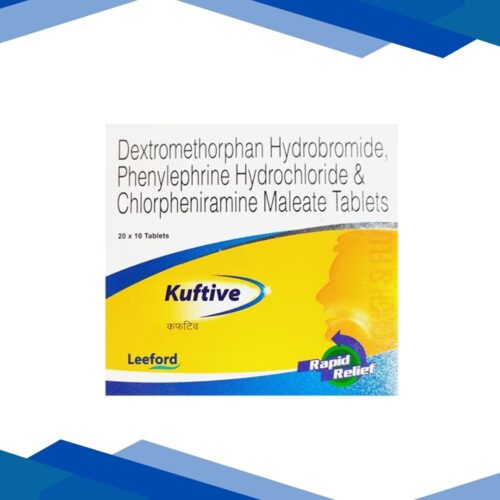
KUFTIVE RAPID RELIEF Tablet 10’s