






















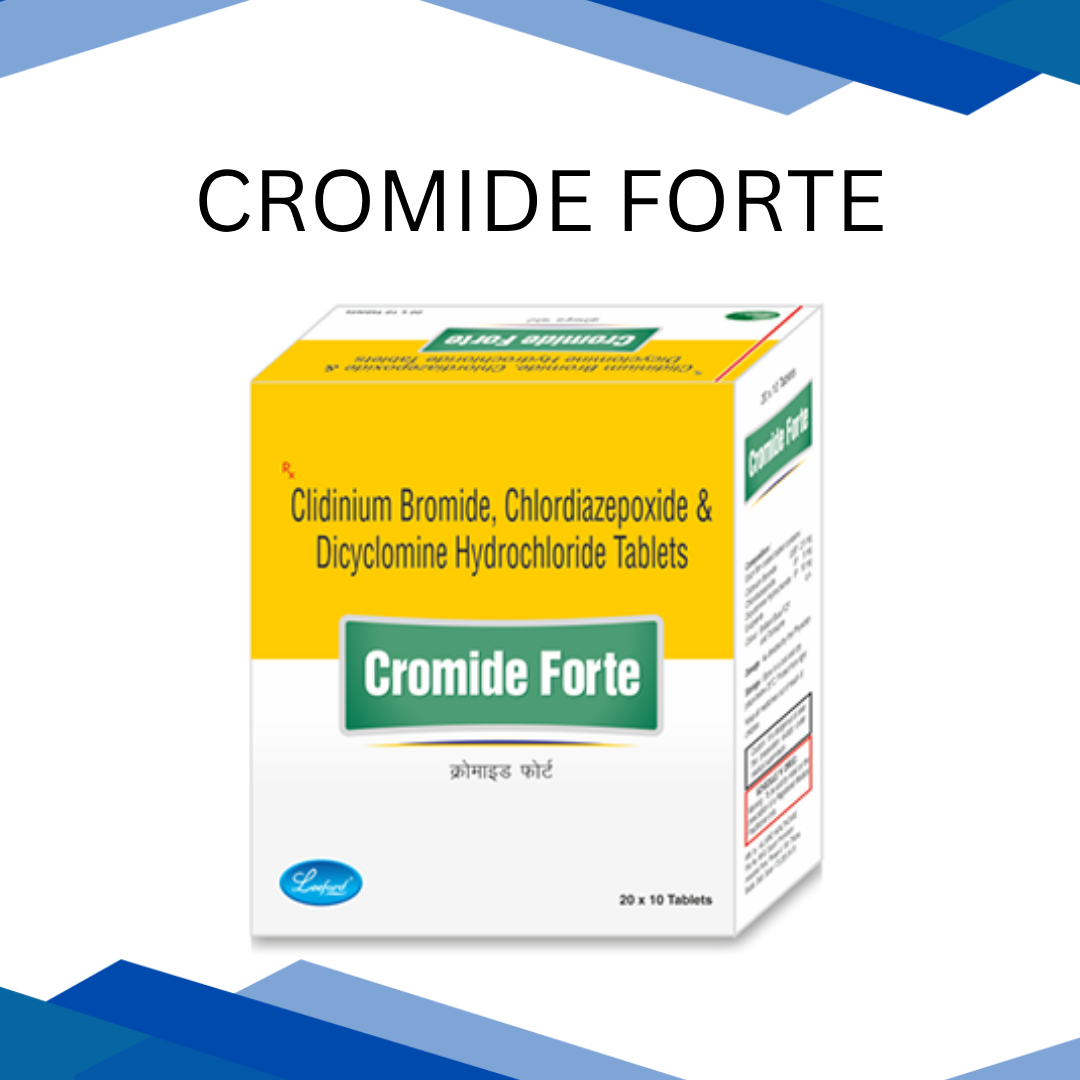
Cromide Forte
❌ Due to high demand, this product is currently out of stock. New stock will be available shortly.
👉 Click here to Buy Same Salt medicine
This combination is used to treat irritable bowel syndrome (IBS) and related digestive issues by reducing abdominal cramps, spasms, and anxiety.
Chlordiazepoxide
Chlordiazepoxide
Chlordiazepoxide is a sedative and hypnotic belonging to the pharmacological class of Benzodiazepines. It is primarily prescribed for short-term cases of anxiety disorders and acute alcohol withdrawal presentations (characterized by restlessness and tremors). It acts by increasing gamma-aminobutyric acid (GABA) activity, a natural chemical in the brain that has a calming effect on the central nervous system.
Therapeutic Use
Anxiety Control: Effective in severe-crisis-type anxiety and tension in various psychological disturbances.
Pre-operative Apprehension: Used for calmness in patients before surgical procedures.
Alcohol Withdrawal: Is used mainly to treat the physical and psychological symptoms of acute alcohol detoxification.
Muscle Spasm: At times, it is used as an adjunct treatment for muscle relaxation.
Main Features
Rapid Onset: Begins to reduce the feeling of acute panic or agitation shortly after entering the body.
Long-lasting effects: Due to long half-life, it provides an extended effect.
Clinical Performance: Has remained one of the very suitable medications in the Benzodiazepine family for sedative effects.
Dosages & Administration
How Administration Should Occur: Swallow the capsules whole with water; they may be taken with or without food.
Missed Dose: From the moment you remember, if you have missed a dose, take the missed dose. If it is time for the next dose, ignore the missed dose, and do not double the dose.
Treatment: For short term: for 2—4 weeks; long-term use may involve undesirable dependency.
Primary Side Effects
Most side effects increase with dosage but decrease over time, as one gets used to the medicine:
Drowsiness and light-headedness
Impaired coordination (ataxia)
Confusion (void in the elderly)
Blurred vision
Dry mouth, or constipation
Caution: Seek emergency medical help if you have wheezing, trouble talking, drowsiness, or falling asleep, or if your eyes turn yellow (jaundice).
Warnings & Precautions
Concerns for Drug Abuse: Chlordiazepoxide has dependence as well as abuse potential. Do not administer this drug to others, and only use it for the reasons your doctor has prescribed for you.
Alcohol Interaction: NEVER take this medication with alcohol. Doing so can lead to fatal respiratory depression or sedation.
Driving & Operating Machines: Do not drive or operate heavy machinery until you have learned how this medicine will affect you, because it can retard reaction time.
How to Taper Discontinuation: The sudden removal of this medication can put you at risk of withdrawal symptoms (e.g., seizures, tremors). Consult your doctor to measure a tapering-down regime.
Pregnancy: It should not be prescribed during pregnancy, especially during the first trimester, as it carries a potential risk of congenital malformations.
Frequently Asked Questions (FAQs)
Q: Is Chlordiazepoxide a sleeping pill?
Though it has tranquilizing effects and may cause drowsiness, it is an anxiolytic (anti-anxiety) primarily. In some ways, it is used to treat anxiety-related insomnia, but this is not a typical indication for hypnotics.
Q: How long does Chlordiazepoxide take to work?
Most patients will feel the calming effects within 30 to 60 minutes after oral administration, with peak blood levels at about two hours.
Q: May I take Chlordiazepoxide with painkillers?
Use extreme caution. When taken with opioid anodynes (e.g., codeine, tramadol), the result is severe sedation leading to respiratory depression. Your physician should be noted as to available treatments.
Q: Is it safe for the elderly patients?
Old people usually do have a higher sensitivity to benzodiazepines. There are higher chances of falls and confusion. Doctors keep the starting dose lower for elderly patients.
Q: Is this archaic medication now ever advised for treating long-term anxiety?
No, it is's generally never used around extended cases of anxiety due to the susceptibility of tolerance (where the drug is basically less useful over time) and dependence.
Storage
Store at room temperature 68°F-77°F ($20\text{°C}$ to $25\text{°C}$), protected from moisture & light. Keep out of reach of children.
Disclaimer: This is a Schedule H/X drug (it is simple: depending on local regulations); it should only be dispensed and administered by a registered healthcare provider. It is illegal to use this drug without a valid prescription.
Clidinium Bromide
Clidinium Bromide s.p. Fc tablets- 2.5 mg
Clidinium Bromide is a synthetic medication with anticholinergic properties that are predominantly used to treat symptoms of gastrointestinal disorders. This acts by being spasmolytic, relaxing the smooth muscles in the stomach and intestines. Reducing spasms, the drug induces cramps and secretion of excessive acid leading to adaptive comfort in a spectrum of digestive maladies.
Use:
Irritable Bowel Syndrome: Clidinium Bromide helps to manage symptoms like cramping and bloating.
Peptic Ulcer Disease: It is used as an auxiliary therapy for the decrease of gastric juices and intestinal motility.
Acute Enterocolitis: It helps to control spasm in the digestive tract.
Gastrointestinal Motility Disorders: Abdominal cramps caused by involuntary contractions of muscles are relieved.
Mechanism of Action
Clidinium for Gastrointestinal Motility Disorders :
It blocks the action of acetylcholine on the smooth muscles of the gut. This inhibits these nerve impulses caused by acetylcholine, thus relaxing the muscles:
Relieving Spasms: Halts sudden, painful muscle contraction-and-retraction episodes/episodes in the intestines.
Decrease Secretion: Decreases stomach acid and digestion juices production.
Decrease Peristalsis: Acts as a powerful antidote to all hyperactivity-related issues with the digestive tract, ensuring that the bowels start work accordingly during flare-ups.
Evidence:
Standard dose: The drug is taken three or four times in a day, thirty to sixty minutes before a mealtime, and at bedtime.
Route: Take the tablet or capsule whole with a full glass of water, and do not chew or crush it.
Nourishment: For a disease such as IBS, compliance is necessary concerning adherence; hence, medications must be taken as prescribed in order to ensure continuous relief.
Adverse reactions:
Most current symptoms, similarly related to the anticholinergic effect of the drug, tend to gradually resolve as the body becomes accustomed to such therapy:
Xerostomia and commonly dry skin texture
Close vision impairment (from pupillary dilation)
Mild drowsiness or dizziness
Constipation
Urinary hesitancy (difficult to initiate void)
Decreased sweating (in hot weather, be aware of getting too hot)
Clidinium should not be taken by people with acute ocular hypertension, as it would make intraocular pressure grow.
Patients with enlarged prostates should not take Clidinium because it may slow down the emptying of the bladder.
Taking Clidinium with alcohol or sedatives can cause increased drowsiness and hence increase the possibility of respiratory depression.
Driving: You should be cautious until you acknowledge how the medication impairs vision or lack of judgment.
Frequently Asked Questions (FAQs)
Q: Is Clidinium addictive?
Clidinium itself is not completely habit-forming. However, it is often prescribed with Chlordiazepoxide (a benzodiazepine), which can lead to physical dependence over some time. Always adhere to your doctor's taper schedule when you want to discontinue using the medicine.
Q: Can I take Clidinium on an empty stomach?
Clidinium should actually be ingested about 30 to 60 minutes before meals. This allows the medication to act as the gut muscles relax during digestive activity after meals.
Q: What should I do if I have a dry mouth now?
Dry mouth is an expected side effect. Sip water, chew sugarless gum, or use a saliva substitute to counteract the effect. If it becomes too bothersome, see a dentist or a doctor.
Q: Can I use these tablets during pregnancy?
Pregnancy safety should be discussed with a doctor, especially when combined with Chlordiazepoxide. Inform your doctor if you are pregnant or planning pregnancy.
Q: How long does Clidinium take to work?
Most patients experience an improvement in abdominal cramps within one to two hours following the first few doses. However, for conditions such as peptic ulcers, it may take several days of consistent use to notice significant improvement.
Storage
Store in a cool, dry place away from direct light and moisture. Ensure that the container is tightly closed and kept out of reach of children.
Disclaimer: This information is provided for educational purposes and does not replace the advice of a medical professional. Always consult your doctor before starting or stopping any prescription medication.
Dicyclomine
Dicyclomine (Dicycloverine): Easing Cramps and Spasms of the Stomach
Dicyclomine is a special type of medicine known as an antispasmodic (anticholinergic). It is most often prescribed to relieve functional bowel disorders, particularly Irritable Bowel Syndrome (IBS). In simple terms, it helps the smooth muscles of the stomach and intestines relax, stopping the painful muscle spasms that cause abdominal discomfort.
The Mechanism of Action for Dicyclomine
The medicine works by blocking the action of a naturally occurring chemical called acetylcholine in the body. By doing so, it reduces involuntary spasms or sharp contractions of the muscles inside the digestive tract. This allows the stomach and intestines to function more normally, relieving the cramping or gripping sensation in the abdomen.
Indications
Irritable Bowel Syndrome (IBS): Helps relieve flare-ups of abdominal cramps and irregular bowel movements.
Intestinal Colic: Used to reduce sharp and sudden abdominal pain caused by muscle spasms.
Gastrointestinal Hypermotility: Helps calm an overactive digestive tract, reducing urgency and discomfort.
Quick Guides: Health & Usage
Factor
Advice & Precautions
When to Take: Should be taken 30–60 minutes before meals for maximum effectiveness.
Hydration: The medication may reduce sweating, so avoid overheating or heatstroke, especially in hot weather.
Driving: May cause blurred vision or dizziness. Avoid driving or operating machinery until you know how the medication affects you.
Glaucoma: Contraindicated. Patients with narrow-angle glaucoma should not take Dicyclomine.
Self-Care for Managing Side Effects
Most side effects are mild and related to the medication’s drying effects.
Dry Mouth: Sucking sugar-free candy or ice chips may help relieve dryness.
Blurred Vision: Usually temporary and often improves as the body adjusts.
Dizziness/Drowsiness: Be cautious and avoid sudden posture changes.
Nausea/Constipation: Increasing dietary fiber intake may help reduce symptoms.
Precaution: Stop the medication and contact your physician immediately if you experience rapid heart rate, confusion, or difficulty urinating.
Frequently Asked Questions (FAQs)
1. Does Dicyclomine act as a pain reliever?
No. It is not a general painkiller like acetaminophen or ibuprofen. Instead, it specifically targets muscle spasms in the gut, which are often the source of abdominal pain.
2. How quickly does Dicyclomine begin to work?
Many people notice relief within 1–2 hours after taking the medication. For long-term IBS management, it is usually taken on a regular schedule rather than only when symptoms occur.
3. Can I take Dicyclomine with antacids?
It is generally recommended not to take antacids at the same time, as they may interfere with Dicyclomine absorption. Take them at least one hour apart.
4. Can I drink alcohol while on this medication?
It is best to limit or avoid alcohol. Both alcohol and Dicyclomine can cause drowsiness and dizziness, and taking them together may increase these effects and impair coordination.
5. Is it useful for treating diarrhea?
Although it is not primarily an antidiarrheal medication, it may help slow excessive bowel movement activity in IBS-related diarrhea, which can reduce stool frequency.
At Gem Pharmacy, we make every effort to provide accurate, expert-written, and thoroughly reviewed information related to medicines. However, this information should not be considered a substitute for professional medical advice, diagnosis, or treatment from a qualified doctor.
The purpose of this information is to educate users and improve communication between patients and healthcare professionals. It should not be used to diagnose or treat any condition.
Always consult a certified healthcare professional before taking any medication.


Related products

CYCLOPAM FAST RELIEF Drops 10ml