Etophylline
Etophylline 100mg Tablet
Etophylline (also known as Etofylline) is a bronchodilator used to support patients with chronic respiratory conditions. It works by relaxing the muscles of the airways (bronchi), which helps improve airflow to the lungs. By reducing airway constriction, Etophylline can significantly relieve breathing difficulty in conditions such as asthma and chronic obstructive pulmonary disease (COPD).
Benefits of Etophylline
Bronchodilation: The bronchial muscles relax, allowing the airways to widen and improving the flow of oxygen into the lungs.
Asthma Control: Helps reduce symptoms of asthma such as wheezing, coughing, and shortness of breath.
Support in COPD: Provides relief for patients with Chronic Obstructive Pulmonary Disease (COPD) by reducing airway obstruction and breathing discomfort.
Maintenance Therapy: Often used as long-term maintenance treatment to keep airways open and reduce flare-ups.
How to Take Etophylline
Patient Compliance: Take the medicine at the same time each day for best results. Many adults prefer taking it in the evening or before bedtime to help maintain easier breathing at night.
With Food: It is generally recommended to take the medication after meals to reduce stomach irritation or ulcer risk.
Administration: Swallow the tablet whole with a glass of water. Do not crush or chew the tablet, especially if it is a sustained-release formulation.
Emergency Note: Etophylline is not meant for immediate relief of acute asthma attacks. Always keep a rescue inhaler available and consult your doctor if needed.
Important Safety Information
Medical Consultation: Inform your doctor if you have a history of heart disease, high blood pressure, or thyroid disorders, as Etophylline may act as a mild stimulant.
Caffeine Intake: Limit or avoid caffeine (coffee, tea, or caffeinated soft drinks) while taking Etophylline, as it may increase side effects such as jitteriness or rapid heartbeat.
Smoking: Smoking can affect how quickly your body processes the medication, so inform your doctor if you smoke or recently quit smoking.
Potassium Levels: Etophylline may slightly affect potassium levels in the blood, so your doctor may recommend periodic blood tests.
Side Effects
Most side effects are mild and often improve as the body adapts to the medication:
Nausea or mild stomach discomfort
Headache or dizziness
Restlessness or difficulty sleeping (insomnia)
Increased heart rate (palpitations)
Contact your healthcare provider immediately if you experience severe vomiting, tremors, or irregular heartbeat.
Frequently Asked Questions (FAQs)
Q: Is Etophylline the same as Theophylline?
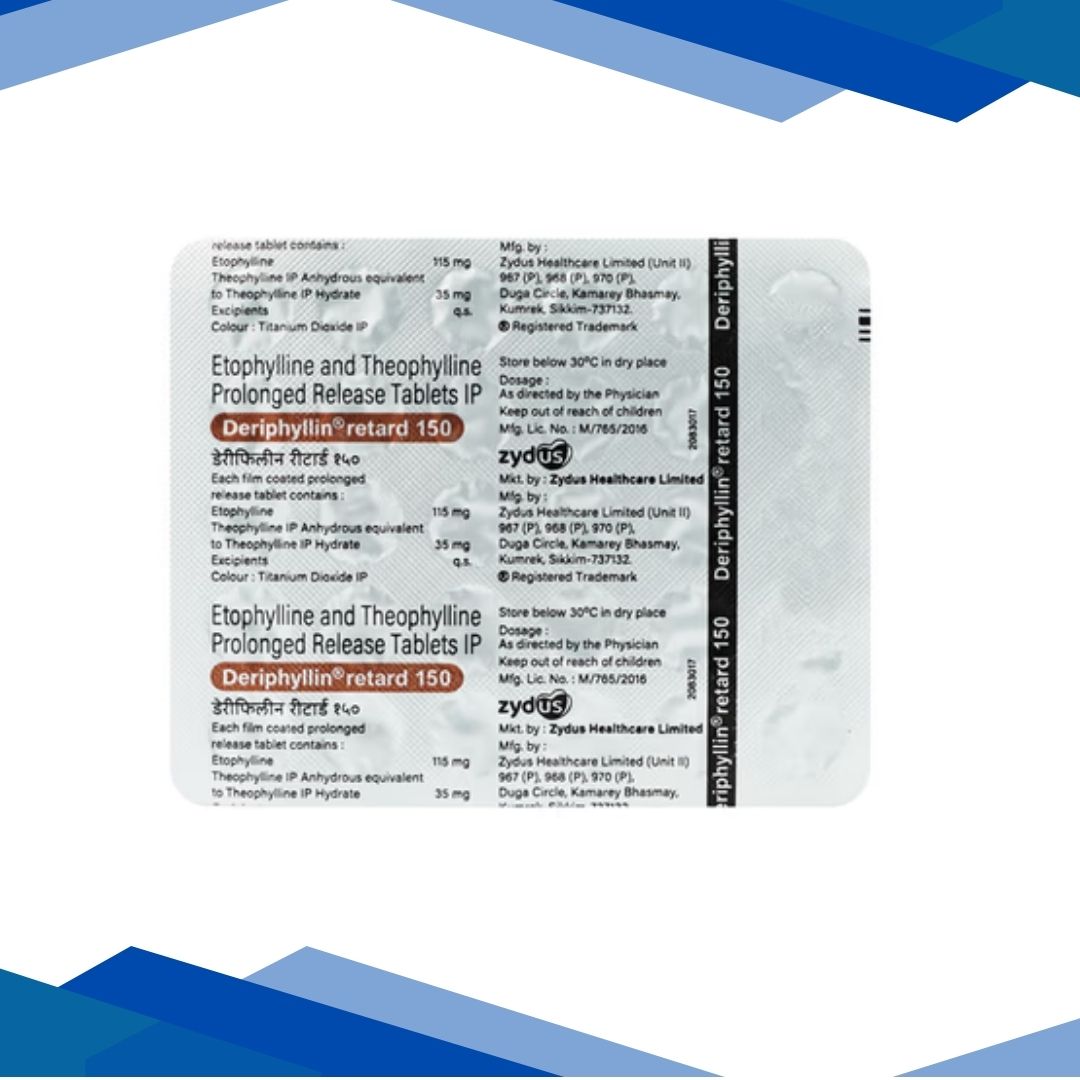
A: Etophylline is closely related to Theophylline and is considered a derivative of it. These medicines are sometimes combined in formulations (such as Deriphyllin) to provide both rapid and sustained bronchodilation.
Q: Can I take Etophylline during pregnancy?
A: Your doctor will evaluate the benefits and potential risks before prescribing Etophylline during pregnancy. It should only be used when clearly necessary and under medical supervision.
Q: Why do I feel shaky after taking the medicine?
A: Etophylline belongs to the xanthine derivative group (similar to caffeine), which may cause mild shakiness or nervousness in some people. This usually improves with continued use, but if symptoms are severe, your doctor may adjust the dosage.
Q: Can I drink alcohol while taking Etophylline?
A: It is best to avoid or limit alcohol consumption, as it may increase side effects such as dizziness, nausea, or drowsiness.
Q: How quickly does Etophylline start working?
A: Some breathing relief may occur within 1–3 hours, but full therapeutic benefits may take a few days of regular dosing.