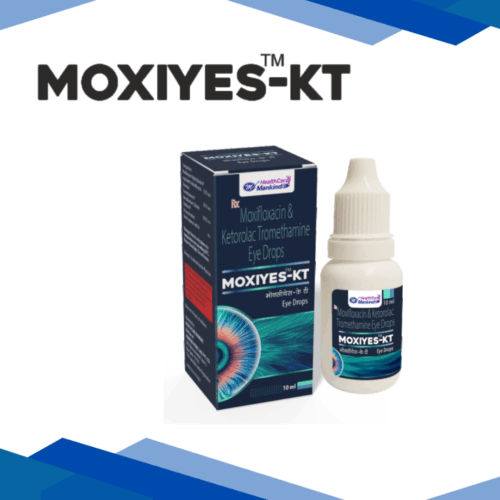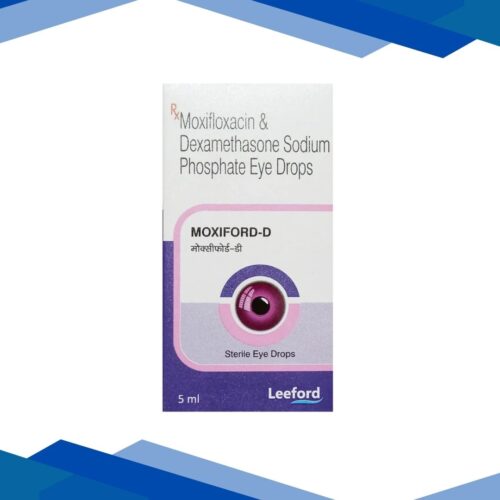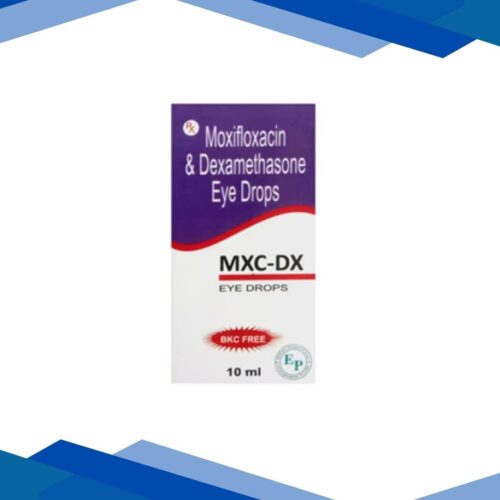


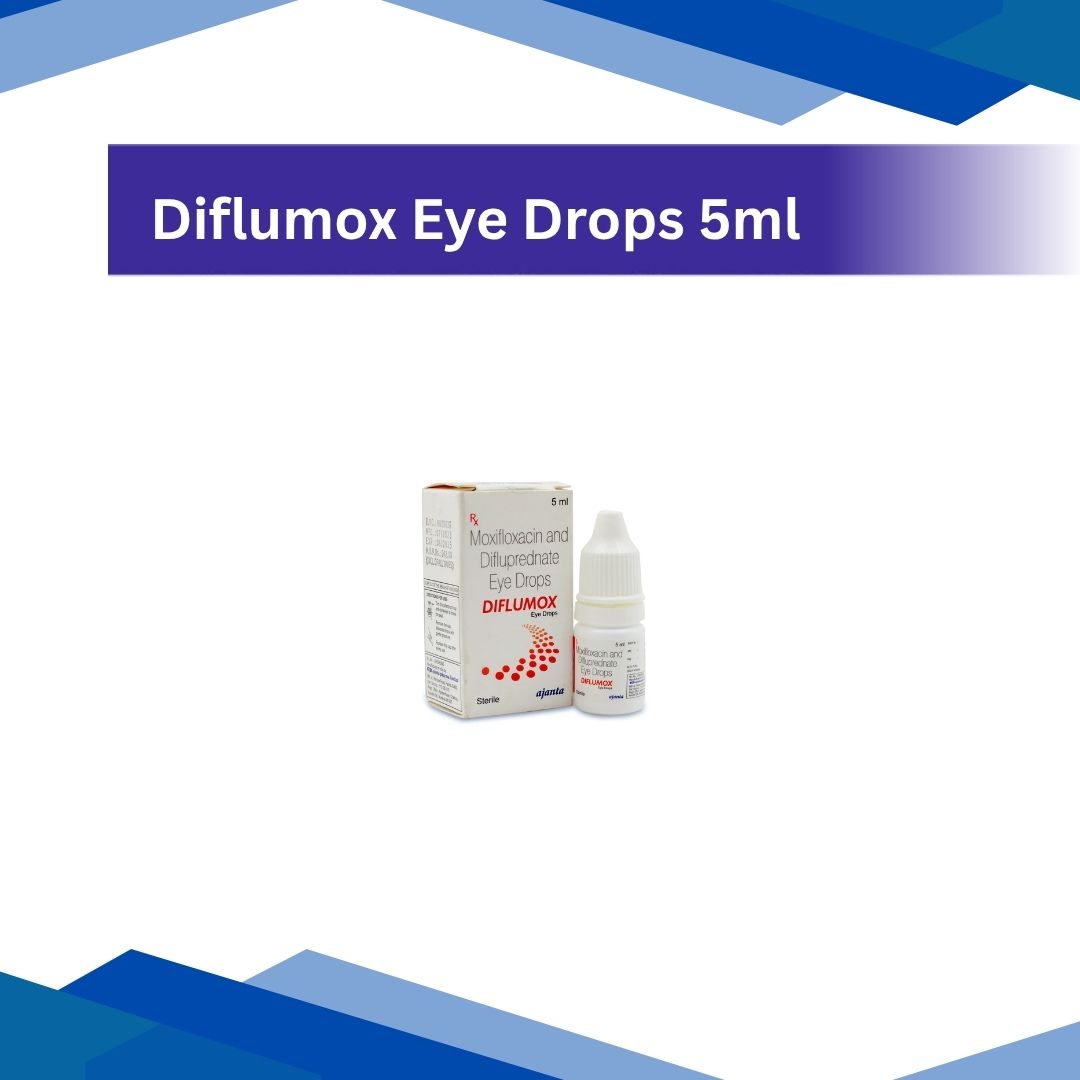
Diflumox Eye Drops 5 ml
No Prescription yet? Don’t worry! Click Here to Get Online Consultation
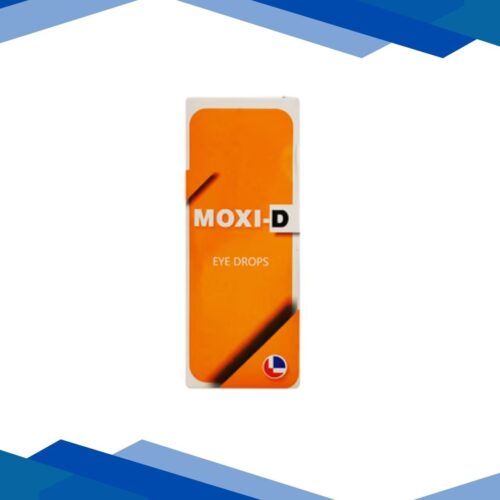
Diflumox Eye Drops are a combination antibiotic‑and‑steroid medicine used to treat bacterial eye infections and associated inflammation (redness, swelling, pain). For more details kindly click on Medicine Salts below:
Difluprednate
Product Information Difluprednate is a strong corticosteroid that primarily reduces inflammation and pain post eye surgeries, mostly cataract surgeries. It is also an excellent option for pain relief against Anterior Uveitis, which encompasses a swelling and redness within a layer of the eye. Different from regular eyedrops, this is an emulsion, which allows the active medicine to remain on the eye for a longer duration for greater absorption. This lets quick relief from the redness, itching, and swelling among different others.
Key Benefit & Uses Post-Op Recovery: The quick decrease of ocular swelling and pain after 24 h of surgery. Uveitis Treatment: Useful for treating non-infectious inflammation of the iris and ciliary body. Unlike most available medications in the anti-inflammatory category, this particular drug acts by inhibition of prostaglandins and leukotrienes, which are naturally occurring chemicals and are responsible for pain and redness.
Dosage Details Shake the Bottle Well: Before application, one should shake the bottle well to make sure the emulsion is properly mixed. Clean Hands: Clean your hands well. The fingertip should never come into contact with the eye, the eyelids, or any other surface as a means of restricting contamination. InstaPuff: Either sitting down or lying back, tilt your head backward and look straight to instill a drop. Gently pull down the lower lid to create a pocket, instill one drop, and then immediately close the eye for 2 minutes to ensure that the solution penetrates effectively, whilst minimizing systemic absorption of the solution. Another interesting way is to pinch the lower eyelid tight just under the lash line to decrease the spill-over drainage of the drug. This can be administered in standing position as well. Absurd as it may sound, gently squeezing the eye had good results with minimal loss from the punctual pathways. Save as long as 15 minutes before reinserting the lenses. If you are diagnosed with an active viral infection of the eye (for instance Herpes Simplex), blood infection, or fungal bacterial infection, do not use this medicine.
Possible Side Effects Temporary side effects will generally last only for a few hours or days after treatment has commenced:
- Vision loss (transient)
- Light sensitivity (Photophobia)
- Mild stinging or burning
Frequently Asked Questions (FAQs) 1. Is Difluprednate stronger than Prednisolone? Yes. Difluprednate is a more potent corticosteroid and is mostly used when the inflammation is severe or when the standard corticosteroid drop is not achieving the desired effect. 3. Should I discontinue the medicine as soon as my eyes are back to normal? No. Steroid eye drops should never be abruptly discontinued. Your doctor will provide you with a "taper-down" schedule for these medicines to slowly diminish the current dose. If taken away all of a sudden, an abrupt reappearance of inflammation can occur which is also termed a rebound effect. 5. Why is my vision blurry after using the drops? Difluprednate, with its emulsion-type nature (oil-and-water mix), can create a small "veil" over the vision for a few moments. This is usual and should fix itself. 6. How long should I keep the bottle once it has been opened? Throw away any left-over liquid 4 weeks after opening the bottle. Using old drops could increase your risk of severe eye infections. 7. What if I miss a dose? Apply it as soon as you remember. However, if it’s almost time for your next dose, skip the missed one. Never double dose.
Moxifloxacin
Indications Community-Acquired Pneumonia, including atypical pneumonias caused by Mycoplasma, Legionella, and Chlamydia (Kalymnos et al., 2007); acute exacerbation of chronic bronchitis; acute maxillary sinus infections of bacterial origin (e.g., Streptococcus pneumoniae, Haemophilus influenzae, or Moraxella catarrhalis); skin and skin structure infections, such as abscesses, cellulitis, and deep wound infections; or intra-abdominal infections due to Escherichia coli, Klebsiella pneumoniae, Bacteroides fragilis, Streptococcus spp., Enterococcus faecalis, Staphylococcus aureus, anaerobic cocci, and Clostridium perfringens.
Dosage and Administration The combination of moxifloxacin 400 mg tablets with conventional medicine such as Ampicillin or Metronidazole has been used for efficacy and safety in adult patients with CAP. The use of moxifloxacin 400 mg tablets should consider all indications and possible side effects. For CAP, a 400 mg dose may be administered via intravenous infusion over 1 hour. For better penetration in invasive infections, prostatitis, neutropenia, etc., moxifloxacin tablets are taken orally (Kitsun et al., 2005).
How Does Moxifloxacin Work? Moxifloxacin is bactericidal, meaning it kills bacteria rather than just inhibiting their growth. It works by blocking DNA gyrase and topoisomerase IV, enzymes essential for bacterial DNA replication and repair. Without these enzymes, bacteria cannot survive, leading to rapid infection control.
Usage Guidelines and Dosage Usual dose: Adults typically take 400 mg once daily. Consistency: Take it at the same time each day to maintain steady drug levels. Food: Can be taken with or without food; taking with food may reduce stomach upset. Complete the Course: Always finish the full course, even if symptoms improve early, to prevent antibiotic resistance.
Critical Safety Precautions Tendon Risk: Being a fluoroquinolone, Moxifloxacin carries a risk of tendonitis or tendon rupture. Avoid strenuous activity and report any joint or tendon pain immediately. Sun Sensitivity: May cause photosensitivity. Use sunscreen (SPF 30+) and protective clothing outdoors. Cardiovascular Health: Inform your doctor if you have QT prolongation or heart rhythm disorders. Pediatric Use: Not recommended for children under 18 years due to risks to developing joints.
Potential Side Effects Most patients tolerate it well, but some may experience: Nausea or mild stomach upset Dizziness Headache Diarrhea (seek medical help if severe or bloody)
FAQs
Q: Can I take antacids or vitamins with Moxifloxacin? A: Antacids containing magnesium or aluminum, iron supplements, and zinc-containing vitamins can reduce absorption. Take Moxifloxacin at least 4 hours before or 8 hours after these products.
Q: Does Moxifloxacin treat colds or flu? A: No. It is effective only against bacterial infections, not viral illnesses like cold or flu.
Q: Can I consume alcohol while taking this medicine? A: While no direct interaction exists, alcohol may worsen side effects like dizziness or stomach upset. It is best to avoid alcohol during treatment.
Q: What should I do if I miss a dose? A: Take it as soon as you remember. If it is within 8 hours of your next dose, skip the missed dose. Do not double the dose.
Q: Does Moxifloxacin cause sleepiness? A: It is more likely to cause dizziness or lightheadedness rather than sleepiness. Avoid driving or operating machinery until you know how it affects you.
At Gem Pharmacy, we make every effort to provide accurate, expert-written, and thoroughly reviewed information related to medicines. However, this information should not be considered a substitute for professional medical advice, diagnosis, or treatment from a qualified doctor.
The purpose of this information is to educate users and improve communication between patients and healthcare professionals. It should not be used to diagnose or treat any condition.
Always consult a certified healthcare professional before taking any medication.


Related products