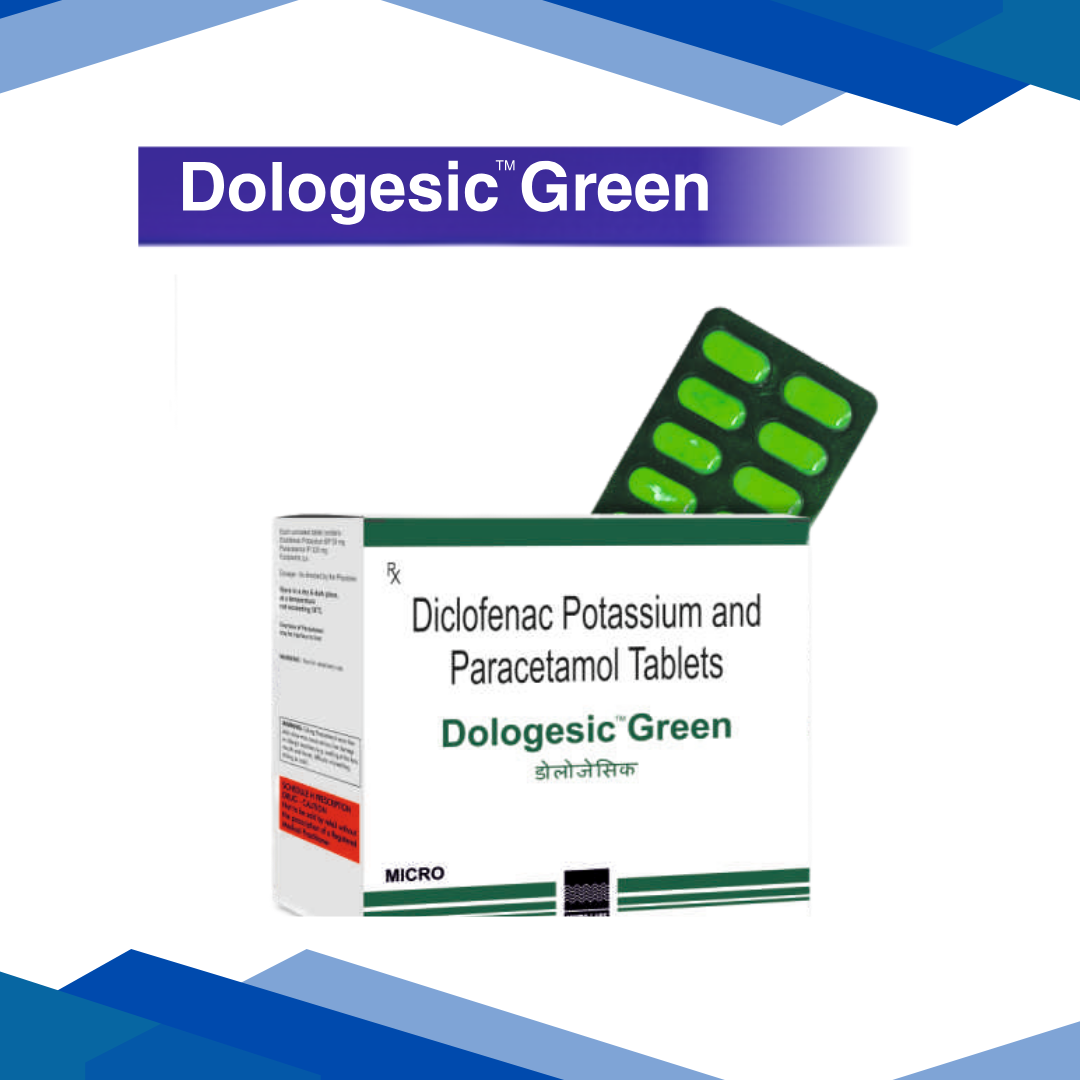
Dologesic Green
No Prescription yet? Don’t worry! Click Here to Get Online Consultation
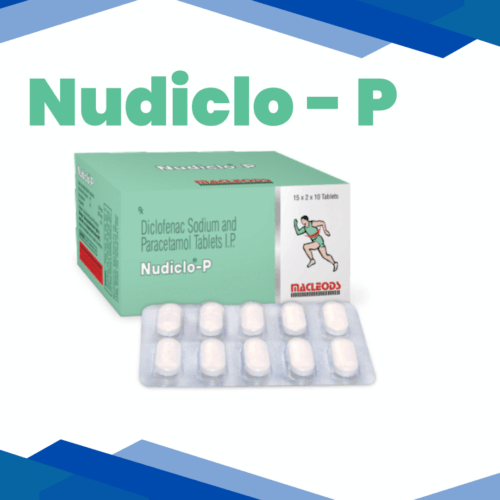
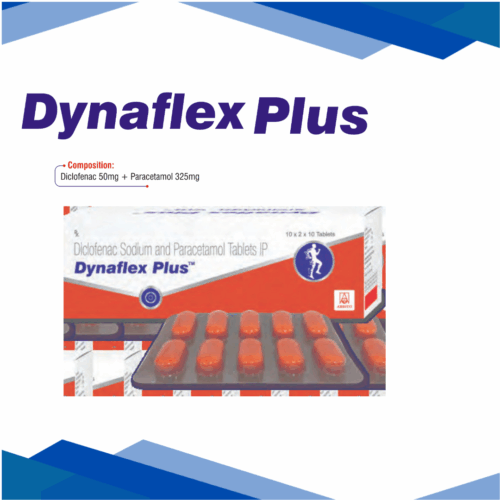
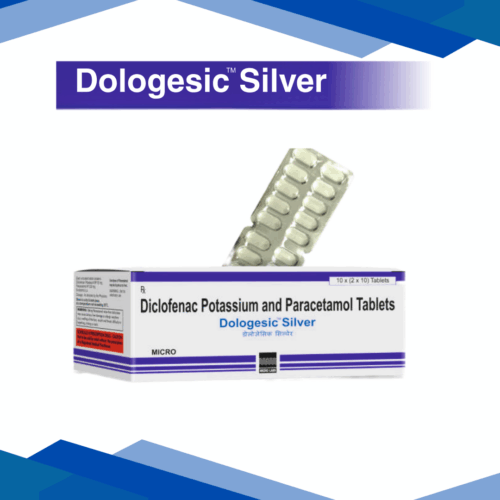
Diclofenac and Paracetamol are used together to relieve pain, swelling, and fever in conditions like arthritis, muscle pain, toothache, and joint pain.For more details kindly click on Medicine Salts below:
Diclofenac
Diclofenac Sodium-Potassium Tablet
Diclofenac, a powerful non-steroidal anti-inflammatory drug (NSAID), is used for relieving acute pain and chronic pain situations. The medicine carries out this job by inhibiting prostaglandin production, which itself is a naturally-occurring chemical of the body causing pain and promoting inflammation. Any range of pain scenarios, athletic or acute or chronic, acute or chronic, are ably managed with Diclofenac, all for the purpose of promoting movement by relieving the swelling and stiffness at the heart of the morbid condition.
Principal Therapeutic Uses
Arthritic Care: There is adequate relief should the usual symptoms arise from Osteoarthritis, Rheumatoid Arthritis, or Ankylosing Spondylitis.
Acute Pain: Analgesia is for use in mild to moderate pain brought about by dental procedures, strains of muscles, postrrecovery from a surgery attack.
Migraines and headache: Specific formulations like Diclofenac Potassium work great to treat an acute attack of headache, with a migraine.
Primary Dysmenorrhea (painful period): Specific relief has been created for Menstrual Cup when it hurts too much.
How to use
Administration: Swallow the tablet whole with a full glass of water; do not crush or chew if it is a "Delayed-Release" or "Enteric-Coated".
With Food: Taking Diclofenac with meals or milk will greatly reduce the chance of a belly upset.
Dosage: Stick to the prescribed dose by your health provider. Common doses control between 25mg to 75 mg thrice daily depending on the clinical state of the condition.
Common Side Effects
Most people are able to tolerate short-term treatment with diclofen7ac; however, some usual symptoms can include:
Nausea or Diarrhea
Dizziness or Mild Headache
Heartburn or Gas
Swelling of the Ankles or Feet (edema)
Warning: Immediate stoppage of medication and immediate seek medical aid if the following occurs after taking the tablet of diclofenac: the stools start turning black/tarry; the person experiences a severe pain in the stomach or gut; skin or eyes turn yellow color (jaundice).
Precautions & Safety Information
Heart Related: There is an increased risk of heart attack or stroke with NSAIDs like Diclofenac, especially if it is taken for the long term or at high doses.
Kidney & Liver Function: It may be necessary to monitor renal and hepatic function in patients who have already had pre-existing conditions of the kidneys or liver.
Asthma: Drug morality is advised to take caution for those with the history of Aspirin-sensitive asthma as they can induce an allergic reaction.
Alcohol: Zero strip-type liquids in the mouth while on this medication; they would raise the risk of severe ulcers and hemorrhage in the stomach.
Pregnancy: You should not take this medication after the 1st trimester because it might be harmful to the baby answered in utero.
FAQs:
Q: Difference between Diclofenac Sodium and Diclofenac Potassium?
Yes, it is. The potassium formulation is absorbed more quickly by the body and thus is usually used for frequently encountered "immediate" pain like headaches or cramps. In contrast, the sodium formulation is often being looked at in cases for "delayed release" pain relief and long-term countering of inflammatory conditions like arthritis.
Q: On an empty stomach, can I take Diclofenac?
Diclofenac works faster on an empty stomach. However, it irritates the mucous membrane of the stomach wall. On the other hand, taking it with food is good for your stomach lining.
Q: Is Diclofenac something that could be habit-forming?
No. Diclofenac is not a narcotic or opioid, it carries no abuse potential, and does not cause physical or psychological dependence.
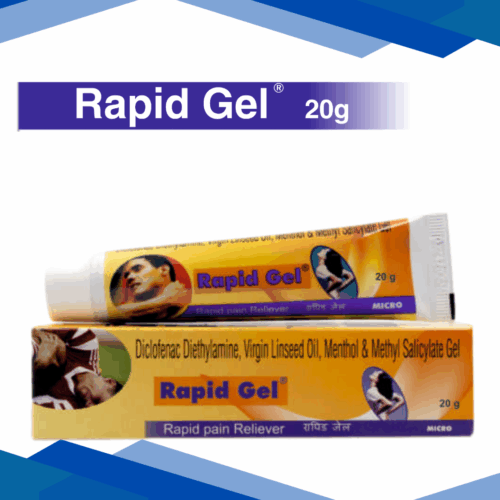
Q: Can Diclofenac gel and tablets be used together?
Using a combination of oral and topical adminstration of diclofenac will have the potential to increase the overall systemic concentration of the drug and possibly increase any chance of side effects. Ask your doctor before administering different forms of the drug simultaneously.
Q: How long does Diclofenac take to work?
Acute pain can be subsided within the first thirty-to-sixty minutes whereas for chronic conditions like arthritis, consistent use offers one a complete inhibition of inflammation beginning at week 1–2.
Paracetamol
Paracetamol 500mg Tablet
Paracetamol is probably the most prescribed and widely used medicine in the world. It is commonly administered to relieve mild-to-moderate pain and to reduce fever. It is well known for its dual action as an analgesic and antipyretic. It is considered a first-line treatment for common ailments such as headaches and fever, and is generally regarded as safe when used within recommended limits.
Key Therapeutic Uses
Fever: Helps in the rapid reduction of high body temperature during viral infections or common flu.
Headache & Migraine: Effective for dull, throbbing pain associated with tension-type headaches.
Muscle & Joint Pains: Relieves minor backache, period cramps, and toothache.
Post-Vaccination Recovery: Used to manage mild soreness or low-grade fever after vaccination.
Usage Guidelines
Standard Adult Dose: Typically 500mg to 1000mg every 4 to 6 hours as needed.
Maximum Limit: Do not exceed 4000mg (4 grams) in a 24-hour period, as this may cause serious liver damage.
Administration: Swallow the tablet whole with water; it can be taken with or without food.
Children: Dosage must be weight-based. Use pediatric formulations like syrups or drops as advised.
Safety & Precautions
Combination Medicines Warning: Many cold and flu products contain paracetamol (acetaminophen). Avoid double dosing.
Alcohol: Limit alcohol intake, as combining with paracetamol increases the risk of liver toxicity.
Liver & Kidney Health: Consult a doctor if you have liver or kidney disorders.
Allergic Reactions: Rarely may cause rash, swelling, dizziness, or breathing difficulty. Seek immediate medical attention if these occur.
Adverse Effects
Paracetamol is usually well tolerated, but rarely may cause:
- Mild nausea
- Skin rash or itching
- Very rare blood disorders (leukopenia, thrombocytopenia)
⚠️ Warning: Yellowing of eyes or extreme fatigue may indicate serious liver issues—seek urgent care.
Frequently Asked Questions (FAQs)
Q: How long does Paracetamol take to work?
A: Relief usually begins within 30 minutes to 1 hour. Fever reduction may take slightly longer.
Q: Can I take paracetamol during pregnancy?
A: It is generally considered safe when used at the lowest effective dose, but always consult your OB-GYN before use.
Q: Is paracetamol better than ibuprofen?
A: It depends on the condition. Paracetamol is ideal for pain and fever, while ibuprofen may be better for inflammation.
Q: Can I take Paracetamol on an empty stomach?
A: Yes, it is gentle on the stomach and can be taken without food.
Q: What happens if I miss a dose?
A: If taken as needed, take it when remembered, ensuring at least a 4-hour gap and not exceeding the daily maximum dose.
At Gem Pharmacy, we make every effort to provide accurate, expert-written, and thoroughly reviewed information related to medicines. However, this information should not be considered a substitute for professional medical advice, diagnosis, or treatment from a qualified doctor.
The purpose of this information is to educate users and improve communication between patients and healthcare professionals. It should not be used to diagnose or treat any condition.
Always consult a certified healthcare professional before taking any medication.


Related products