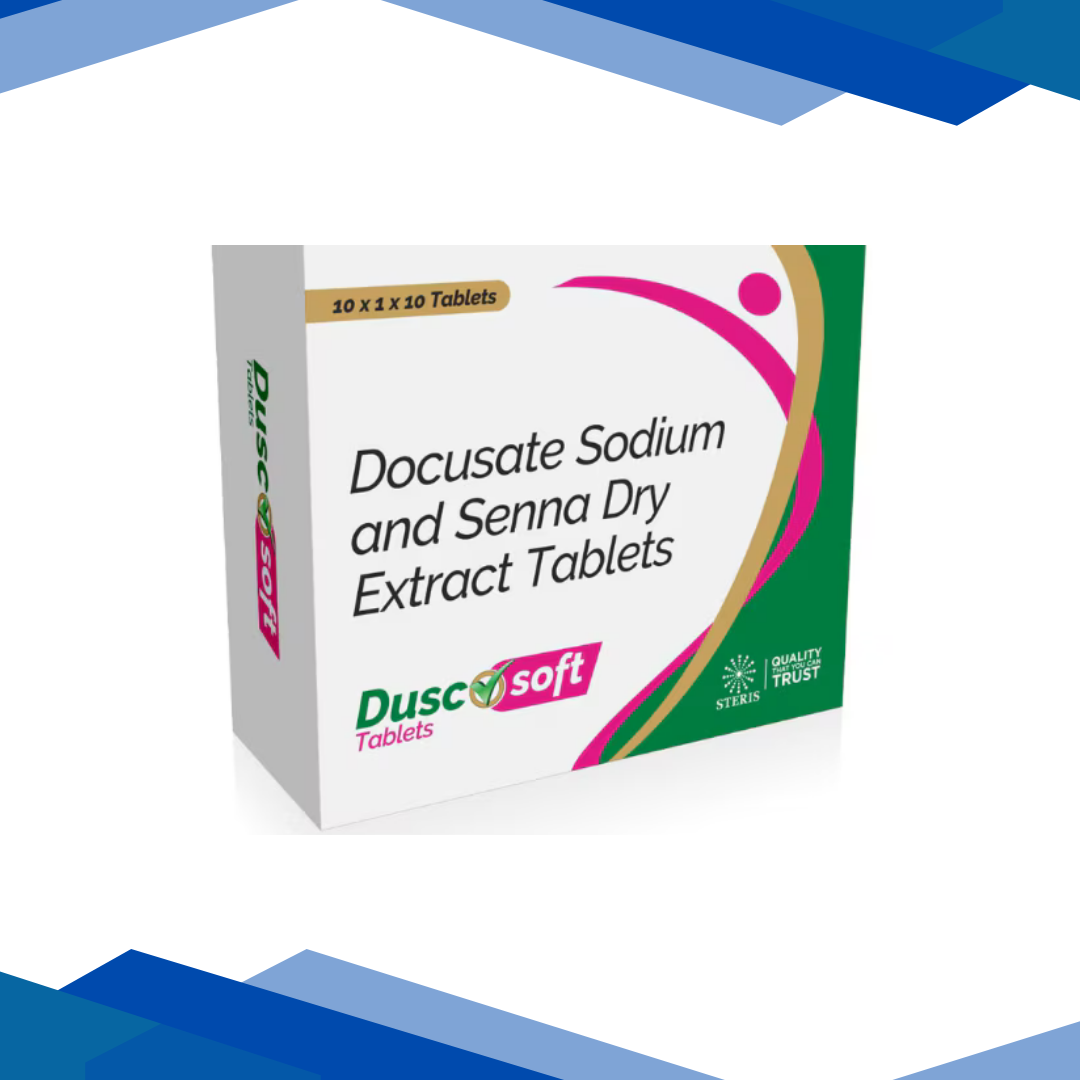
Docusate Sodium
Docusate Sodium: Description, Indications, and Safety Guidelines
Docusate Sodium is an effective stool softener used to relieve occasional constipation. It works by increasing the amount of water and fat absorbed by the stool, making it softer and easier to pass. This helps reduce strain during bowel movements, which is particularly helpful after surgery or in conditions such as hemorrhoids or anal fissures.
Strengths and Indications
Relief from Constipation: Helps treat occasional irregularity and hard, dry stools.
Preventing Straining: Important for people with heart conditions or those recovering from surgery, where excess abdominal pressure should be avoided.
Relieves Piles: Helps reduce pain and discomfort while passing stool in patients with hemorrhoids or anal fissures.
Gentle Action: Typically produces a bowel movement within 12–48 hours, providing more natural relief compared to stimulant laxatives.
How Docusate Sodium Works
Docusate Sodium belongs to the class of emollient laxatives or stool softeners. It acts as a surfactant, which reduces the surface tension of the stool.
This allows water and fats to penetrate the stool more easily, keeping it moist, soft, and easier to pass.
Safety Points
Pregnancy & Lactation
Category | Advice
Alcohol: Generally no major interaction, but excessive alcohol may cause dehydration and worsen constipation.
Pregnancy: Often considered safe during pregnancy, but it should be used only under medical supervision.
Breastfeeding: Usually safe, as very little of the drug enters the bloodstream.
Driving: No effect on alertness; it does not cause drowsiness or impair the ability to drive or operate machinery.
Kidney and Liver: Usually safe, and dose adjustment is generally not required. However, patients with chronic kidney or liver conditions should consult their doctor before use.
How to Use Docusate Sodium
Oral Capsules/Tablets: Swallow whole with a full glass of water. Do not chew, crush, or break the tablet.
Liquid/Syrup: Measure the dose with a medicine cup or syringe. It can be mixed with 6–8 ounces of milk or fruit juice to reduce bitterness.
It is often taken at bedtime so that a bowel movement occurs comfortably the next day.
For best results, drink plenty of water throughout the day, as hydration improves the effectiveness of stool softeners.
Common Side Effects
Docusate Sodium is generally safe and well tolerated, but some individuals may experience mild side effects.
Digestive: Mild stomach cramps or abdominal discomfort.
Nausea: Occasional nausea may occur.
Loose Stools: Especially if the dose is higher than recommended.
Throat Irritation: May occur with liquid forms.
Caution: Stop using the medication and consult a doctor immediately if you notice blood in your stool or if constipation continues despite treatment.
Medication Counseling Advice
Fiber-Rich Diet: Include whole grains, fruits (such as prunes and apples), and green leafy vegetables in your daily meals.
Adequate Water Intake: Drink 8–10 glasses of water daily to help soften stool and support bowel function.
Stay Physically Active: A 20-minute walk each day can help stimulate natural bowel movement.
Avoid Long-Term Use: Do not use the medication for more than 7 consecutive days unless directed by a doctor, as prolonged use may cause dependency.
Frequently Asked Questions (FAQs)
Q1. Is Docusate Sodium a stimulant laxative?
No. Docusate Sodium is an emollient laxative (stool softener), not a stimulant laxative. It softens stool instead of forcing the bowel to contract.
Q2. How long does Docusate Sodium take to work?
Oral forms usually work within 12–48 hours. Enema forms may provide relief within 5–20 minutes.
Q3. Can I take Docusate Sodium with other medications?
Avoid taking it within 2 hours of other medicines, as it may affect their absorption. It should not be combined with mineral oil unless advised by a doctor.
Q4. Does it cause weight loss?
No. Docusate Sodium is not intended for weight loss. Misusing laxatives for weight control can cause serious electrolyte imbalances.
Q5. Can children take Docusate Sodium?
Consult a doctor before giving this medication to children under 6 years of age. Proper dosage guidance from a healthcare professional is important.