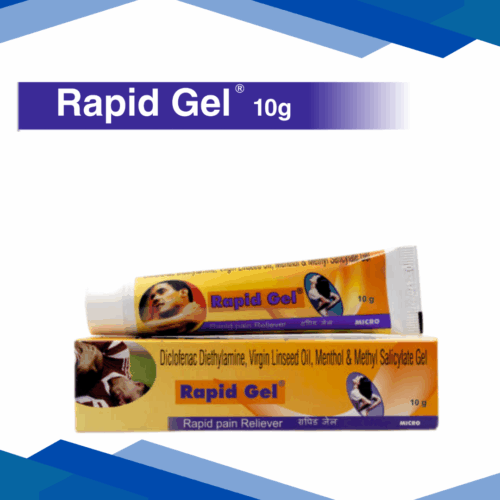
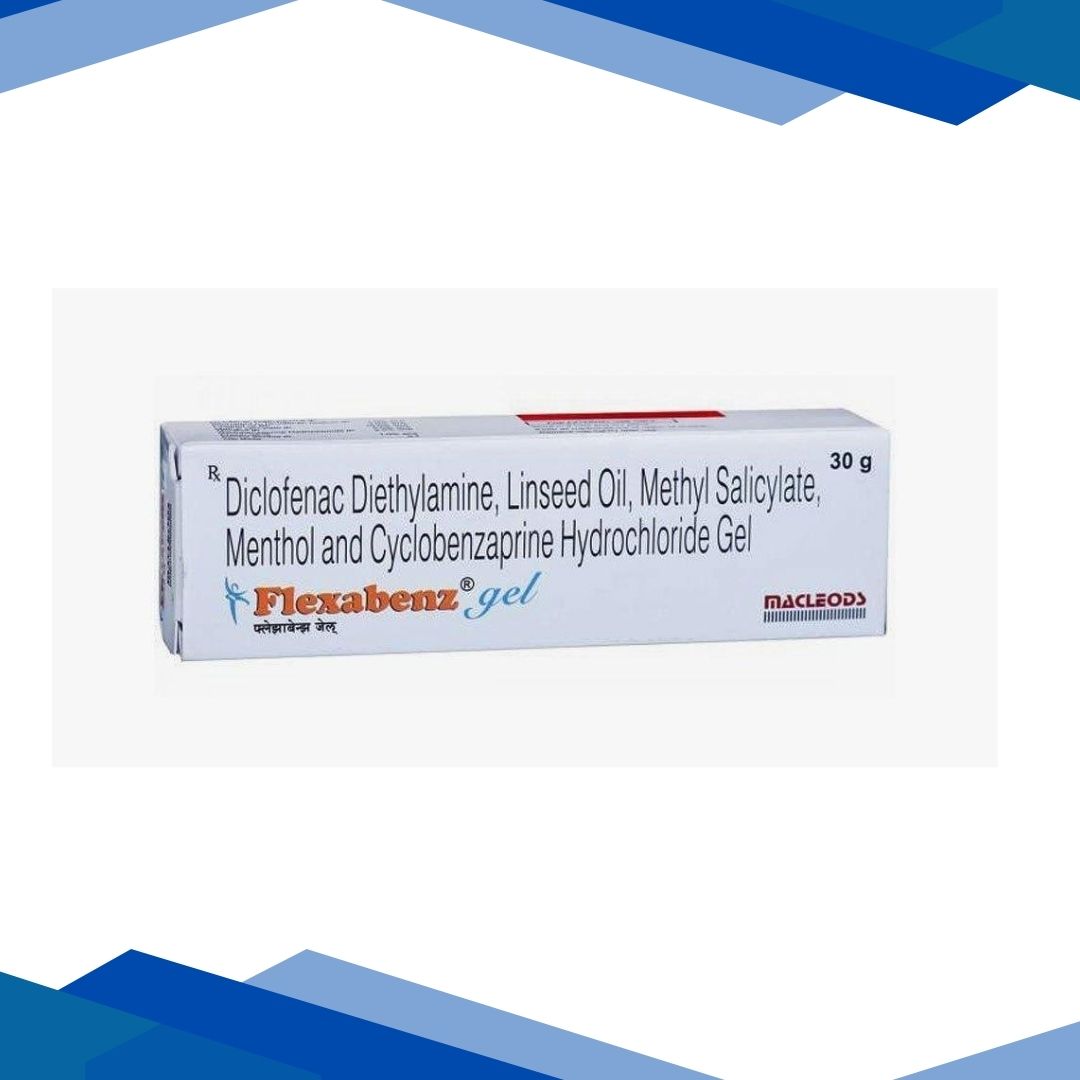
Flexabenz Gel 30gm
No Prescription yet? Don’t worry! Click Here to Get Online Consultation
FLEXABENZ GEL is a combination of Cyclobenzaprine, Diclofenac, Linseed Oil, Menthol and Methyl Salicylate which belongs to the group of medicines called Muscle relaxants, Non-Steroidal Anti- Inflammatory drugs, Cooling agents and Analgesics. It is used to relieve from the discomfort associated with acute, painful musculoskeletal conditions such as rigidity, tension, stiffness and muscle spasms.
Diclofenac Diethylamine
Diclofenac Diethylamine Topical Gel
Diclofenac Diethylamine, a potent non-steroidal anti-inflammatory drug, is specifically formulated for topical application. Unlike oral painkillers, which are developed for absorption into the bloodstream, the diethylamine salt is designed for penetrating the skin more thoroughly to allow the active drug to reach deeper into the target site in joints and muscles. By its structural impact on cyclo-oxygenases 1 and 2 to reduce the synthesis of prostaglandins, more specifically PGE2, DDEA inhibits the mechanisms relevant to the establishment of secondary hyperalgesia.
Therapeutic Uses
Joint Pain: Provides targeted relief for osteoarthritis of superficial joints like the knees, elbows, and fingers.
Muscle Strains & Sprains: Staunchly reduces swelling and pain following sports injuries or sudden physical exertion.
Back & Neck Pain: Gets deep down into the musculature to help the stiffness and acute aches present.
Soft Tissue Rheumatism: Useful for localized tendinitis and inflammatory conditions like bursitis.
Key Features
Enhanced Absorption: The diethylamine salt makes absorption via the skin faster and deeper than standard sodium salt formulations.
Localized Action: It keeps systemic absorption to a minimum, reducing the chances of general side effects associated with oral NSAIDs.
Non-Greasy Formula: Usually available as a hydro-alcoholic gel—non-greasy, cooling, and non-staining.
How to Apply
Cleanse: Clean the affected area using soap and water, then dry thoroughly.
Measure: Apply a small amount (about the size of a cherry or walnut depending on the area).
Massage: Gently massage the gel into the skin until absorbed. Avoid vigorous rubbing.
Hygiene: Wash hands after application unless treating the hands.
Frequency: Apply 3–4 times daily or as directed by your physician.
Safety Precautions & Warnings
External Use Only: Do not apply on open wounds, cuts, infected skin, or exfoliative dermatitis.
Sun Sensitivity: Avoid direct sunlight or artificial tanning on the treated area due to photosensitivity.
Avoid Occlusion: Do not use airtight bandages or heat therapy over the applied area.
Pregnancy Warning: Use with caution in the first two trimesters; avoid completely in the third trimester.
Asthma/Allergies: Avoid use if you have aspirin-induced asthma or hypersensitivity; consult a doctor.
Frequently Asked Questions (FAQs)
Q: What is the difference between Diclofenac Diethylamine and Diclofenac Sodium?
Diclofenac Diethylamine is more lipid-soluble, allowing better skin penetration, while Diclofenac Sodium is commonly used in oral formulations.
Q: How long does it take to work?
A cooling effect is felt immediately, while significant pain relief usually occurs within 30–60 minutes, improving further over 2–3 days.
Q: Can I use it with oral painkillers?
Consult your doctor before combining with oral NSAIDs like Ibuprofen or Naproxen, as it may increase side effects.
Q: What if I develop a rash?
Mild irritation may occur. Discontinue use and seek medical advice if severe rash, swelling, or blistering develops.
Q: Does it cure the condition?
It reduces inflammation and pain but does not cure underlying conditions like osteoarthritis.
Storage
Store in a cool, dry place below 30°C. Do not freeze. Keep the tube tightly closed.
Index
This content is for informational purposes only and should not replace professional medical advice. Always read the product label and consult your healthcare provider before use.
Linseed Oil
Linseed Oil (Virgin & Cold-Pressed)
Virgin Linseed Oil, obtained from flax plant seeds (Linum usitatissimum), is a rich source of essential fatty acids. It is highly reputed in the medical fraternity on account of the fact that it is extremely high in Omega-3 amino acids, with major content in Alpha-Linolenic Acid (ALA); this is one of the omega-3 fatty acids the body cannot make on its own. Whether as a common dietary supplement in many cases to its beneficial effect in supporting heart function, or as a fungible, multipurpose remedy for certain major systemic illnesses, the benefits of Linseed Oil are deeply embraced in current, modern health and wellness practice.
Key Benefits & Uses
Joint & Muscle Relief: Fittingly incorporated into topical gels to heighten the penetration of anti-inflammatory medicines that work toward alleviating stiffness scenario: osteoarthritis.
Cardiovascular Support: Contributes to the maintenance of healthy cholesterol and the overall support thereof.
Natural Laxative: A differential oil with which an oral dose in its very own specific mild manner that operates as a lube effect in the belly—making a good choice for giving relief to occasional constipation.
Skin Health: Contains Vitamin E and antioxidants that facilitate some skin defense and reduce dryness or irritation.
Doors of Inflammation: Intervention with systemic inflammation/type 1 inflammation is protective and good for metabolic health.
Quick Facts
FeatureDetails
Active Ingredient: Alpha-Linolenic Acid (Omega-3)
Extraction Method: Cold-Pressed (No Heat)
Category: Nutraceutical / Topical Adjunct
Dietary Preference: Vegan, Non-GMO
Usage Instructions
For Oral Health: 5ml–10ml (1–2 tsp) a day. Could be mixed with salads, yogurt, or cold smoothies. This oil is perfect for cold food consumption. Do not use for cooking at high temperature.
For Topical Relief: Apply a few drops at the local joint/muscle area and lightly massage. If using a gel containing Linseed Oil specifically, adhere to the instructions given on the pack.
Safety Precautions
Sensitivity: It is best to perform a patch test first and refrain from extensive application in case of any skin reddening and itching.
Medical Interactions: Patients on anti-coagulant (blood thinning) medications must inform their doctor of their intention to take Linseed Oil supplements.
Pregnant & Nursing: It is always best to talk to your physician beforehand about introducing any new supplements into your system during pregnancy.
Storage: The oil has a high tendency to spoil due to oxidation; thus, keep it in a cool, dark place and make sure it is sealed tight to prevent rancidity.
Frequently Asked Questions (FAQs)
Q: Can I use the Linseed Oil found in hardware stores for health purposes?
Definitely not. Industrial-grade linseed oil gets toxic with the added preservatives and solvents. Always use "Cold-Pressed Virgin Linseed Oil" or "Flaxseed Oil" expounded with reference to human consumption or veterinary use.
Q: Why include Linseed Oil in so many Diclofenac pain relievers?
Basically to use as a conduit: it makes sure the active ingredients of the pain-killing agent are better absorbed through the layers of the skin and actually reach the inflamed area more effectively.
Q: Is it very taste-able?
High-quality virgin linseed oil will taste a bit nutty and mild. If it has an extremely bitter taste or smells bad, it has gone rancid and should not be consumed.
Q: Would it be preferred over fish oil for Omega-3?
Flaxseed oil is one of the best plant-based Omega-3 sources, and offers a good alternative to fish oil. A pool of fish oil brings EPA and DHA; in comparison, linseed oil only offers ALA, which your body can partially convert into both EPA and DHA.
Q: How long will it normally keep?
Once opened, a bottle of it stays freshest for 6–8 weeks. If stored in the refrigerator, it might extend the life of its strength.
Menthol
Menthol (Topical Analgesic)
Menthol is natural ingredient that occurs organically and is extracted from peppermint and other mint oils. It has certain pharmacological properties due to the topical analgesic and counterirritant that is widely utilized in pharmaceutical applications. When applied to the skin, it binds to the cold-sensitive receptor termed TRPM8 nicotine, and thus generates a cooling sensation. It works by producing enough cooling sensation to distract the brain from underlying pain signals, therefore providing some relief, deceiving the skin's pain receptors and authors. It is commonly used in muscle-recovery products and patches to mitigate joint pain.
Primary Indications
Muscle & Joint Relief: Temporary relief of minor aches and pains, caused by arthritis, simple backaches, strains, and sprains.
Counterirritant Action: Provides a cooling, slightly warming sensation with benefits of desensitization of pain nerve endings.
Itch & Irritation Control: Effectively don't entertain the itching from insect bites, sunburn, or minor skin rashes.
Respiratory comfort: Often used in chest rubs to emotionally relieve symptoms of feeling clear airways during common colds.
Post-Workout Recovery: Helps reduce the perception of soreness in overworked muscles and tendons.
The Product Specifications
Drugs Group: Topical Analgesic/ Counterirritant.
Formulations: Gels, sprays creams, ointments, medicated patches are available.
Concentration: Ranges generally from 1% and 16% as per the strength.
Appearance: Clear liquid or white crystalline material, characteristic of a minty aroma.
Instructions of Use
For Pain Relief: Clean and dry the affected area. Then apply a thin layer of gel or cream to the area 3-4 times daily.
Sprays: Spray on the skin evenly from 4" to 6" distance. Do not rub unless otherwise specified.
Patches: Stick one patch to the painful area and leave it for as long as 8 hours. Don't use more than one patch that has formed into a mass.
Hygiene: Wash your hands thoroughly with soap after application to avoid any accidental contact with the eyes and mucosa.
Safety Precautions & Warnings
For external use only: Do not ingest menthol-based topical products.
Avoid Over Broken Skin: Never apply to an open wound, damaged skin, or any irritated rashes.
No Heat therapy: Whether using a heating pad, hot water bottle, or tight bandage applied to the area, do not apply heat either. This will increase permeation and cause severe skin burns.
Flammability: Some menthol sprays and gels are flammable. Keep away from open flames or high heat until the product has completely dried on the skin.
Children: Consult a pediatrician before using on children under 12.
Frequently Asked Questions (FAQs)
Q: How does Menthol actually stop pain?
Menthol does not "numb" the pain as a local anesthetic does, but rather acts as a counterirritant. As the compound creates an intense cold sensation, it blocks the pain signals headed to the brain, effectively turning down the volume on discomfort.
Q: Can Menthol be used with a heating pad?
No. This is a major danger. Menthol causes the blood flow to the skin to increase, and the application of heat tends to make the medication be absorbed too quickly or cause some very bad burns and blisters.
Q: Why do I instantly feel cold but end up feeling warm?
This is essentially because of the 'counterirritant effect.' The menthol first activates the cold receptors, offering initial cooling effects. Then the local circulation is elevated when it is rubbed in, and the now-warm sensation is relaxing tight muscles.
Q: Can Menthol be used with an oral pain medication?
Yes, in practice, no! Since menthol is only used topically, so very little of it penetrates your bloodstream. However, let your doc know if you're on blood thinners, say, on Warfarin, because some of the topical formulations can have methyl salicylate, which can interact with them.
Q: Will the Menthol smell "stick"?
The very minty smell is the strongest during application and then dissipates as the product dries down. I would suggest many "vanishing scent gels" for a more subtle application, if the user prefers it that way.
Methyl Salicylate
At Gem Pharmacy, we make every effort to provide accurate, expert-written, and thoroughly reviewed information related to medicines. However, this information should not be considered a substitute for professional medical advice, diagnosis, or treatment from a qualified doctor.
The purpose of this information is to educate users and improve communication between patients and healthcare professionals. It should not be used to diagnose or treat any condition.
Always consult a certified healthcare professional before taking any medication.


Related products