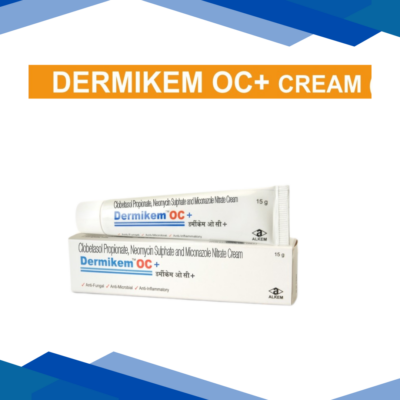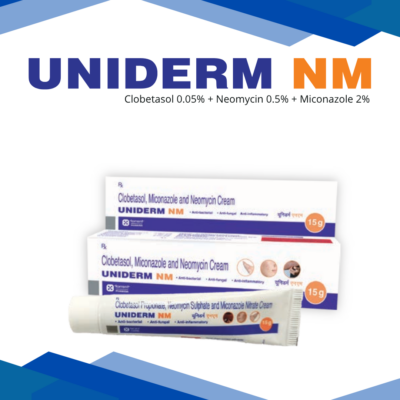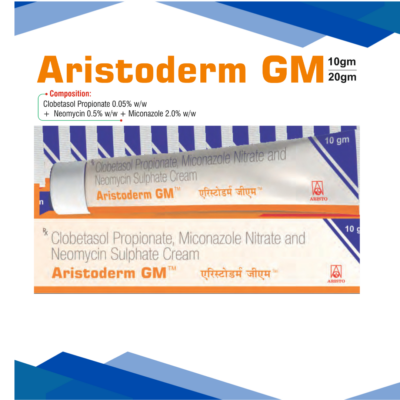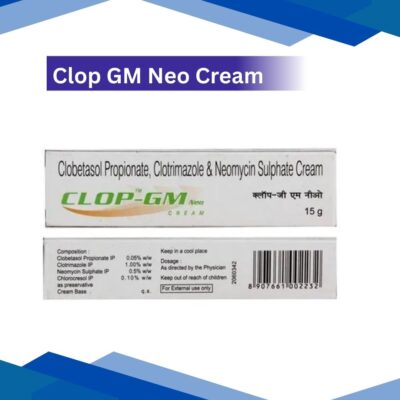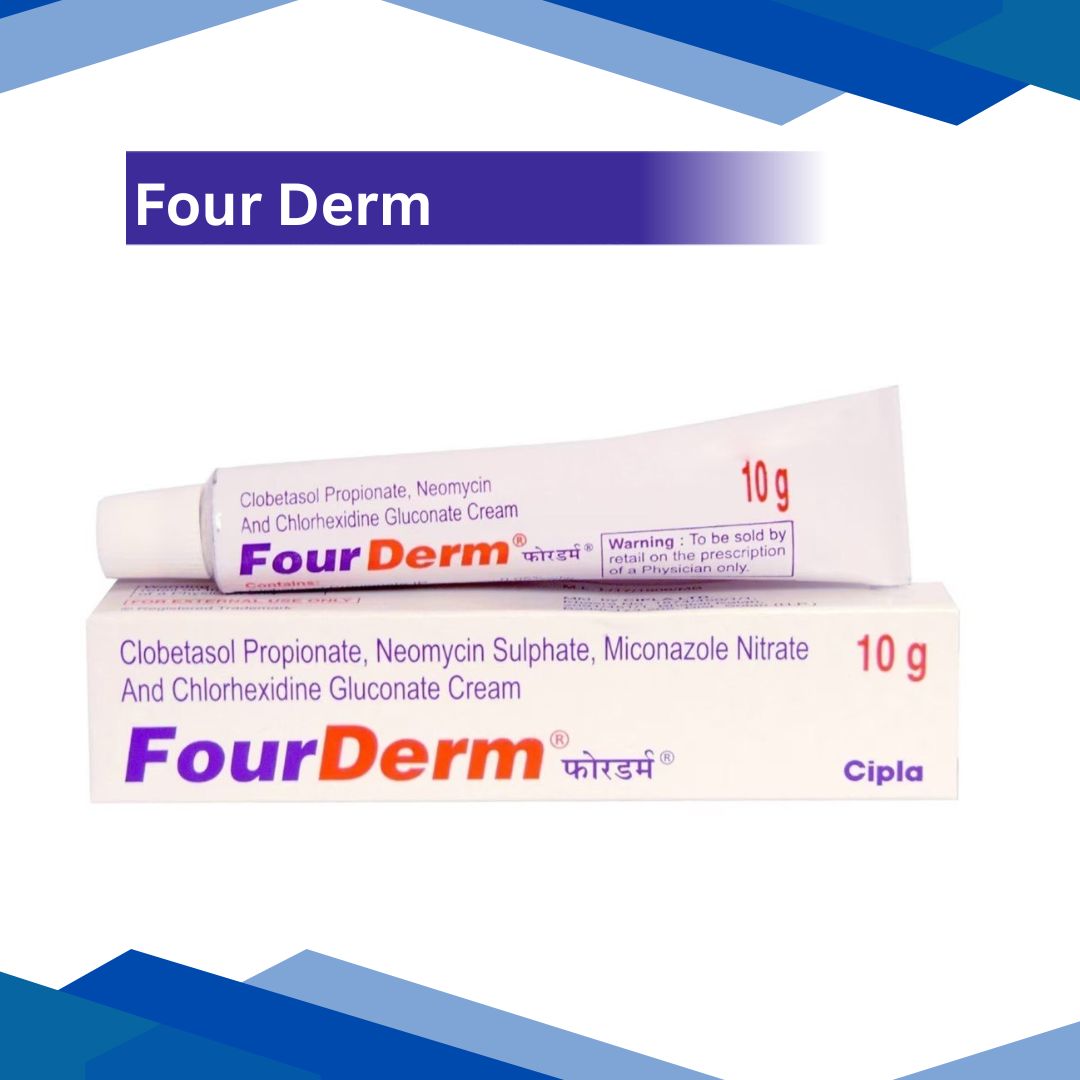
Fourderm Cream
No Prescription yet? Don’t worry! Click Here to Get Online Consultation
FOURDERM CREAM is used to manage corticosteroid -responsive dermatoses (skin conditions that occurs due to corticosteroid medications), eczema (skin inflammation), and psoriasis (itchy dry skin) in affected individuals. For more details Kindly click on Medicine Salts below:
Chlorhexidine Gluconate
Chlorhexidine Gluconate 0.2% w/v Oral Rinse
Chlorhexidine Gluconate 0.2% w/v is a very strong, broad-spectrum antiseptic and anti-plaque oral liquid. It is usually prescribed (or strongly recommended) to help with gingivitis, like swollen or bleeding gums, and to keep dental plaque from building up too fast. It also helps painful mouth ulcers calm down quicker, and it supports oral cleanliness when brushing is limited because of injury or after surgical recovery.
Therapeutic Class: Antiseptics / Anti-infectives
Active Concentration: Chlorhexidine Gluconate IP 0.2% w/v
Form: Liquid
Liquid Oral Rinse / Mouthwash
Prescription Status: Over-The-Counter (OTC) / often recommended directly by dental surgeons
Primary Uses & Clinical Benefits
1. Gingivitis & Gum Inflammation Control
Chlorhexidine Gluconate works to reduce the harmful microbe communities that drive red, puffy, bleeding gums. When used regularly, it can help reverse early gum issues and support healthier tissue structure.
2. Anti-plaque Defense (when brushing is hard)
When tooth brushing hurts or is restricted clinically (like after wisdom tooth extraction or periodontal procedures), this rinse can act like a chemical guard. It sticks to oral surfaces and helps stop the formation of tacky bacterial plaque films.
3. Quicker Mouth Ulcer Recovery
The solution cleans aphthous ulcers (canker sores) and helps with localized oral infections by reducing the chance of secondary bacterial invasion. This supports the natural mucosal tissue repair process.
Mechanism of Action: How It Works
Chlorhexidine Gluconate is a cationic (positively charged) molecule. It binds tightly to negatively charged cell walls of bacteria, fungi, and certain viruses found in the mouth. This disrupts the cell membrane, so key cellular contents leak out, and the pathogens are effectively killed.
One key aspect is its substantivity—it adheres to enamel, gums, and oral tissues and then releases antibacterial activity gradually for up to about 12 hours, providing longer lasting protection.
Directions for Use & Daily Protocol
To get the full effect and reduce the chance of neutralizing the active ingredient, follow this order carefully:
1. Brush and Floss First:
Prerequisite Step.
Brush and floss thoroughly. Rinse your mouth to remove every bit of toothpaste residue with plain water completely, before you open the medication.
2. Measure the Exact Dose:
10 ml to 15 ml.
Pour exactly 10 ml to 15 ml (roughly one tablespoon) of the undiluted Chlorhexidine Gluconate liquid into the measuring cap provided. Do not dilute it with water and do not mix it.
3. Swish and Hold:
60 seconds.
Place the solution in your mouth and swish firmly around teeth and gums for a full 60 seconds. Do not gargle it in the throat, and do not swallow the liquid.
4. Spit Out and Wait:
30-minute hold.
Spit the liquid out fully. Important: do not rinse your mouth with water, do not brush your teeth, and do not eat, drink, or smoke for at least 30 minutes after using it.
Side Effects & Adverse Actions
Chlorhexidine Gluconate is effective, but longer or improper use can lead to certain localized side effects. Keep an eye on them.
Common Oral Side Effects
- Surface staining: temporary brown or yellowish staining on the teeth, tongue surface, dental restorations, or dentures
- Taste alteration: a brief bitter taste, or a short change in how food and drinks taste right after use
- Increased tartar: more calculus buildup, meaning hardened plaque deposits, especially with extended timelines
Serious Symptoms (Stop use and seek medical help right away)
- Sudden swelling of the salivary glands, like the parotid glands, under the jaw or near the ears
- Severe allergic reactions, including skin rash, swelling of face, lips, tongue, or throat, with immediate breathing trouble
- Painful peeling or raw irritation inside cheeks and on the oral mucosa
Safety Profiles & Critical Warnings
Patient Category | Clinical Status | Medical Directives & Rationale
Pregnancy: Safe
Generally considered safe when your dentist explicitly approves it. Systemic absorption through oral tissues is minimal.
Breastfeeding: Safe
Compatible with lactation because it does not enter breast milk in clinically meaningful amounts that would impact a nursing infant.
Pediatric Use
⚠️ High Caution
Not recommended for children below 6 years unless a pediatric dentist directs it, due to the higher chance of accidental swallowing.
Tooth Fillings
⚠️ Notice
May cause permanent discoloration on front-tooth composite or synthetic restorations if their surfaces are rough or already degraded.
Frequently Asked Questions (FAQs)
Q. Why can’t I rinse my mouth with water immediately after using Chlorhexidine?
Because rinsing with water removes the medicine before it can properly latch to your teeth and gums, and that reduces the effectiveness dramatically. Also, rinsing right after use can make the bitter aftertaste worse.
Q. Why does toothpaste mess with Chlorhexidine Gluconate oral rinse?
Many toothpastes include Sodium Lauryl Sulfate (SLS), which is a foaming agent. SLS is negatively charged and it chemically binds to the positively charged Chlorhexidine molecule, neutralizing its germ-killing activity. Always rinse well with water to clear all toothpaste traces before using the oral rinse, or schedule the mouthwash for a completely different time of day.
Q. How can I reduce the brown stains from this mouthwash?
Those brown surface stains are not permanent structural damage. They show up because the medicine binds to dietary tannins found in foods. You can reduce staining by brushing and flossing daily, and avoiding dark beverages like tea, coffee, or red wine for at least an hour after use. If any stain remains after your treatment period ends, a dental professional can remove it with routine scaling and polishing.
Q. Can I use Chlorhexidine Gluconate as a daily cosmetic rinse for bad breath?
No. It should not replace a regular daily mouthwash. Because it is a strong antimicrobial, constant use beyond about 2 to 4 weeks may disturb the natural balance of your oral microbiome, increase tartar build-up, and change taste perception. Use it only for the short-term duration your dentist recommends.
Clobetasol propionate
Clobetasol Propionate 0.05% Cream/Ointment
Clobetasol Propionate is considered one of the strongest medications against various severe skin problems. This drug, by acting upon these substances in the skin, helps in decreasing the swelling, redness, and itching that happen in skin diseases. This is classified under "super-potent" class I steroid and is therefore reserved for very severe dermatoses that do not respond to less potent steroids.
Indications
This medicine can basically be prescribed for inflammatory and pruritic conditions responsive to corticosteroids, which are represented by:
- Psoriasis: Especially plaque psoriasis localized on the scalp, elbows, and knees.
- Eczema: Incapacitating atopic dermatitis unresponsive to other types of treatment.
- Lichen Planus: An inflammatory disease of the skin and mucous membranes
- Discoid Lupus Erythematosus
Key features
Rapid Action: Quick relief from severe itching and localized inflammation.
Targeted Therapy: High skin permeability ensures deep immunization of the affected dermal tissues by the active material.
Multiple Formulations: Available as a cream, ointment, gel, and scalp solution depending on skin typology and what part of the body might be affected.
Application Directions
Pre-treatment: Wash and dry hands and the area on the skin where the medication is to be applied.
Gentle Layering: Use pea-sized amounts, and gently rub the cream, drug, or gel into the area being treated, making sure it disappears into the skin.
Use Frequency: Use frequency is usually 1-2 times daily, but no more than what is recommended by your dermatologist, in terms of dosing or frequency.
Cleanliness of the Hands: Rinse hands, unless hands are to be treated on.
Major Precautions
Use Short-term: Owing to the high potency, prolonging usage should not go beyond two consecutive weeks.
Cautiousness in Facial Areas: The owned should be directed merely to the areas of application; however, if this has to end up being the face, an alternative medicine is otherwise recommended for such cases on strict grounds.
Occlusion: Unless otherwise advised by a physician, the patient shall make sure that the treated skin is not occluded by bandages or air-tight dressings, which increase systemic absorption of the medicine.
No Data on Adrenal Insufficiency: Long-term use of clobetasol propionate over a significant body area has the potential to increase the systemic absorption of the drug and possibly affect the hypothalamic-pituitary-adrenal axis.
Adverse Effects
Common side effects of Clobetasol Propionate 0.05%/gm are:
Irritation or stinging after application.
Skin thinning or infrequently striae.
Folliculitis.
Spider telangiectasia veins.indicators
FAQs (Frequently Asked Questions)
Q: Is Clobetasol Propionate a fungal or antibiotic cream?
Clobetasol is a steroid type. It does not treat infections mediated by bacteria, fungi, or viruses, and can enhance them if used on the infected area alone.
Q: Is it okay to use Clobetasol for baby diaper rash?
No, Clobetasol is too strong for the delicate infant skin and should never be used in diaper dermatitis cases as mentioned above. The inclusion of steroids in the diaper region increases the risk of systemic absorption from the 'occlusive' property of a diaper.
Q: Should I start using it if I missed a dose?
When you remember, use it; otherwise, wait and continue with your regular dosing schedule. Do not "double up" to make up for the missed dose.
Q: How long should I expect to wait before I see some form of improvement?
Most patients start to feel a decrease in itching and redness within the first couple of days of applying it. Should you be unable to see any improvement after two weeks, talk with an experienced person from the dermatology society.
Q: Would pregnant women use it?
Topical steroids are used during pregnancy exclusively when the potential benefit of treating the mother far exceeds the theoretical risk to the fetus. It is always wise to have a discussion with your OB-GYN before you start treatment.
Miconazole Nitrate
Miconazole is an antifungal agent from the azole class. Therefore, miconazole nitrate shows broad activity against many fungal species. The primary use is against dermatophytes, which are epidermal fungal infections. The mechanism of action of miconazole is similar to other azole antifungals. It works by inhibiting ergosterol synthesis in the fungal cell membrane. Ergosterol is an essential lipid component of fungal membranes, and without it, the fungus cannot grow, leading to elimination of the infection.
Major Indications:
Athlete’s Foot (Tinea Pedis): Causes itching and cracking between the toes.
Jock Itch (Tinea Cruris): Causes itching in the groin and underwear-covered areas.
Ringworm (Tinea Corporis): Appears as red, circular, itchy skin lesions.
Cutaneous Candidiasis: Treats yeast infections in skin folds.
Pityriasis Versicolor (Tinea Versicolor): Helps restore normal skin pigmentation affected by fungal infection.
Whenever a patient is advised to use miconazole nitrate or any formulation containing miconazole, it is generally recommended that the patient either use it under a prescription or after consultation with a doctor.
Clean & Dry: Clean the affected area thoroughly with a mild, non-perfumed soap and ensure it is completely dry. Moist environments promote fungal growth, so keeping the area dry is essential.
Cover Up: Apply a small amount of cream on the infected area and surrounding skin. Gently massage until absorbed.
How Often to Use: Usually applied twice daily (morning and night), but follow dermatologist instructions.
Persistence is Good: Even after symptoms improve, continue treatment for the full prescribed duration to prevent recurrence.
Expert Safety Tips
Tip: In athlete’s foot, pay special attention to toes and skin folds. Wear well-ventilated footwear and change socks daily.
External Use Only: Do not apply to eyes, nose, or mouth.
Caution: For vaginal yeast infections, miconazole may weaken latex condoms and diaphragms.
Avoid Band-Aids: Do not cover with plastic or waterproof dressings unless advised by a doctor, as this may worsen irritation.
Side Effects
Miconazole is generally well tolerated, but may cause:
Mild skin irritation or redness
Slight stinging or burning sensation
Itching or hives (rare)
⚠️ If you experience severe blistering, oozing, or swelling, stop using the medicine and seek medical advice immediately.
Frequently Asked Questions (FAQs)
Q: How long does it take for Miconazole to work?
A: Relief from itching and burning usually occurs within 24–48 hours, but complete fungal clearance may take 2–4 weeks depending on severity.
Q: Can I use Miconazole Nitrate on my face?
A: Only use on the face if prescribed by a doctor, as facial skin is sensitive. Avoid contact with eyes and mouth.
Q: Is Miconazole safe for children?
A: Yes, it is generally safe for children over 2 years for topical fungal infections. For infants, consult a pediatrician first.
Q: Can I use make-up or sunscreen over it?
A: Yes, but allow 15–20 minutes for full absorption before applying other products.
Q: What if I forget to apply it?
A: Apply it as soon as remembered. If it is close to the next dose, skip the missed application and continue the regular schedule.
Neomycin
Neomycin Topical Sulfate (USP/IP)
Neomycin is a potent aminoglycoside antibiotic used to treat and prevent bacterial skin infections. It works by inhibiting bacterial protein synthesis, thereby stopping the growth and multiplication of bacteria. It is effective mainly against gram-negative and some gram-positive organisms, and is commonly included in “triple antibiotic” ointments for minor skin care.
Therapeutic Uses
Infected Minor Wounds: Prevents infection in cuts and abrasions
Minor Burns: Protects damaged skin from secondary bacterial infection
Secondary Skin Infections: Used in eczema or impetigo when infected
Pre-Surgical Prep: Helps in surface sterilization before minor procedures
Salient Features
Localized Action: Works directly at the site of infection
Rapid Effect: Begins acting on surface bacteria quickly
Multiple Forms: Available as creams, ointments, and powders
Usage
Preparation: Wash hands and clean area with soap and water
Application: Apply a thin layer to affected area
Frequency: Use 1–3 times daily as advised
Protection: Cover with a sterile bandage if required
Unwanted Side Effects and Safety
Mild redness or irritation
Itching or stinging sensation
Allergic Contact Dermatitis: rash or hives may occur
Warning: Avoid use on large open wounds due to risk of systemic absorption and rare ototoxicity or nephrotoxicity
Precautions and Warnings
Duration: Do not use beyond 7 days without medical advice
Sensitive Areas: Avoid use in eyes or ear canal
Pregnancy: Use under medical supervision
Pediatric Use: Generally safe for children above 2 years with guidance
Frequently Asked Questions
Q: Can it treat acne?
Not ideal; better options include benzoyl peroxide or clindamycin
Q: What if swallowed accidentally?
Usually causes mild stomach irritation; seek help if large amount ingested
Q: Why is my skin red and itchy?
Possible allergic reaction; discontinue use and consult a doctor
Q: Can it treat fungal infections?
No, it works only against bacterial infections
Q: Can it be used under a dressing?
Yes, but consult a doctor if the wound is severe or highly inflamed
At Gem Pharmacy, we make every effort to provide accurate, expert-written, and thoroughly reviewed information related to medicines. However, this information should not be considered a substitute for professional medical advice, diagnosis, or treatment from a qualified doctor.
The purpose of this information is to educate users and improve communication between patients and healthcare professionals. It should not be used to diagnose or treat any condition.
Always consult a certified healthcare professional before taking any medication.


Related products