
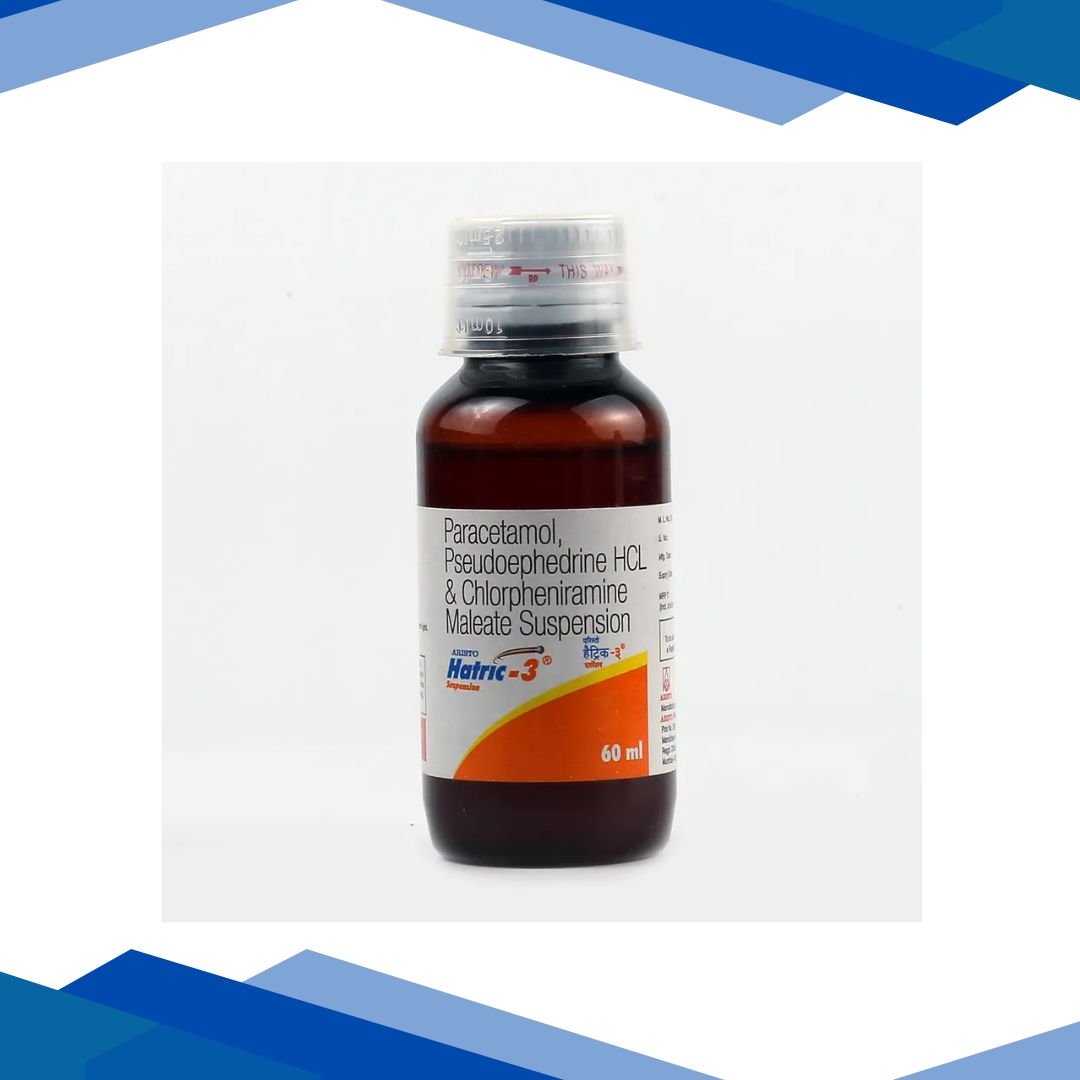
Hatric 3 Suspension 60ml
No Prescription yet? Don’t worry! Click Here to Get Online Consultation
Hatric 3 Suspension is commonly prescribed in children to treat symptoms such as runny nose, cough, sneezing, watery eyes, sore throat, body ache, and fever. These symptoms are usually associated with common cold, hay fever (allergic rhinitis), and other respiratory tract conditions.
Chlorpheniramine
Paracetamol
Paracetamol 500mg Tablet
Paracetamol is probably the most prescribed and widely used medicine in the world. It is commonly administered to relieve mild-to-moderate pain and to reduce fever. It is well known for its dual action as an analgesic and antipyretic. It is considered a first-line treatment for common ailments such as headaches and fever, and is generally regarded as safe when used within recommended limits.
Key Therapeutic Uses
Fever: Helps in the rapid reduction of high body temperature during viral infections or common flu.
Headache & Migraine: Effective for dull, throbbing pain associated with tension-type headaches.
Muscle & Joint Pains: Relieves minor backache, period cramps, and toothache.
Post-Vaccination Recovery: Used to manage mild soreness or low-grade fever after vaccination.
Usage Guidelines
Standard Adult Dose: Typically 500mg to 1000mg every 4 to 6 hours as needed.
Maximum Limit: Do not exceed 4000mg (4 grams) in a 24-hour period, as this may cause serious liver damage.
Administration: Swallow the tablet whole with water; it can be taken with or without food.
Children: Dosage must be weight-based. Use pediatric formulations like syrups or drops as advised.
Safety & Precautions
Combination Medicines Warning: Many cold and flu products contain paracetamol (acetaminophen). Avoid double dosing.
Alcohol: Limit alcohol intake, as combining with paracetamol increases the risk of liver toxicity.
Liver & Kidney Health: Consult a doctor if you have liver or kidney disorders.
Allergic Reactions: Rarely may cause rash, swelling, dizziness, or breathing difficulty. Seek immediate medical attention if these occur.
Adverse Effects
Paracetamol is usually well tolerated, but rarely may cause:
- Mild nausea
- Skin rash or itching
- Very rare blood disorders (leukopenia, thrombocytopenia)
⚠️ Warning: Yellowing of eyes or extreme fatigue may indicate serious liver issues—seek urgent care.
Frequently Asked Questions (FAQs)
Q: How long does Paracetamol take to work?
A: Relief usually begins within 30 minutes to 1 hour. Fever reduction may take slightly longer.
Q: Can I take paracetamol during pregnancy?
A: It is generally considered safe when used at the lowest effective dose, but always consult your OB-GYN before use.
Q: Is paracetamol better than ibuprofen?
A: It depends on the condition. Paracetamol is ideal for pain and fever, while ibuprofen may be better for inflammation.
Q: Can I take Paracetamol on an empty stomach?
A: Yes, it is gentle on the stomach and can be taken without food.
Q: What happens if I miss a dose?
A: If taken as needed, take it when remembered, ensuring at least a 4-hour gap and not exceeding the daily maximum dose.
Pseudoephedrine
Pseudoephedrine Hydrochlorid Tablets
Pseudoephedrine is a potent systemic decongestant useful in the provision of temporary relief of nasal and sinus congestion caused by the common cold, hay fever, or other upper respiratory allergies. Unlike the topical nasal sprays, Pseudoephedrine acts internally through the bloodstream to bring about constriction of the swollen blood vessels present within the nasal passage-turbinates and alleviate from respiration block and expeditious sinus drainage.
Therapeutic indications
Nasal congestion: It imparts relief of that stuffy feeling in viral infections.
Sinus pressure: It takes off the painful pressure normally present in the frontal and maxillary sinuses.
Eustachian tube congestion: It seems so helpful in the cases of ear fullness or "plugged ears" ascribed to allergic reactions or colds.
Vasomotor rhinitis: The drug helps manage chronic nonallergic nasal inflammation.
How it works
Pseudoephedrine is a sympathomimetic agent that acts directly on the alpha-adrenergic receptors present within the mucosa of the respiratory tract. This action leads to vasoconstriction-contraction of blood vessels, which subsequently results in lessened swelling of tissues and nasal congestion and hence opens up the airways.
Dosage & Administration
A regular adult dose is usually 60mg every 4 to 6 hours or 120mg (extended-release) every 12 hours.
Maximum allowed: Do not exceed 240mg in 24 hours.
One must swallow the entire tablet with water and not crush or chew the extended-release (ER/SR) formulations that may lead to quick release of the drug into the system.
May be taken with or without food.
Avoid taking close to bedtime as potential restlessness might be caused.
Common Side Effects
Most side effects are manageable and decrease as the medicine is metabolized:
Increased heart rate or palpitations
Nervousness, restlessness, or tremors
Insomnia (difficulty falling asleep)
Dry mouth or throat
Mild dizziness or headache
Safety Precautions & Contraindications
Hypertension: Individuals with high blood pressure should consult a doctor before use, as Pseudoephedrine can further increase blood pressure.
MAO Inhibitors: Do not use if you are currently taking or have taken a Monoamine Oxidase Inhibitor (MAOI) in the last 14 days.
Pre-existing Conditions: Inform your physician if you have hyperthyroidism, glaucoma, diabetes, or prostate enlargement.
Pregnancy/Lactation: Consult a healthcare professional before use. It may reduce breast milk production in some individuals.
Frequently Asked Questions (FAQs)
Q: Is Pseudoephedrine the same as Phenylephrine?
No. While both are decongestants, clinical studies often suggest that oral Pseudoephedrine is more effective at reaching deep sinus tissues compared to Phenylephrine. However, Pseudoephedrine is subject to stricter purchase regulations in many countries.
Q: Why do I feel "jittery" after taking this medication?
Pseudoephedrine is a stimulant. It mimics the effects of adrenaline in the body, which can lead to increased alertness, a faster heartbeat, or a feeling of nervousness. If these symptoms become severe, discontinue use.
Q: Can I take Pseudoephedrine with alcohol?
It is not recommended. Alcohol can increase the risk of dizziness and may interact with the stimulant effects of the drug, leading to unpredictable heart rate changes.
Q: How long does it take to start working?
Oral tablets typically begin to provide relief within 30 to 60 minutes, with peak effects occurring around 2 hours after ingestion.
Q: Is Pseudoephedrine habit-forming?
When used as directed for short-term cold symptoms (usually not more than 7 days), it is not considered addictive. However, it should never be used for prolonged periods without medical supervision.
Storage
Store in a cool, dry place ($20\text{°C}$ to $25\text{°C}$) away from moisture and direct sunlight. Keep the medication in its original blister pack until use to prevent degradation.
Disclaimer: This content is for informational purposes only and does not constitute medical advice. Pseudoephedrine is a regulated substance; always follow local laws and consult a registered medical practitioner before use.
At Gem Pharmacy, we make every effort to provide accurate, expert-written, and thoroughly reviewed information related to medicines. However, this information should not be considered a substitute for professional medical advice, diagnosis, or treatment from a qualified doctor.
The purpose of this information is to educate users and improve communication between patients and healthcare professionals. It should not be used to diagnose or treat any condition.
Always consult a certified healthcare professional before taking any medication.


Related products