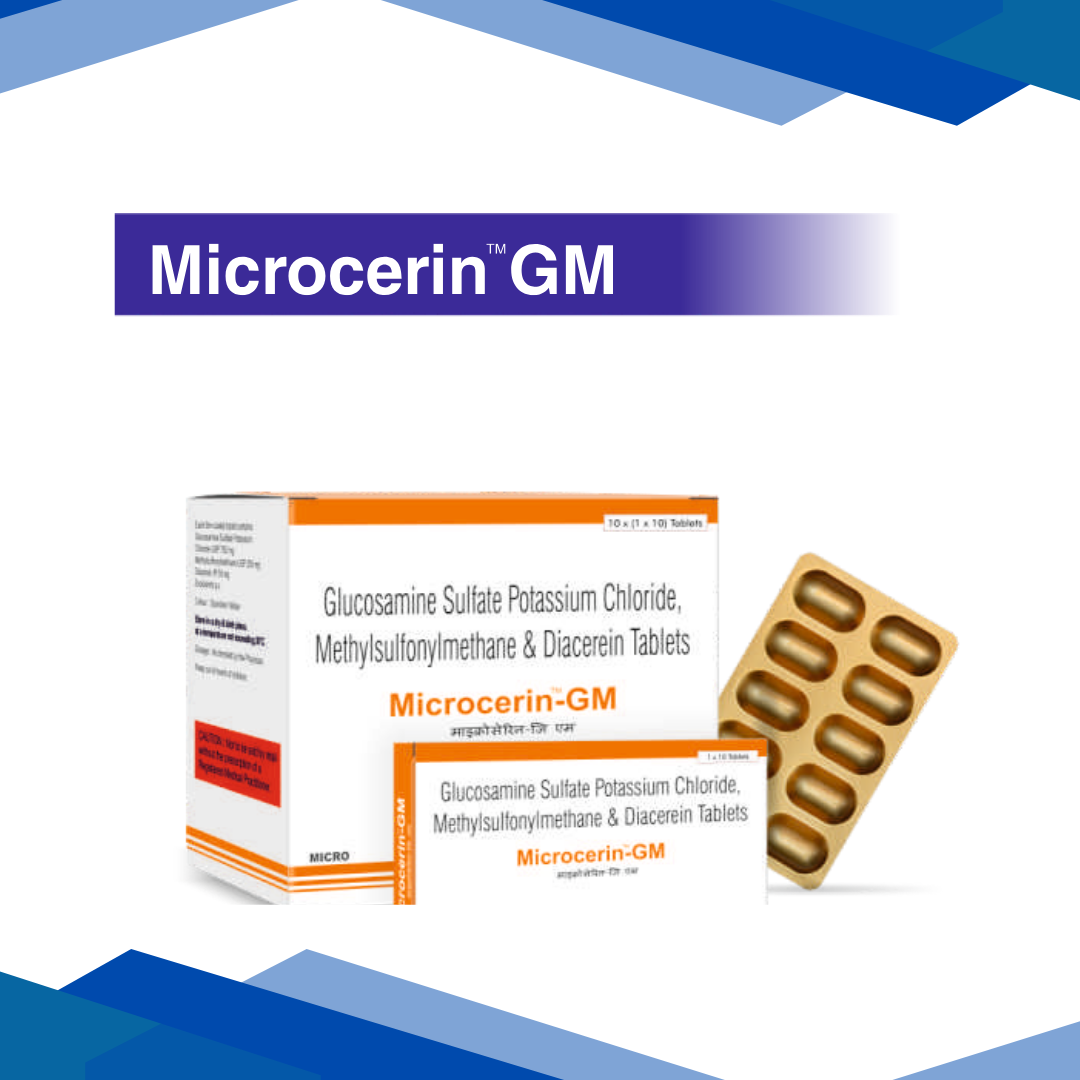
Microcerin GM
No Prescription yet? Don’t worry! Click Here to Get Online Consultation
Diacerein, glucosamine sulphate potassium chloride, and methylsulfonylmethane are used together to manage osteoarthritis by reducing joint pain, inflammation, and improving joint function. For more details kindly click on Medicine Salts below:
Diacerein
Diacerein-Long-term Relief for Osteoarthritis and Joint Health
Diacerein is a specialized ana bitter-tasting medicinewith slow action, belonging to the anthraquinone class. Diacerein is classified as a SYSADOA (S ymptomatic S low-acting D rug in Osteoarthritis) unlike various traditional analgesics that only provide temporary relief. It is primarily used in the management of symptoms for long-life joint wear-and-tear, particularly of the knee and hip, with the goal of addressing the underlying inflammatory processes.
Major Therapeutic Benefits
Chondroprotective Effects: This medication helps in preserving some cartilage that exists between the joints, creating degeneration.
Variety of Action Negates Inflammation? Interleukin-1? More directly, interdicts the activity of Interleukin-1, which is considered the principal inflammatory protein and the most significant corrosive in the destruction of cartilages in osteoarthritis.
Pain Elevation: Slowly diminishes chronic pain associated with movement of the joint while increasing the enrolling gatherings.
Nsaids Dependence Reduction: The regular use of diacerein can help reduce the need for conventional analgesics like Ibuprofen or Diclofenac, which are known for their severe side effects on the stomach.
Mode of Action:
Diacerein acts via an entirely novel mechanism of action on inflammation. It effectively blocks two transcription factors important in inflammatory processes, IL-1α und β and IL-1 converting enzyme. Interactions with the cell membrane stimulate the release of IL-1α or β from the cell. This interleukin directly stimulates the enzyme that degrades cartilage, matrix metalloproteinase (MMP). Therefore, the treatment affects not only the removal of IL-1 production and all the other metabolites that create this event, but also IL-1 downstream metabolic pathways. This whole mechanism lowers the inflammation in the articular environment, helping in maintaining better cushioning and joint movement with time through the proposed therapy of Diacerein.
Use under expert´s advice:
Be patient: Diacerein is a slow-acting drug. One might not feel a great difference in the first 2-4 weeks, with maximum benefit preferably after 2-3 months of consistent use.
Always consume with main meal: Consume Diacerein with a meal without fail. This will enhance the absorption of the medicine and reduce the chances of an upset stomach significantly.
Change in Color of Urine: Do not be alarmed to discover the reddish or intensely yellow color of the urine. This is due to the medicine's chemicals and arises as an innocuous offshoot.
FAQs about Diacerein
Q: Is Diacerein a painkiller?
A: Diacerein is not exactly a painkiller, but it does relieve pain over some time, unlike immediately acting Paracetamol. Its proactive approach in the treatment is directed at the source of pain rather than merely masking the symptoms.
Q: Can I take Diacerein with liver problems?
A: You should tell your doctor if you have ongoing liver disease or a past of liver disease. Diacerein is generally avoided for serious liver disease in patients and old persons over 70 years of age who might have extra complications.
Q: Does Diacerein cause diarrhea?
A: The frequent side effect of the medicine is diarrhea, especially in the initial weeks of treatment. Following the physicians' instructions, an initial lower dose can aid the body to accommodate the drug. Severe diarrhea following Diacerein intake demands immediate consultation with the doctor.
Q: Can I discontinue the medicine as soon as the pain in my joints disappears?
A: You should complete the full course as prescribed by your orthopedic. Osteoarthritis is a chronic illness; hence, discontinuing the drug may lead to the return of inflammation and pain.
Q: Is it safe for pregnant and nursing women?
A: There is no data on the safety of diacerein in pregnancy, or breastfeeding, and is generally contraindicated under such circumstances. It is important to consult with an OB-GYN before starting any new medication during such stages.
Glucosamine
Glucosamine: Essential Support for Joint Mobility & Cartilage Health
Glucosamine is a naturally occurring compound found in human cartilage—the tough tissue that cushions joints. As we age or experience physical strain, the natural levels of glucosamine in the body can deplete, leading to joint discomfort and reduced flexibility. Available as a high-quality supplement (often as Glucosamine Sulfate or Glucosamine Hydrochloride), it is a cornerstone of proactive joint care.
Primary Health Benefits
Cartilage Regeneration: Acts as a building block for the molecules that form the structural framework of your joints.
Osteoarthritis Management: Widely used to reduce pain and improve physical function in individuals with mild-to-moderate knee or hip osteoarthritis.
Anti-Inflammatory Properties: Helps dampen the inflammatory response within the joint capsule, reducing morning stiffness.
Enhanced Lubrication: Supports the production of synovial fluid, the "oil" that keeps your joints moving smoothly.
How Glucosamine Works
Glucosamine is a precursor for glycosaminoglycans, which are the major components of joint cartilage. By supplementing with Glucosamine, you provide your body with the raw materials needed to repair wear and tear. Over time, this helps maintain the thickness and elasticity of the cartilage, preventing "bone-on-bone" friction.
Expert Usage & Lifestyle Tips
The "Slow-Acting" Effect: Unlike instant painkillers, Glucosamine builds up in your system. It typically takes 4 to 8 weeks of consistent daily use to notice significant improvements in mobility.
Optimal Absorption: It is best taken with meals to minimize any potential digestive discomfort.
Synergistic Pairings: Many users find better results when combining Glucosamine with Chondroitin or MSM (Methylsulfonylmethane) for comprehensive joint support.
Stay Active: Low-impact exercises like swimming or cycling complement the effects of Glucosamine by strengthening the muscles surrounding the joints.
Glucosamine: Frequently Asked Questions (FAQs)
Q: Is Glucosamine safe for people with shellfish allergies?
A: Most Glucosamine supplements are derived from the shells of shellfish (shrimp, lobster, or crab). If you have a severe shellfish allergy, look for "Vegetarian Glucosamine" or "Shellfish-Free" labels, which are derived from fermented corn or fungi.
Q: Can Glucosamine cure arthritis?
A: There is currently no known cure for arthritis. However, Glucosamine is highly effective at managing symptoms, slowing down joint degradation, and improving the overall quality of life for many patients.
Q: Does Glucosamine affect blood sugar levels?
A: While Glucosamine is a type of amino sugar, most clinical studies show it does not significantly impact blood glucose in healthy individuals. However, if you have Type 2 diabetes or insulin resistance, it is wise to monitor your levels closely when starting the supplement.
Q: What is the recommended daily dosage?
A: The standard clinical dose used in most successful trials is 1500 mg per day. This can be taken as a single dose or split into three 500 mg doses throughout the day.
Q: Can I take Glucosamine if I am on blood thinners?
A: There is some evidence that Glucosamine may increase the effects of blood-thinning medications like Warfarin. If you are on anticoagulants, consult your physician before adding Glucosamine to your routine.
Supplement Facts & Quick Guide
Feature
Details
Best For
Joint stiffness, Knee pain, Sports recovery
Common Forms
Tablets, Capsules, Effervescent powder
Source
Marine (Shellfish) or Vegan (Fermentation)
Interactions
Warfarin (Blood thinners), certain chemotherapy drugs
Manufacturer & Storage Information
Storage: Store in a cool, dry place away from direct sunlight. Keep the container tightly closed to prevent moisture absorption.
Safety: Keep out of reach of children. Not intended for use by pregnant or nursing women unless specifically advised by a doctor
Methylsulfonyl Methane
Methylsulfonylmethane (MSM) Supplement
Methylsulfonylmethane (MSM) is a naturally occurring sulfur compound that supports the integrity of connective tissues. Often referred to as the “beauty mineral of nature,” it is widely used for joint pain relief, muscle recovery, and improving skin and hair health.
Role of MSM
Sulfur is the third most abundant mineral in the human body. MSM provides a bioavailable source of sulfur, essential for forming collagen (for skin and joints) and keratin (for hair and nails).
Top Medicinal Data
Joint Health and Mobility: Helps reduce inflammation and stiffness, especially in osteoarthritis.
Muscle Recovery: Reduces oxidative stress and post-exercise soreness, aiding faster recovery.
Skin, Hair & Nails: Supports protein structures, improving skin elasticity and hair strength.
Anti-Inflammatory Properties: Works at the cellular level to reduce inflammatory chemical mediators.
How to Take
Dosage: Typically 1,000 mg to 3,000 mg daily, divided into doses. In some cases, up to 6,000 mg may be prescribed.
Timing: Best taken with food to improve absorption and reduce stomach discomfort.
Consistency: Effects are cumulative—noticeable benefits may take 2–4 weeks.
Safety Checklist & Precautions
Start Low: If experiencing bloating, begin with a lower dose and gradually increase.
Pregnancy & Breastfeeding: Limited data—consult a doctor before use.
Blood Thinners: Use caution if taking Warfarin, Aspirin, or other anticoagulants, as MSM may slightly affect blood clotting.
Allergies: Rare, but discontinue if rash or itching occurs.
Potential Adverse Reactions
Generally safe (GRAS), but some may experience:
Mild nausea or bloating
Occasional headaches
Fatigue (especially on an empty stomach)
Insomnia (if taken late in the evening)
Frequently Asked Questions (FAQs)
Q: Is MSM the same as DMSO?
A: No. While chemically related, MSM is a stable, odorless form that is easier to use as a supplement and does not cause the strong odor associated with DMSO.
Q: Can I take MSM with Glucosamine and Chondroitin?
A: Yes. MSM works synergistically with Glucosamine and Chondroitin, often used together for enhanced joint support.
Q: Can MSM improve hair health?
A: Indirectly, yes. As a sulfur source, it supports keratin production, strengthening hair shafts and reducing breakage.
Q: Is MSM safe for long-term use?
A: Most studies cover 3–6 months. For long-term use, consult your healthcare provider.
Q: Capsules or powder—which is better?
A: Both are effective. Capsules offer convenience, while powder is often more economical and easier to mix into drinks.
Potassium Chloride
Potassium Chloride (Oral Supplement)
Intro
Potassium Chloride is a crucial mineral supplement that is prescribed to treat or prevent low blood potassium levels, also called hypokalemia. Potassium is an essential electrolyte, it works like a vital ignition point for your body; it helps keep the heart electrical conductivity stable, it supports smooth muscle contractions, and it backs healthy nerve function too.
This can happen because of diuretics use, long term gastrointestinal problems, or dietary imbalances that gradually tip the balance. When potassium goes low, the body can react with severe muscle weakness, persistent fatigue, and potentially risky irregular heart rhythms. So this medication refills the depleted reserves, and keeps your internal systems running with steady coordination, rather than drifting out of sync.
Main Medical Uses
Hypokalemia treatment: used to correct low blood potassium levels brought on by illness, or as a side effect of other medications.
Diuretic Support: it’s often given together with those “water pills” diuretics like furosemide or hydrochlorothiazide in order to replace the potassium that gets pushed out, kinda faster than usual, by these medicines.
Prevention: Potassium Chloride is used as a preventative measure for people who are at risk of potassium depletion, especially when they cannot keep up potassium levels with food changes alone, or when diet adjustments just do not work enough.
How Potassium Chloride Works
Potassium is one of the main cations located inside your cells. It works along with sodium to keep the “electrochemical gradient” stable across cell membranes. When you take Potassium Chloride, it releases potassium ions into the bloodstream. This additional potassium helps your cells hold onto their resting potential, meaning the basic electrical charge nerves use to fire, muscles use to contract, and, most importantly, the heart uses to keep beating in a steady, rhythmic way.
Quick Reference: Usage & Administration
Take with food: Potassium Chloride can be really irritating to the stomach lining, so always take your tablet or liquid dose with a full meal or immediately after one. Also use a large glass of water, that helps reduce digestive upset.
Keep upright: After you swallow your dose, stay sitting up or standing for at least 10 minutes. This helps stop the tablet from lingering in the esophagus, and that lingering can trigger local irritation or ulceration.
Stick to a routine: Take your dose at the same time each day, for steady potassium levels.
Do not crush or chew: If you were given extended release tablets, usually labeled ER or SR, swallow them whole. Crushing , or chewing them messes up the slow-release setup and can lead to a sudden dump of the medicine into your stomach, which is dangerous.
Important safety info
Potassium levels need to stay within a tight, healthy band. Too little potassium , hypokalemia, and too much potassium, hyperkalemia, can be life-threatening.
Signs that Potassium levels are high (Stop and get help):
Unexplained muscle weakness, or a "heavy" feeling in your limbs
A slowed up, shallow, or irregular heartbeat
Tingling that keeps happening, or numbness in hands, feet, or near the mouth
Odd confusion, or feeling light headed
Common not so severe Side Effects:
Nausea, vomiting, or pain in the stomach
Mild diarrhea, or abdominal gas
Heartburn
Medical Alert: If you have severe belly pain, vomiting that will not quit, or black tarry stools, reach out to your doctor right away, since this could mean irritation or bleeding inside the digestive tract
Expert Advice and Safety Notes
Regular Blood Work: your doctor will want routine blood testing (Serum Potassium tests) to keep track of your levels. Do not miss those visits, because your dose might need frequent tweaks depending on what shows up in your results
Salt Substitute Warning: A lot of “salt free” or “low-sodium” table salt substitutes contain high levels, of Potassium Chloride. So, you should not use them without talking to your doctor first, because you might accidentally take in too much and end up triggering dangerous hyperkalemia .
Renal Health: If you have kidney disease, your body might have trouble getting rid of extra potassium. Always let your doctor know if you have any past renal impairment before starting this supplement, because the risk changes with your excretion ability.
Frequently Asked Questions (FAQs)
Q. Can I just eat more bananas instead of taking this medication?
Bananas and other potassium rich foods (like avocados, spinach, and potatoes) are great for overall wellbeing , but they usually can not provide the strong concentrated amount needed to correct a medical grade deficiency. Your doctor prescribed this supplement because your potassium levels fell below the point where dietary choices alone will fix it.
Q. Why does my medicine taste or smell strange?
Potassium usually has a naturally strong, saline metallic flavor. The liquid versions are often made more palatable with extra flavorings, but the mineral taste is hard to cover, completely. This is expected and doesnt mean the medication is spoiled.
Q. What should I do if I miss a dose?
If you miss a dose, take it as soon as you remember, but only if you have a meal ready. If your next scheduled dose is already near, you should skip the missed dose. Do not take two doses together at the same time.
Q. Is there a specific diet I should follow while taking Potassium Chloride?
Keep up a balanced diet, but pay attention to how much you use salt substitutes. Also tell your doctor about any other medicines you take, especially ACE inhibitors, ARBs (blood pressure medicines), or potassium-sparing diuretics (for example, spironolactone), because together they can push potassium levels up to unsafe amounts.
Q. How long do I need to stay on this supplement?
The length of time really depends on what caused your low potassium. If you are taking it to counteract a medicine you use every day, you might need to stay on it for the long run. If the issue was temporary, for example a stomach bug, then your doctor will usually stop it once your blood levels return to normal.
At Gem Pharmacy, we make every effort to provide accurate, expert-written, and thoroughly reviewed information related to medicines. However, this information should not be considered a substitute for professional medical advice, diagnosis, or treatment from a qualified doctor.
The purpose of this information is to educate users and improve communication between patients and healthcare professionals. It should not be used to diagnose or treat any condition.
Always consult a certified healthcare professional before taking any medication.


Related products

PEGFORD Oral Solution 200ml