
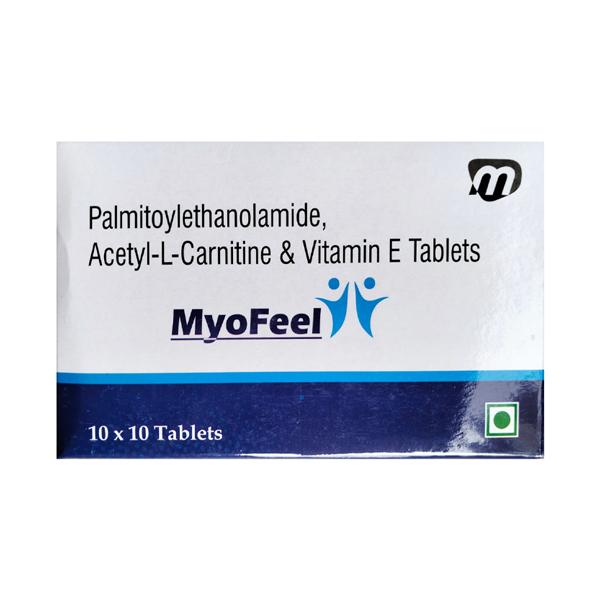
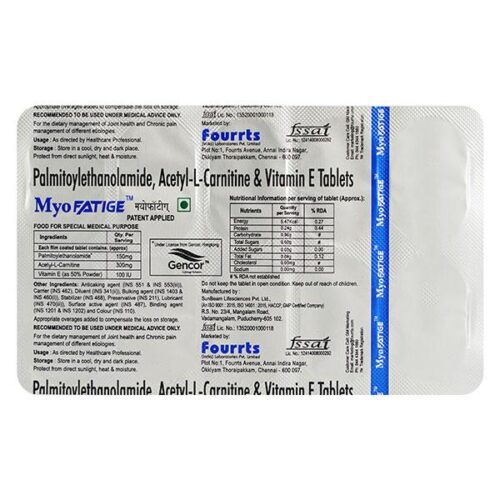
MYO FEEL Tablet 10’s
No Prescription yet? Don’t worry! Click Here to Get Online Consultation
Acetyl-L-Carnitine is a naturally occurring amino acid derivative that helps the body produce energy by transporting fatty acids into the mitochondria of cells. It is commonly used to support nerve health and may help manage conditions such as Peripheral neuropathy and Alzheimer’s disease. It is also known for its role in improving mental energy, memory, and overall brain function.
Acetyl L Carnitine
Acetyl L-Carnitine (ALCAR)
Acetyl L-Carnitine is a naturally occurring amino acid derivative that plays a vital role in energy metabolism. Unlike regular L-Carnitine, the acetyl group allows it to cross the blood-brain barrier more effectively. Its primary function is to transport long-chain fatty acids into the mitochondria, where they are oxidized to produce energy. This makes it a valuable supplement for brain support, nerve function, and overall cellular vitality.
Main Indications
Cognitive Support: Acts as a precursor to acetylcholine, a key neurotransmitter for memory, focus, and learning.
Nerve Health: Helps reduce discomfort in peripheral neuropathy, especially in diabetic patients.
Cellular Energy: Enhances mitochondrial efficiency, helping reduce physical and mental fatigue, particularly in older adults.
Antioxidant Protection: Protects brain and nerve cells from oxidative stress and age-related damage.
Mood Regulation: May support mood improvement and help manage mild to moderate depression.
Product Specifications
Classification: Nootropic / Nutritional Supplement
Type: Capsules / Tablets / Powder
Bioavailability: High (crosses the blood-brain barrier)
Common Dose: 500mg per serving
Instructions & Dosage
Dose: Standard dosage ranges from 500mg to 2000mg per day, usually divided into two or three doses. Follow your doctor’s advice.
Timing: Best taken 30 minutes before meals with water for better absorption.
Consistency: Maintain regular intake to keep stable levels in the body.
Side Effects & Safety
Generally well tolerated, but some individuals may experience:
Mild stomach upset or nausea
Dry mouth or headache
Restlessness (especially if taken late in the day)
"Fishy" odor in breath or sweat (rare, usually at high doses)
Contraindications & Warnings
Thyroid Health: Consult a doctor if you have thyroid disorders, as it may influence thyroid hormone activity.
Seizure History: Use under strict supervision if you have a history of epilepsy.
Drug Interactions: May interact with blood thinners like Warfarin or Acenocoumarol.
Pregnancy/Nursing: Use cautiously and only after medical consultation.
Frequently Asked Questions (FAQ)
Q: What is the difference between Acetyl L-Carnitine and L-Carnitine?
A: ALCAR has better brain bioavailability, while L-Carnitine is more focused on muscle metabolism and exercise performance.
Q: How long does it take to see results?
A: Some people notice improved energy and focus within days, while cognitive and nerve benefits may take 4–8 weeks.
Q: Can it be taken at night?
A: It may interfere with sleep due to increased alertness. Best to avoid taking it late in the day.
Q: Will it help with weight loss?
A: It supports fat metabolism, but is not a primary weight loss supplement. Best results occur with diet and exercise.
Q: Can I stop it suddenly?
A: It is not addictive, but symptoms like nerve discomfort may return after discontinuation if used long-term.
Palmitoylethanolamide
Tocopherol
Vitamin E (tocopherol)
The fat-soluble antioxidant known as tocopherol, or vitamin E, is incredibly important for the overall health of the body. As opposed to being just one single substance, eight different compounds make up one form of tocopherol, namely alpha-tocopherol, which is the most biologically active in humans. One of its functions is to defend the cells from being screwed up by oxidative stress thanks to the free radicals—army of unstable molecules that harm cellular structures.
In addition to keeping ourselves healthy, tocopherol also assists with immune function, skin well-being, and the prevention of abnormal blood clotting. It is used commonly in clinics as a remedy for deficiencies, as well as in cosmetics due to its extremely moisturizing and healing properties.
Salutary Effects & Uses
Antioxidant Therapy: It provides protection against the deleterious effects of environmental pollutants and metabolic byproducts on the body's tissues.
Skin & Hair Care: It is often available in serums or creams for supporting cell repair, diminishing UV damage and maintaining scalp health.
Immune System Support: It enhances one's ability to fight off harmful invaders.
Heart Health: It nourishes healthy blood vessels and prevents oxidation of low-density lipoprotein.
Recommended Usage
Tocopherol can be consumed in oral capsules, liquid drops or topical oils. For better absorption, it should ideally be taken with a meal rich in good fats.
General Cautions:
Talk to a Professional: Always consult your healthcare provider before taking high doses of vitamin E. This recommendation especially applies if you are already taking blood-thinning medication.
Storage: Keep in a cool, dry place where the oil is protected from heat and direct light, which can spoil its good quality.
FREQUENTS QUERIES
1. What are some natural sources of vitamin E?
Vitamin E is bound to be found in high concentrations in vegetable oils, that is, sunflower or wheat germ oil, nuts (almonds, hazelnuts), seeds, and green leafy vegetables, such as spinach and broccoli.
2. Can I apply Tocopherol capsules directly to my skin?
Yes, the oil from Vitamin E capsules is very frequently applied topically to soothe dry skin or light scars; be aware of the reaction of a little area of your skin before applying directly.
3. What does it do to me if I take too much Vitamin E?
While rare, overdosing on Vitamin E may lead to nausea, fatigue, increased bleeding in the body. Stick to the RDAs unless advised otherwise by the doctor.
4. Would you say that there is a difference between natural and synthetic Tocopherol?
Natural Vitamin E is always labeled as "d-alpha-tocopherol," whereas the synthetic version is "dl-alpha-tocopherol." Research has also demonstrated that the natural form is absorbed better by human beings.
At Gem Pharmacy, we make every effort to provide accurate, expert-written, and thoroughly reviewed information related to medicines. However, this information should not be considered a substitute for professional medical advice, diagnosis, or treatment from a qualified doctor.
The purpose of this information is to educate users and improve communication between patients and healthcare professionals. It should not be used to diagnose or treat any condition.
Always consult a certified healthcare professional before taking any medication.


Related products
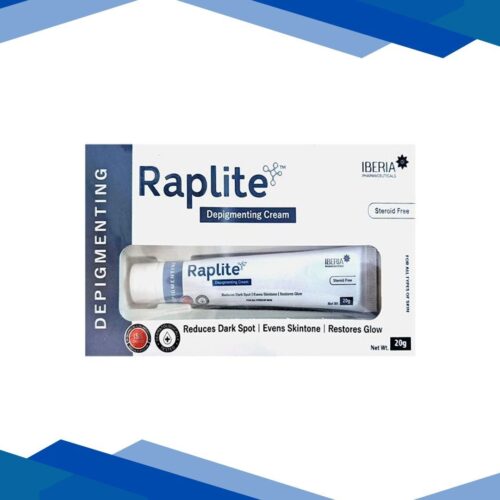
RAPLITE DEPIGMENTING Cream 20g
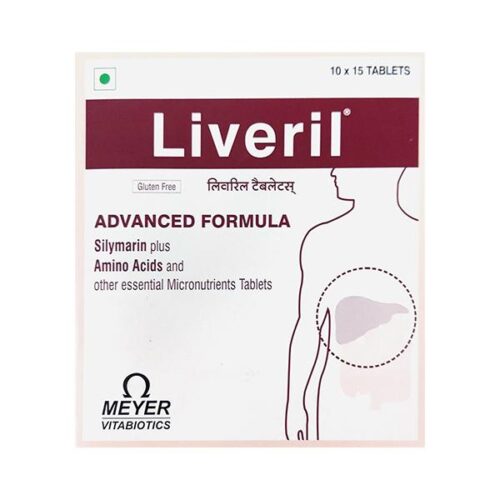
LIVERIL GLUTEN FREE Tablet 15’s