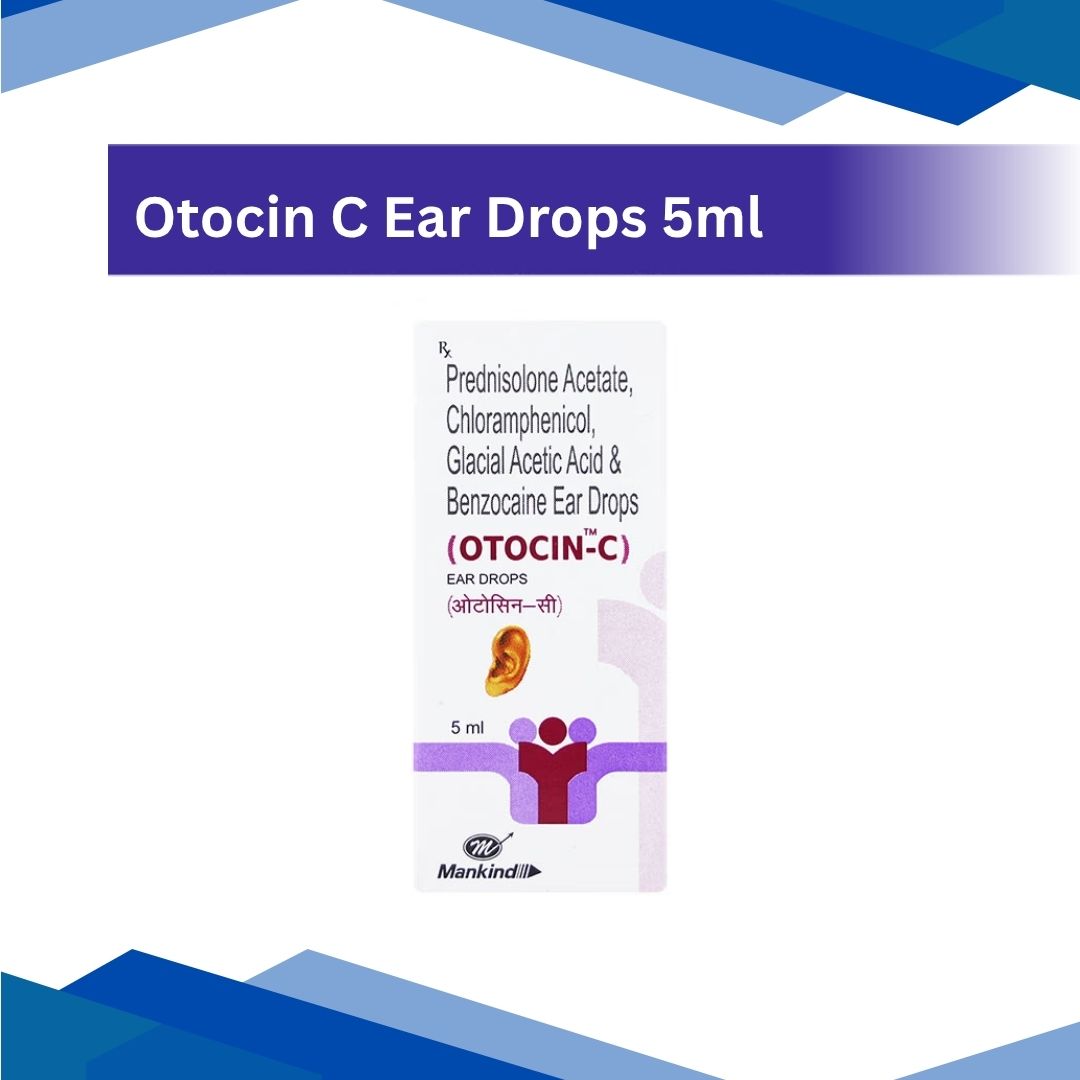
Otocin C Ear Drops 5 ml
No Prescription yet? Don’t worry! Click Here to Get Online Consultation
Otocin‑C is a combination ear drop used to treat bacterial ear infections. It works by killing bacteria, reducing inflammation, relieving pain, irritation and itching in the ear canal. For more details kindly click on Medicine Salts below:
Acetic Acid
Acetic Acid 2% Otic Solution
Acetic Acid 2% Ear Drops is a specially made non-aqueous otic (ear) solution, mainly prescribed to manage superficial infections of the external ear canal. It has strong antibacterial and antifungal action, and it works well for acute problems like Otitis Externa, often called Swimmer’s Ear.
Therapeutic Class: Otologicals (Ear Preparations)
Action Class: Topical Antiseptics / Disinfectants
Common Strengths: 2% w/v Otic Solution
Habit-Forming: No
Prescription Required: Yes (Rx)
Key Benefits & Clinical Uses
1. Cuts Down Microbial Overgrowth
Acetic Acid changes the local chemical setting inside the ear canal. It stops Gram-positive and Gram-negative bacteria along with opportunistic fungal organisms from multiplying, which often lead to outer ear tenderness.
2. Brings Back Natural pH Balance
The external auditory canal already keeps a mildly acidic state to discourage germs. When moisture builds up (after swimming or in humid weather) this protection weakens. Acetic Acid helps bring the low pH back, creating a less friendly environment for harmful microbes.
3. Eases Local, Uncomfortable Symptoms
By focusing on the source of the infection, this topical medicine helps reduce localized inflammation and can lessen clear fluid discharge, redness, persistent itching, and swelling inside the outer ear.
How It Works
Medical-grade Acetic Acid works as an organic acidifying agent. Once instilled in the external ear canal, it quickly drops the surface pH into an acidic range (about pH 3.0). Many bacteria and fungi prefer an alkaline or neutral medium to grow.
This solution interferes with microbial cell membrane integrity and blocks enzyme activity, which helps neutralize the infection without depending on traditional systemic antibiotics.
Steps for Proper Administration
To keep things safe and avoid introducing extra contamination, follow these steps:
Clean the Area:
Lightly wipe any visible crusting or discharge from the outer ear using a clean damp cloth. Do not put cotton buds inside the canal.
Warm the Bottle:
Keep the container between your palms for 1 to 2 minutes. Cold drops can trigger the caloric reflex, leading to temporary dizziness or vertigo.
Correct Positioning:
Tilt your head or lie on your side with the affected ear facing up.
Application:
Hold the dropper near the ear opening. Make sure the nozzle does not touch the ear canal, your fingers, or any other surfaces. Squeeze the prescribed dose in, usually 3 to 5 drops for adults.
Dwell Time:
Stay in that side-lying position for around 2 to 3 minutes so the liquid can move down toward the eardrum. If your ENT specialist advises, a small cotton wick soaked with the solution may be used.
Side Effects to Monitor
Acetic Acid for the ear is usually safe because it acts locally and is not expected to enter the bloodstream in meaningful amounts. Still, minor local reactions can happen.
Common Local Reactions:
- A short, passing stinging or mild burning right after instillation
- Localized skin irritation, minor redness, or itching inside the canal
Serious Symptoms (Stop use and contact your doctor right away):
- Strong, throbbing ear pain that gets worse after using it
- Signs of systemic allergy, like skin rash, hives, or swelling of the face, lips, or throat
- Sudden dizziness, sudden hearing change, or unusual discharge
Safety Guidelines & Precautions
| Risk Factor | Clinical Status | Specialist Warning Note |
|---|---|---|
| Perforated Eardrum | ❌ Absolutely Unsafe | Strictly contraindicated. Do not use if you have a ruptured, torn, or perforated tympanic membrane (eardrum), because the medicine can leak into the middle ear area and cause severe pain or inner ear issues. |
| Water Exposure | ⚠️ High Caution | Keep the ear clean and dry during treatment. Avoid swimming, and while bathing keep water, soap, or shampoo away from the ear canal. |
| Pediatric Use | ⚠️ Moderate Caution | Not recommended for infants or children below 3 years, unless a pediatric ENT specialist is explicitly monitoring and prescribing it. |
| Pregnancy/Lactation | ✅ Safe If Advised | Because systemic absorption via the ear canal is very minimal, it is generally considered safe, but you should still inform your obstetrician before starting. |
Frequently Asked Questions (FAQs)
Q. Can Acetic Acid otic drops be used to treat a deep middle ear infection?
No. These drops are meant for superficial outer ear canal infections only. They do not treat middle ear infections (Otitis Media), or inner ear concerns.
If your ear pain comes with a deep blockage, fever, or cold-like symptoms, speak to a physician for the right oral or systemic options.
Q. Why does the medicine sting when I put it into my ear?
A mild, brief stinging or burning is common, especially during the first few uses when the canal lining is inflamed or irritated. It usually settles within a couple of minutes.
If the burning increases over time, or if it becomes intensely painful, stop using the drops and consult your doctor.
Q. How long do I need to continue using Acetic Acid ear drops?
Use it for the exact duration your healthcare provider advises, commonly around 5 to 7 days. Even if itching and pain calm down after 2 days, do not stop early.
Stopping early can let remaining microbes grow again and the infection may return.
Q. What should I do if the dropper tip accidentally touches my finger?
If the dropper tip touches your finger, ear, or any household surface, wipe it right away using a clean dry tissue and close the bottle tightly.
Benzocaine
Benzocaine: Quick Relief for Minor Pain & Irritations
Benzocaine is a well-established local anesthetic used to provide temporary relief from pain and itching. Whether it’s a stubborn sore throat, a nagging toothache, or minor skin irritation, Benzocaine works by numbing the affected area quickly, allowing you to get back to your day without the constant distraction of discomfort.
How Benzocaine Works
Benzocaine belongs to the class of local anesthetics known as esters. It functions by creating a temporary barrier on your nerve endings. When applied, it stops sodium ions from entering the nerve ending, which effectively prevents pain signals from being sent to your brain.
Key Uses & Benefits
Benzocaine is versatile and available in various forms, including gels, sprays, lozenges, and creams. It is commonly used for:
-
Oral Pain: Relief from mouth ulcers, canker sores, and gum pain.
-
Sore Throats: Found in medicated lozenges to soothe irritation.
-
Skin Irritation: Temporary relief from minor burns, insect bites, and scrapes.
-
Ear Care: Used in specific drops to manage pain from ear pressure or wax buildup.
Usage Guidelines
To get the most out of your treatment and ensure safety, follow these general steps:
-
Clean the Area: Ensure the affected area is clean and dry before application.
-
Apply Sparingly: Use only the amount recommended on the product packaging or by your healthcare provider.
-
Frequency: Do not use more than 3–4 times a day unless directed otherwise.
-
Avoid Eyes: Keep all Benzocaine products away from your eyes and inner nose.
Safety Information & Precautions
While Benzocaine is generally safe for over-the-counter use, it is important to keep the following in mind:
-
Methemoglobinemia: This is a rare but serious condition where the amount of oxygen carried through the blood is greatly reduced. Seek medical help immediately if you notice pale, gray, or blue-colored skin/lips.
-
Age Restrictions: Benzocaine products should not be used for teething in infants or children under 2 years of age.
-
Allergies: If you have a known allergy to ester-type anesthetics (like procaine or tetracaine), consult your doctor before use.
Frequently Asked Questions (FAQs)
1. How long does it take for Benzocaine to start working?
Typically, you will feel a numbing sensation within 30 to 60 seconds of application. The peak effect usually lasts between 15 to 20 minutes.
2. Can I use Benzocaine for a toothache?
Yes, Benzocaine gels are frequently used for temporary toothache relief. However, it is a “band-aid” solution. You should visit a dentist to address the underlying cause of the pain.
3. Is Benzocaine safe during pregnancy?
If you are pregnant or breastfeeding, it is best to consult your OB-GYN before using Benzocaine. While topical absorption is generally low, professional medical advice ensures the safety of both mother and child.
4. What should I do if I accidentally swallow Benzocaine spray or gel?
While small amounts used for sore throats are generally safe to swallow, ingesting large quantities can be harmful. If you feel nauseous or dizzy after accidental ingestion, contact a poison control center immediately.
5. Can I use Benzocaine on open wounds?
You should avoid applying Benzocaine to deep puncture wounds, severe burns, or large areas of blistered skin unless a doctor specifically instructs you to do so.
Chloramphenicol
Chloramphenicol (USP/IP)
Chloramphenicol is a potent, broad-spectrum antibiotic used for treating serious bacterial infections. Originally derived from Streptomyces venezuelae, it works by inhibiting bacterial protein synthesis, thereby stopping bacterial growth. Due to its strength and risk profile, it is reserved for severe infections where other antibiotics are ineffective.
Therapeutic Uses
Chloramphenicol is available in forms like eye/ear drops, capsules, and injections, and is used for:
Bacterial Conjunctivitis (“pink eye”)
Otitis Externa (outer ear infections)
Typhoid Fever (in resistant or severe cases)
Meningitis (specific bacterial infections)
Serious Anaerobic Infections
Important Aspects
Penetration: Crosses the blood-brain barrier effectively.
Activity: Active against a wide range of organisms like H. influenzae and Salmonella.
Action: Shows a rapid reduction in bacterial load.
A Guide on How to Utilize
Eye/Ear Drops: Wash hands, tilt head, and apply drops. Avoid touching the dropper tip.
Oral Capsules: Take on an empty stomach (1 hour before or 2 hours after meals) with water.
Duration: Complete the full prescribed course to prevent resistance.
Contraindications
Warning: Use is restricted due to risk of serious blood disorders like aplastic anemia. Monitoring may be required during prolonged therapy.
Common side effects include:
Nausea and vomiting
Blurred vision (eye drops)
Diarrhea
Weakness or fatigue
Metallic taste
Seek immediate medical help if symptoms like fever, sore throat, unusual bruising, or pale skin occur.
Precautions & Contradictions
Pregnancy & Nursing: Avoid in late pregnancy and breastfeeding due to risk of Gray Baby Syndrome.
Liver & Kidney Issues: May require dose adjustments.
Immunization: May interfere with vaccine response.
Alcohol: Avoid due to increased gastrointestinal side effects.
Frequently Asked Questions (FAQs)
Q: Can it treat viral infections?
No. It is effective only against bacterial infections.
Q: Why are blood tests needed?
To monitor for bone marrow suppression affecting RBCs, WBCs, and platelets.
Q: What if I miss a dose?
Take it when remembered unless close to the next dose. Do not double dose.
Q: How should eye drops be stored?
Typically at 2°C to 8°C (check product instructions).
Q: Can I wear contact lenses?
Avoid until infection resolves; preservatives may damage lenses.
Prednisolone
Potent Anti-Inflammatory & Immunosuppressant Support
Prednisolone is a synthetic glucocorticoid corticosteroid derived from cortisol; it enjoys a place of honor in the playbook of synthetic drug usage in clinical medicine due to its preeminent capacity to mute highly disputative overactive immune responses almost instantly and reduce severe inflammation. Prednisolone bestows the effects of relieving practically all conditions exerting an effect on various other bodily organs like the lungs, skin, joints, and blood by blocking the production or release of many mediators, such as prostaglandins and leukotrienes. Such robust system impact makes Prednisolone a POM – Prescription-Only Medicine – to be ingested under the watchful eye of a doctor.
Indications and Uses
Allergic and Respiratory Conditions: It is indicated for the management of acute asthmatic exacerbations, severe allergic reactions, and Chronic Obstructive Pulmonary Disease (COPD).
Autoimmunity: The drug brings about great relief when hefted for the control of flares in diseases like Rheumatoid Arthritis, Systemic Lupus Erythematosus (SLE), and Multiple Sclerosis.
History: It finds a very important place in controlling some allergic skin, joint, or soft-tissue inflammatory processes, such as Psoriasis, Pemphigus, etc.
IBD: Prednisolone helps induce remission in Crohn's disease and Ulcerative Colitis.
Endocrine Support: The drug is used as replacement therapy in cases of adrenal insufficiency in which the adrenal glands do not produce enough endogenous corticosteroids.
Safety Checklist: Pharmacists
Drug: Prednisolone (oral)
Topically Used Steroids
Action: Through systemic circulation | Local and specific potency of action
Potency: High | Ranging from mild to very potent, depending on formulation and concentration, activity, and duration
Good Use: Inflammation within deep internal body tissues, "flares" in autoimmune disorders | Superficial inflammation like rashes, bites, and local eczema
Prescription Status: Mandated | OTC (Over the Counter) for lower strength administration
Directions for Usage
Timing: Prednisolone is usually taken as a single dose in the morning (around 8 AM) to match the naturally occurring cortisol peak within the body.
With Food: Consume the tablets with food or at least with a glass of milk to reduce the chances of gastric irritation or upset stomach.
Tapering: This is of utmost importance: never halt Prednisolone abruptly if you have been taking it for more than a few days. Instead, the dosage should be gradually reduced in order for the adrenal glands to reactivate.
Pharmacist's Safety Checklist
Feature
Prednisolone (Oral Tablet)
Topical Corticosteroids
Action: Systemic (Affects the whole system) | Localized (Affects a specific area)
Potency: High (and tapers down) | Variable (depends)
Best For: Internal inflammation and flares | Rashes, bites and local eczema
Prescription: Absent | OTC (Low-strength products)
Usage & Administration Guidelines
Timing: Prednisolone is usually taken as a single dose in the morning (around 8:00 AM) to mimic the body's natural rhythm of cortisol production.
With Food: Always take the tablet with a meal or a glass of milk to minimize the risk of gastric irritation or stomach upset.
The Tapering Rule: Crucial: Never stop taking Prednisolone abruptly if you have been on it for more than a few days. The dosage must be gradually reduced ("tapered") to allow your adrenal glands to resume natural function.
Frequently Asked Questions
1. How long for Prednisolone to work?
In viral or allergic cases like asthma attack or acute exacerbation, results may be seen within 1–4 hours. In chronic inflammations, consistent and continuous dosage may be needed over the ensuing days for better response.
2. Why did my doctor tell me not to stop this medicine suddenly?
Prednisolone confers its effect by dampening the normal balance of the system. Immediate cessation can lead to withdrawal, characterized by profound fatigue, nausea, and low blood pressure.
3. Does Prednisolone make you gain weight?
Yes, weight gain may occur, commonly due to increased appetite and metabolic changes. Monitoring salt and sugar intake can help control this.
4. Can I get vaccinated while on Prednisolone?
Prednisolone is an immunosuppressor—avoid live vaccines (like MMR, yellow fever) in high doses. Always inform your healthcare provider about current medications.
5. Can I take painkillers like Ibuprofen with Prednisolone?
Generally not advisable. Combining with NSAIDs (like Ibuprofen or Naproxen) increases the risk of stomach ulcers or gastrointestinal bleeding. A safer option may be Paracetamol.
Shouldering Infection Risk
High doses can mask signs of infection. Even mild fever or a persistent sore throat should prompt consultation with a healthcare provider. In cases of fungal infection, treatments like ketoconazole or fluconazole may be required. Avoid unnecessary strong antiseptic mouthwashes unless advised.
Safety & Storage Information
Storage: Store at room temperature (20°C to 25°C) away from light and moisture.
Missed Dose: If a dose is missed, take it as soon as remembered. If close to the next dose, skip the missed one—do not double dose.
Disclaimer: This information is for educational purposes only. Prednisolone is a prescription medication and should be used under proper supervision of a healthcare professional.
In ≤50 words (for sales rep):
Use Prednisolone in hospitals and clinics for acute asthma, COPD exacerbations, severe allergies, and autoimmune flares. Prescribe during moderate-to-severe inflammation when rapid suppression is needed. It works by reducing immune overactivity and inflammation, providing quick symptomatic relief and preventing disease progression.
At Gem Pharmacy, we make every effort to provide accurate, expert-written, and thoroughly reviewed information related to medicines. However, this information should not be considered a substitute for professional medical advice, diagnosis, or treatment from a qualified doctor.
The purpose of this information is to educate users and improve communication between patients and healthcare professionals. It should not be used to diagnose or treat any condition.
Always consult a certified healthcare professional before taking any medication.


Related products