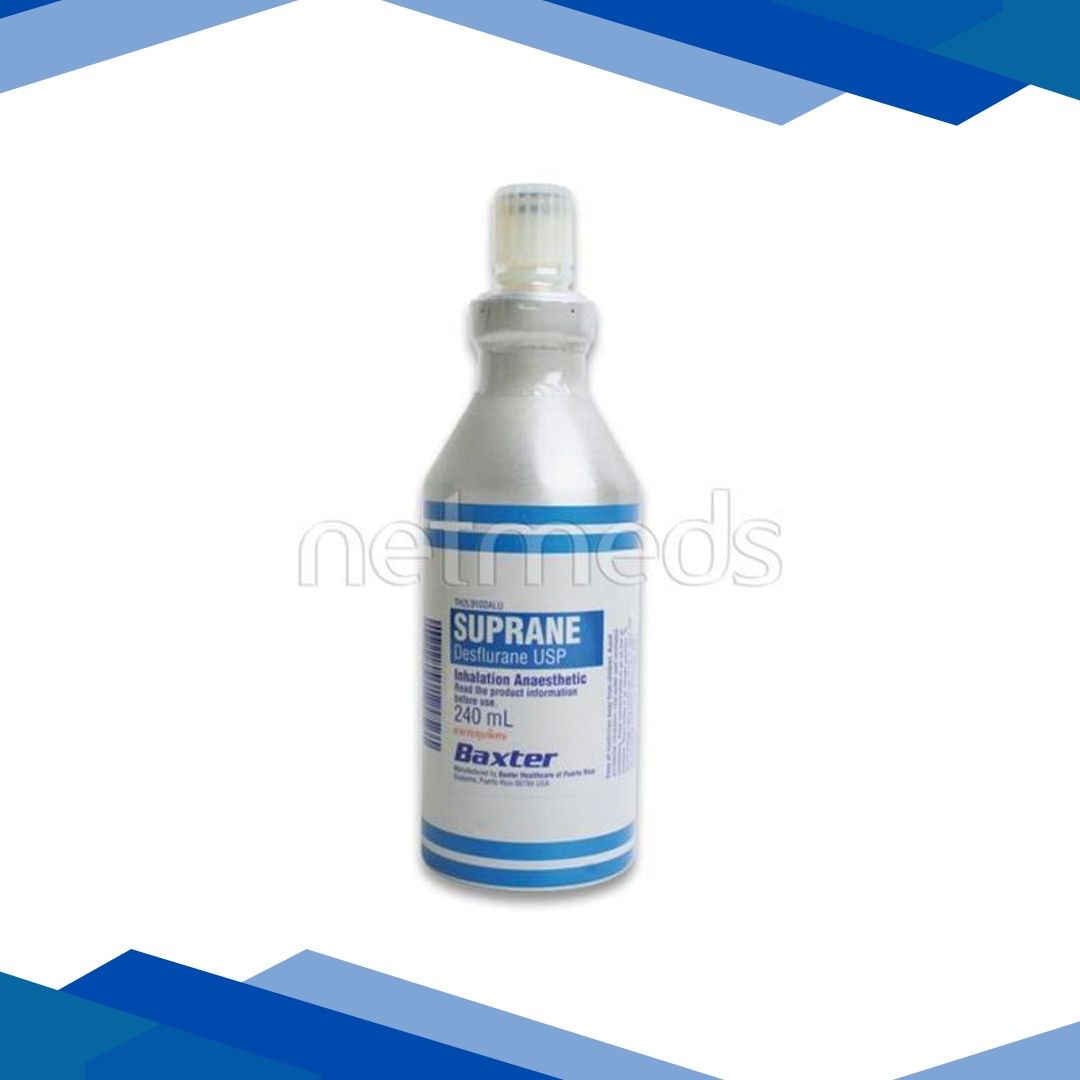
Suprane Injection 240ml
❌ Due to high demand, this product is currently out of stock. New stock will be available shortly.
👉 Click here to Buy Same Salt medicine
Suprane Injection is a fast-acting inhaled general anesthetic used to help patients go to sleep and stay asleep during surgery. It works by slowing activity in the brain and central nervous system, which causes a temporary loss of awareness, sensation, and memory. Because it can be adjusted quickly and wears off rapidly, Suprane Injection is often chosen when a clinician needs close control over the depth of anesthesia and a smooth recovery after the procedure. It is mainly used in hospital operating rooms for maintenance of anesthesia in adults and some children under medical supervision. Suprane Injection does not treat pain on its own, so it is usually given as part of a larger anesthesia plan managed by trained healthcare professionals.
Description
Suprane Injection is a fast-acting inhalation anesthetic used to produce and maintain general anesthesia during surgical procedures. it is administered only in a controlled medical setting, typically by an anesthesiologist or trained anesthesia provider, because it must be delivered using specialized vaporizing equipment and close monitoring of the patient’s breathing, heart function, and oxygen levels. Suprane Injection is especially valued for its rapid onset and very quick recovery profile, which can help patients wake up sooner after surgery compared with some other inhaled anesthetics.
as a volatile anesthetic, Suprane Injection works by depressing the central nervous system in a reversible way. it produces a state in which the patient does not feel pain, is unconscious, and is unable to remember the procedure. its effects are dose-dependent, meaning deeper anesthesia occurs at higher inhaled concentrations. because of its low blood solubility, Suprane Injection is absorbed and eliminated quickly, allowing the anesthesia team to adjust depth efficiently and to help the patient recover faster once the medicine is stopped.
this medicine is not intended for self-use and is not a treatment for chronic conditions. it is used for short or long surgical procedures where general anesthesia is necessary. Suprane Injection is suitable for a wide range of adult patients and may be used in selected pediatric situations depending on clinical judgment, but its use is determined by the anesthesia team based on age, health status, type of surgery, and risk factors. careful evaluation is important because some patients may have heart, lung, or metabolic conditions that increase the risk of complications.
in addition to causing unconsciousness, Suprane Injection helps reduce the body’s stress response to surgery and can be combined with other anesthetic agents, pain medicines, and muscle relaxants as part of a balanced anesthesia plan. it does not relieve pain on its own in the way a painkiller does, so it is usually used alongside other medicines that manage surgical pain and ensure patient comfort during and after the procedure.
ingredients
- Suprane Injection: the active anesthetic ingredient that produces unconsciousness and loss of sensation during surgery. it is the main component responsible for the medicine’s rapid onset and rapid recovery characteristics. Suprane Injection acts on the brain and spinal cord to suppress awareness, movement, and response to surgical stimulation.
- inhalation formulation components: Suprane Injection is supplied as a volatile liquid for vaporization in specialized anesthesia equipment. the formulation is designed to be converted into a precise inhaled anesthetic vapor. it is not taken by mouth or injected, and it requires a calibrated vaporizer because its physical properties differ from many other inhaled agents.
- no routine additional medicinal ingredients: Suprane Injection products are typically single-agent anesthetic preparations rather than combination medicines. the safety and effectiveness depend on proper delivery equipment, oxygen or oxygen/air mixtures, and monitoring rather than on added active ingredients.
key uses
- induction of general anesthesia: Suprane Injection may be used to start anesthesia in selected patients, although it is more commonly used for maintenance. it helps the patient become unconscious before surgery begins, allowing procedures to be performed without awareness or pain.
- maintenance of general anesthesia: this is one of the main uses of Suprane Injection. it keeps the patient asleep and immobile during the operation while the anesthesia team adjusts the dose as needed.
- facilitating rapid recovery after surgery: because Suprane Injection leaves the body quickly, patients often wake up sooner and may regain alertness more rapidly after the procedure. this can be helpful in ambulatory or outpatient surgery settings.
- balanced anesthesia regimens: Suprane Injection is commonly combined with opioids, sedatives, and muscle relaxants to provide a tailored anesthetic plan. this approach helps achieve adequate unconsciousness while minimizing side effects from each individual medication.
how to use
Suprane Injection must be used only by trained healthcare professionals in an operating room or similarly equipped medical environment. it is administered through inhalation using a specialized vaporizer and anesthesia machine that precisely controls the concentration delivered to the patient. the dose and duration are individualized based on age, weight, medical history, type of surgery, other medicines being used, and the patient’s response during the procedure.
before surgery, the anesthesia team evaluates the patient’s medical condition, including heart and lung function, history of anesthesia complications, and any relevant allergies or metabolic disorders. during administration, vital signs are continuously monitored, including oxygen saturation, breathing, blood pressure, heart rate, and often body temperature and carbon dioxide levels. the healthcare team may adjust Suprane Injection levels throughout the operation to maintain a safe and effective depth of anesthesia.
patients should not attempt to use this medicine themselves and should follow all preoperative instructions, such as fasting, medication adjustments, and guidance on when to stop eating or drinking before surgery. after the procedure, the anesthesia team continues to monitor recovery until the patient is awake, stable, and safe for discharge or transfer. because Suprane Injection acts quickly, the recovery phase can also be rapid, but complete recovery varies depending on other medicines used and the length of surgery.
safety information
- warnings: Suprane Injection can cause dose-related breathing suppression, low blood pressure, and changes in heart rate. it may trigger airway irritation, coughing, breath-holding, or laryngospasm, especially when started abruptly in sensitive patients. a rare but life-threatening reaction called malignant hyperthermia can occur in susceptible individuals, causing high fever, muscle rigidity, rapid heart rate, and severe metabolic disturbances. the anesthesia team must be prepared to recognize and treat this emergency immediately.
- side effects: common side effects may include nausea, vomiting, sore throat, shivering, dizziness, headache, drowsiness, and temporary confusion after surgery. some patients may experience coughing, increased saliva, low blood pressure, or rapid heart rate during anesthesia. serious side effects can include malignant hyperthermia, severe breathing problems, irregular heartbeat, significant blood pressure changes, liver injury, allergic reactions, or delayed recovery from anesthesia.
- precautions: Suprane Injection should be used carefully in people with a history of malignant hyperthermia, severe airway reactivity such as asthma or bronchospasm, significant heart disease, unstable blood pressure, liver problems, or conditions that increase the risk from anesthesia. it may not be appropriate for patients in whom a rapid rise in anesthetic concentration could provoke airway irritation. the anesthesiologist will assess whether the benefits outweigh the risks.
- pregnancy/breastfeeding: Suprane Injection may be used during pregnancy only when clearly needed for surgery and when the expected benefit outweighs potential risks. exposure during pregnancy is generally avoided unless medically necessary. after anesthesia, small amounts may pass into breast milk for a limited time; breastfeeding guidance depends on the procedure, overall anesthetic plan, and the mother’s recovery, so a healthcare professional should be consulted.
- interactions: Suprane Injection can interact with other anesthetics, sedatives, opioids, muscle relaxants, and alcohol, increasing the risk of excessive sedation, breathing suppression, or low blood pressure. medicines that affect the heart rhythm, blood pressure, or central nervous system may also alter its effects. the anesthesia team should know about all prescription drugs, over-the-counter products, supplements, and recent alcohol use before surgery.
additional information
- storage: Suprane Injection should be stored exactly as directed by the manufacturer and handled only in clinical settings. it is kept in its original sealed container and protected from improper heat or contamination. because it is a volatile inhalation anesthetic, it requires specialized handling and should not be stored or used like a regular home medication.
- missed dose: a missed dose is generally not applicable because Suprane Injection is administered during surgery by healthcare professionals, not taken on a patient schedule. if the planned anesthetic administration is interrupted or delayed, the anesthesia team decides how to proceed safely based on the situation.
- overdose: excessive exposure can lead to profound sedation, dangerously slow breathing, severe low blood pressure, abnormal heart rhythms, and loss of protective reflexes. in a severe overdose, oxygen levels may fall and urgent airway support may be needed. this is a medical emergency managed immediately by the anesthesia team with ventilatory support, adjustment or stopping of the anesthetic, and other rescue measures as needed.
- habit forming: no. Suprane Injection is not considered habit-forming because it is a short-term anesthetic used under medical supervision for surgery. it is not prescribed for ongoing use, and it does not produce the type of dependence associated with many habit-forming medicines. however, repeated exposure should still be medically justified and carefully monitored.
frequently asked questions
Q: what is Suprane Injection used for?
A: Suprane Injection is used to induce and maintain general anesthesia during surgical procedures. it helps keep the patient unconscious, pain-free, and unaware of the operation while the medical team monitors the patient continuously.
Q: how does Suprane Injection work?
A: Suprane Injection works by depressing the central nervous system in a reversible way. it lowers brain activity enough to cause unconsciousness, reduce response to pain, and allow surgery to be performed safely.
Q: why is Suprane Injection often preferred for faster recovery?
A: Suprane Injection has low blood solubility, which means it enters and leaves the body quickly. this property allows patients to wake up sooner after surgery compared with some other inhaled anesthetics.
Q: can Suprane Injection be used at home?
A: no. Suprane Injection must only be given in a monitored clinical setting by trained professionals using specialized anesthesia equipment. it is not safe for home use.
Q: does Suprane Injection relieve pain by itself?
A: Suprane Injection causes unconsciousness and prevents awareness during surgery, but it is not a stand-alone pain medicine. it is usually combined with other medications to manage surgical pain and muscle relaxation.
Q: what are the most common side effects after Suprane Injection anesthesia?
A: common side effects may include nausea, vomiting, dizziness, sore throat, shivering, sleepiness, and temporary confusion. most are short-lived, but persistent or severe symptoms should be reported to a healthcare professional.
Q: can Suprane Injection cause an allergic reaction?
A: allergic reactions are uncommon but possible with any anesthesia medicine. symptoms such as rash, swelling, trouble breathing, or sudden changes in blood pressure require immediate medical attention.
Q: what is malignant hyperthermia and why is it important?
A: malignant hyperthermia is a rare but life-threatening reaction to certain anesthetic medicines, including volatile agents like Suprane Injection in susceptible people. it can cause a dangerous rise in body temperature, muscle rigidity, and abnormal heart rate, and it requires emergency treatment immediately.
Q: is Suprane Injection safe for patients with asthma?
A: it may be used cautiously in some patients, but Suprane Injection can irritate the airway and may trigger coughing or bronchospasm in sensitive individuals. the anesthesiologist will decide whether it is appropriate based on the patient’s condition.
Q: can Suprane Injection affect the heart?
A: yes. Suprane Injection can influence heart rate and blood pressure, and these effects are closely monitored during anesthesia. patients with heart disease need careful evaluation before it is used.
Q: will i remember the surgery after receiving Suprane Injection?
A: usually no. Suprane Injection is used to produce general anesthesia, which includes loss of consciousness and memory of the surgical procedure. some patients may have partial awareness in rare situations if anesthesia depth is inadequate, which is why monitoring is essential.
Q: can i drink alcohol after receiving Suprane Injection?
A: alcohol should be avoided until the healthcare team confirms that recovery is complete and it is safe to resume normal activities. alcohol can worsen drowsiness, impair judgment, and interact with other medicines used around the time of surgery.
Q: how long does it take to wake up after Suprane Injection?
A: many patients wake up relatively quickly after Suprane Injection is stopped because it leaves the body rapidly. however, the exact recovery time depends on the length of surgery, the dose used, and whether other anesthetic or pain medicines were given.
Q: can Suprane Injection cause nausea?
A: yes. nausea and vomiting are common after general anesthesia, including Suprane Injection. preventive medicines may be given to reduce this risk, and patients should inform the care team if they have a history of postoperative nausea.
Q: who should tell the anesthesiologist about their medical history?
A: anyone receiving Suprane Injection should share their full medical history, including previous anesthesia reactions, breathing problems, heart disease, liver disease, and all medicines or supplements they use. this information helps the team choose the safest anesthesia plan.
Q: what should i do if i feel unwell after anesthesia?
A: if you have severe shortness of breath, chest pain, persistent vomiting, high fever, worsening confusion, rash, swelling, or any unusual symptoms after anesthesia, seek urgent medical care immediately. mild grogginess is common, but serious symptoms should not be ignored.
this information is for educational purposes only and should not be considered medical advice. always consult a qualified healthcare professional before use.
At Gem Pharmacy, we make every effort to provide accurate, expert-written, and thoroughly reviewed information related to medicines. However, this information should not be considered a substitute for professional medical advice, diagnosis, or treatment from a qualified doctor.
The purpose of this information is to educate users and improve communication between patients and healthcare professionals. It should not be used to diagnose or treat any condition.
Always consult a certified healthcare professional before taking any medication.