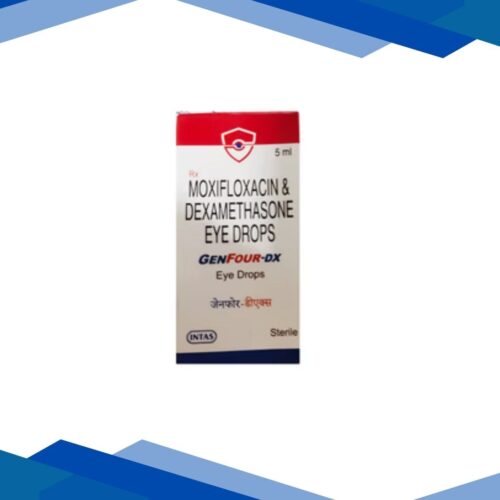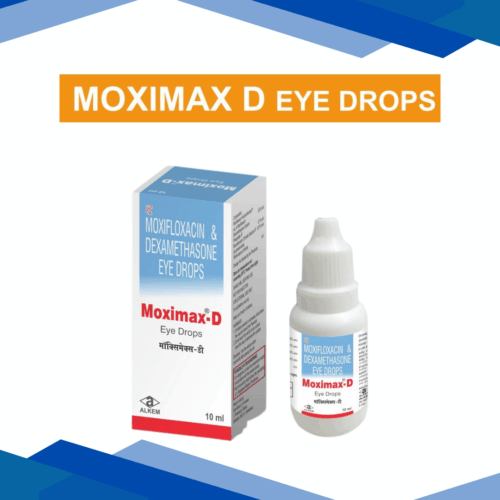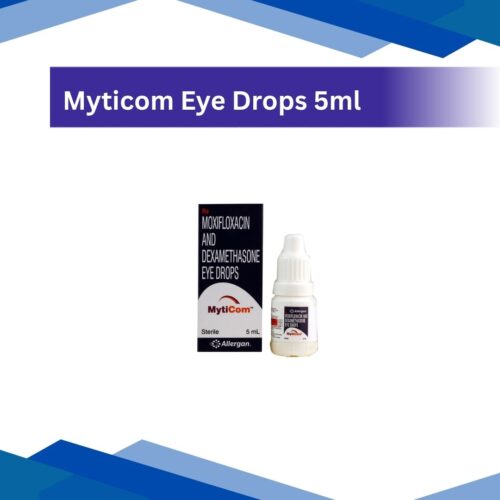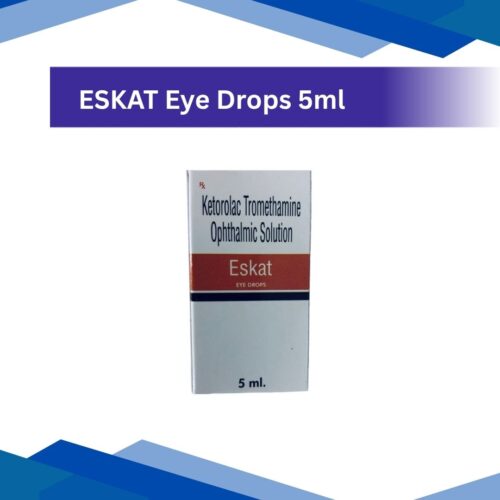

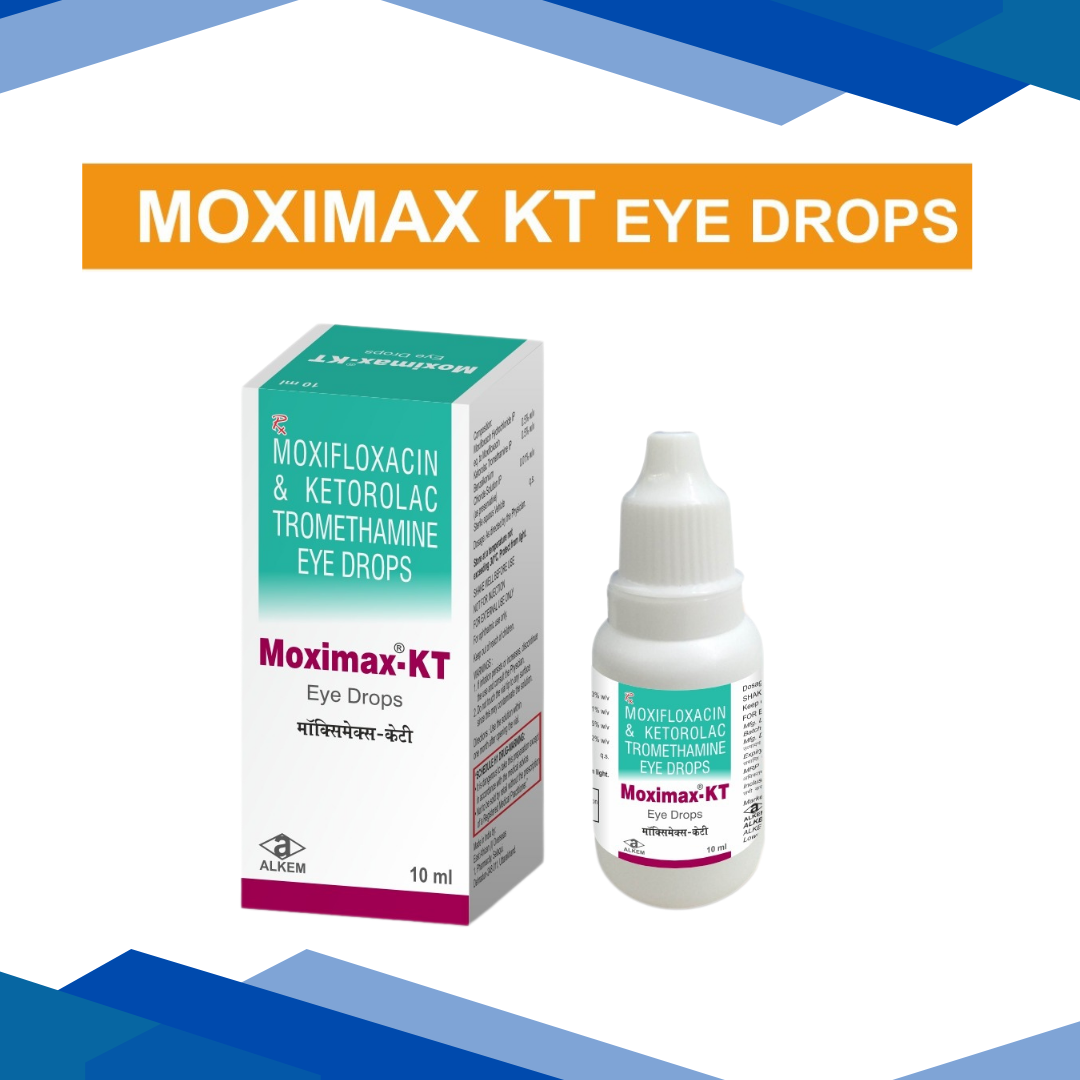
Moximax Kt Eye Drops
No Prescription yet? Don’t worry! Click Here to Get Online Consultation
Moximax-KT Eye Drop is used to treat eye infections. It prevents the infection-causing bacteria from multiplying. This improves the infection’s pain, itching, inflammation, discomfort, and irritation. For more details kindly click on Medicine Salts below:
Ketorolac
Tablet of Ketorolac 10 mg Ketorolac is a highly potent nonsteroidal anti-inflammatory drug (NSAID) used for the short-term management of moderate to severe acute pain. Due to its strong analgesic effect, it is often compared to opioids, but without the risk of physical dependence. It is commonly prescribed for post-operative pain and dental procedures.
Usage 1. Post-operative Recovery: Effective for severe pain following orthopedic, gynecological, or abdominal surgeries. 2. Dental Procedures: Useful in managing toothaches and post-extraction pain. 3. Acute Injuries: Helps relieve musculoskeletal pain from sprains and strains. 4. Inflammation Control: Works by inhibiting cyclooxygenase enzymes (COX-1 and COX-2), reducing inflammation and pain.
Intake of Ketorolac Duration and Limitations: Should not be used for more than 5 days due to increased risk of kidney damage and stomach complications. With Meals: Always take with food, snacks, or milk to protect the stomach lining. Body Position: Avoid lying down immediately after taking the tablet to prevent throat irritation. Dosage: Provides relief every 4–6 hours as needed. Do not exceed 40 mg per day unless prescribed.
Notes on Safety Important: Not suitable for mild or chronic pain conditions like headaches or arthritis. It is strictly for short-term acute pain. Stomach Health: Use cautiously if there is a history of ulcers. Discontinue if black stools or persistent stomach pain occur. Kidney Function: Maintain adequate hydration. Consult a doctor if you have kidney disease. Cardiovascular Health: Prolonged use may increase risk of heart-related complications, similar to other NSAIDs.
Side Effects Some users may experience: Common Effects: Dizziness, drowsiness, nausea, headache, or mild stomach cramps. Serious Reactions: Seek immediate help if you notice facial swelling, difficulty urinating, shortness of breath, or skin rash.
Frequently Asked Questions (FAQs) Q: Is Ketorolac a narcotic or a steroid? A: No. It is a non-steroidal anti-inflammatory drug (NSAID). While very strong, it is non-addictive and does not cause dependence. Q: Why is Ketorolac limited to 5 days? A: Because prolonged use significantly increases the risk of serious side effects, including stomach ulcers and kidney damage. Q: Can I take ibuprofen or aspirin with Ketorolac? A: No. Avoid combining with other NSAIDs like Ibuprofen, Naproxen, or Aspirin due to increased risk of bleeding and ulcers. Q: Does Ketorolac cause drowsiness? A: Some individuals may experience dizziness or drowsiness. Avoid driving or operating machinery until you know how it affects you. Q: What should I do if I miss a dose? A: Take it as soon as you remember. If the next dose is near, skip the missed dose. Do not double the dose.
Moxifloxacin
Indications Community-Acquired Pneumonia, including atypical pneumonias caused by Mycoplasma, Legionella, and Chlamydia (Kalymnos et al., 2007); acute exacerbation of chronic bronchitis; acute maxillary sinus infections of bacterial origin (e.g., Streptococcus pneumoniae, Haemophilus influenzae, or Moraxella catarrhalis); skin and skin structure infections, such as abscesses, cellulitis, and deep wound infections; or intra-abdominal infections due to Escherichia coli, Klebsiella pneumoniae, Bacteroides fragilis, Streptococcus spp., Enterococcus faecalis, Staphylococcus aureus, anaerobic cocci, and Clostridium perfringens.
Dosage and Administration The combination of moxifloxacin 400 mg tablets with conventional medicine such as Ampicillin or Metronidazole has been used for efficacy and safety in adult patients with CAP. The use of moxifloxacin 400 mg tablets should consider all indications and possible side effects. For CAP, a 400 mg dose may be administered via intravenous infusion over 1 hour. For better penetration in invasive infections, prostatitis, neutropenia, etc., moxifloxacin tablets are taken orally (Kitsun et al., 2005).
How Does Moxifloxacin Work? Moxifloxacin is bactericidal, meaning it kills bacteria rather than just inhibiting their growth. It works by blocking DNA gyrase and topoisomerase IV, enzymes essential for bacterial DNA replication and repair. Without these enzymes, bacteria cannot survive, leading to rapid infection control.
Usage Guidelines and Dosage Usual dose: Adults typically take 400 mg once daily. Consistency: Take it at the same time each day to maintain steady drug levels. Food: Can be taken with or without food; taking with food may reduce stomach upset. Complete the Course: Always finish the full course, even if symptoms improve early, to prevent antibiotic resistance.
Critical Safety Precautions Tendon Risk: Being a fluoroquinolone, Moxifloxacin carries a risk of tendonitis or tendon rupture. Avoid strenuous activity and report any joint or tendon pain immediately. Sun Sensitivity: May cause photosensitivity. Use sunscreen (SPF 30+) and protective clothing outdoors. Cardiovascular Health: Inform your doctor if you have QT prolongation or heart rhythm disorders. Pediatric Use: Not recommended for children under 18 years due to risks to developing joints.
Potential Side Effects Most patients tolerate it well, but some may experience: Nausea or mild stomach upset Dizziness Headache Diarrhea (seek medical help if severe or bloody)
FAQs
Q: Can I take antacids or vitamins with Moxifloxacin? A: Antacids containing magnesium or aluminum, iron supplements, and zinc-containing vitamins can reduce absorption. Take Moxifloxacin at least 4 hours before or 8 hours after these products.
Q: Does Moxifloxacin treat colds or flu? A: No. It is effective only against bacterial infections, not viral illnesses like cold or flu.
Q: Can I consume alcohol while taking this medicine? A: While no direct interaction exists, alcohol may worsen side effects like dizziness or stomach upset. It is best to avoid alcohol during treatment.
Q: What should I do if I miss a dose? A: Take it as soon as you remember. If it is within 8 hours of your next dose, skip the missed dose. Do not double the dose.
Q: Does Moxifloxacin cause sleepiness? A: It is more likely to cause dizziness or lightheadedness rather than sleepiness. Avoid driving or operating machinery until you know how it affects you.
At Gem Pharmacy, we make every effort to provide accurate, expert-written, and thoroughly reviewed information related to medicines. However, this information should not be considered a substitute for professional medical advice, diagnosis, or treatment from a qualified doctor.
The purpose of this information is to educate users and improve communication between patients and healthcare professionals. It should not be used to diagnose or treat any condition.
Always consult a certified healthcare professional before taking any medication.


Related products