

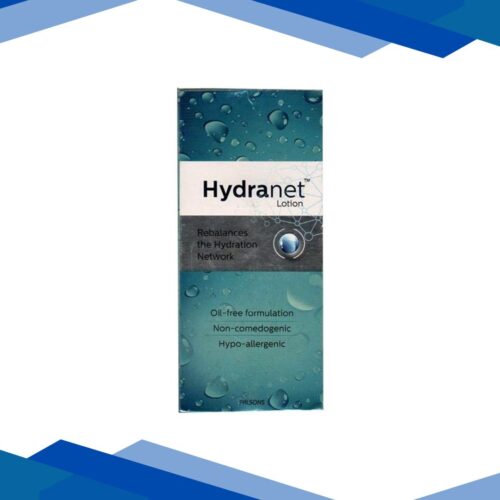

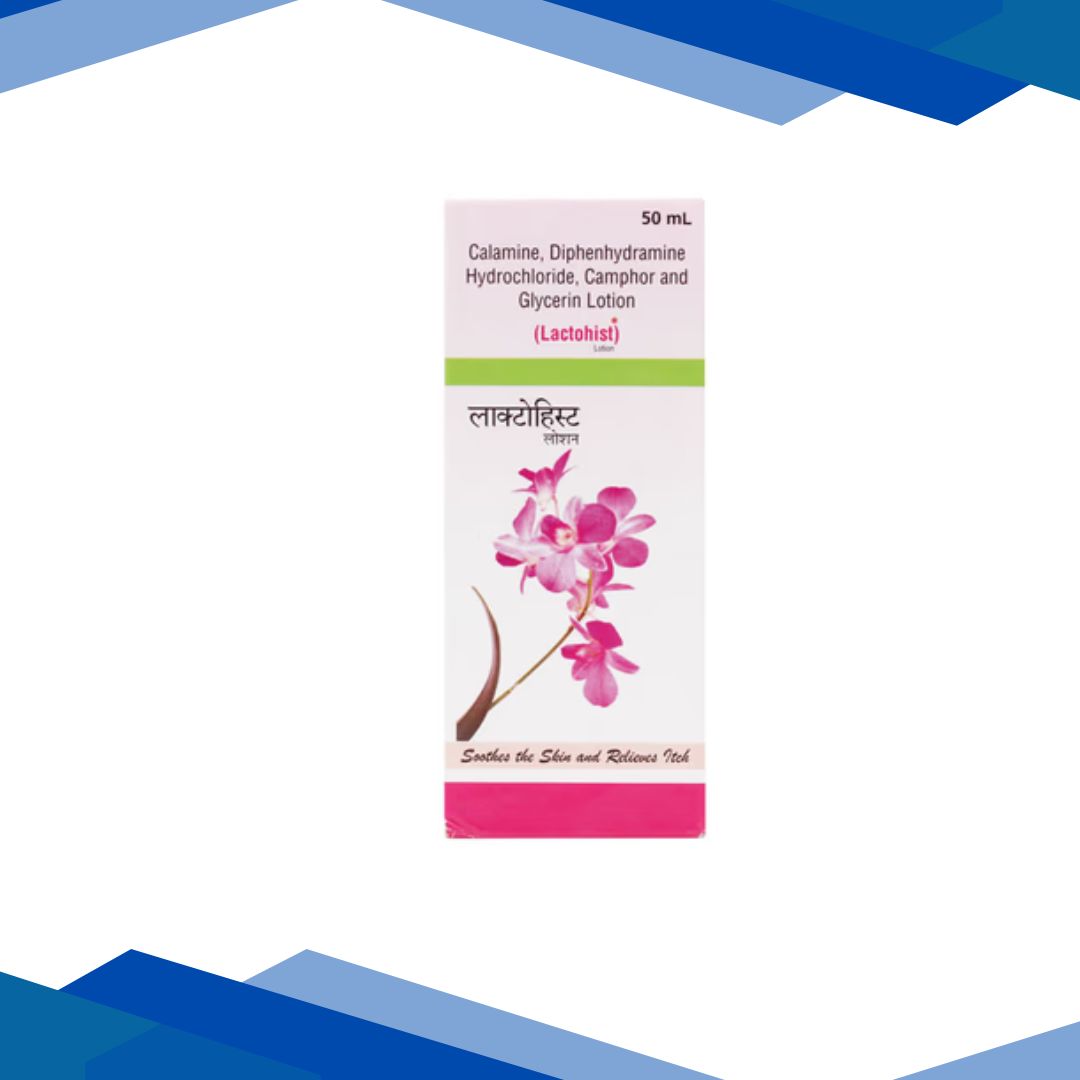
LACTOHIST Lotion 50ml
❌ Due to high demand, this product is currently out of stock. New stock will be available shortly.
👉 Click here to Buy Same Salt medicine
No Prescription yet? Don’t worry! Click Here to Get Online Consultation
LACTOHIST Lotion 50 ml is a topical dermatological lotion used to relieve itching, irritation, redness, and discomfort associated with allergic skin conditions, insect bites, minor rashes, and dry irritated skin by calming and soothing the affected area and helping restore moisture. For more details kindly click on Medicine Salts below:
Calamine
Calamine Skin Soothing Lotion
Calamine, a specialty treatment, is an anti-itch (antipruritic) and mild antiseptic lotion primarily featuring a mixture of zinc oxide with a small amount of ferric oxide, which gives it a characteristically pink color. It remains conventional as a concern of first aid in managing minor irritations foremost; however, as one tends to evaporate, it does provide a cool and salutary right sensation and lightning relief to redness and swell as well as the itch.
Indications
Insect Bites and Stings: Rapidly soothe itching and pain from mosquito bites, bee stings, and ant bites.
Occupational Rashes: Effective against contact dermatitis caused by plants like poison ivy, oak, or sumac.
Varicella & Zoster: Facilitates in drying out oozing blisters while providing an adsorptive layer to prevent secondary infections.
Calms Sunburn: Provides relief from heat sensation and helps ease skin moisture imbalance consequent upon solar exposure.
Overview:
Calamine: A value addition unapproachable as an astringent, capable of accomplishing the healing of identified wetting skin conditions, which promises rapid recovery.
FeelCool!um: Experience natural physical ease.
Usable: Almost a miracle for almost everyone, young and old, children for infants—yes, but under medical supervision.
Tangible Protection: Physical beats frolic the creams to zap those sensitive areas.
Composition and Ingredients
Calamine (8 -- 15%): Primary soothing agent by virtue reducing inflammation.
Zinc oxide: Effective skin protectant with mild antimicrobial properties.
Glycerin/Liquid paraffin: Glyceryl is highly moisturizing, with good humectants routinely inserted in many skin formulations to prevent the skin from becoming too dry for comfort.
Bentonite/Sodium citrate: To stabilize it, both agents are included to attain the proper distribution of medication.
How to use
Preparation: Clean the affected area with a mild soap and water. Pat dry.
Shake well: Shake the bottle well before use; ingredients settle at the bottom of the bottle during its shelf life.
Suave: Place some lotion on a wet cotton pad or ball so then gently daub the concerned patch.
Do not apply: Ensure the lotion stays and dries on the surface; usually, it leaves a slight pink film.
Frequency: Can be applied 3 to 4 times a day or as per doctor’s advice.
General Information and Safety
For External Applications: Avoid contact with the eyes, nose, mouth, and genital areas. If the lotion accidentally enters the eyes, rinse with copious amounts of water.
Open wounds: The lotion shall not be used on deep punctures, deep cuts, severe burns, or open, blistered skins, oral mucous membranes, or genital areas unless permitted by a doctor for the wound.
Duration: If the condition lasts for more than 7 days, causes a skin rash, or worsens itchiness, discontinue application, and consult a dermatologist.
Storage: Keep in a cool and dry place away from direct sunlight. Do not freeze.
Frequently Asked Questions (FAQs)
Q: Can Calamine be used to treat acne or pimples?
It is very useful for preventing drying owing to Calamine’s astringent and drying properties, also it is used for oily pimples, but the aforesaid agent will also reduce the redness caused by acne. In general, it is recommended as a spot treatment rather than an all-over-face moisturizer.
Q: What about pregnancy safety?
Calamine is meant to be completely safe during pregnancy and breastfeeding when topically used as directed—these particular use properly limits systemic absorption thus providing her with an additional benefit to the potentially unpleasant cholestasis itch of pregnancy.
Q: Does Calamine lotion stain clothes?
Calamine lotion may stain clothing, as the ferric oxide in it is a pink pigment. The lotion should be allowed to dry completely before any clothes are placed over the area being treated.
Q: Can I put it on my baby's diaper rash?
While Calamine can be soothing, but diaper rashes might sometimes be complicated by yeast infections, so it is best to consult the pediatrician prior to its application to the baby, so as to be sure if it will sort out that particular rash or not.
Q: What is the difference between Calamine lotion and Calamine cream?
The liquid consistency meant that the lotion was really good for a cooling effect caused by evaporative cooling and could cover quite a large area with a cooling enough effect for extremely itchy skin. The cream is thicker and maybe a lot more emollient and often more useful for the less localized, dried, scaly patches.
Disclaimer: The information provided in this article is for teaching purposes only and should not be used as a substitute for professional medical advice. Under any circumstances, consult your doctor or pharmacist before taking any medication.
Camphor
Diphenhydramine
Diphenhydramine 25mg/50mg Capsule/Tablet
Generic Name: Diphenhydramine Hydrochloride
Therapeutic Class: First-generation Antihistamine (H1-receptor antagonist)
Product Overview
Diphenhydramine is a versatile, fast-acting medication widely used to treat symptoms of allergy, hay fever, and the common cold. By blocking the action of histamine—a natural substance in the body that causes allergic reactions—it effectively relieves watery eyes, itchy nose/throat, and sneezing. Beyond allergy relief, its sedative properties make it a common short-term solution for occasional sleeplessness and the prevention of motion sickness.
Primary Uses & Benefits
Comprehensive Allergy Relief: Rapidly manages symptoms like skin rashes, hives, and allergic rhinitis.
Sleep Support: Acts as a mild sedative to help individuals with difficulty falling asleep (insomnia).
Motion Sickness: Prevents and treats nausea, vomiting, and dizziness associated with travel.
Common Cold Support: Dries up nasal secretions to provide relief from a “runny nose.”
Quick Expert Tips
Drowsiness Warning: This medication is known to cause significant sleepiness. Do not drive or operate heavy machinery until you know how it affects you.
The "30-Minute" Rule: For motion sickness, take the dose 30 to 60 minutes before starting your journey.
Hydration is Key: It can cause dry mouth. Keep water or sugarless lozenges handy.
Seniors Beware: Older adults may be more sensitive to side effects like confusion or dizziness, increasing risk of falls.
Safety Profile & Interactions
| Category | Status | Expert Guidance |
|---|---|---|
| Alcohol | Unsafe | Alcohol significantly increases the sedative effects; avoid concurrent use. |
| Pregnancy | Consult Doctor | Usually considered safe for short-term use, but always consult your OB/GYN first. |
| Kidney/Liver | Caution | Dose adjustment may be necessary for patients with impaired organ function. |
| Glaucoma | Avoid | May worsen narrow-angle glaucoma due to its anticholinergic properties. |
Common Side Effects
- Extreme sleepiness or dizziness
- Dryness of the mouth, nose, or throat
- Constipation or blurred vision
Note for Kids: In some children, Diphenhydramine can cause “paradoxical excitation”, leading to restlessness or hyperactivity instead of sleepiness.
Practical Queries
1. How Long does Diphenhydramine take to work?
15 to 30 minutes usually are sufficient for oral administration. Peak effect occurs in 2 hours, attaining relief within 4 to 6 hours.
2. Can I Take Diphenhydramine Every Night For Sleep?
No. It is intended for short-term use (about 7–10 nights). Prolonged use can reduce effectiveness. Persistent sleep issues should be discussed with a physician.
3. Is Benadryl the same as Diphenhydramine?
Yes. Benadryl is the most familiar brand name of Diphenhydramine. Always check the active ingredients on the packaging, as some local versions may contain other antihistamines like Cetirizine.
4. Why do I feel “hungover” the morning after taking it?
Sedative breakdown takes time; grogginess or brain fog may last until the next morning. Lowering the dose may help.
5. Can I use it for an itchy rash?
Yes. Effective for hives and pruritus. If the rash is accompanied by difficulty breathing or tongue swelling, seek emergency medical help immediately (possible anaphylaxis).
Glycerin
At Gem Pharmacy, we make every effort to provide accurate, expert-written, and thoroughly reviewed information related to medicines. However, this information should not be considered a substitute for professional medical advice, diagnosis, or treatment from a qualified doctor.
The purpose of this information is to educate users and improve communication between patients and healthcare professionals. It should not be used to diagnose or treat any condition.
Always consult a certified healthcare professional before taking any medication.


Related products
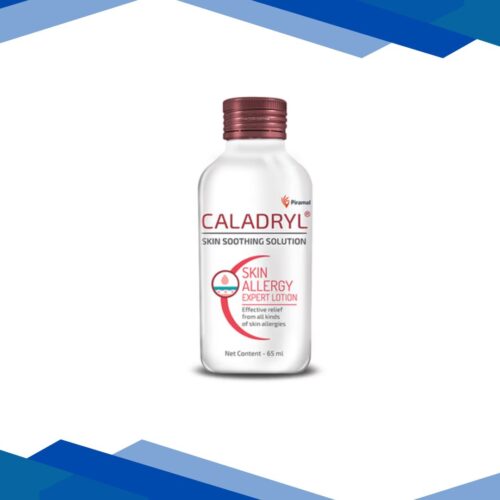
Caladryl Skin Soothing Solution 65 ml

Beauty Garage Shampoo K9 Frizz Dismiss
Agrawal Eleesa Glycerin Suppositories – Adult 10 s