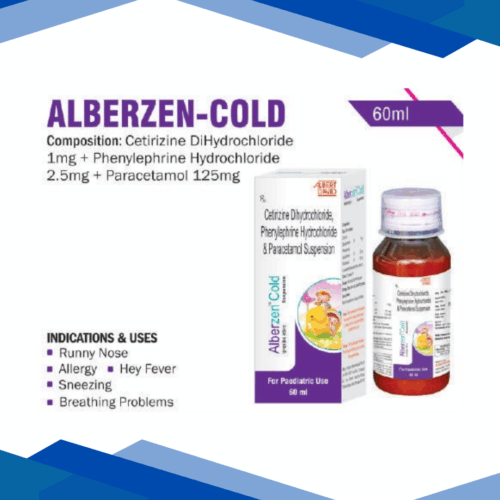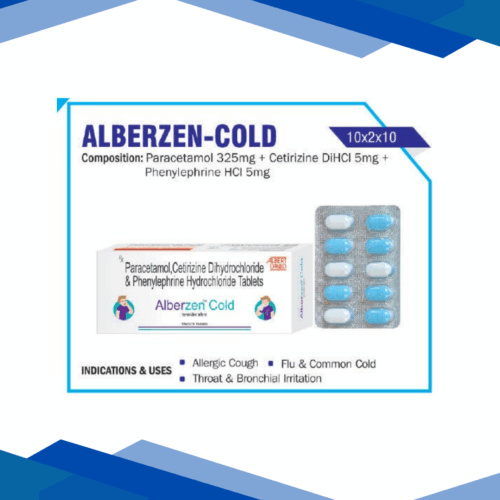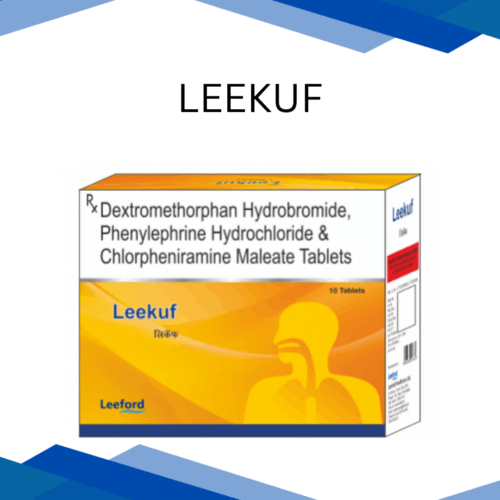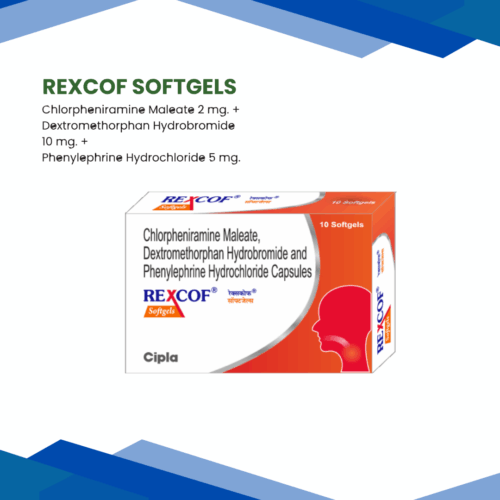






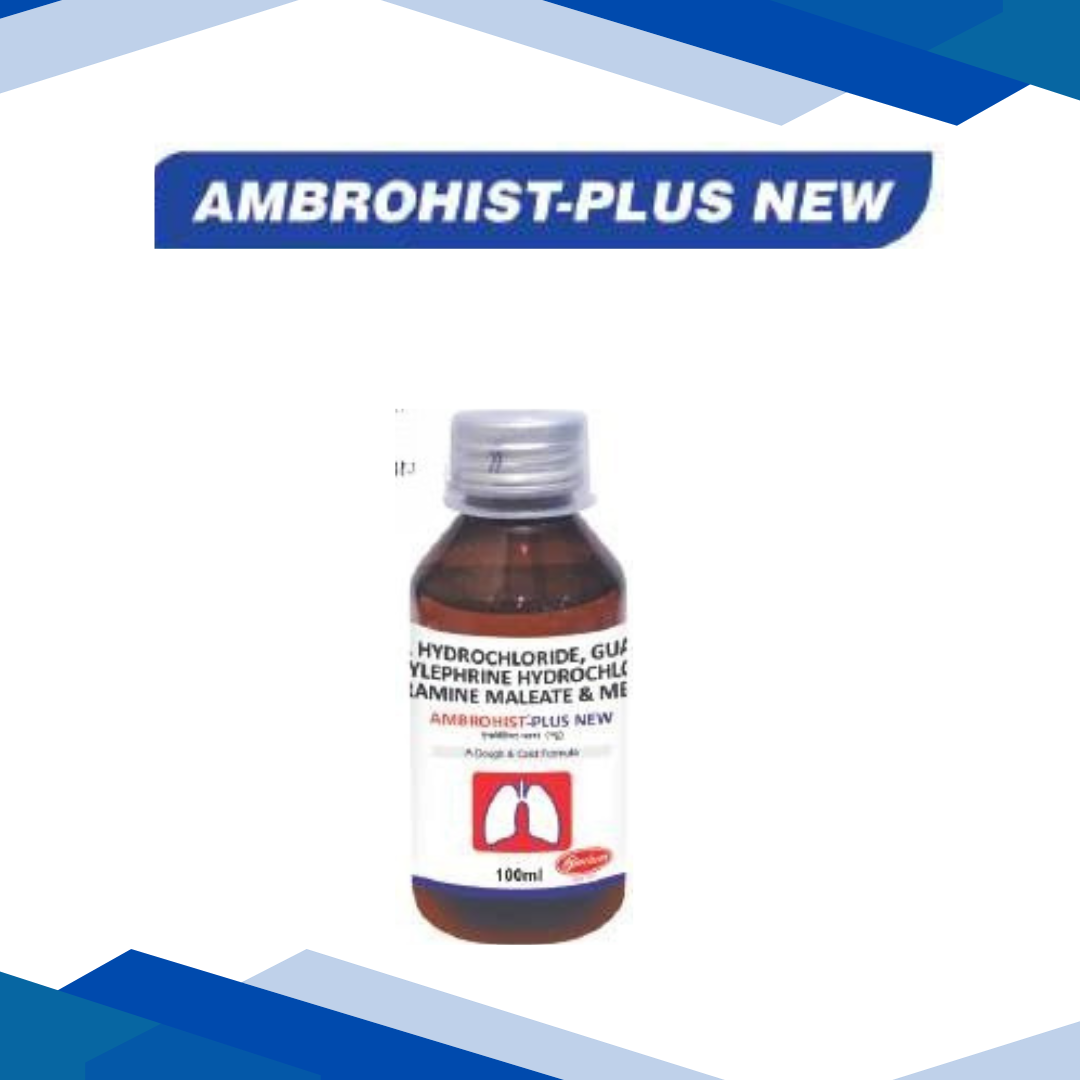
Ambrohist-Plus New
No Prescription yet? Don’t worry! Click Here to Get Online Consultation
Ambrohist-Plus New is used to treat cough. It thins the mucus in the nose, making it easier to cough out. This medicine narrows the blood vessels in the nose to relieve congestion or stuffiness. It also relieves allergy symptoms like watery eyes, sneezing, runny nose, and throat irritation.
Ambroxol Hydrochloride
Ambroxol Hydrochloride 30mg Tablet
Ambroxol Hydrochloride is a potent systemic mucolytic agent used to treat respiratory tract diseases associated with excessive or viscid (thick) mucus. It belongs to the class of medications known as secretolytics, which work by thinning and loosening phlegm in the airways, making it easier to cough out. It is commonly prescribed for conditions like bronchitis, emphysema, and bronchial asthma.
Therapeutic Action
Mucokinetic Effect: Reduces the viscosity of mucus by breaking down acid mucopolysaccharide fibers.
Surfactant Stimulation: Promotes the production of natural lung surfactants, which helps prevent mucus from sticking to the bronchial walls.
Ciliary Clearance: Enhances the movement of the tiny hairs (cilia) in the respiratory tract to clear debris and phlegm faster.
Local Anesthetic Properties: Provides a soothing effect on the throat, often reducing the discomfort associated with a persistent "chesty" cough.
Indications
Acute and chronic inflammation of infection of upper and lower respiratory tract.
Bronchitis (Acute and Chronic).
Broncheactasis and Bronchial Asthma with thick mucus.
Expectoration is intended for cough availing of rheum.
Usage & Dosage
30 mg every 2 to 3 times a day after meals is the recommended dosage for adults.
Administration: The tablet has to be swallowed whole with an increased amount of water. Though Ambroxol is still around in your body, swallowing water while you eat is the right way to ensure that this medication works in breaking up the mucus.
How to proceed with a missed dose: Take one pill whenever you remember. In case it is almost time for the next dose, skip the one that you failed to take preceding time. Rationally and most important, do not for any reason double dose.
Safety Profile
Ambroxol is tolerable in most people; hardly to see are:
Gastrointestinal: Desensitizing acids, indigestion, and nausea.
Sensory: That the taste does not always follow, a characteristic, or an oxymoron, that is, paresthesia, or a chilling of the mouth or throat.
Allergic reactions: Simply non-fatal skin rash and/or angioedema- like phenomena.
Warning: If your child has had Gastric ulcers or had severe liver/kidney issues, talk to your doctor first before initiating the medicine.
Precautions
Pregnancy & Lactation: Not recommended during the first trimester of pregnancy, consult with the doctor if breastfeeding.
Drug Interactions: Ambroxol can affect the distribution of some antibiotics with bronchial secretions, such as Amoxicillin and Erythromycin. This can be beneficial, but it must be done carefully.
Skin Reactions: Very rarely, severe skin reactions such as Stevens-Johnson syndrome are reported. Discontinue its use if a progressive skin rash appears.
FAQ
Q: Is Ambroxol as well as dry cough syrup?
No. Ambroxol is for a productive cough, which has got mucus in it. It works by freeing up the phlegm to make it easy to cough up. It should not be used for nonproductive cough accompanied by mucus.
Q: Can I take Ambroxol empty stomached?
It is generally recommended to take Ambroxol after meals in order to minimize the risk of gastric irritation or stomach upset.
Q: How long will it take for Ambroxol to start showing its effects?
Most patients will start feeling relief from 30 minutes to 6 to 12 hours after administration orally.
Q: Does Ambroxol contain any steroids?
No. Ambroxol Hydrochloride is a mucolytic and does not contain steroids or habit forming ingredients.
Q: Can I drink alcohol while on this drug?
Although there are no direct ill effects caused by this medication, alcohol thins and dehydrates your mucus on the whole disregarding the purpose of the medicine. So, try to avoid alcohol intake in the case of respiratory infections.
Chlorpheniramine Maleate
CHLORPHENIRAMINE MALEATE 4MG TABLET
Chlorpheniramine Maleate is a first-generation antihistamine from the alkylamine class, extensively used in symptomatic relief of allergic conditions affecting the upper respiratory tract and skin. By blocking the action of histamine, a natural body chemical that causes allergies, sneezing, watery eyes, and itching is controlled effectively.
Therapeutic Use
Hypersensitivity disorders: Relief of symptoms of hay fever, including a runny nose and sneezing
Hives: Management of the skin rash, large round or irregular patches, hives, or itching
Common cold: Generally, treatment is combined for reduction of watery discharge from the eyes and nose
Mosquito bites: Relief of localized allergic swelling and redness
Allergic conjunctivitis: Relief from redness and irritation of the eyes due to allergens such as pollen or dust
Mechanism of Action
Chlorpheniramine acts competitively as an H1 receptor antagonist. Histamine is released by the body during allergic reactions and binds to H1 receptors, causing dilatation of blood vessels and swelling in the tissues. They basically block histamine binding at cellular levels, thereby preventing the allergic response.
Main points to consider
Onset of Action: Usually within 30-60 minutes post oral ingestion, these symptoms start to ease.
Versatile in relief: Effective against any respiratory and dermatological (skin) allergy attacks.
Safety: Very safe, having a proven record of usage in adult and pediatric patients (under careful medical supervision).
Dosage Units
Standard adult dose: 4mg usually every 4-6 hours not to exceed 24mg in 24 hours.
Administration: Swallow tablet whole with water. It can be taken on an empty stomach if required.
Missed Dose: Drench whatever dose gets missed. But let alone their dosage if it is almost your time before next dosage dose. Do not poison by means of a double dose.
Side Effects and Safety
. The most common adverse effect of first-generation antihistamines is drowsiness.
. Other potential side effects may include:
Dry mouth, nose, or throat.
Blurring of vision
Dizziness or lightheadedness
Mild constipation
Urinary hesitation (more common in elderly patients)
Precautions & Warnings
. Blocked throat: There must be no driving, operating heavy machinery, or any type of critical work after taking the medication since it will impair specific neurological functions and, consequently, one's reactions, decision-making, reaction time, and even balance.
. Long evenings of fun: Clearly, patients should avoid drinking altogether. It often doesn't ever fit in terms of its adverse effects on the body after being mixed in with the drug.
. Medical conditions: If you suffer from glaucoma, enlarged prostate, asthma, or high blood pressure, speak with a physician.
Pregnancy/lactation: This drug must be administered under doctor's vision and clearly only when the benefits outweigh the possible risks in case it is really required,
Frequently Asked Questions (FAQs)
Q: Is the chlorpheniramine maleate causing my extreme sleepiness?
Yes, drowsiness is a common side effect to drugs that cross the blood-brain barrier, and so the best practice might be to take it in the evening or at bedtime if daytime drowsiness is too significant.
Q: Can I use this for a chronic cough?
Allergic postnasal drip coughs could receive significant relief from chlorpheniramine. It would not be an appropriate option for treating a productive cough (cough with mucus) or chronic coughs due to smoking or emphysema.
Q: Is it safe for children?
It does get used in children's practice, but the dose must be supervised by a pediatrician after calculating the age and weight of the child. It is prudent not to give any OTC antihistamines to children under 4 years old without an approval from a qualified medical practitioner.
Q: How long will the drug dwell in the body?
The maximum effects of 4mg once-daily dosage shall remain in place for 4-6 hours. Ingestion of sustained-release formulations would extend the effect to last for 24 h.
Q: Can I take this with my blood pressure medicine?
For most hypertensive medications, there is no direct contraindication specific to decongestants; but many allergy-cold medications contain decongestants capable of increasing your blood pressure. So, always check the ingredients and if necessary, ask your pharmacist.
Storage
Store this medicine in a cool, dry place (20°C to 25°C), away from moisture and sun. Keep out of reach of children.
Disclaimer: This content is for informational purposes only and does not constitute medical advice. Always consult your doctor or a registered pharmacist before starting any new medication.
Guaifenesin
Dosage of Guaifenesin, Usage, Side Effects, and Brands
Overview
Guaifenesin is an expectorant widely used to relieve chest congestion. If you are suffering from a “wet cough” or heaviness in the chest due to common cold, infections, or allergies, it helps by thinning mucus (phlegm) in the airways.
This makes coughing more productive, helping clear mucus and improve breathing.
How Guaifenesin Works
Guaifenesin works through a secretomotor action, which:
- Increases respiratory tract secretions
- Reduces mucus viscosity (thickness)
- Enhances the function of cilia (tiny hair-like structures) to clear mucus
This process helps the body expel irritants more efficiently from the airways.
Major Advantages and Uses
- Relieves Chest Congestion: Helps clear mucus from the lower airways
- Clears Airways: Makes breathing easier and reduces the feeling of a heavy chest
Information From a Pro
- Hydration Tip: Drink a full glass of water with every dose to enhance effectiveness
- Read the Label: Many products combine Guaifenesin with dextromethorphan or decongestants—choose based on symptoms
- Extended-Release Tablets: Do not crush or chew (e.g., long-acting tablets like Mucinex)
- Duration: Do not use for more than 7 days without medical advice
- Warning: Seek medical help if cough is accompanied by fever or persistent rash
General Adverse Effects
Although generally well tolerated, some may experience:
- Mild nausea or vomiting
- Dizziness or lightheadedness
- Headache
- Skin rash or urticaria (rare)
Frequently Asked Questions (FAQs)
Q: Is Guaifenesin safe for children?
A: Yes, for children above 4 years, but dosage must be age-appropriate. Avoid use in infants without a doctor’s advice.
Q: Can I take Guaifenesin with high blood pressure?
A: Pure Guaifenesin is generally safe, but combination products may contain pseudoephedrine or phenylephrine, which can increase blood pressure.
Q: Does this medicine cause drowsiness?
A: No, Guaifenesin alone is non-sedating. Drowsiness may occur due to added ingredients like antihistamines (e.g., Diphenhydramine).
Q: Can I take it on an empty stomach?
A: Yes, it can be taken with or without food. If you have a sensitive stomach, take it after a light meal.
Q: Is it safe during pregnancy?
A: It is a Pregnancy Category C drug—use only if clearly needed and after consulting your doctor.
Brand Names
Guaifenesin is available under several brands, including:
- Mucinex (extended-release tablets)
- Robitussin (syrup/liquid)
- Benylin (combination formulas)
- Generic Guaifenesin (cost-effective alternatives)
Disclaimer: This content is for educational purposes only and should not replace professional medical advice. Always consult a healthcare provider before using any medication.
Menthol
Menthol (Topical Analgesic)
Menthol is natural ingredient that occurs organically and is extracted from peppermint and other mint oils. It has certain pharmacological properties due to the topical analgesic and counterirritant that is widely utilized in pharmaceutical applications. When applied to the skin, it binds to the cold-sensitive receptor termed TRPM8 nicotine, and thus generates a cooling sensation. It works by producing enough cooling sensation to distract the brain from underlying pain signals, therefore providing some relief, deceiving the skin's pain receptors and authors. It is commonly used in muscle-recovery products and patches to mitigate joint pain.
Primary Indications
Muscle & Joint Relief: Temporary relief of minor aches and pains, caused by arthritis, simple backaches, strains, and sprains.
Counterirritant Action: Provides a cooling, slightly warming sensation with benefits of desensitization of pain nerve endings.
Itch & Irritation Control: Effectively don't entertain the itching from insect bites, sunburn, or minor skin rashes.
Respiratory comfort: Often used in chest rubs to emotionally relieve symptoms of feeling clear airways during common colds.
Post-Workout Recovery: Helps reduce the perception of soreness in overworked muscles and tendons.
The Product Specifications
Drugs Group: Topical Analgesic/ Counterirritant.
Formulations: Gels, sprays creams, ointments, medicated patches are available.
Concentration: Ranges generally from 1% and 16% as per the strength.
Appearance: Clear liquid or white crystalline material, characteristic of a minty aroma.
Instructions of Use
For Pain Relief: Clean and dry the affected area. Then apply a thin layer of gel or cream to the area 3-4 times daily.
Sprays: Spray on the skin evenly from 4" to 6" distance. Do not rub unless otherwise specified.
Patches: Stick one patch to the painful area and leave it for as long as 8 hours. Don't use more than one patch that has formed into a mass.
Hygiene: Wash your hands thoroughly with soap after application to avoid any accidental contact with the eyes and mucosa.
Safety Precautions & Warnings
For external use only: Do not ingest menthol-based topical products.
Avoid Over Broken Skin: Never apply to an open wound, damaged skin, or any irritated rashes.
No Heat therapy: Whether using a heating pad, hot water bottle, or tight bandage applied to the area, do not apply heat either. This will increase permeation and cause severe skin burns.
Flammability: Some menthol sprays and gels are flammable. Keep away from open flames or high heat until the product has completely dried on the skin.
Children: Consult a pediatrician before using on children under 12.
Frequently Asked Questions (FAQs)
Q: How does Menthol actually stop pain?
Menthol does not "numb" the pain as a local anesthetic does, but rather acts as a counterirritant. As the compound creates an intense cold sensation, it blocks the pain signals headed to the brain, effectively turning down the volume on discomfort.
Q: Can Menthol be used with a heating pad?
No. This is a major danger. Menthol causes the blood flow to the skin to increase, and the application of heat tends to make the medication be absorbed too quickly or cause some very bad burns and blisters.
Q: Why do I instantly feel cold but end up feeling warm?
This is essentially because of the 'counterirritant effect.' The menthol first activates the cold receptors, offering initial cooling effects. Then the local circulation is elevated when it is rubbed in, and the now-warm sensation is relaxing tight muscles.
Q: Can Menthol be used with an oral pain medication?
Yes, in practice, no! Since menthol is only used topically, so very little of it penetrates your bloodstream. However, let your doc know if you're on blood thinners, say, on Warfarin, because some of the topical formulations can have methyl salicylate, which can interact with them.
Q: Will the Menthol smell "stick"?
The very minty smell is the strongest during application and then dissipates as the product dries down. I would suggest many "vanishing scent gels" for a more subtle application, if the user prefers it that way.
Phenylephrine Hydrochloride
Phenylephrine Hydrochloride: Relief for Nasal and Sinus Congestion That Really Works
Phenylephrine hydrochloride is a strong decongestant that is used for temporary relief from the feeling of a "stuffed-up nose" that occurs with a cold, hay fever, or other upper respiratory allergies. Unlike some of the older decongestants, phenylephrine focuses on primarily reducing swelling of the nasal passages so that breathing is restored to be easy.
Measurements and Types of Use
Rhinal Decongestion: Quick clearance of blocked passages.
Sinus Pressure Relief: Reduction of heavy-pressure, painful forehead and cheek discomfort due to sinusitis.
Allergic Conditions Help: Managing the hypersensitivity reactions of allergic rhinitis (hay fever).
Ophthalmic Use: Dilating eyes to treat redness in specific concentrations.
Haemorrhoidal Relief: Shrinks swollen tissues when topically applied.
Phenylephrine Mechanism
Phenylephrine belongs to a category of drugs described as sympathomimetic amines. Specific to alpha-1 adrenergic receptors in smooth muscles of blood vessels: it is crystal clear! For instance, when one catches a cold, blood vessels in the nose dilate and become inflamed. This congests the field ready for action in a no-go area. As long as it does, phenylephrine will allow you to breathe in a stable pattern by aiming for alpha-1 adrenergic receptors in order to create tension and prevent the dilation of blood vessels. This helps to shrink the swelling and obstruct the flow of mucus, thus making it easy to resume using the gear again.
Usage and Dosage
Orally: Usually taken every 4 hours when needed. Dose not exceed six doses in one cycle, unless advised by a physician.
Nasal spray: Usually used every 4 hours. Do not use for more than 3 consecutive days to prevent "rebound congestion."
Hydration: Always make sure to drink water to thin secretions during the use of decongestants.
Phenylephrine Hydrochloride: Frequently Asked Questions (FAQs)
Q: Does Phenylephrine cause high blood pressure?
A: Yes. Since Phenylephrine narrows blood vessels (vasoconstriction), higher blood pressure might occur on a temporary basis. If you have hypertension already or some heart disease, consult your primary physician before its use.
Q: Can I take Phenylephrine at night?
A: Most people do not find that Phenylephrine causes "jitteriness" or keeps them awake. But if you're sensitive to decongestants, try taking your last dose early in the evening.
Q: Can I take this with Paracetamol or Ibuprofen?
A: Remember that a lot of the so-called "all-in-one" cold-and-flu products already contain Phenylephrine mixed with painkillers. Always look at the ingredients list for your other medications to avoid accidental double dosing.
Q: Three days with a nasal spray shouldn't hurt, right?
A: Extended nasal spray use typically results in "rhinitis medicamentosa." This refers to a condition where the nose becomes reliant on the spray, subsequently leading to a worse state of congestion once you stop it.
Q: Does it heal the cold or flu from within?
A: No, Phenylephrine is symptomatic treatment. It has mainly been designed to clear your airways and hence make you feel at ease, but it does not work to kill the infection-causing virus.
Safety and Precautions
Side EffectsFrequencyAdvice
Dizziness / HeadacheOccasionalRest, drink liquids
Nervousness / RestlessnessOccasionalReduce dose or avoid dosing at night
Increased Heart RateRareDiscontinue and consult a doctor
Stinging (Nasal Spray)CommonTemporary; normally fades within seconds.
Important Contraindications
Not to be used in patients taking MAOIs (certain drugs used to treat depression or Parkinson's disorders) or till two weeks have elapsed since they were stopped. The reason for this contraindication is an emergency hazardous hypertensive syndrome that develops due to an interaction.
At Gem Pharmacy, we make every effort to provide accurate, expert-written, and thoroughly reviewed information related to medicines. However, this information should not be considered a substitute for professional medical advice, diagnosis, or treatment from a qualified doctor.
The purpose of this information is to educate users and improve communication between patients and healthcare professionals. It should not be used to diagnose or treat any condition.
Always consult a certified healthcare professional before taking any medication.


Related products