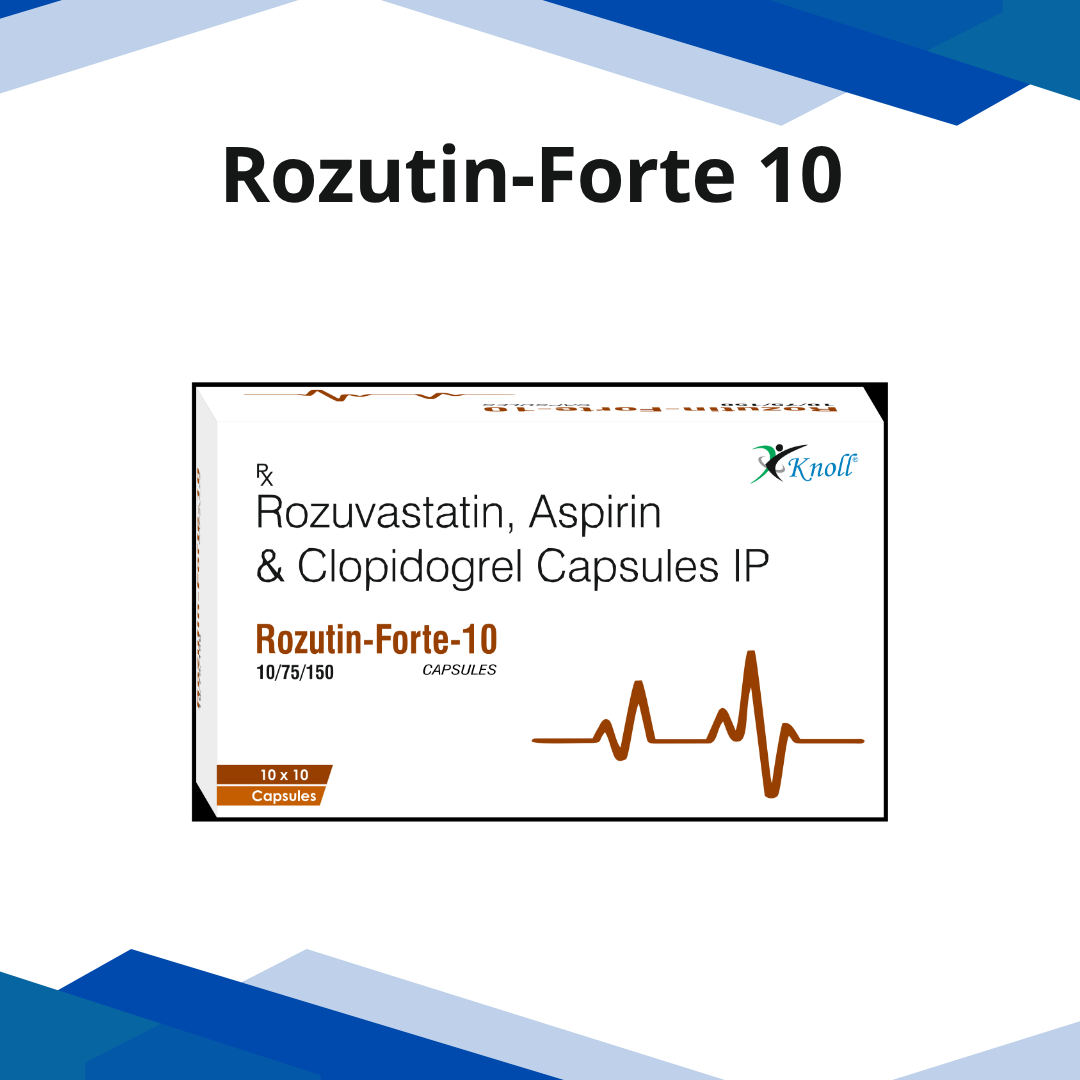
Rozutin-forte 10
No Prescription yet? Don’t worry! Click Here to Get Online Consultation
ROZUTIN F 10 TABLET is used to control elevated blood cholesterol levels in addition to proper diet, exercise and lifestyle changes. By reducing lipid levels in the blood, ROZUTIN F 10 TABLET can also be used to manage the risk of heart attack, stroke, atherosclerosis and other circulatory disorders. For more details kindly click on Medicine Salts below:
Aspirin
Aspirin (Acetylsalicylic Acid) Tablet
Aspirin is a drug with a number of nonsteroidal anti-inflammatory and antiplatelet agent-like actions. It is mainly used for its analgesic (pain-relieving), antipyretic (fever-reducing), and anti-inflammatory properties. Another indication frequently assigned for low-dose aspirin administration is to prevent the development of clots in high-risk individuals.
Uses
Pain & Fever: Instant relief is given in conditions such as headache, toothache, muscle aches, and menstrual pain, when aspirin is given.
Inflammatory Disorders: For swollen joint practice with increase in pain, usually seen in rheumatoid arthritis or osteoarthritis.
Blood Thinning: For some small blocks of time ($75\text{mg}$ or $150\text{mg}$), these doses of aspirin can aid the person in lowering heart attack or stroke risk by interfering with processes required for platelet aggregation.
Postoperative Maintenance: Since it's essential for the survival and proper function of life, aspirin is given after stent placement or bypass surgery.
Means of Drug Action
Aspirin acts by inhibiting the production of prostaglandins, which are chemicals in the body that signal pain as well as inflammation. It inhibits COX-1 in platelets, which means that new platelets cannot form clots effectively in the arteries.
Dosage & Administration
Popular Dose: For discomfort or fever, adults are usually advised $325\text{mg}$ to $650\text{mg}$ every 4 to 6 hours as required. For cardiac protection, follow cardiologist-prescribed dosing only.
Dosing Frequency: For heart-related use, do not miss a dose. Sudden discontinuation increases the risk of a cardiac event.
Precautions & Warnings
Risk of Reye Syndrome: Avoid aspirin in children and teenagers with viral infections.
GI Safety: Continuous use can increase the chance of stomach irritation. Inform your doctor if you have a history of ulcers or acid reflux.
Bleeding Risk: Clotting may take longer due to aspirin’s anticoagulant effect, leading to prolonged bleeding from minor cuts.
Alcohol: May increase the risk of stomach bleeding when taken with aspirin.
Mild Adverse Effects
Vomiting
Heartburn
Unexplained weakness
Unusual bruising or nosebleeds
Serious Symptoms
Black or tarry stools
Coughing up blood
Tingling in the ears
Frequently Asked Questions (FAQ)
Q: Is daily aspirin safe?
Daily use is recommended only under a doctor’s supervision, typically for heart disease prevention. For pain, use only as needed.
Q: Which is better, aspirin or paracetamol?
Both relieve pain and fever. Aspirin also has anti-inflammatory and blood-thinning effects, whereas paracetamol does not. Choice depends on the condition and patient tolerance.
Q: Can I take aspirin if I have asthma?
In some individuals, aspirin may trigger aspirin-induced asthma or worsen symptoms. Consult your doctor before use.
Q: What should I do if I miss a dose?
Take it when you remember. If it is close to the next dose, skip the missed dose. Do not double the dose.
Q: Should I stop aspirin before surgery?
Yes, typically 5–7 days before surgery to reduce bleeding risk—but always follow your doctor’s advice.
Clopidogrel
Clopidogrel 75mg Tablet
Clopidogrel is under the thienopyridine class of antiplatelet drugs (commonly known as "blood thinners"). It is used mainly to prevent severe cardiovascular events—like heart attacks and strokes—in high-risk patients. The mechanism is the selective inhibition of the adsorption of adenosine diphosphate (ADP) on the platelet receptor, thus preventing the activation of platelets from coming together and creating fatal blood clots within narrow blood vessels.
Therapeutic Indications
Acute Coronary Syndrome (ACS): Reduces the rate of heart attack and stroke.
Recent Stroke or Heart Attack: Indicated in cases with an emergent history of these conditions so as to prevent recurrence.
Peripheral Arterial Disease (PAD): Improves blood flow in patients with persisting arterial occlusion in the limbs.
Post-Stent Procedure: Put in after the placement of a coronary stent to prevent the stent from blocking (stent thrombosis).
Significant System Therapy
Secondary Prevention: It has a tremendous and proactive role in managing patients with chronic cardiovascular diseases.
Dual Antiplatelet Therapy (DAPT): In many cases, low-dose Aspirin is also given during the post-cardiologic procedure for protection.
Rapid Absorption: Although the peak plasma level is rapidly reached, its anti-platelet effect shows up around 3 to 4 days of good therapy.
Dosage and Administration
Standard Dosage: The most common dose is prescribed once a day and is generally 75 mg. In acute settings, a loading dose may be prescribed under physician supervision.
Consistency: It is better to take it at the same time every day, often in the evening, to maintain steady levels.
Method of Administration: Can be taken with or without food. Swallow the tablet whole with water.
Side Effects
Experimental data show that Clopidogrel is generally well-tolerated, with minimal adverse events.
Some patients may report:
Increased bleeding tendency or bruising (including nosebleeds)
Mild GI disturbances or indigestion
Diarrhea or abdominal pain
EMERGENCY: Contact your doctor immediately if you experience symptoms of severe bleeding, such as black or bloody stools, coughing up blood, or sudden severe headaches.
Precautions & Interactions
Surgical Procedures: Inform your surgeon or dentist before any procedure. You may need to stop the medication 5–7 days prior to reduce bleeding risk.
Liver/Kidney Conditions: Use cautiously in patients with moderate liver or kidney impairment.
Proton Pump Inhibitors (PPIs): Drugs like Omeprazole and Esomeprazole may reduce the effectiveness of Clopidogrel. Alternatives like Pantoprazole are often preferred.
Alcohol: Limit alcohol intake due to increased risk of stomach bleeding.
Questions and Answers (Q&As)
Q: Is Clopidogrel the same as an anticoagulant like Warfarin?
No. Clopidogrel is an antiplatelet agent. While both prevent clots, antiplatelets stop platelets from clumping, whereas anticoagulants (like Warfarin) interfere with clotting proteins.
Q: What to do if I cut myself while taking Clopidogrel?
Minor cuts may bleed longer. Apply firm, steady pressure with a clean cloth for at least 10 minutes. If bleeding persists, seek medical help.
Q: Can I take Ibuprofen or Aspirin while on Clopidogrel?
Avoid NSAIDs (like Ibuprofen or Naproxen) or additional Aspirin unless advised by your doctor, as this increases the risk of internal bleeding.
Q: How long do I need to take this medication?
Duration depends on your condition. Some patients may require it for 6–12 months after a stent, while others may need long-term or lifelong therapy. Never stop without consulting your doctor.
Q: Does Clopidogrel cause fatigue?
Fatigue is uncommon. However, unusual tiredness or pallor may indicate anemia due to hidden bleeding—consult your doctor promptly.
Storage
Store below 30°C in a cool, dry place. Keep away from moisture and always use the medication in its original blister pack.
Disclaimer:
This information is provided for general guidance only. Prescription medications should be used strictly under the supervision of a registered medical practitioner.
Rozuvastatin
Roxithromycin: Uses, Dosages, Side Effects
Some of the other features of this powerful antibiotic mom-generic of macrolide group are also talked about most of the time as the best answer for those allergic to penicillin. It is highly effective in stopping the bacteria that cause many infections in the body system.
Be it long-standing lung infections or skin infections—it kills the bacteria by affecting the protein synthesis of those bacteria and helps to stop the infection in the body.
Common Indications
Your physician may advise you to use this antibiotic in the following situations:
- Respiratory Tract Infections: In cases such as bronchitis and sinusitis; pneumonia.
- Ear, Nose, and Throat Infections: Here, the infections are tonsillitis and pharyngitis.
- Skin and Soft Tissue Infections: Commonly the causative organisms of erythematous rashes or pyoderfair boils.
- Genital Infections: Including non-gonococcal urethritis.
How to Use Roxithromycin
To get the most out of your treatment and make sure the infection does not return, please follow these simple guidelines:
- The emptier the stomach, the better: For absolute absorption, aim to take the tablet at least 15 minutes before eating or at least 3 hours after eating.
- Consistent Dosing is Crucial: To maintain a good steady level of the drug in your bloodstream, always dosing should be initiated at the same time each day.
- Complete the Course: Even if you wake up feeling very different from how you were feeling yesterday, never discontinue it. Stopping mid-treatment can result in antibiotic resistance and makes the killing of these nefarious bacteria difficult for future treatments.
Warnings and Safety Precautions
Although Roxithromycin is generally tolerated quite well, it may not be for everyone. Seek the approval of your healthcare provider if:
- You have had heart rhythm disorders such as QT prolongation.
- You have liver issues before from the onset since the action of the drug is mainly by the liver.
- Interactions: You are taking migraine medications like ergotamines, warfarin, or blood-thinning medications.
Note: This drug is distinctly for treating bacterial infections and treating no other; it will be ineffective against viral infections like flu or cold.
Frequently Asked Questions (FAQs)
How long will it take for Roxithromycin to start kicking in?
Most patients will start feeling better symptomatically in 48–72 hours. Nonetheless, it is important that the entire course have been tasted as per the doctor's prescription.
Can I drink alcohol while taking this medicine?
There is no "dangerous" interaction with alcohol, but it can dehydrate you and worsen potential adverse effects like dizziness and nausea. It is usually best to avoid alcohol until you have recovered from your infection.
What should I do if I miss a dose?
If you miss a dose, take it as soon as you remember. However, if it is almost time for your next dose, leave out the missed dose and continue with the rest of the doses. Never go for the two missed ones if the time means two doses.
4. How safe is roxithromycin in pregnancy?
Roxithromycin should be prescribed during pregnancy only when clearly needed and where advised by a specialist. Please discuss the issue with your doctor if you are pregnant, might be pregnant, or are nursing and beginning a new prescription.
5. What side effects can you expect?
Common side effects might include:
- Nausea or stomach cramps
- Diarrhea
- Headaches
- Changes in taste or smell
In case of a severe allergic reaction, such as swelling of the face or difficulty in breathing, get emergency medical help immediately.
At Gem Pharmacy, we make every effort to provide accurate, expert-written, and thoroughly reviewed information related to medicines. However, this information should not be considered a substitute for professional medical advice, diagnosis, or treatment from a qualified doctor.
The purpose of this information is to educate users and improve communication between patients and healthcare professionals. It should not be used to diagnose or treat any condition.
Always consult a certified healthcare professional before taking any medication.


Related products