
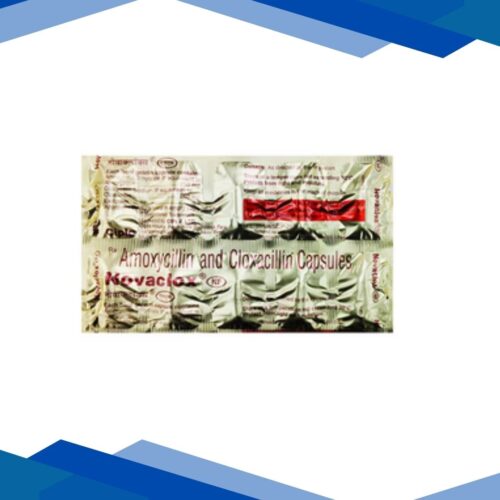
Amoxicillin (250mg) + Cloxacillin (250mg) Capsule
Amoxicillin + Cloxacillin is a powerful combination antibiotic used in the treatment of a broad-spectrum of bacterial infections. While Amoxicillin provides broad-spectrum coverage, Cloxacillin provides the critical defense layer against “penicillinase-producing” bacteria; that is, bacteria that acquired resistance to standard penicillin treatments. The combined effectiveness of this dual-action approach maintains its relevance in infections concerning skin, bones, and the respiratory tract, caused by resistant pathogens.
Product specifications
Product specifications
FeaturesDetails
Therapeutic ClassPenicillin-type Antibiotics
Salt CompositionAmoxicillin (250mg) + Cloxacillin (250mg)
Prescription RequiredYes (Schedule H Drug)
Common UseSkin infections, Bronchitis, Post-surgical prophylaxis
Dose FormatCapsule
Clinical Mechanism: How It Works
This medication interrupts the bacterial cell wall using a “Shield and Strike” strategy:
Amoxicillin (The Broad Strike): Inhibits the synthesis of the bacterial cell wall. By binding to specific proteins (PBPs), it causes the bacterial cell to rupture and die.
Cloxacillin (The Shield): One of the mechanisms bacteria commonly use to resist antibiotics is by synthesizing an enzyme called penicillinase that attacks the antibiotic. Cloxacillin is a “penicillinase-resistant” agent. This means that the drug retains its potency against bacteria that secrete penicillinase, whereas many other penicillins are inactivated by the enzyme.
Key Benefits & Uses
Skin & Soft Tissue: Used to treat cellulitis, furunculosis, infected wounds, and abscesses.
Respiratory Infections: The management of bacterial pneumonia and acute exacerbations of chronic bronchitis.
Bone & Joint Health: To fight against osteomyelitis (a severe kind of bone infection) when staphylococcal bacteria are expected.
ENT Support: Used for treating complicated infections of the ear (Otitis Media), nose (Sinusitis), and throat.
Post-Surgical Protection: Given to protect against bacterial colonization post-surgical procedures.
Expert Advice for Patients
The Best Way Is to Have This on an Empty Stomach: The optimal way for Cloxacillin to be absorbed properly is when taken at least 1 hour before or after meals.
The Most Important School Rule is Never, Ever Skipping Class: Do not skip or stop treatment early. Top up your stores of antibiotics whenever you take them. Even though you may feel 100% better soon, ensure the complete treatment to prevent resistance.
Drinking Water Is Essential: Keep sipping water constantly to help your kidneys excrete the drugs.
Probiotic Synergy: Antibiotics can easily kill off most of the good bacteria in your gut, so make sure you’re replenishing some by eating yogurt or popping a probiotic pill.
Safety Information & Warnings
Allergy Warning: The person must not take this medicine in case they have a known serious allergic reaction to Penicillins or Cephalosporins.
Kidney and Liver Function: Take this medicine only if you’re certain that you haven’t had jaundice before, or your renal function has been good. Being observed carefully may be prudent.
Contraceptive Counseling: This antibiotic might reduce the efficacy of birth control pills, so use an extra barrier (e.g., a condom) during the course.
Drug Interactions: Talk to the doctor if you are taking Allopurinol or Methotrexate. It’s best to stay clear of these meds with an antibiotic as interplaying effects could cause skin rashes or drug toxicity.
Frequently Asked Questions (FAQs)
Q: Is this medicine an absolute for common cold or viral flue?
A: No, it’s antibiotic for bacterial infections. It would remain ineffectual in the treatment of viral infections and may cause new bacterial resistance with unnecessary use.
Q: What if I forget my dose by mistake?
A: Take the missed dose as soon as you remember. Skip it if it is nearly time for your next scheduled dose. Do not double the dose to make up for the missed one.
Q: Is it OK to have some drinks when am on the course?
A: It’s neither highly recommended nor detrimental. However, it may badly dehydrate you, giving rise to a heavy bout of the side effects, such as nauseousness and feeling dizzy. Better not to have it until MAH boys and girls feel great.
Q: Why does the doctor require me to take it on an empty stomach?
A: Food will substantially reduce drug absorption. This is to ensure that most of the medicine goes into your bloodstream on an empty stomach to fight the infection.