


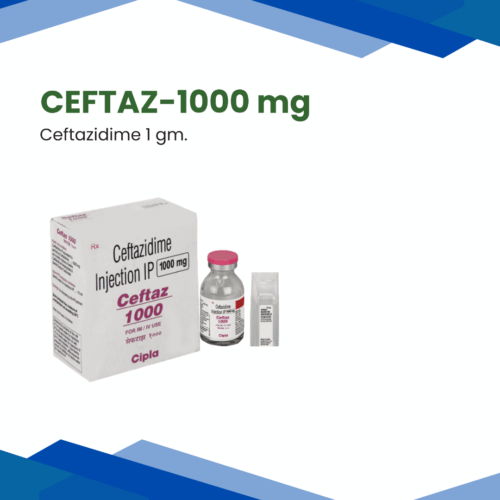
Ceftazidime Injection: Literature Review and Clinical Insight
Insightfully, Ceftazidime is one amongst the giants in the bio-antibiotic history. It differs in class, and it’s classified as a third-generation cephalosporin. Gram-negative bacteria, majorly Pseudomonas aeruginosa, have been specifically designed to be targeted by the compound. For multiple hospital infections with resistance due to liability against the enzyme resistance produced by bacteria to protect themselves, Ceftazidime remains the drug of choice.
Clinical Applications
Complex UTI: Consider LUTI cases if all the others failed to cure them.
Lower Respiratory Tract Infection: Serious pneumonia and lung infections in cysticosis.
Meningitis: Due to efficient penetration into the CNS.
Intraabdominal Infection: When put together with other medications, it provides a gap in the spectrum of antibacterial therapeutic activity.
Febrile neutropenia: Low white cell count or white blood cells in the case of oncology posed management of fever.
Quick Safety Checklist
Feature
Precaution Level
Notes
Pregnancy
Category B
Generally safe and use only if its benefit outweighs the risk to fetus
Breastfeeding
Caution
Minimal infiltration occurring; consult paediatrician
Driving
Safe
It usually does not compromise alertness, but therapy has made some people dizzy
Kidney Health
Crucial
Dose adjustment required for low creatinine clearance
How To Take
Ceftazidime does not come in pills. It is taken intravenously or intramuscularly.
Intravenously: Given as a drip over a period of 15–30 min.
Intramuscularly: Deep tissue injection is advocated in regions bearing a large clean muscle, like the glute.
Proversion
While there are very common side effects when using Ceftazidime, caution should be exercised, as not all may experience them.
Gastrointestinal: Nausea, vomiting, or mild diarrhea
Skin: Redness or mild swelling at the injection site
Sympression: Consult your healthcare provider if you develop a severe rash or fluid-filled blister over known skin ulcers.
Frequent Asked Questions
1. Does Ceftazidime work for MRSA?
Negative. While the crystal ball works against many bad bacteria, it is generally not effective against Methicillin-resistant Staphylococcus aureus (MRSA), so your Allopathic will provide you other antibiotics.
2. Can Ceftazidime be given to a patient allergic to Penicillin?
It depends on the severity of the penicillin allergy. In general, there is a slightly elevated risk of cross-reactivity (about 1–5%). Therefore it is recommended not to use cephalosporin Ceftazidime if the subject suffered an anaphylactic-type allergic reaction to penicillin.
3. Is there any contraindication of Ceftazidime interaction with other medications?
Yes, certain antibiotics like aminoglycosides or strong diuretics that raise the risk of kidney damage. You must give the full list of prescribed medication to your doctor.
4. In how many days will a person start feeling better with Ceftazidime medication?
Most patients start showing improvement within 48 to 72 hours; therefore, do not stop the treatment immediately even if you feel fine and much better against the bacteria.
5. What is the way out for maintaining this medicine?
Vials should be kept at room temperature, away from light. They can be used for an extended period on refrigeration after the powders are mixed with water.