Showing the single result
Filter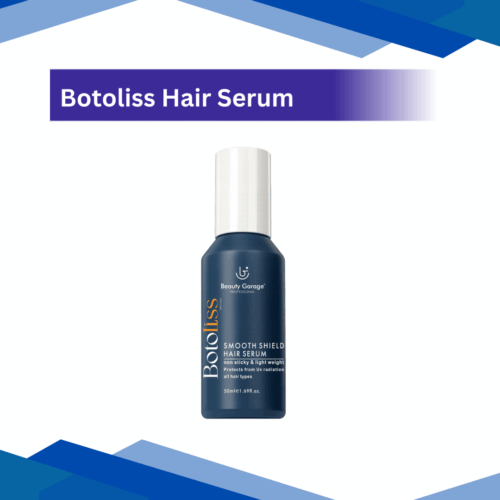
Botoliss Hair Serum 50 ml
Cyclopentasiloxane: Benefits, Use, and Safety of Skin
Cyclopentasiloxane, also referred to as D5, is a versatile and lightweight silicone frequently used in medical and cosmetic formulations. Unlike heavier oils, it is volatile, meaning it evaporates quickly after application. This unique property allows it to carry active ingredients across the skin or hair, leaving behind a smooth, silky, and velvety finish.
Operation Mode
Calling Cyclopentasiloxane simply a plasticizer is not entirely accurate. More precisely, it forms a thin protective film on the skin that remains breathable and permeable. This helps maintain skin hydration without blocking or clogging pores. Additionally, its low surface tension allows creams and ointments to spread evenly and smoothly across the skin.
Important Advantages and Expected Outcomes
1. Improved Spreadability: Helps topical medications and sunscreens spread uniformly across the skin.
2. Mild Weight-Hydration: Softens the skin and provides lightweight hydration without the heavy feel of traditional oils.
3. Scar Management: Often used in silicone-based scar treatments, such as scar gels, to help reduce the appearance of keloids and hypertrophic scars.
4. Frizz Control: In hair care, it coats the hair shaft, reducing friction, improving detangling, and providing heat protection.
5. Non-Comedogenic: Due to its large molecular size, it generally does not penetrate pores, making it safe for acne-prone skin.
Safety Advice & Quick Facts
Category
Status
Guidance
Skin Type: All Types – Suitable for oily, dry, and sensitive skin due to its non-irritating nature.
Absorption: Minimal – It evaporates from the surface, and less than 0.2% is typically absorbed by the skin.
Pregnancy: Safe – Generally considered safe for topical use during pregnancy.
Environment: Caution – It is a stable compound, so follow local guidelines for disposal of wash-off products.
Common Side Effects
Cyclopentasiloxane is generally considered well tolerated by regulatory authorities, including the Cosmetic Ingredient Review (CIR) panel. However, mild reactions may occasionally occur:
Mild Irritation: Temporary redness may appear if applied to very sensitive, damaged, or broken skin.
Allergic Reaction: In rare cases, some individuals may develop a localized rash due to silicone sensitivity.
Pro Tip: When using a new product containing this ingredient, apply a small amount on the inner forearm and observe for 24 hours before full application.
Frequently Asked Questions (FAQs)
1. Is Cyclopentasiloxane the same as Dimethicone?
No. Although both are silicones, Cyclopentasiloxane is a volatile cyclic silicone, while Dimethicone is a linear silicone that remains longer on the skin and forms a stronger protective barrier.
2. Will this ingredient cause breakouts or acne?
Cyclopentasiloxane is generally considered non-comedogenic. It does not clog pores or suffocate the skin; instead, it forms a light, breathable film.
3. Why is it used in waterproof sunscreens and makeup?
Its water-resistant properties help UV filters and pigments adhere to the skin, preventing the product from running or washing away easily during sweating or water exposure.
4. Is Cyclopentasiloxane safe for daily use?
Yes. Many skincare and pharmaceutical topical products contain it for daily use. It is considered non-toxic and does not bioaccumulate significantly when applied topically.
5. Is it beneficial for anti-aging?
While Cyclopentasiloxane is not an anti-aging active ingredient like Retinol, it provides a temporary soft-focus effect that can visually reduce the appearance of fine lines and wrinkles by smoothing uneven skin texture.