
Showing all 4 resultsSorted by popularity
Filter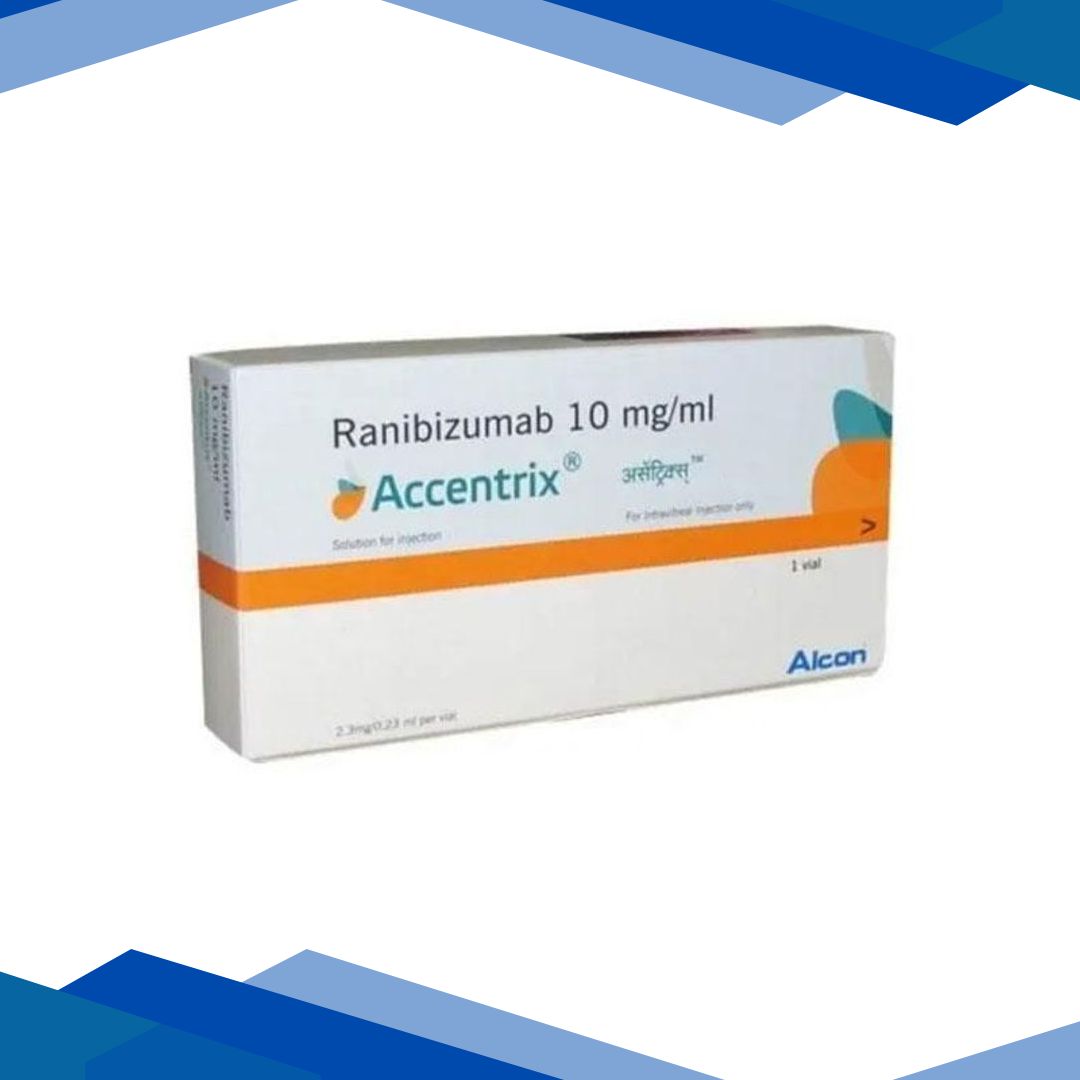
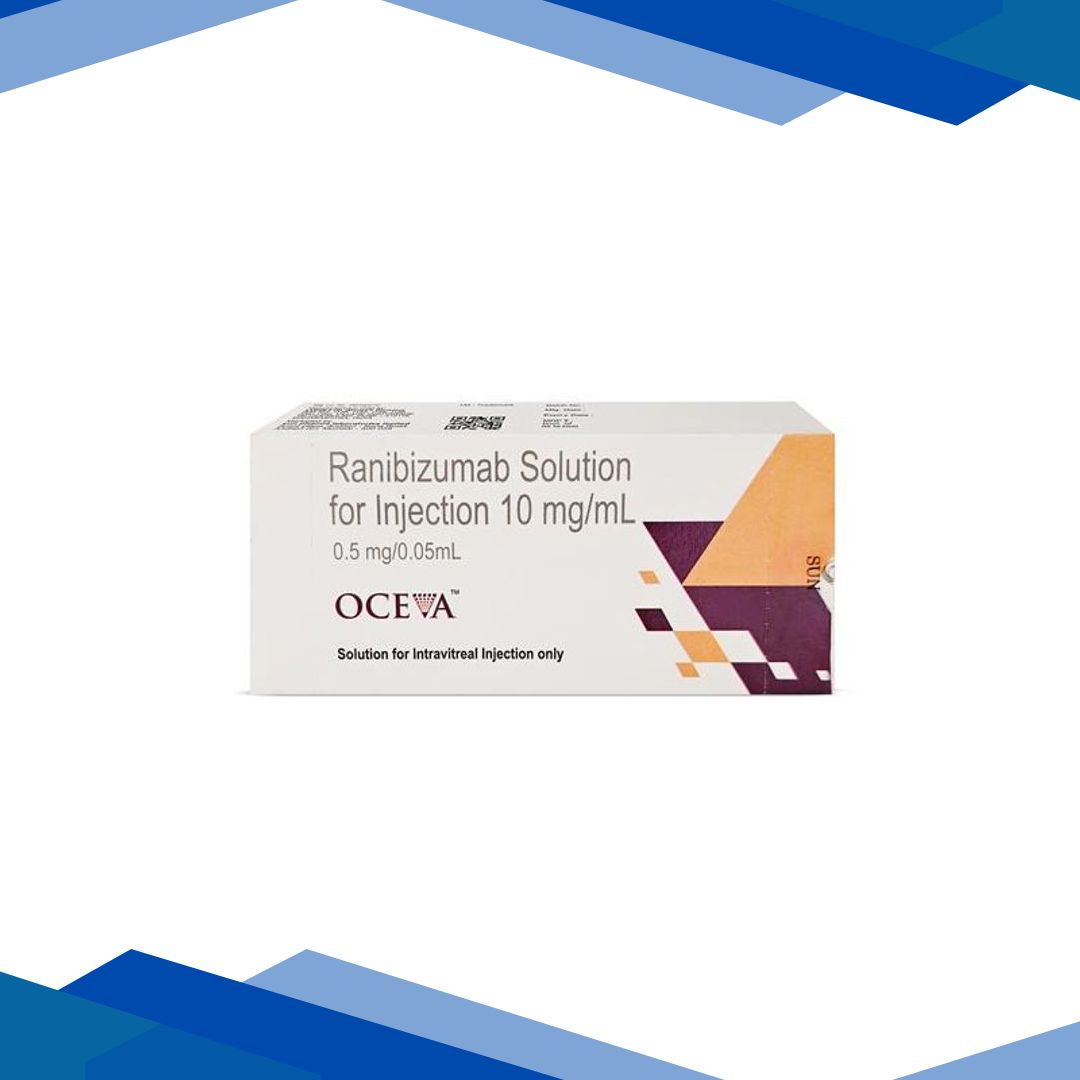
Ranibizumab Injection, Intravitreal
Ranibizumab is a highly specialized recombinant humanized IgG1 kappa isotype monoclonal antibody fragment made for intraocular use, meaning it stays within the eye and it is not intended for anything else. It works as an anti-angiogenic medicine and also as a vascular endothelial growth factor-A (VEGF-A) antagonist, helping slow down progressive vision impairment by stopping abnormal capillary growth and cutting down the exudative fluid leakage in the retinal layers.
Therapeutic Class: Ophthalmic Anti-neovascularization Agents
Pharmacological Class: Anti-VEGF Monoclonal Antibody Fragment
Standard Presentation: Single-use glass vials and pre-filled syringes, often 0.23 ml or 0.3 ml solutions
Prescription Mandate: Strictly Schedule H1 (requires a specialist prescription)
Administration: Intravitreal injection only, meaning only a certified vitreoretinal surgeon should administer it
Primary Uses & Clinical Benefits
1. Neovascular (Wet) Age-Related Macular Degeneration (AMD)
Wet AMD is a major reason for severe and irreversible central vision loss in older adults. Ranibizumab targets the driving VEGF proteins directly by binding to active forms, which helps stop fragile new blood vessel sprouting under the macula. It also reduces blind spots that can show up when leakage damages central vision.
2. Diabetic Macular Edema (DME) & Diabetic Retinopathy
Long term elevated blood sugar harms the retina’s microvasculature, leading to fluid build up near the central macula. This injection helps reduce macular swelling, supports steadier capillary permeability, and helps preserve retinal clarity for everyday needs like reading and driving.
3. Macular Edema Secondary to Retinal Vein Occlusion (RVO)
When the primary retinal vein that drains blood gets blocked, fluid can accumulate quickly and cause sudden visual distortion. Ranibizumab gives anti-permeability help to reduce localized edema and support healthier retinal thickness.
4. Choroidal Neovascularization (CNV) Secondary to Pathological Myopia
In advanced nearsightedness, eyeball elongation stresses and can tear deeper retinal tissues. This can trigger compensatory growth of abnormal choroidal vessels, leading to scarring and hemorrhage. Ranibizumab works to prevent that follow-on abnormal vessel activity.
Mechanism of Action: How It Protects Vision
Ranibizumab is engineered to lack an Fc region, which keeps the molecule compact, with an approximate molecular weight of 48 kilodaltons. Because it is relatively small, it can move through human retinal layers to reach the intended target site.
It binds with high affinity to the receptor-binding domain of active human VEGF-A isoforms. After binding, it blocks VEGF-A from docking to its native endothelial receptors, VEGFR1 and VEGFR2. This disrupts the downstream signal pathway tied to endothelial cell multiplication, neo-vascular branching, and inflammatory vascular leakage.
Dosing Profile & Medical Administration
Clinical Protocol:
This treatment must never be self-administered, and it must never be used like a routine intravenous infusion. It is injected directly into the vitreous cavity under sterile operating room conditions.
Standard Dosing Schedule:
Initial Phase: Usually given as a 0.5 mg dose, or 0.3 mg depending on the diagnostic indication, once every 28 days, for about 3 consecutive months.
Maintenance Phase: After the initial phase, your retina specialist usually switches you to a Treat-and-Extend plan, or to a pro re nata (PRN) as-needed schedule, guided by periodic Optical Coherence Tomography (OCT) imaging.
Pre-Injection Protocol:
The eye care team cleans the area with an antiseptic iodine wash, then applies localized anesthetic drops so the injection process stays as painless as possible.
Adverse Effects and Management
Since this medication goes straight into the intraocular space, most side effects are localized to the treated eye.
Common and Transitory Symptoms:
- Conjunctival hemorrhage (a noticeable but harmless red spot on the white of the eye from temporary surface vessel breakage)
- Mild eye irritation, itching, or a “foreign body” feeling (like sand in the eye)
- Vitreous floaters (small temporary spots or threads drifting across your view)
- Briefly increased intraocular pressure right after the procedure
Serious Complications Requiring Urgent Emergency Care:
- Endophthalmitis – a rare but severe internal eye infection (deep redness, pain, light sensitivity, rapid vision drop)
- Rhegmatogenous Retinal Detachment – sudden floaters, flashes, or a shadow over vision
- Cataract progression (if the lens is accidentally touched during injection)
Critical Safety Restrictions & Contraindications
Patient Risk Parameter / Compliance Status / Essential Clinical Warning
Active Ocular Infection: ❌ Absolutely contraindicated
Never administer if there is any active bacterial, viral, or fungal infection in or around either eye.
Intraocular Inflammation: ❌ Contraindicated
Do not give it if the patient has active uveitis or significant internal ocular inflammation, until that issue is fully controlled.
Pregnancy: ⚠️ High caution
Available human data is limited. Systemic absorption is low, but VEGF matters for embryogenesis, so use only when the visual benefit clearly outweighs fetal risk. Effective contraception is needed for at least 3 months after the final dose.
Breastfeeding: ❌ Not recommended
Small amounts of monoclonal antibodies may reach breast milk. Nursing should be paused during active treatment.
Frequently Asked Questions (FAQs)
Q. What instructions should I strictly follow right after a Ranibizumab injection?
To reduce infection risk inside the eye, avoid washing your hair, avoid splashing water on your face, and avoid taking a direct shower for 48 hours after the injection. Do not rub or touch the eye at any time. Avoid swimming or using eye makeup for at least a full week. Also switch from contact lenses to standard spectacles until your specialist clears you again.
Q. Will I feel pain when the needle enters my eye?
The procedure can be intimidating, but most patients experience minimal discomfort. Your ophthalmologist uses strong localized anesthetic drops or a small local gel to numb the surface. Many people report pressure rather than sharp pain.
Q. How does Ranibizumab differ from other anti-VEGF agents like Bevacizumab?
Both block VEGF to protect vision. Ranibizumab was developed specifically for use inside the eye, as a smaller antibody fragment. Because it is smaller, it is thought to clear from the bloodstream faster than full-length antibodies such as Bevacizumab, which may reduce the theoretical likelihood of systemic cardiovascular adverse effects.
Q. Can I drive myself home right after receiving my injection?
No. Your clinician uses dilating drops to enlarge your pupils for a proper retinal evaluation before the injection. Afterward, the injection can cause temporary blurring or light sensitivity. You should arrange a family member or friend to take you home safely.