
Showing the single result
Filter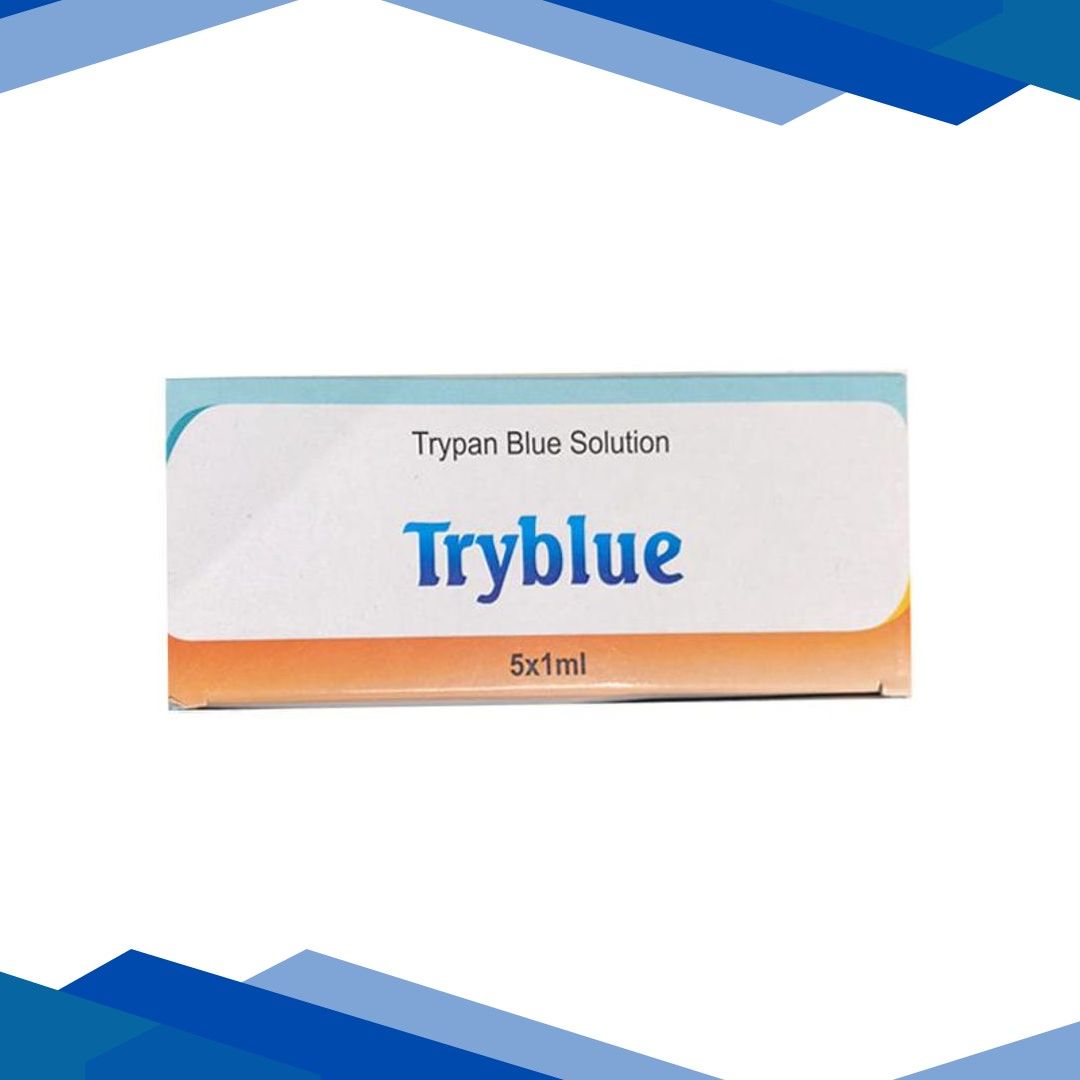
Trypan Blue: Uses, Side Effects, and Surgical Properties
The Trypan Blue-Ophthalmic Solution is an essential dye for discerning visual use by eye surgeons, particularly during complex eye surgeries, mainly cataract surgeries. It behaves as a ‘staining agent’, dyeing the anterior capsule of the lens blue, thus taking on a sharp contrast that can occupy the surgeon with great visibility. Starting from this point, surgery becomes safer and the surgeon becomes more precise.
Most Uses of Trypan Blue
Cataract Surgery: It irrevocably stains the front layer of the lens of the eye which is often invisible once a cataract is ‘mature’ or ‘white’.
Vesicles: This will permit the performance of an accurately shaped capsulorhexis (or circular opening in the lens membrane), thereby reducing the risks of adherence and other complications.
Vitreoretinal Surgery: Sometimes, the dye can be used to illuminate rather delicate retinal membranes that need removal.
How It is Done
Trypan Blue is solely for clinical use by professional doctors. No “drop” is for personal purposes. The surgeon injects a tiny amount of it, most commonly 0.06%, in the front chamber of the eye during the surgery. The dye then instantly dyes the tissue. Now the respective amount of dye is washed away clean by the surgeon with saline solution before or by the end of the time for operation.
Safety & Precautions at a Glance
Feature – Guidance
Usage: For Professional Use Only. Must be administered by an ophthalmologist in a sterile OT setting.
IOL Compatibility
Warning: Should not be used when a “dry state” hydrophilic acrylic lens is implanted, as this lens may absorb the blue dye.
Recovery
Through convalescence, you may find your vision blurred or slightly lighted in blue. It is a temporary condition.
Allergy
Please kindly notify your doctor if you have had an allergic response to any dye or another medication.
Side Effects of Limited Quickness
Trypan Blue is generally accepted to be safe and local in action, but some of these simply short-lived events may still happen:
An eye filled with an always-temporary blue hue, for a period of hours.
Some inflammation or redness, which are common postoperative occurrences.
Pressure inside the eye seems to increase (a thing that will charge your surgeon).
Frequently Asked Questions (FAQs)
1. Will Trypan Blue permanently change my eye color?
A: No. The dye is introduced in such small quantities and washed out during the procedure that any blue tint is usually cleared in 24–48 hours by the natural process.
2. Is it safe for everyone?
A: Most cataract patients are candidates for its use. However, this dye is contraindicated in certain IOLs that tend to stain. Your surgeon will determine the right aid for particular lens in surgery.
3. Can I purchase Trypan Blue for red-eye or irritation?
A: Absolutely not. Trypan Blue is a surgical tool, not a therapeutic eye drop. It is only utilized inside a surgery room to enable the surgeon to see better during delicate procedures.
4. Will it sting or feel like pain?
A: No sting! Trypan Blue is injected once the eye is anesthetized (either locally or topically), so the patient will not feel any form of pain or stinging sensation as the dye is added. Post-operative discomfort shall be from the operation itself and will probably not originate from the use of the dye.
5. Are there any long-term risks associated with Trypan Blue?
A: Most studies have shown that when used under optimal concentrations of 0.06%, Trypan Blue poses no lasting harm to the internal eye structures.