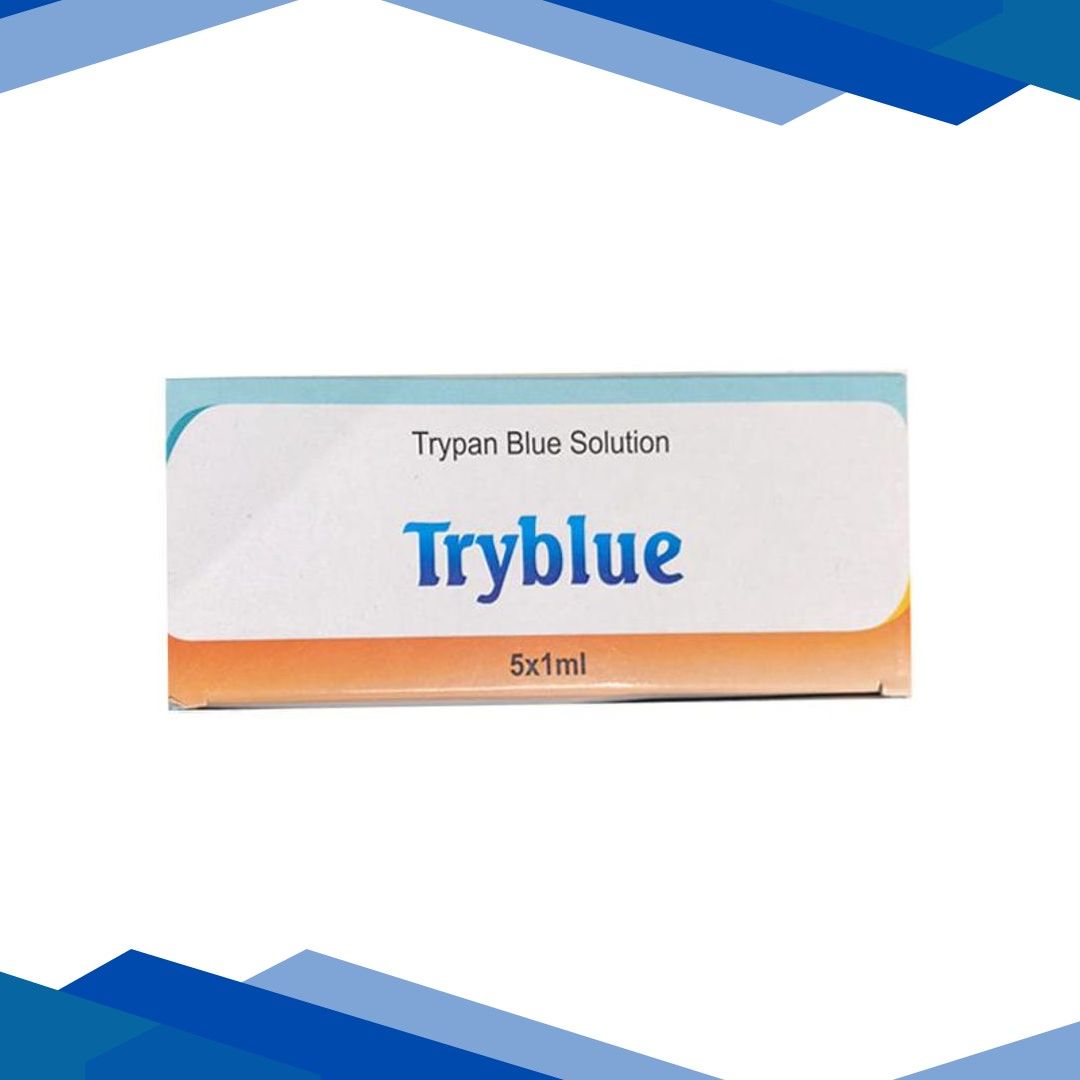
TRYBLUE SOLUTION 1ML
❌ Due to high demand, this product is currently out of stock. New stock will be available shortly.
👉 Click here to Buy Same Salt medicine
TRYBLUE SOLUTION is a blue dye used in certain medical and surgical procedures, especially in eye care. It works by staining specific tissues, which helps doctors see delicate structures more clearly under a microscope. This improved visibility can make it easier to identify and handle membranes, capsules, or other transparent parts during surgery. TRYBLUE SOLUTION is most commonly used in ophthalmic procedures, such as cataract surgery and some retinal operations, where precise visualization is important. It does not treat an illness by itself, but it serves as a useful diagnostic and surgical aid. Because it is used in specialized procedures, it should only be handled and applied by trained healthcare professionals.
Description
TRYBLUE SOLUTION is a diagnostic dye used mainly in ophthalmic and laboratory settings, especially where clear visualization of tissue is important. in eye surgery, it is commonly used to stain the anterior capsule of the lens so that the surgeon can more easily see the capsule during procedures such as cataract surgery, particularly when the natural red reflex is weak or absent. this improved visibility helps the surgeon perform delicate steps more safely and accurately. TRYBLUE SOLUTION does not treat an eye disease on its own; rather, it assists healthcare professionals during procedures by enhancing contrast and highlighting structures that would otherwise be difficult to see.
this medicine works by selectively binding to devitalized or poorly transparent tissue and providing a blue coloration that improves contrast under surgical lighting. in the eye, it is especially useful for staining the lens capsule, making capsulorhexis safer and more controlled. because it is a dye used for visualization, its benefit is procedural rather than therapeutic in the usual sense. it is typically handled and administered by trained medical professionals in a controlled clinical environment. proper use is important because, although generally considered safe when used as directed, the eye is highly sensitive and inappropriate exposure can cause irritation or other adverse effects.
TRYBLUE SOLUTION is intended for patients undergoing certain ophthalmic procedures and for situations where tissue viability or anatomical outlines need to be identified clearly. in many cases, patients will not use it themselves; instead, it is applied by the surgical team. its role is supportive but very important, since good visualization can reduce the risk of complications and help achieve better procedural outcomes. because this product is used in specific medical settings, questions about suitability, safety, and expected effects should always be directed to an eye specialist or another qualified healthcare professional.
ingredients
- TRYBLUE SOLUTION: the active dye responsible for staining tissue and improving contrast during medical procedures. in ophthalmic use, it helps outline the anterior lens capsule and other structures so they can be seen more clearly under the microscope. its main benefit is visualization, not treatment of disease.
- purified water or sterile aqueous vehicle: provides the liquid base that allows the dye to be administered in a sterile, controlled manner. the vehicle itself does not provide therapeutic action but is essential for safe application.
- buffering agents or stabilizers (if present in the product formulation): help maintain the correct ph and stability of the solution. this can reduce irritation and help preserve product quality during storage and use.
- preservative-free sterile formulation (in many ophthalmic preparations): some medical formulations are designed without preservatives to reduce the risk of ocular irritation or toxicity, especially when the product is intended for direct eye use during surgery.
key uses
- capsular staining during cataract surgery: TRYBLUE SOLUTION is widely used to stain the anterior lens capsule when the red reflex is poor. this makes the capsule more visible and helps surgeons create a safer opening during surgery.
- improving visualization in difficult ophthalmic procedures: it may assist in procedures where anatomical structures are hard to distinguish, allowing better precision and reducing the chance of accidental damage.
- tissue viability assessment in laboratory or specialized clinical settings: in some non-ophthalmic contexts, the dye may be used to help distinguish living cells from non-viable ones, as non-viable cells may take up the dye more readily.
- adjunct to microsurgical planning: by enhancing contrast, it supports the surgeon’s ability to assess tissue margins and improve procedural control, especially in delicate eye surgeries.
how to use
TRYBLUE SOLUTION is generally used only by trained healthcare professionals in a clinical or surgical setting. it is not a medicine for routine self-administration at home. in ophthalmology, it is applied carefully to the targeted area according to the surgeon’s judgment and the procedure being performed. the exact method can vary depending on the product formulation, the type of surgery, and the patient’s eye condition. because the dye is intended to improve visibility rather than produce a long-lasting pharmacologic effect, it is typically used during the procedure and then removed or diluted as part of the surgical process.
patients should follow all pre-operative and post-operative instructions given by the eye specialist. if TRYBLUE SOLUTION is being used in a surgical procedure, inform the healthcare team about any history of eye allergies, prior reactions to dyes or antiseptics, and any current medicines being used. do not attempt to self-administer or reuse the product unless specifically instructed and trained to do so by a qualified professional. since technique and sterile handling are critical, improper use may increase the risk of irritation, infection, or other complications.
safety information
- warnings: TRYBLUE SOLUTION should be used only under medical supervision, particularly in sterile eye procedures. direct exposure to the eye tissues should be controlled and limited to the intended surgical purpose. incorrect use may lead to irritation, corneal staining, or inflammation. if the solution is contaminated or not stored properly, it should not be used.
- side effects: common side effects may include temporary eye irritation, mild redness, watering, or a brief sensation of discomfort after exposure. less common but more serious effects can include corneal epithelial toxicity, increased inflammation, allergic reaction, or, in rare cases, tissue staining beyond the intended area. any severe pain, vision changes, swelling, or persistent redness should be reported promptly.
- precautions: use caution in patients with a history of sensitivity to dyes, severe eye surface disease, or compromised corneal health. extra care is needed in patients with pre-existing ocular inflammation or fragile ocular tissues. it should only be handled with sterile technique by trained personnel.
- pregnancy/breastfeeding: because TRYBLUE SOLUTION is used primarily in procedural settings and not as a routine systemic medication, exposure is usually limited. however, if a patient is pregnant or breastfeeding, the ophthalmologist should be informed before the procedure so the risks and benefits can be reviewed. seek individualized medical advice when needed.
- interactions: there are no widely recognized systemic drug interactions in the usual sense because TRYBLUE SOLUTION is typically used locally in a procedure. however, concurrent use with other ocular agents, antiseptics, or intraoperative dyes may affect tissue exposure or irritation risk. alcohol is not known to directly interact with the dye, but patients should still follow surgical guidance and avoid anything that may affect recovery or anesthesia instructions.
additional information
- storage: store according to the manufacturer’s instructions, usually in a cool, dry place protected from light. keep the container tightly closed and maintain sterility. do not use if the solution is discolored, cloudy, expired, or the seal is broken.
- missed dose: this usually does not apply in the same way as with regular medicines because TRYBLUE SOLUTION is used during a scheduled procedure under professional supervision. if a planned procedure is delayed, the healthcare team will decide the appropriate time for use.
- overdose: excessive exposure may increase the chance of eye irritation, unwanted staining, or tissue toxicity. if overuse or accidental contact occurs, the medical team should manage it immediately. patients should not try to treat the problem themselves; urgent ophthalmic assessment may be needed if significant pain or vision changes occur.
- habit forming: no. TRYBLUE SOLUTION is not habit-forming and does not cause dependence. it is a procedural dye used for visualization rather than a medicine with addictive potential.
frequently asked questions
what is TRYBLUE SOLUTION used for?
TRYBLUE SOLUTION is mainly used in eye surgery to stain the lens capsule and improve visibility. it helps surgeons see delicate structures more clearly, especially when the natural red reflex is weak.
does TRYBLUE SOLUTION treat eye disease?
no. it is not a treatment for an eye disease. it is a diagnostic or surgical aid that helps the doctor perform a procedure more safely and accurately.
is TRYBLUE SOLUTION safe for the eyes?
when used correctly by trained professionals, it is generally considered safe and useful. however, like any ocular product, it can cause irritation or other side effects if used improperly or if a patient has a special sensitivity.
can TRYBLUE SOLUTION be used at home?
no, it is not intended for home use. it is typically administered in a sterile clinical environment by an eye specialist or surgical team.
what side effects can happen after use?
temporary redness, irritation, watering, or mild discomfort may occur. rarely, there may be stronger inflammation, corneal toxicity, or allergic-type reactions. any severe symptoms should be assessed by a doctor.
who should be careful before using it?
people with eye allergies, fragile corneas, active eye inflammation, or a history of reactions to dyes should inform their doctor. pregnant or breastfeeding patients should also discuss its use with a healthcare professional.
does TRYBLUE SOLUTION interact with other medicines?
it usually does not have major systemic drug interactions because it is used locally. still, the surgical team should know about all eye drops, antiseptics, and medications being used to avoid irritation or procedural issues.
what should i do if i have pain after the procedure?
mild discomfort can sometimes occur, but severe or persistent pain, blurred vision, significant redness, or swelling should be reported promptly to the eye specialist for evaluation.
can TRYBLUE SOLUTION affect vision?
it is used to support procedures and should not normally cause long-term vision problems when used appropriately. however, any procedure involving the eye carries some risk, so follow-up care is important.
is TRYBLUE SOLUTION habit forming?
no. it has no addictive properties and is not used regularly like a maintenance medication.
what if the solution is accidentally exposed to the eye outside the intended procedure?
if accidental exposure occurs, the area may need irrigation or assessment depending on the situation. a healthcare professional should be consulted promptly, especially if there is pain, redness, or vision change.
how should i prepare before a procedure using TRYBLUE SOLUTION?
follow the surgeon’s instructions carefully. mention all current medicines, eye conditions, allergies, and any history of sensitivity to dyes. do not use any eye drops or contact lenses unless your doctor says it is okay.
this information is for educational purposes only and should not be considered medical advice. always consult a qualified healthcare professional before use.
At Gem Pharmacy, we make every effort to provide accurate, expert-written, and thoroughly reviewed information related to medicines. However, this information should not be considered a substitute for professional medical advice, diagnosis, or treatment from a qualified doctor.
The purpose of this information is to educate users and improve communication between patients and healthcare professionals. It should not be used to diagnose or treat any condition.
Always consult a certified healthcare professional before taking any medication.