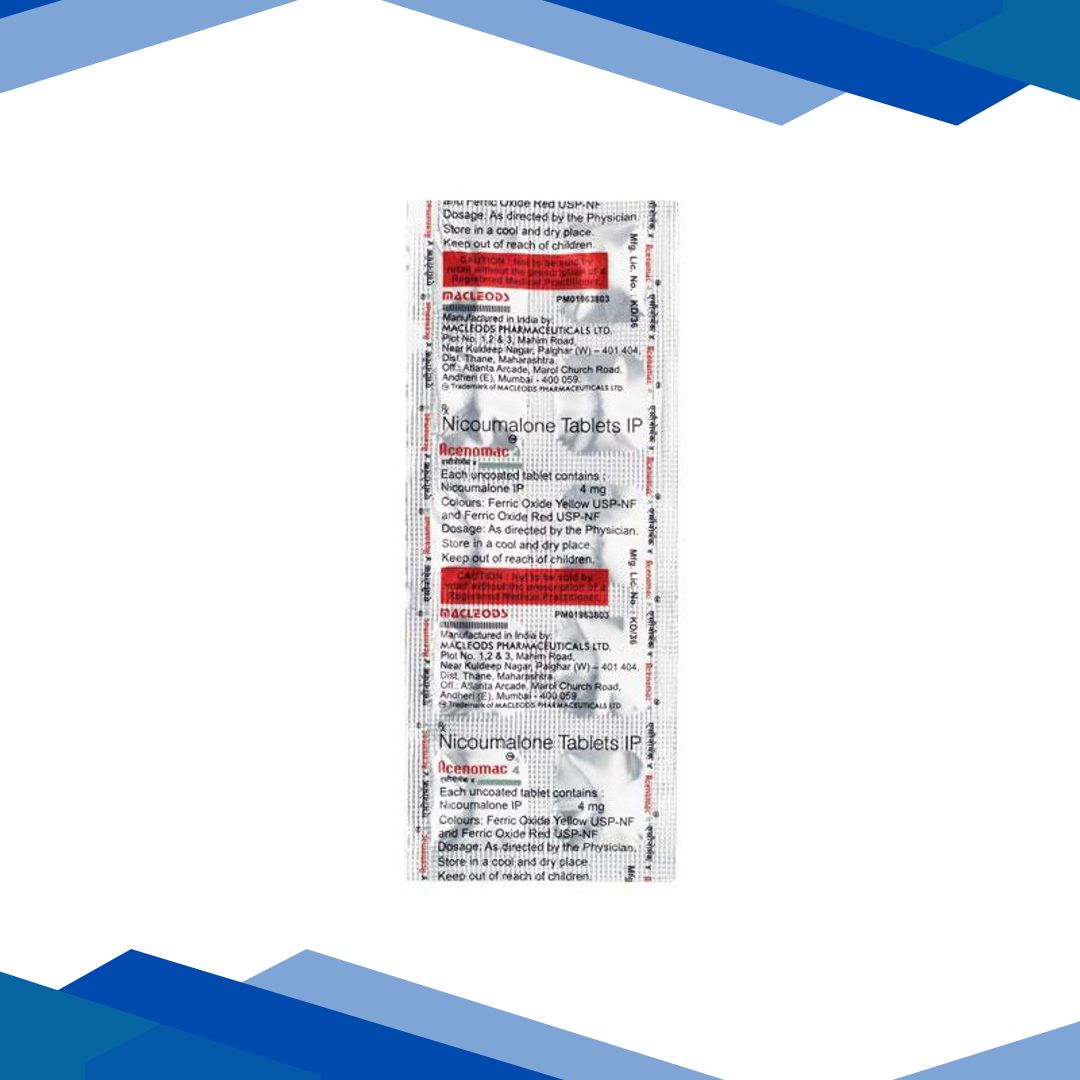
Acenomac 4mg Tablet 10’S
Acenomac 4mg Tablet is an oral anticoagulant medicine, often called a ?lood thinner.?It helps reduce the blood? ability to form harmful clots by blocking the action of vitamin K, which is needed to make certain clotting factors in the liver. Because of this, Acenomac 4mg Tablet is used to help prevent and treat conditions where blood clots can be dangerous, such as deep vein thrombosis, pulmonary embolism, and clot-related stroke risk in some people with irregular heart rhythms or certain heart valve problems. It does not dissolve existing clots, but it helps stop them from getting larger and lowers the chance of new clots forming. Since its effect can vary from person to person, treatment is usually monitored by a healthcare professional to help keep therapy safe and effective.
Description
Acenomac 4mg Tablet is an oral anticoagulant medicine used to help prevent and treat abnormal blood clot formation. it belongs to the group of medicines commonly known as vitamin k antagonists, which means it reduces the body? ability to make certain clotting factors that depend on vitamin k. by slowing down the blood clotting process, Acenomac 4mg Tablet lowers the risk of harmful clots traveling through the bloodstream or blocking important vessels. this makes it especially useful in conditions where clot formation can lead to serious complications such as stroke, pulmonary embolism, or recurrent deep vein thrombosis.
this medicine does not dissolve existing clots immediately, and it is not a painkiller or anti-inflammatory medicine. instead, it works gradually by affecting the liver? production of clotting proteins. because of this delayed action, Acenomac 4mg Tablet is often used in long-term clot prevention and treatment plans, and the response to therapy must be monitored carefully with blood tests that measure clotting activity. the dose and frequency are highly individualized, as even small changes in diet, other medicines, or overall health can affect its action.
Acenomac 4mg Tablet is typically prescribed for people at high risk of blood clots, including those with certain heart rhythm disorders, mechanical heart valves, some clotting disorders, or a history of venous thromboembolism. it may also be used when a clinician wants precise control over anticoagulation and long-term monitoring. because the medicine can increase bleeding risk, safe use depends on regular follow-up, attention to drug interactions, and awareness of warning signs such as unusual bruising or bleeding. patients should use it exactly as directed by a healthcare professional.
ingredients
- Acenomac 4mg Tablet: this is the active anticoagulant ingredient. it works by inhibiting vitamin k-dependent clotting factor production in the liver, which helps prevent the blood from clotting too easily. its main benefit is reducing the risk of dangerous blood clots in veins, lungs, the brain, and other parts of the body.
- tablet or capsule excipients: depending on the brand and formulation, Acenomac 4mg Tablet products may also contain inactive ingredients such as fillers, binders, disintegrants, coating agents, and stabilizers. these help shape the medicine, improve swallowing, support proper absorption, and maintain product stability, but they do not provide the anticoagulant effect.
key uses
- prevention of stroke in atrial fibrillation: in people with atrial fibrillation, blood can pool in the heart and form clots. Acenomac 4mg Tablet lowers the chance that a clot will travel to the brain and cause a stroke.
- treatment and prevention of deep vein thrombosis: it helps treat clots in the deep veins, usually of the legs, and reduces the risk of the clot growing or returning.
- prevention of pulmonary embolism: by reducing clot formation, it helps lower the risk that a clot will move to the lungs and block blood flow.
- protection in patients with mechanical heart valves: people with artificial heart valves often need anticoagulation to prevent clots from forming on the valve surface or causing embolic events.
- reduction of recurrent clotting episodes: in some patients with a history of repeated thromboembolism, long-term anticoagulation may be required to reduce future events.
- selected clotting disorders or high-risk medical conditions: a clinician may prescribe it in certain inherited or acquired conditions where the risk of abnormal clotting is high and ongoing prevention is necessary.
how to use
Acenomac 4mg Tablet should be taken exactly as prescribed by a healthcare professional, because its effect is highly individualized and depends on regular blood test monitoring. it is usually taken by mouth once daily, often at the same time each day to help maintain steady effects. tablets should be swallowed with water, with or without food, unless your clinician gives specific instructions. since the medicine acts slowly, it is important not to expect immediate results and not to stop or change the dose on your own.
regular monitoring of clotting tests is essential, commonly using the inr, to ensure the blood is not too thin or not thin enough. your clinician may adjust the dose based on test results, medical conditions, and other medicines you take. diet can also affect this medicine, especially foods rich in vitamin k such as some leafy green vegetables. you do not usually need to avoid these foods completely, but it is important to keep your intake consistent. if you are ever unsure about a missed dose, a new medicine, illness, or dietary change, contact your healthcare professional for advice rather than guessing.
safety information
- warnings: Acenomac 4mg Tablet can cause serious bleeding, including internal bleeding that may not be obvious at first. seek immediate medical help for signs such as black stools, blood in urine, vomiting blood, coughing blood, severe headache, sudden weakness, dizziness, fainting, or unexplained large bruises. any injury, fall, or head trauma should be taken seriously while on this medicine.
- side effects: common side effects may include easy bruising, nosebleeds, bleeding gums, and mild stomach discomfort. more serious effects include major bleeding, anemia from blood loss, skin necrosis, or rare severe allergic reactions. any unusual symptom should be reported promptly, especially if it suggests bleeding or an immune-type reaction.
- precautions: use caution if you have liver disease, kidney disease, a history of bleeding problems, uncontrolled high blood pressure, stomach ulcers, recent surgery, frequent falls, or alcohol misuse. it may not be appropriate for people who cannot reliably attend monitoring visits. extra care is needed before dental work, surgery, injections, or other procedures.
- pregnancy/breastfeeding: Acenomac 4mg Tablet is generally not considered safe during pregnancy because it can harm the developing baby and may increase the risk of birth defects or bleeding complications. if pregnancy is possible or occurs during treatment, contact a clinician immediately. breastfeeding safety depends on individual circumstances and clinical guidance, so professional advice is important before use while nursing.
- interactions: this medicine has many important interactions. other anticoagulants, antiplatelet drugs, nsaids, some antibiotics, antifungals, antiarrhythmics, antiepileptics, and herbal products such as st. john? wort or ginkgo may alter bleeding risk or blood levels. alcohol can also increase risk, especially if intake is heavy or irregular. always tell your clinician and pharmacist about all prescription drugs, over-the-counter products, supplements, and herbal remedies you use.
additional information
- storage: store Acenomac 4mg Tablet in its original container, tightly closed, and keep it in a cool, dry place away from moisture, direct heat, and sunlight. keep it out of reach of children and pets. do not use the medicine after the expiry date.
- missed dose: if you miss a dose, take it as soon as you remember on the same day if advised by your healthcare professional. if it is almost time for the next dose, skip the missed dose and continue your regular schedule. do not take two doses at once to make up for a missed one unless a clinician specifically instructs you to do so.
- overdose: taking too much Acenomac 4mg Tablet can cause dangerous bleeding. symptoms may include prolonged bleeding, severe bruising, blood in urine or stool, vomiting blood, weakness, or collapse. if an overdose is suspected, seek emergency medical attention immediately. treatment may require urgent evaluation, blood tests, and specific reversal measures guided by a healthcare professional.
- habit forming: no. Acenomac 4mg Tablet is not habit forming and does not cause addiction. however, it must be taken carefully and monitored closely because stopping it suddenly or using it incorrectly can lead to serious clotting or bleeding complications.
frequently asked questions
Q: what is Acenomac 4mg Tablet used for?
A: Acenomac 4mg Tablet is used to reduce the risk of harmful blood clots. it is commonly prescribed for conditions such as atrial fibrillation, deep vein thrombosis, pulmonary embolism, and in some patients with mechanical heart valves or other high-risk clotting conditions.
Q: how does Acenomac 4mg Tablet work in the body?
A: it works as a vitamin k antagonist. by blocking vitamin k-dependent clotting factor production in the liver, it slows the blood? clotting ability and helps prevent dangerous clots from forming or getting larger.
Q: do i need blood tests while taking Acenomac 4mg Tablet?
A: yes. regular blood tests are usually necessary to monitor the anticoagulant effect and ensure the blood is not too thin or too thick. the dose may be adjusted based on these results.
Q: can i eat green vegetables while taking Acenomac 4mg Tablet?
A: yes, but consistency is important. foods high in vitamin k, such as leafy green vegetables, can affect the medicine? action. you do not usually need to avoid them completely, but sudden large changes in intake should be avoided.
Q: what side effects should i watch for?
A: the most important side effect is bleeding. watch for unusual bruising, nosebleeds, bleeding gums, black or bloody stools, blood in urine, severe headache, weakness, or any signs of internal bleeding.
Q: can Acenomac 4mg Tablet be taken with painkillers?
A: some painkillers, especially nsaids like ibuprofen or aspirin, can raise the risk of bleeding when used with Acenomac 4mg Tablet. always check with a healthcare professional before taking any pain medicine.
Q: is Acenomac 4mg Tablet safe during pregnancy?
A: it is generally not considered safe during pregnancy because it may harm the unborn baby and increase bleeding risks. if pregnancy is possible or confirmed, urgent medical advice is needed.
Q: can i drink alcohol while on Acenomac 4mg Tablet?
A: alcohol can increase bleeding risk and may affect how the medicine works, especially if consumption is heavy or inconsistent. it is best to discuss alcohol use with your clinician.
Q: what should i do if i miss a dose?
A: take it when remembered on the same day if appropriate, or skip it if it is almost time for the next dose. do not double the dose unless specifically told to do so by a healthcare professional.
Q: what happens if i take too much Acenomac 4mg Tablet?
A: an overdose can lead to serious or life-threatening bleeding. if too much is taken, seek emergency help right away, even if symptoms have not started yet.
Q: can Acenomac 4mg Tablet be stopped suddenly?
A: it should not be stopped suddenly without medical guidance. stopping it abruptly can increase the risk of clot formation, which may be dangerous depending on the reason it was prescribed.
Q: why is Acenomac 4mg Tablet sometimes adjusted often?
A: the medicine is affected by diet, other drugs, illness, and liver function. because of this, dose adjustments are often needed to keep the anticoagulant effect within a safe range.
Q: can antibiotics affect Acenomac 4mg Tablet?
A: yes. several antibiotics can change its effect and increase the risk of bleeding or alter blood test results. always inform the prescriber that you are taking Acenomac 4mg Tablet before starting any new antibiotic.
Q: do i need to tell my dentist or surgeon about this medicine?
A: yes. tell all healthcare providers, including dentists and surgeons, because Acenomac 4mg Tablet can increase bleeding during procedures and may require special planning.
Q: is Acenomac 4mg Tablet the same as a blood thinner?
A: yes, it is commonly called a blood thinner, although it does not actually make blood thinner in a physical sense. it reduces the blood? ability to form clots.
Q: can herbal supplements interact with Acenomac 4mg Tablet?
A: yes. many herbal products can change bleeding risk or affect the medicine? activity. always check before using supplements, as even natural products can be important interaction risks.
Q: what should i do if i notice unusual bleeding?
A: contact a healthcare professional immediately. if bleeding is severe, persistent, or associated with weakness, fainting, head injury, or black stools, seek urgent emergency care.
this information is for educational purposes only and should not be considered medical advice. always consult a qualified healthcare professional before use.
At Gem Pharmacy, we make every effort to provide accurate, expert-written, and thoroughly reviewed information related to medicines. However, this information should not be considered a substitute for professional medical advice, diagnosis, or treatment from a qualified doctor.
The purpose of this information is to educate users and improve communication between patients and healthcare professionals. It should not be used to diagnose or treat any condition.
Always consult a certified healthcare professional before taking any medication.


Related products