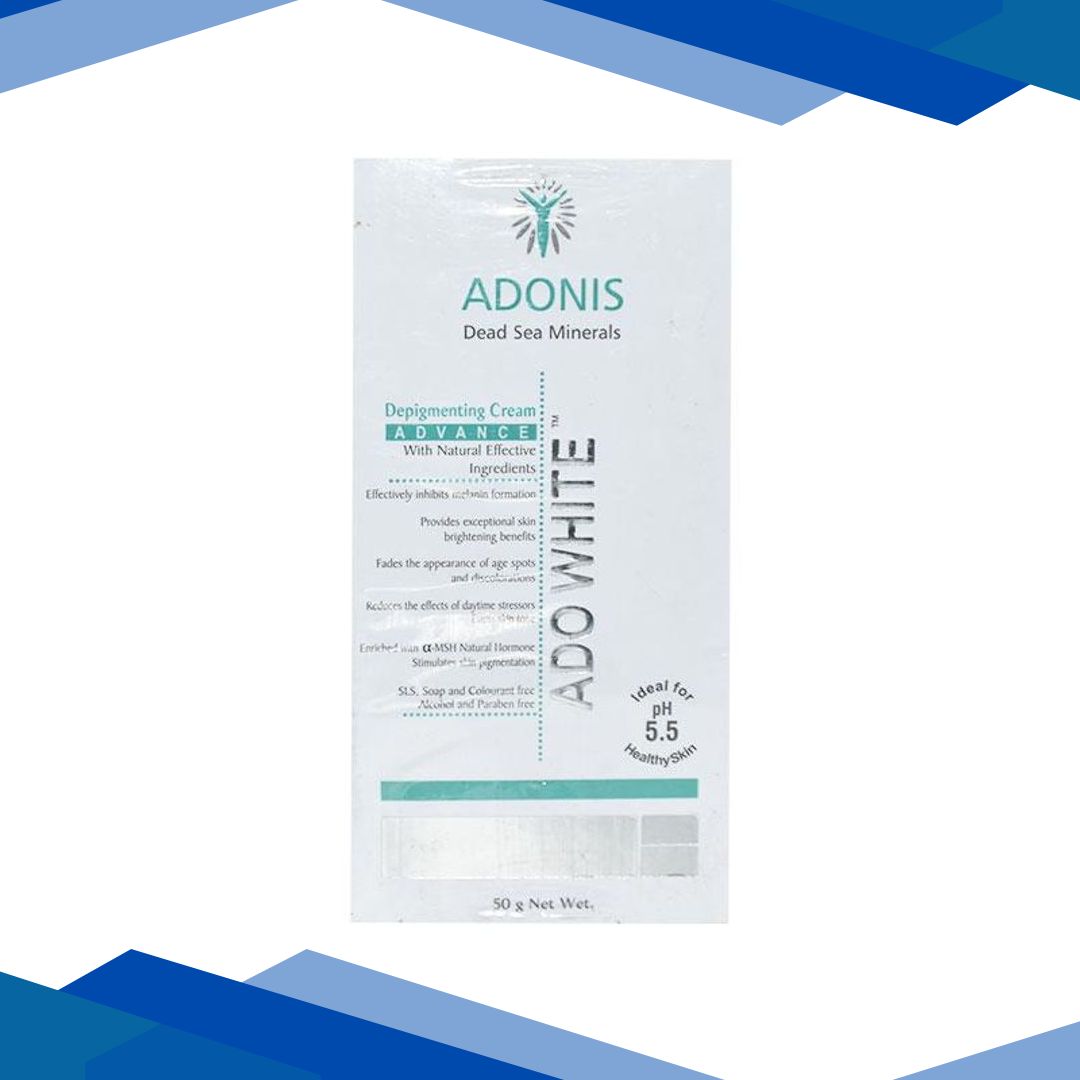
ADO WHITE ADVANCED DEPIGMENTING Cream 50gm
❌ Due to high demand, this product is currently out of stock. New stock will be available shortly.
👉 Click here to Buy Same Salt medicine
ADO WHITE ADVANCED DEPIGMENTING Cream is a skin-lightening and exfoliating formulation used to help improve uneven skin tone and reduce the appearance of dark spots, melasma, and other forms of hyperpigmentation. It works by combining ingredients that act on different steps of pigmentation and skin renewal: hydroquinone and kojic acid help reduce excess melanin production, ascorbic acid supports skin brightening and antioxidant protection, while lactic acid and aluminium oxide help gently remove dead skin cells to improve surface texture and promote a more even look. This medicine is generally used under medical guidance for cosmetic skin concerns related to discoloration. It should be used carefully, as sensitive skin may react to it.
Description
ADO WHITE ADVANCED DEPIGMENTING Cream is a topical skin-lightening and tone-correcting combination commonly used to help reduce the appearance of dark patches, uneven skin tone, and discoloration caused by excess melanin production. it is generally formulated for external use on the skin and is often recommended in situations where hyperpigmentation is bothersome, such as melasma, post-inflammatory hyperpigmentation, or spots left behind after acne or minor skin irritation. because it combines multiple active ingredients with complementary actions, it is designed to target pigment formation from more than one angle while also supporting skin exfoliation and surface renewal.
each ingredient contributes in a different way. hydroquinone is a well-known depigmenting agent that helps reduce melanin production in the skin. kojic acid also supports pigment reduction by interfering with enzymes involved in melanin synthesis. ascorbic acid, a form of vitamin c, acts as an antioxidant and can help brighten the skin while supporting an even complexion. lactic acid gently exfoliates the outer layer of the skin, helping improve the appearance of dullness and allowing other ingredients to penetrate more effectively. aluminium oxide is commonly associated with mild exfoliating or polishing support in topical skin products, helping smooth the skin? surface and enhance the product? cosmetic effect. together, these ingredients may help improve the look of discoloration, but the response is gradual and varies from person to person.
this combination is usually intended for adults who are dealing with pigment-related concerns rather than simple dryness, acne, or general skincare needs. it is not a ?hitening?medicine in the cosmetic sense of changing a person? natural skin color; rather, it is used to fade unwanted dark areas and help the skin appear more uniform. since the formula contains potent actives, it must be used carefully. overuse, application on irritated skin, or use without sun protection may worsen irritation or reduce benefit. a healthcare professional or dermatologist should guide use if the discoloration is extensive, persistent, or associated with another condition.
because the product contains ingredients that can be irritating, it is important to understand that improvement usually takes time and consistent use. some people see gradual brightening and softening of dark spots, while others may need a different treatment plan if the underlying cause is hormonal, medication-related, or due to an inflammatory skin condition. good results also depend on daily sun protection, since ultraviolet exposure can quickly trigger new pigmentation and counteract treatment. for this reason, this medicine is typically part of a broader skin-care and sun-avoidance routine rather than a standalone solution.
ingredients
- aluminium oxide: this ingredient is generally associated with a mild abrasive or exfoliating role in topical preparations. it may help remove superficial dead skin cells and smooth rough texture, which can make the skin look more refined and can support better delivery of the other active ingredients. in products for discoloration, a gentle exfoliating effect may help improve the visual appearance of uneven tone over time.
- ascorbic acid: a stable form of vitamin c used in skin care for its antioxidant and brightening properties. it helps protect skin from oxidative stress caused by environmental factors and may reduce the appearance of dullness. in pigmentation formulas, it can support a more radiant complexion and may help limit excess pigment formation.
- hydroquinone: a depigmenting agent used to reduce dark spots and hyperpigmentation. it works by decreasing melanin production in the skin, which helps fade areas that have become darker than the surrounding skin. hydroquinone is effective but must be used with caution because it may cause irritation, and prolonged or inappropriate use can lead to unwanted effects.
- kojic acid: a skin-brightening ingredient that helps inhibit the enzyme tyrosinase, which is involved in melanin synthesis. it is often used to support the fading of pigmentation and may work well in combination with other depigmenting agents. kojic acid can be helpful but may also cause sensitivity in some users.
- lactic acid: an alpha hydroxy acid (aha) that gently exfoliates the outer layer of the skin. by encouraging removal of dead skin cells, it can improve texture, brightness, and the appearance of discoloration. lactic acid may also enhance penetration of other ingredients, but it can sting or irritate sensitive skin.
key uses
- melasma: used to help reduce brown or gray-brown patches that often appear on the face, especially on the cheeks, forehead, or upper lip. this condition is commonly influenced by sun exposure, hormones, and genetics, so treatment usually works best when combined with strict sun protection.
- post-inflammatory hyperpigmentation: helps fade dark marks left behind after acne, eczema, insect bites, or minor skin injury. these spots may take weeks to months to lighten naturally, and a topical depigmenting formula can sometimes speed the process.
- sun-induced dark spots: may be used for freckles or sun spots that appear or become darker after repeated ultraviolet exposure. it does not remove the cause of sun damage, so sunscreen remains essential to prevent recurrence.
- uneven skin tone: can improve the appearance of patchy discoloration and create a more uniform complexion. the effect is gradual and generally cosmetic rather than curative for any underlying skin disease.
- skin resurfacing support: thanks to lactic acid and aluminium oxide, the formula may also help smooth rough, dull, or flaky skin texture. this can make the skin appear fresher while supporting the overall brightening effect.
how to use
this medicine is intended for external use only and should be applied exactly as advised by a healthcare professional or according to the product directions. in general, the skin should be clean, dry, and free from other irritating products before application. a thin, even layer is usually applied only to the affected dark areas, not to the entire face or body unless specifically instructed. it is important to avoid the eyes, eyelids, lips, nostrils, and any broken, irritated, or inflamed skin, because the active ingredients can cause significant stinging or irritation in delicate areas.
use should be gentle and consistent rather than heavy or frequent. more product does not work faster and may increase redness, peeling, or burning. after application, washing the hands is recommended unless the hands are the treatment area. if the skin becomes very irritated, overly dry, or uncomfortable, use may need to be reduced or stopped and a clinician consulted. since this combination can increase skin sensitivity, daytime sun protection is essential. a broad-spectrum sunscreen, protective clothing, and minimizing direct sun exposure are strongly recommended to help prevent worsening pigmentation and to maintain results.
safety information
- warnings: this product can irritate the skin, especially if overused, applied to sensitive areas, or combined with other harsh treatments such as scrubs, peeling agents, or retinoids without medical advice. hydroquinone-containing products should generally not be used for long periods without supervision, because prolonged use may increase the risk of adverse skin changes. stop use and seek advice if severe redness, swelling, blistering, or darkening of the treated area occurs.
- side effects: common side effects may include mild burning, stinging, itching, dryness, redness, peeling, or temporary tightness. less common but more serious effects can include intense irritation, allergic contact dermatitis, skin rash, swelling, or paradoxical darkening of the skin. rarely, extended or improper hydroquinone use may be associated with ochronosis, a bluish-black discoloration of the skin that can be difficult to treat.
- precautions: use with caution in people with sensitive skin, eczema, dermatitis, a history of allergy to any ingredient, or a tendency to develop irritation from exfoliating products. do not apply on cuts, sunburn, active rashes, or infected skin. avoid combining with harsh soaps, alcohol-based toners, strong peels, or abrasive scrubs unless a clinician has approved the routine.
- pregnancy/breastfeeding: safety data for some of these ingredients, especially hydroquinone, may be limited in pregnancy and breastfeeding. because hydroquinone can be absorbed through the skin to some extent, pregnant or breastfeeding individuals should only use this medicine if a healthcare professional believes the benefit outweighs the potential risk. safer alternatives may be preferred in many cases.
- interactions: when used with other topical irritants such as retinoids, benzoyl peroxide, salicylic acid, chemical peels, or strong exfoliants, the risk of dryness and inflammation may increase. excessive alcohol use is not a direct drug interaction, but alcohol can worsen overall skin dehydration and sensitivity in some people. always tell a clinician about all topical and oral medicines being used, especially if treating acne, eczema, or other skin conditions.
additional information
- storage: store in a cool, dry place away from direct sunlight and heat. keep the container tightly closed and out of reach of children. do not freeze unless the product label specifically says it is safe to do so. discard the product if it changes color, texture, or smell unexpectedly.
- missed dose: if a dose is missed, apply it when remembered unless it is almost time for the next application. do not apply extra medicine to make up for the missed use. consistency is important, but doubling up can increase irritation without improving results.
- overdose: overapplication can cause marked redness, burning, peeling, or swelling of the skin. if a large amount is accidentally applied, gently wash the area with lukewarm water and stop using other irritating products. if severe reactions occur or if the medicine is swallowed, seek medical help promptly.
- habit forming: no. this medicine is not known to cause dependence or addiction. however, some people may continue using it for cosmetic benefit, so long-term use should still be monitored by a healthcare professional to avoid irritation or other complications.
frequently asked questions
Q: what is ADO WHITE ADVANCED DEPIGMENTING Cream used for?
A: it is generally used to help reduce dark patches, uneven skin tone, and hyperpigmentation such as melasma or post-inflammatory marks. it works by reducing pigment formation and gently exfoliating the skin surface.
Q: how long does it take to see results?
A: results are usually gradual and may take several weeks of consistent use. the exact timeline depends on the cause, severity, skin type, and how well sun protection is followed.
Q: can i use this on my whole face?
A: it should only be used on the areas recommended by a healthcare professional. applying it broadly to normal skin may increase irritation and is usually unnecessary.
Q: is sunscreen necessary while using this medicine?
A: yes, sunscreen is very important. sun exposure can worsen pigmentation and reduce the effectiveness of treatment, so daily broad-spectrum sun protection is strongly advised.
Q: can this medicine cause skin irritation?
A: yes, mild irritation is common, especially at the beginning of treatment. burning, redness, dryness, or peeling can occur, and severe irritation should be evaluated by a healthcare professional.
Q: should i stop using it if my skin becomes darker?
A: yes, if the treated area becomes darker, irritated, or develops unusual discoloration, stop use and consult a clinician. darkening may indicate irritation, overuse, or an adverse reaction.
Q: can it be used with acne treatments?
A: sometimes, but caution is needed because many acne products can also irritate the skin. combining treatments without guidance may increase dryness and inflammation, so professional advice is recommended.
Q: is this product safe for sensitive skin?
A: it may not be ideal for highly sensitive skin because it contains several active ingredients that can cause stinging or dryness. a patch test and medical guidance are often helpful before regular use.
Q: can i use makeup after applying it?
A: makeup may sometimes be applied after the product has fully absorbed, if the skin is not irritated. however, heavy or occlusive makeup may worsen clogged pores or irritation in some people.
Q: what should i do if i develop a rash?
A: stop using the product and seek medical advice. a rash may suggest irritation or allergy, and continuing use could make the reaction worse.
Q: does it work for all types of dark spots?
A: it can help many pigment-related problems, but not every dark mark responds the same way. some discoloration has underlying causes that require different treatment, so a dermatologist? assessment may be needed.
Q: can children use this medicine?
A: this product is usually intended for adults unless a clinician specifically recommends it. children have more sensitive skin and may be at greater risk of irritation, so medical supervision is important.
this information is for educational purposes only and should not be considered medical advice. always consult a qualified healthcare professional before use.
At Gem Pharmacy, we make every effort to provide accurate, expert-written, and thoroughly reviewed information related to medicines. However, this information should not be considered a substitute for professional medical advice, diagnosis, or treatment from a qualified doctor.
The purpose of this information is to educate users and improve communication between patients and healthcare professionals. It should not be used to diagnose or treat any condition.
Always consult a certified healthcare professional before taking any medication.


Related products
Scalp Sense Hair & Scalp Conditioner 200 ml