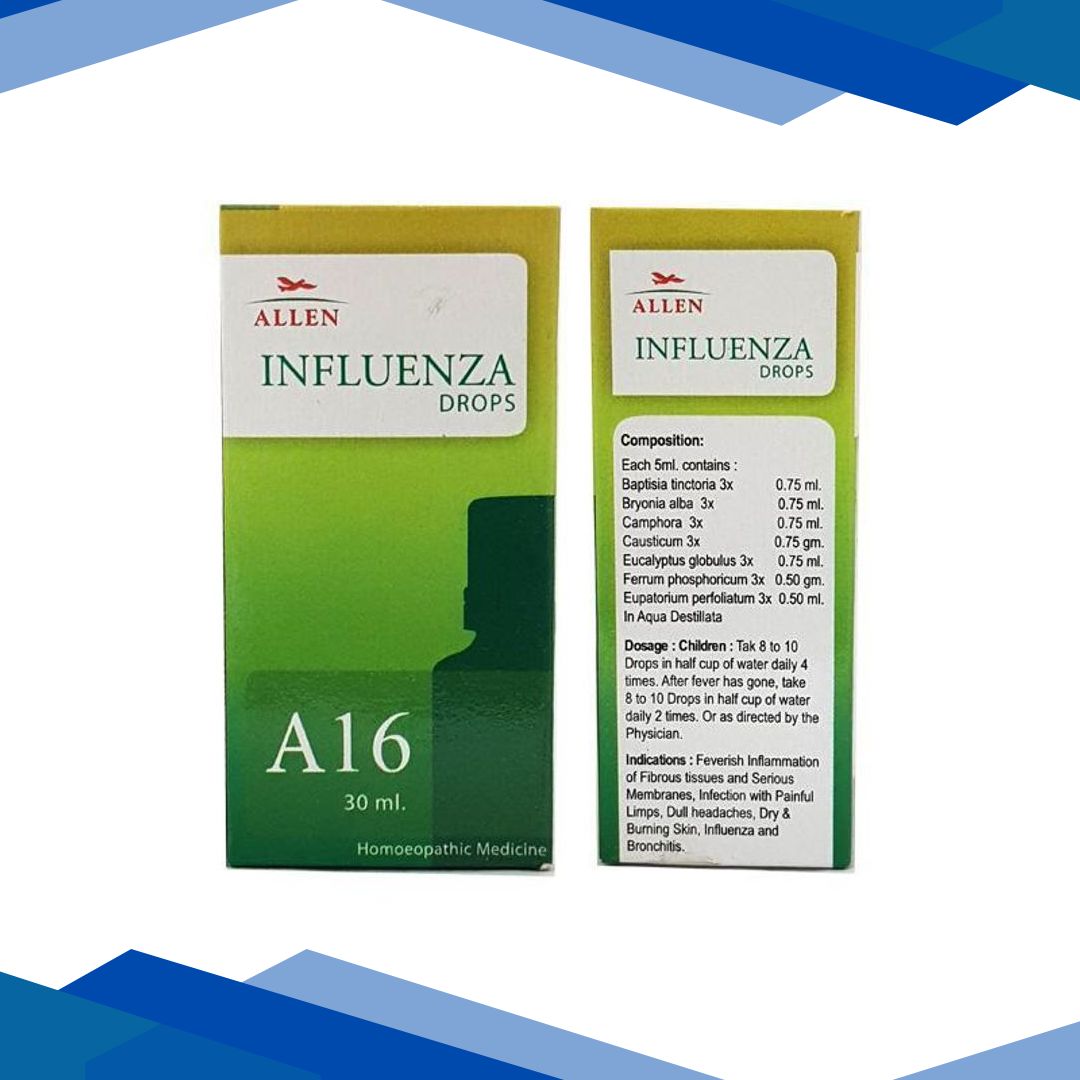
Allen A16 Influenza Drops 30 ml
Allen A16 Influenza Drops 30 is a vaccine used to help protect against influenza, also known as the flu. It contains a weakened form of the virus that cannot cause flu illness in healthy people, but it teaches the immune system to recognize and fight the virus more effectively in the future. By stimulating the body? natural defenses, it helps reduce the risk of getting influenza and may also make illness less severe if infection does occur. This vaccine is mainly used for prevention of seasonal flu in eligible individuals, especially those at higher risk of complications or exposure. It is given under medical guidance to ensure it is appropriate and safe for the person receiving it.
Description
Allen A16 Influenza Drops 30 is a vaccine used to help protect against influenza, commonly known as the flu. it is called ?ive attenuated?because it contains influenza viruses that have been weakened so they do not cause the disease in healthy people, but can still stimulate the immune system to build protection. this vaccine is designed to reduce the risk of getting influenza and, if infection does occur, to help make the illness less severe. it is commonly given as a nasal spray rather than an injection, which makes it different from many other flu vaccines.
this medicine works by exposing the body to weakened forms of influenza viruses so the immune system can learn to recognize them. after vaccination, the body produces antibodies and develops immune memory against the strains included in the vaccine. if a person later encounters a similar flu virus, the immune system can respond more quickly and effectively. because influenza viruses change over time, the vaccine composition is reviewed and updated periodically to match circulating strains as closely as possible.
Allen A16 Influenza Drops 30 is generally intended for certain healthy individuals, typically those within an approved age range and without specific medical conditions that would make a live vaccine unsafe. it is not suitable for everyone, especially people with weakened immune systems or certain chronic health conditions. before receiving it, a healthcare professional should assess whether this vaccine is appropriate based on age, health status, allergies, pregnancy status, and current medications. although it does not treat active influenza infection, it plays an important preventive role in public health by reducing flu-related illness and transmission risk in eligible groups.
the benefit of this vaccine lies in prevention. influenza can cause fever, cough, sore throat, body aches, fatigue, and in some cases serious complications such as pneumonia, worsening of underlying chronic disease, hospitalization, and rarely death. vaccination is one of the most effective ways to lower these risks. while no flu vaccine provides perfect protection, receiving annual vaccination is strongly recommended for many people because influenza viruses evolve from year to year and immunity can decline over time.
ingredients
- live attenuated influenza viruses: these are the main active components. they are weakened influenza virus strains that replicate poorly in humans and are used to train the immune system without causing typical flu illness in healthy recipients.
- influenza virus strains selected for the season: the vaccine usually contains multiple strains chosen to match current circulating influenza a and b viruses. this improves the chance of protection against the most relevant seasonal strains.
- stabilizing agents: these help maintain vaccine potency and structure during storage and administration. they ensure the weakened viruses remain effective until used.
- buffering components: these help maintain a suitable ph and preserve the stability of the vaccine formulation, which is important for safe and effective delivery.
- preservative-free formulation in many products: some live attenuated influenza vaccines are supplied without preservatives, which may be important for nasal administration and formulation integrity. the exact inactive ingredients may vary by product and manufacturer.
key uses
- prevention of seasonal influenza: the main use is to help prevent flu caused by selected influenza virus strains included in the vaccine formulation.
- reduction of flu severity: if a vaccinated person still gets influenza, the illness may be milder and less likely to cause serious complications.
- protection of eligible healthy individuals: it is used for people who meet age and health criteria and can safely receive a live attenuated vaccine, especially when nasal spray vaccination is preferred.
- contribution to community protection: by lowering the number of people who become infected, vaccination can help reduce spread within households, schools, workplaces, and communities.
- annual seasonal immunization: it is used as part of routine yearly influenza prevention because flu viruses change frequently and prior vaccination does not guarantee lasting protection against new strains.
how to use
Allen A16 Influenza Drops 30 is usually administered as a nasal spray by a healthcare professional or according to approved product instructions, depending on local practice. it is generally given once during the influenza season, but the exact timing depends on age, eligibility, and seasonal recommendations. because this is a live vaccine, it should only be used as directed and only in people for whom it is considered appropriate. it is not intended to be injected unless specifically stated by the product instructions, and it should not be used for treatment of an active flu infection.
before use, the recipient should inform the healthcare provider about any medical conditions, current illness, allergies, immune problems, medications, or pregnancy status. a mild cold may not always prevent vaccination, but fever or significant acute illness may require postponement. after administration, the person may be advised to avoid close contact with severely immunocompromised individuals for a short period, because the weakened vaccine virus may be shed briefly in nasal secretions. this concern is especially important in homes or settings where vulnerable people are present.
good vaccination practice includes following all provided instructions carefully, avoiding use of expired product, and ensuring the vaccine is stored correctly before administration. people should understand that immune protection takes time to develop, so they may not be fully protected immediately after receiving it. annual vaccination remains important even if a person was vaccinated in prior years. for the best individual recommendation, a healthcare professional should determine whether this vaccine is the right choice based on current guidelines.
safety information
- warnings: because this is a live attenuated vaccine, it may not be safe for individuals with weakened immune systems, some chronic medical conditions, or certain other risk factors. it should not be used in people who have had a severe allergic reaction to a previous influenza vaccine or to any component of the formulation. it is also not appropriate for everyone who is pregnant. a medical review is essential before vaccination.
- side effects: common side effects may include runny nose, nasal congestion, mild sore throat, cough, headache, reduced appetite, low-grade fever, and tiredness. some people may also experience muscle aches or mild irritability. serious side effects are uncommon but can include severe allergic reactions, wheezing, trouble breathing, facial swelling, high fever, or other signs of a serious immune response. seek urgent medical help if severe symptoms occur.
- precautions: people with asthma or recurrent wheezing, immunodeficiency, immunosuppressive therapy, recent use of certain antiviral influenza medications, or a history of serious reaction to vaccines should use special caution or avoid this vaccine depending on clinical guidance. those with close household contact with severely immunocompromised persons should discuss the benefits and risks with a healthcare professional.
- pregnancy/breastfeeding: this live attenuated vaccine is generally not recommended during pregnancy because of theoretical risk and guideline-based precautions. if pregnancy is possible or confirmed, a healthcare professional should recommend the most appropriate influenza vaccine option. breastfeeding is usually not considered an absolute contraindication, but individual circumstances should still be reviewed by a clinician.
- interactions: live vaccine response may be affected by immunosuppressive medicines such as corticosteroids at high doses, chemotherapy, biologic agents, or other immune-suppressing treatments. antiviral influenza medications may reduce the effectiveness of live influenza vaccination if taken around the time of administration. alcohol does not have a direct specific interaction, but excessive alcohol use may weaken general health and should be avoided around vaccination.
additional information
- storage: store exactly as directed on the product label, usually refrigerated and protected from light. do not freeze unless the manufacturer specifically allows it. improper storage can reduce vaccine effectiveness, so it should be kept within the recommended temperature range until use.
- missed dose: if a scheduled flu vaccination is missed, contact a healthcare professional or pharmacist as soon as possible to arrange vaccination if it is still appropriate and available for the current season. there is no standard ?ake-up?schedule in all cases, so timing should be individualized.
- overdose: an overdose is not typical because this vaccine is administered in a controlled amount. if an extra dose is accidentally given, adverse effects may be more likely, such as stronger local or flu-like symptoms. medical advice should be sought promptly if an administration error occurs or if concerning symptoms develop.
- habit forming: no. Allen A16 Influenza Drops 30 is a vaccine and is not associated with dependence, addiction, or habit formation.
frequently asked questions
Q: what is Allen A16 Influenza Drops 30 used for?
A: it is used to help prevent seasonal influenza in eligible individuals. the vaccine trains the immune system to recognize selected flu strains and respond faster if exposed later.
Q: how does a live attenuated flu vaccine work?
A: it contains weakened influenza viruses that can stimulate immune protection without causing typical influenza illness in healthy people. this helps the body build antibodies and immune memory.
Q: is this vaccine given as a shot?
A: in many products, Allen A16 Influenza Drops 30 is given as a nasal spray rather than an injection. the exact administration method depends on the specific product and approved instructions.
Q: who should not receive this vaccine?
A: people with significant immune suppression, certain chronic conditions, a history of severe allergic reaction to influenza vaccines, or those who are pregnant are often advised to avoid it or seek an alternative. a healthcare professional should review eligibility.
Q: can this vaccine give me the flu?
A: it is designed not to cause influenza in healthy recipients. some people may experience mild temporary symptoms such as runny nose, low fever, or body aches, but these are not the same as having the flu.
Q: how long does protection last?
A: protection can decrease over time and influenza viruses change from season to season. that is why annual vaccination is usually recommended rather than relying on prior vaccination alone.
Q: can i take this vaccine if i have a cold?
A: a mild cold may not always prevent vaccination, but if you have a moderate or severe illness, fever, or significant symptoms, it may be better to wait. a clinician can decide based on your condition.
Q: what side effects are most common?
A: common effects include nasal congestion, runny nose, sore throat, headache, mild fever, and tiredness. most are short-lived and improve on their own.
Q: can i use antiviral flu medicine around the time of vaccination?
A: some antiviral influenza medications can interfere with the live vaccine and reduce its effectiveness. tell your healthcare provider about any antiviral medicines before vaccination.
Q: is it safe during pregnancy?
A: this live attenuated vaccine is generally not recommended in pregnancy. pregnant individuals should ask a healthcare professional about the most appropriate influenza vaccine option.
Q: can breastfeeding mothers receive it?
A: breastfeeding is not always a strict contraindication, but the decision should be individualized. a healthcare professional can advise whether this vaccine is appropriate.
Q: do i still need the flu vaccine every year?
A: yes, annual vaccination is usually recommended because influenza viruses change and immunity may not last long enough to protect against future seasons.
Q: what should i do if i have a severe allergic reaction after vaccination?
A: seek emergency medical help immediately if you develop symptoms such as difficulty breathing, swelling of the face or throat, widespread rash, or dizziness after vaccination.
Q: can this vaccine be given to people with asthma?
A: people with asthma or a history of wheezing may not be appropriate candidates for this live vaccine, depending on severity and current control. a healthcare professional should evaluate the risk.
Q: does it protect against all flu viruses?
A: no vaccine protects against every possible influenza virus. it offers protection against strains included in the formulation and may not cover all circulating variants.
this information is for educational purposes only and should not be considered medical advice. always consult a qualified healthcare professional before use.
At Gem Pharmacy, we make every effort to provide accurate, expert-written, and thoroughly reviewed information related to medicines. However, this information should not be considered a substitute for professional medical advice, diagnosis, or treatment from a qualified doctor.
The purpose of this information is to educate users and improve communication between patients and healthcare professionals. It should not be used to diagnose or treat any condition.
Always consult a certified healthcare professional before taking any medication.


Related products
Father Muller Cholenil Syrup 60 ml

SBL Ferrum Sip Syrup 500 ml