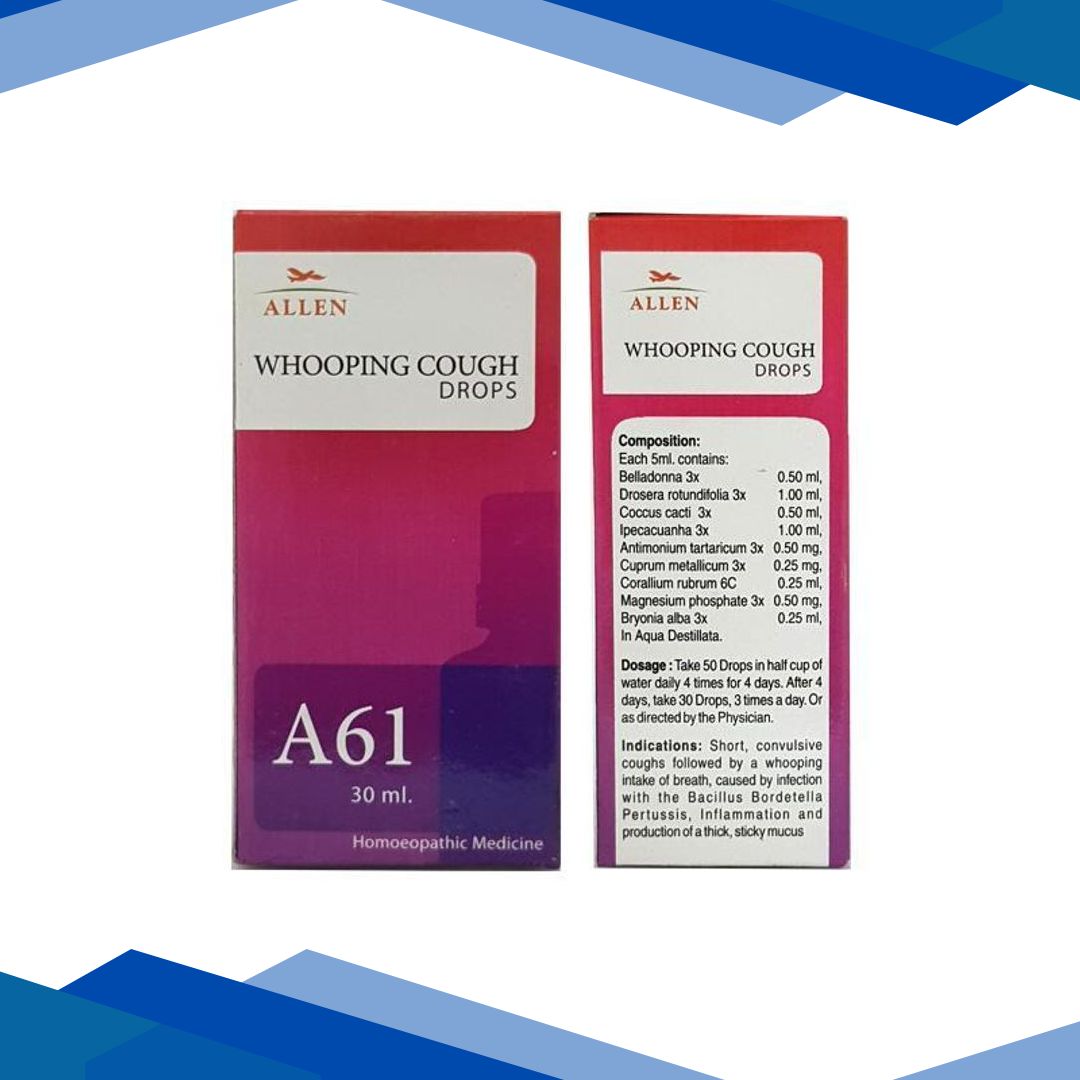
Allen A61 Whooping Cough Drops 30 ml
Allen A61 Whooping Cough Drops 30 is a combination vaccine used to help protect against three serious bacterial diseases: diphtheria, pertussis (whooping cough), and tetanus. It works by stimulating the body? immune system to recognize these infections and produce protective antibodies, so the body can respond faster if exposed in the future. This vaccine does not treat an active infection, but it helps prevent illness and lowers the risk of severe complications. It is commonly used as part of routine immunization programs in children and may also be given as recommended by a healthcare professional for continued protection. Because vaccine needs can vary by age and health status, it should be used under medical guidance.
Description
Allen A61 Whooping Cough Drops 30 is a combination vaccine used to help protect against three serious bacterial diseases: diphtheria, pertussis (whooping cough), and tetanus. it contains purified, inactivated toxin components known as toxoids. these toxoids do not cause the diseases themselves, but they train the immune system to recognize and fight the toxins produced by the bacteria if future exposure occurs. in this way, the vaccine helps the body build protective immunity without causing the full illness.
this medicine is commonly used as part of routine immunization schedules, especially in infants, children, and sometimes adults depending on local vaccination guidelines and previous vaccine history. diphtheria can affect the throat and airways and may lead to breathing problems, heart damage, or nerve injury. pertussis causes severe coughing fits that can be dangerous, especially in young children and infants. tetanus, sometimes called lockjaw, can cause painful muscle stiffness and spasms and may be life-threatening. by combining protection against these three infections in one vaccine, the medicine helps reduce the number of injections needed and supports broader protection in a practical way.
the vaccine works by stimulating the immune system to produce antibodies and immune memory against each of the toxoids included in the formulation. if a vaccinated person later comes into contact with the actual bacteria or their toxins, the immune system is better prepared to respond quickly and reduce the severity of illness. it is important to understand that protection is not always immediate after vaccination and may require a full series of doses and boosters over time to maintain immunity. because immunity can decrease gradually, booster vaccination is often important for continued protection.
this medicine is intended for prevention, not treatment. it does not cure diphtheria, pertussis, or tetanus once infection has already developed, and it is not meant for people with active serious illness unless advised by a healthcare professional. the vaccine should be given according to medical guidance, and the exact schedule may differ based on age, previous immunization, local recommendations, and whether the person is receiving a primary series or a booster dose. a healthcare professional should always review the patient? health history before administration.
ingredients
- diphtheria toxoid: this is a purified, inactivated form of the diphtheria toxin. it helps the body create antibodies that protect against the harmful effects of diphtheria infection. its main role is to prevent toxin-mediated damage, especially to the throat, heart, and nervous system.
- pertussis toxoid: this component is derived from inactivated pertussis toxin and helps stimulate protective immunity against whooping cough. it reduces the risk of severe coughing illness and the dangerous complications that can occur, particularly in infants and young children. in combination vaccines, it supports broader immune defense against pertussis-related disease.
- tetanus toxoid: this is an inactivated form of the tetanus toxin. it helps the immune system prepare to neutralize the toxin that causes muscle stiffness, painful spasms, and breathing difficulty. it is especially important because tetanus spores can enter the body through even small wounds.
- adjuvants and excipients: depending on the product formulation, the vaccine may also contain other ingredients that help stabilize the vaccine, support immune response, or preserve the product. these may vary by manufacturer and should be checked in the official product information. some formulations may contain trace residual substances used during manufacturing.
key uses
- prevention of diphtheria: helps protect against a serious infection that can cause severe sore throat, breathing problems, and toxin-related complications affecting the heart and nerves.
- prevention of pertussis: reduces the risk of whooping cough, a highly contagious respiratory disease that can lead to prolonged coughing, vomiting after coughing, sleep disruption, and potentially serious illness in infants.
- prevention of tetanus: helps protect against tetanus, a dangerous disease caused by toxin-producing bacteria that can enter through wounds and cause painful muscle spasms and jaw stiffness.
- routine immunization: often used in scheduled vaccination programs to build and maintain immunity in childhood and later with booster doses, depending on age and prior vaccine status.
- booster protection: may be used to refresh immunity when protection has declined over time, particularly in individuals who previously completed a primary vaccination series.
- protection after incomplete vaccination: in some cases, it may be recommended for people who have not completed their full immunization history, based on a healthcare professional? assessment and local guidelines.
how to use
this vaccine should be administered only by a trained healthcare professional, usually by injection into a muscle or, in some age groups or formulations, as directed by the product? official guidance. it is not meant for self-administration. the timing, number of doses, and need for boosters depend on the person? age, vaccine history, and the immunization schedule recommended in the country or region. parents or caregivers should ensure that the vaccination record is available so the clinician can confirm whether the person needs a primary series, catch-up doses, or a booster.
before administration, the healthcare professional may ask about recent illness, fever, allergic reactions to previous vaccines, neurological conditions, immune problems, and any history of severe reactions after immunization. after the injection, it is common to remain at the clinic briefly so that any immediate allergic reaction can be recognized and treated quickly if needed. it is important not to miss scheduled vaccine visits, because protection is best when doses are given at the recommended intervals.
if a person has a minor illness such as a mild cold, vaccination may still be possible, but moderate or severe illness may lead the clinician to delay the dose until recovery. the injection site should generally be kept clean, and any discomfort can often be managed with simple supportive care if recommended by a healthcare professional. do not attempt to adjust the dose or schedule on your own.
safety information
- warnings: tell the healthcare professional if the person has had a severe allergic reaction to any previous vaccine dose or to any vaccine ingredient. vaccination should be used cautiously in people with a history of serious neurological problems, severe acute illness, or a significant reaction after prior immunization. seek urgent medical help if symptoms of anaphylaxis occur after vaccination, such as difficulty breathing, swelling of the face or throat, widespread rash, or fainting.
- side effects: common side effects can include pain, redness, swelling, or tenderness at the injection site, mild fever, fatigue, irritability, headache, reduced appetite, and general discomfort. these effects are usually temporary. less common but serious side effects may include high fever, persistent crying in infants, severe allergic reaction, unusual weakness, seizures, or signs of a severe neurologic event. any severe or unusual symptom should be evaluated promptly by a healthcare professional.
- precautions: use extra caution in people with a history of guillain-barr?syndrome, uncontrolled neurological illness, immune compromise, bleeding disorders, or low platelet counts. those with a history of severe reaction after a prior dose of diphtheria-, pertussis-, or tetanus-containing vaccines should be assessed carefully before receiving another dose. inform the clinician about any current medications, recent vaccines, or ongoing health conditions.
- pregnancy/breastfeeding: safety depends on the person? clinical situation and the specific vaccine schedule. in some cases, vaccines containing tetanus and diphtheria components are recommended during pregnancy, but the appropriateness of this particular combination should be determined by a healthcare professional. during breastfeeding, vaccination is generally considered compatible in many situations, but medical advice should still be obtained before use.
- interactions: tell the healthcare professional about all medicines, including immune-suppressing drugs, chemotherapy, corticosteroids, or other vaccines, because these can affect immune response or timing. if another vaccine is needed, a clinician may decide whether it can be given at the same visit or should be spaced appropriately. alcohol does not usually have a direct interaction with the vaccine, but heavy alcohol use may affect overall health and should be discussed if relevant.
additional information
- storage: store according to the manufacturer? instructions, usually in a refrigerator at the recommended temperature and protected from light. do not freeze unless the label specifically allows it, as freezing can damage the vaccine and reduce effectiveness. keep it out of reach of children and do not use it after the expiration date.
- missed dose: if a dose is missed, contact a healthcare professional or immunization clinic as soon as possible. the schedule usually does not need to be restarted from the beginning, but the timing of the next dose should be planned based on the person? vaccine history and current recommendations.
- overdose: because this vaccine is given by a healthcare professional, overdose is uncommon. if too much is accidentally administered, or if an extra dose is given too soon, side effects such as more intense local pain, swelling, fever, or malaise may be more likely. seek medical advice immediately if an administration error is suspected.
- habit forming: no. this medicine is not habit forming and does not cause dependence. it is a preventive immunization used to support the body? immune defense against specific infections.
frequently asked questions
- what does Allen A61 Whooping Cough Drops 30 do?
- it helps the immune system build protection against diphtheria, pertussis, and tetanus by exposing the body to inactivated toxin components that cannot cause the disease.
- can this vaccine treat an active infection?
- no. it is used to prevent disease, not to cure an ongoing infection. if someone already has symptoms of diphtheria, pertussis, or tetanus, urgent medical treatment is needed.
- why is a combination vaccine used?
- a combination vaccine reduces the number of injections needed and helps provide protection against three important diseases in a more convenient way.
- are side effects common?
- yes, mild side effects such as soreness at the injection site or a low fever can happen and usually improve on their own. serious reactions are uncommon but require immediate medical attention.
- do adults need this vaccine too?
- some adults may need boosters or catch-up vaccination depending on their history, age, and local recommendations. a healthcare professional can advise based on individual risk and immunization records.
- what should i do after vaccination?
- monitor for any unusual symptoms, keep the vaccination record safe, and follow the next scheduled dose or booster as advised by the clinician.
- can the vaccine cause diphtheria, pertussis, or tetanus?
- no. the toxoids are inactivated and cannot cause these diseases. they only help the immune system recognize and respond to them later.
- is it safe during a mild illness?
- sometimes yes, but if the illness is moderate or severe, the vaccine may be postponed. a healthcare professional should decide based on the current condition.
- why are booster doses important?
- immunity can decrease over time, so boosters help maintain protection and support long-term defense against these infections.
- should i worry about allergic reactions?
- severe allergic reactions are rare, but they are possible with any vaccine. that is why medical supervision after vaccination and a review of allergy history are important.
this information is for educational purposes only and should not be considered medical advice. always consult a qualified healthcare professional before use.
At Gem Pharmacy, we make every effort to provide accurate, expert-written, and thoroughly reviewed information related to medicines. However, this information should not be considered a substitute for professional medical advice, diagnosis, or treatment from a qualified doctor.
The purpose of this information is to educate users and improve communication between patients and healthcare professionals. It should not be used to diagnose or treat any condition.
Always consult a certified healthcare professional before taking any medication.


Related products
SBL Ferrum Sip Syrup 180 ml

Allen A59 Tumour Drops 30 ml