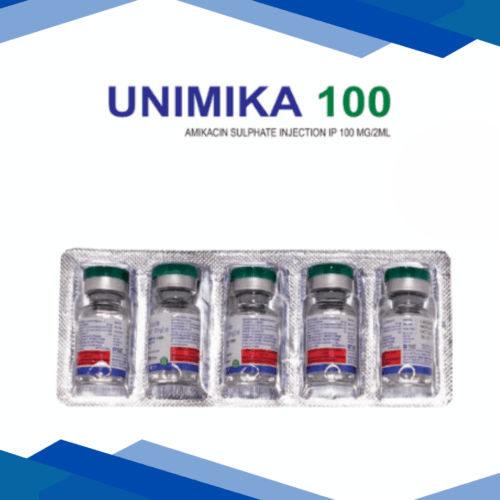

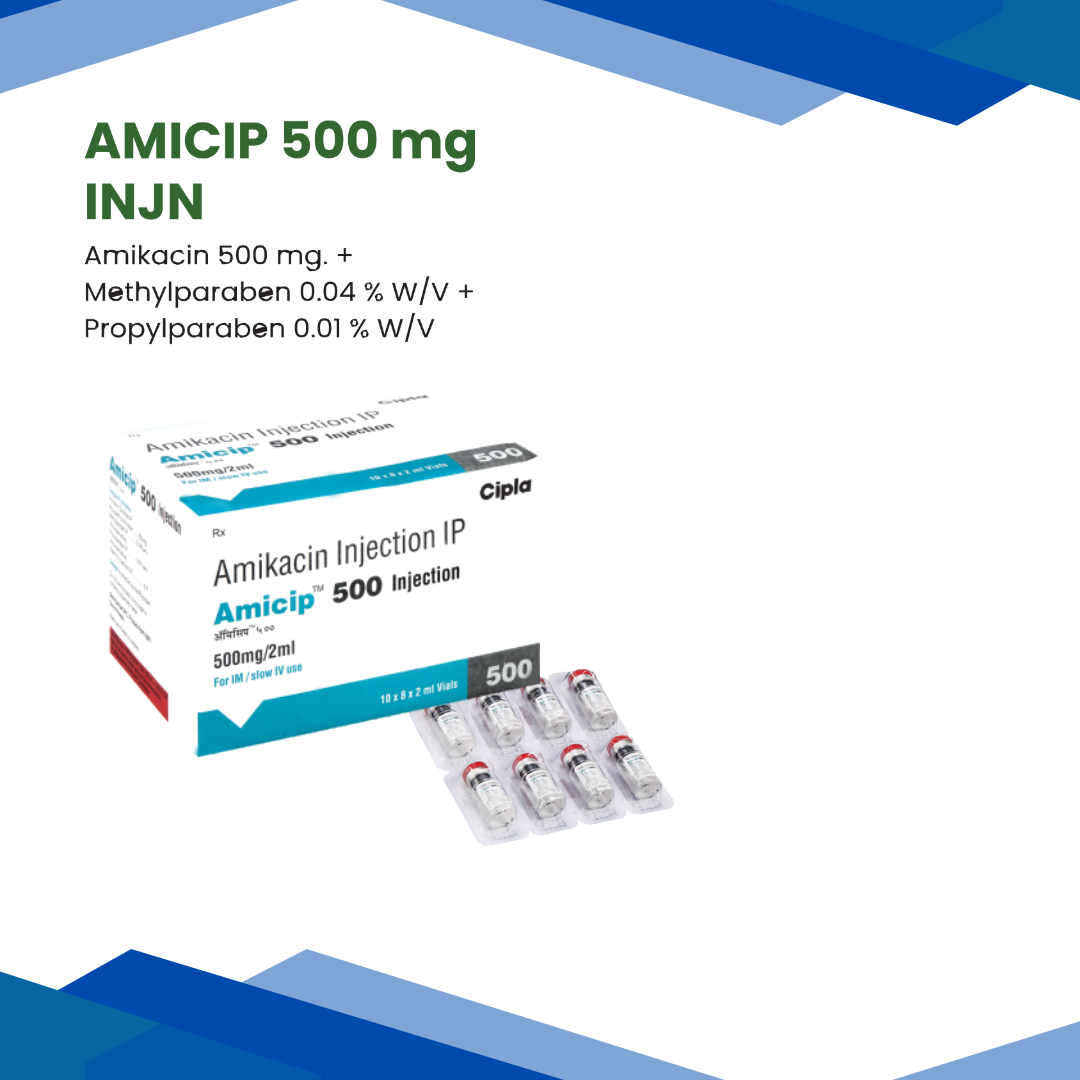
Amicip 500
No Prescription yet? Don’t worry! Click Here to Get Online Consultation
Amicip 500 Injection is an antibiotic used to prevent or treat various bacterial infections. These may include infections of the urinary tract, bones, joints, lungs (e.g., pneumonia), brain, blood, etc
Amikacin
Dexamethasone 0.5mg Tablet
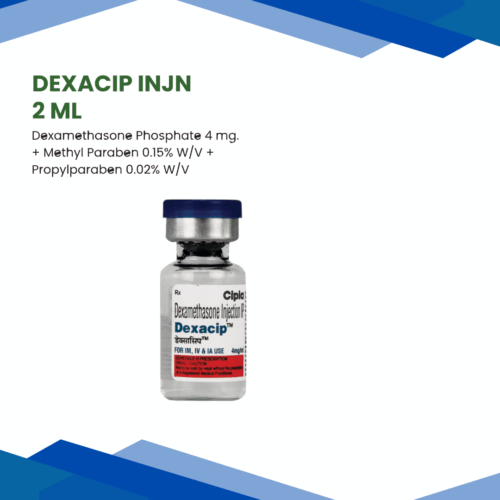
A very potent glucocorticoid (steroid), dexamethasone, is used for its highly potent anti-inflammatory as well as immunosuppressant action. It has been a mainstay drug for the treatment of different diseases where the immune response of the body is exaggerated causing swelling, pain, and various tissue damages. While mimicking the hormone produced naturally by the adrenal glands, it thus brings about a balance and decreases, to a great extent, the manifestations of allergic and inflammatory reactions.
Indications:
Dexamethasone is used in many varied medical conditions:
Severe Allergic Reactions: Some specifications are to manage:
- asthma
- contact dermatitis
- drug hypersensitivity
Rheumatic Disorders: Effective in:
- rheumatoid arthritis
- gouty arthritis
- ankylosing spondylitis
Respiratory Issues: Effective upon:
- croup in children
- COPD flare-ups
Skin and Eye Conditions: The use glucocorticoids includes Psoriasis as perceptor as well as Stevens-Johnson syndrome and ocular inflammation.
Immune System Disorders: Treatment of severe SLE and certain other autoimmune anemias.
Oncology Support: Used to reduce cerebral edema (swelling of the brain tissues) from tumors and to prevent nausea from chemo.
Key advantages
High Potency: It is far larger in size and ranges on power than standard hydrocortisone, necessitating a smaller dosis for relief.
Fast Action: It has a rapid onset and produces fast relief as it enters the bloodstream in seconds, binding on to the receptors, and starts suppressing prostaglandin molecules from its first minute of regulated action.
Versatile in Formulation: Oral solution, tablets, and injections in the delivery of choices for variety of purposes.
Mineralocorticoid Activity: Very little mineralocorticoid activity exists in this steroid, in contrast with older varieties. It does not retain water, in general.
Dosage & Administration
Administration: Swallow a whole tablet with a full glass of water. It can be taken in conjunction with or very soon after a meal to diminish any possibility of stomach discomforts.
Timing: The best time to take this drug is in the morning when the natural hormone cycle of the body operates to avoid insomnia.
Method: Take this medication at the same time every day, and avoid skipping doses. It wouldn't be best to discontinue taking your pills all of a sudden, unless you have spoken to your doctor about this.
Side Effect Assessment
Most side effects result from prolonged use or high doses but may be overcome through weight management. The most common side effects are:
Increased appetite and weight gain
Insomnia
Light mood swings or restlessness
Diarrhea or stomach discomfort
Dizziness or headache
It could be as much as something to talk over with your health care provider: Instantly, let your doctor know if you observe blurred vision, severe abdominal pain, black tarry stools, or signs of an infection (fever, sore throat).
Precautions and Safety Tips
Dexamethasone may camouflage stores about infections. One should restrict association with people who experience chicken pox or measles during the dosage administration of this medication.
Diabetes may rise on this steroid, for it raises blood levels. Patients with diabetes may need to control the intake of insulin or oral medication.
Pregnancy & Nursing: Use of dexamethasone may be hazardous for a pregnant woman or a new-born, making the question of whether to use this steroid a big one indeed. Do consult your obstetrician.
Bone Health: Prolonged use may result in decreased bone density. Calcium and Vitamin D supplements may be suggested by your doctor.
Alcohol: Avoid this drug if you're consuming alcohol. This combination of alcohol and such a steroid can cause stomach ulcers and intestinal bleeding.
Frequently Asked Questions (FAQs)
Q: Is Dexamethasone Painkiller?
No. Dexamethasone is a corticosteroid that helps control pain because it thwarts inflammation underneath. It is much stronger than common OTC painkillers (which include Ibuprofen or Paracetamol).
No. If dexamethasone had been taken more than a few days, the galenic corticosteroid production is highly likely to have slowed down. Stopping "cold turkey" could cause irritating withdrawal symptoms, such as excessive fatigue and aching throughout the entire body. Instead, they need to offer a schedule to mechanically reduce the dose.
Q: Does dexamethasone cause weight gain?
Yes; they cause this certain disease called "cortisone hunger". They can also generate water retention and redistributive fat nowadays, particularly in the facial region or on the upper back. This normally will be corrected when the medicine is terminated.
Q: Can I take vaccination while on Dexamethasone?
When taking high doses of steroids, live vaccines (like whether they may include MMR or Yellow Fever) must be avoided, i.e. the medication suppresses your immune system from responding to the vaccine. Always consult with your doctor prior to being immunized.
Q; How long does it remain in the system?
As dexamethasone has a longer half-life of about 36-72 hours, its effects persist for a longer period in the body compared with other steroids like Prednisone.
Methylparaben
Methylparaben (E218)
Methylparaben is a preservative that belongs to a class of compounds called parabens, and it is with increasing frequency in those with methyl groups attached to hydroxyl groups of the aromatic ring. In natural products, it is a methyl ester of p-hydroxybenzoic acid found in certain fruits such as blueberries. In the pharmaceutical realm, it serves as a critical inactive ingredient (excipient) designed to control the growth of bacteria, fungi, and molds in various medicinal formulations, so that such medicines are guaranteed to remain sterile and safe for human consumption throughout their shelf-life.
Primary Functions & Benefits
- Antimicrobial Protection: Greatly hampers a large spectrum of microorganisms, particularly yeasts and molds.
- Product Stability: Inhibits chemical degradation of medicines due to microbial contamination.
- Versatility: Found in creams, topical drugs for eye treatment, oral syrups, and injectable solutions.
- Safety Record: Its safety record speaks for itself for more than 50 years; “generally recognized as safe” (GRAS) by the FDA when used within regulated limits.
Where It Is Found
The "inactive ingredients" section of most household products contains Methylparaben, due to its high efficiency:
Topical Medicines: Antifungals, corticosteroids, cooling gels.
Oral Medicines/Suspensions: Cough syrups, liquid vitamins, pediatric suspensions.
Cosmetic/Personal Hygiene: Shampoos, lotions, sunscreens.
Injectables: Used in multidose vials where repeated punctures require preservation.
Safety & Precautions
By and large, Methylparaben has a strong safety profile, but some considerations apply:
Dermatological Sensitivity: Rare cases of contact dermatitis (redness, itching) may occur in sensitive individuals.
Interaction with UV: Some studies suggest that high concentrations applied to skin may interact with UVB rays and potentially contribute to skin aging. Using sunscreen is advisable.
Human Metabolism: Rapidly metabolized and excreted in urine, with minimal risk of accumulation in the body.
Potential Side Effects
Rare, usually mild local allergic reactions:
Mild skin irritation or rash
Hives or localized swelling
Burning sensation on application
Frequently Asked Questions (FAQs)
Q: Can Methylparaben be considered an active drug?
A: No. It is an excipient (inactive ingredient). It does not treat disease directly but helps protect medicines from contamination and spoilage.
Q: Can parabens like Methylparaben be used daily?
A: Yes. Regulatory authorities like the FDA and EMA consider it safe within prescribed limits (typically 0.01% to 0.3% in formulations).
Q: Is it safe for people with gluten allergy?
A: Yes. Methylparaben is gluten-free and safe for individuals with celiac disease or gluten sensitivity.
Q: Is there any link between Methylparaben and cancer?
A: Current scientific evidence does not support a direct link between Methylparaben and cancer in approved pharmaceutical or cosmetic use. It remains a well-studied and regulated compound.
Q: How can I identify Methylparaben in a product?
A: Check the ingredient or excipient list on packaging. It may appear as Methylparaben, methyl p-hydroxybenzoate, or E218.
Propylparaben
PROPYLPARABEN
Overview
Propylparaben is a preservative used in many cosmetics, personal care products, and even medicines and foods. Its main job is to stop the growth of germs, bacteria, and mold, helping products stay fresh and safe to use for longer.
Classification
Propylparaben belongs to a group of chemicals called parabens. These are synthetic (man-made) preservatives commonly used to prevent spoilage and contamination in creams, lotions, shampoos, makeup, and medicines.
Uses
Keeps cosmetic products like lotions, creams, and shampoos from going bad
Helps preserve the shelf life of certain foods and medicines
Prevents bacterial or fungal growth in skin care and hygiene products
Used in pharmaceuticals to maintain product stability
How It Works
Propylparaben works by stopping the growth of microorganisms (like bacteria and mold) that could spoil products. This helps keep the product safe, clean, and usable for a longer time.
Dosage
As prescribed by your doctor.
Side effects
Most people use propylparaben safely, but some may experience:
Skin irritation or redness, especially on sensitive skin
Allergic reactions in rare cases (itching, rash)
Hormonal concerns have been raised in some research, but current levels used in products are considered safe by health agencies
Precautions
People with sensitive skin or allergies may react to parabens — always check product labels
Some studies suggest parabens may affect hormone balance, but more research is needed
It’s generally considered safe in small amounts approved by health authorities
Not recommended for use on broken or irritated skin unless prescribed
If you’re concerned about parabens, look for “paraben-free” products
Disclaimer
This content is for informational purposes only. Always consult a healthcare provider for medical advice and proper dosage
At Gem Pharmacy, we make every effort to provide accurate, expert-written, and thoroughly reviewed information related to medicines. However, this information should not be considered a substitute for professional medical advice, diagnosis, or treatment from a qualified doctor.
The purpose of this information is to educate users and improve communication between patients and healthcare professionals. It should not be used to diagnose or treat any condition.
Always consult a certified healthcare professional before taking any medication.


Related products