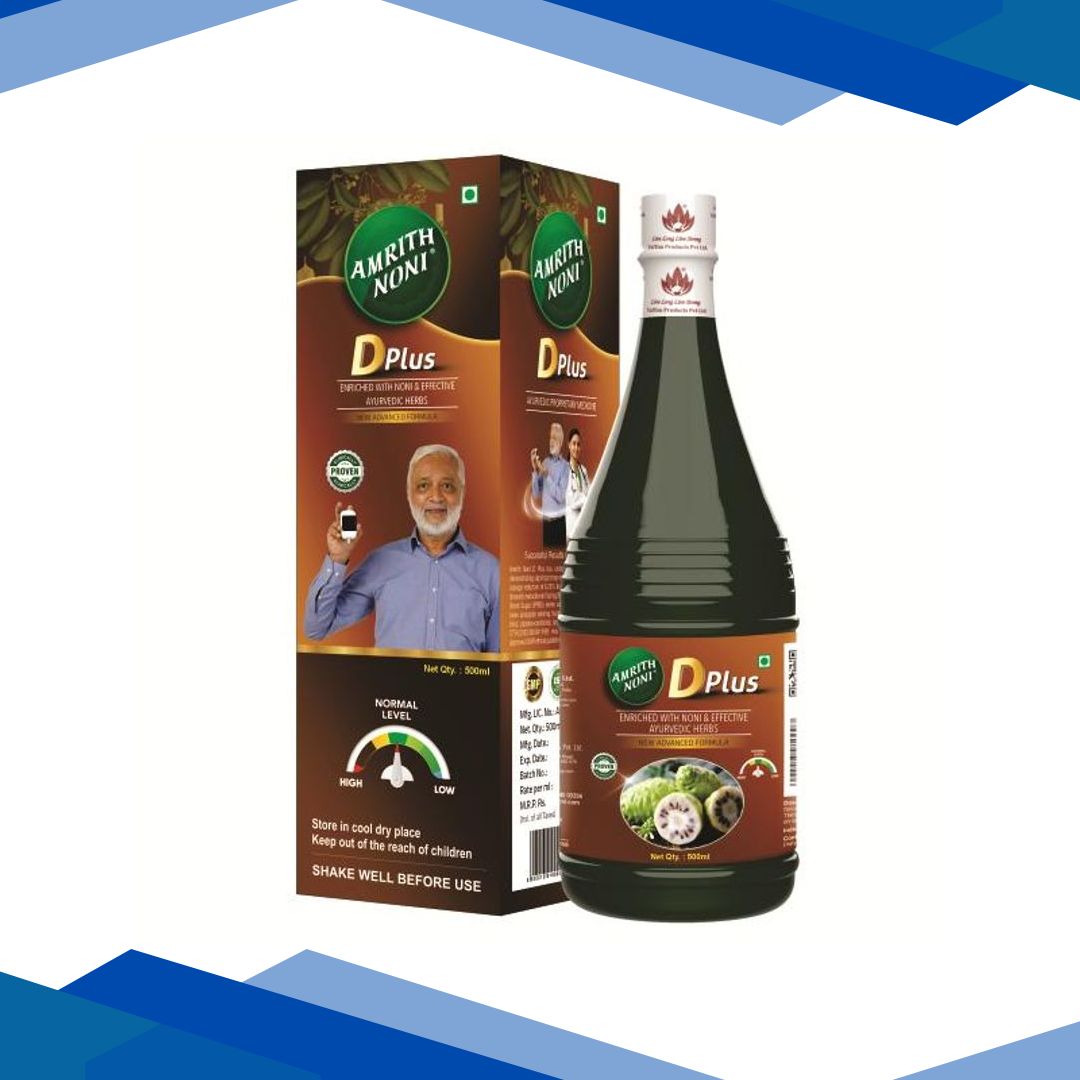
Amrith Noni D-Plus Liquid 500 ml
Amrith Noni D-Plus Liquid 500 is a combination medicine used to support healthy blood clotting, bone strength, and blood vessel health. ADRENOCHROME MONOSEMICARBAZONE and MENADIONE SODIUM BISULFITE help promote normal clot formation and may be used in conditions where there is a tendency to bleed. CALCIUM PHOSPHATE and VITAMIN D work together to help the body maintain strong bones and proper calcium balance. RUTIN supports blood vessels and may help reduce capillary fragility. This medicine is sometimes prescribed when a person has bleeding problems linked to weak blood vessels, vitamin deficiencies, or increased need for clotting support. It should be used only under medical supervision, as the exact benefit depends on the underlying condition.
Description
Amrith Noni D-Plus Liquid 500 is a combination medicine commonly described as a hemostatic and vitamin-support formulation. it is generally used when there is a need to support normal blood clotting, strengthen fragile blood vessels, and help correct or prevent certain nutritional deficiencies that can contribute to bleeding tendency or poor bone health. depending on the specific product and country of marketing, this combination may be used as a supportive treatment in conditions where capillary fragility, mild bleeding, or vitamin-related deficiency states are present. because it contains multiple components with complementary roles, it is designed to work on several pathways involved in vascular stability, coagulation support, and mineral metabolism.
the medicine? activity is based on the combined effects of its ingredients rather than one single mechanism. adrenochrome monosemicarbazone is traditionally used for its hemostatic action, helping reduce capillary bleeding by supporting vessel stability. menadione sodium bisulfite is a synthetic vitamin k-related component that supports the body? clotting process by helping the production of clotting factors. rutin is a bioflavonoid known for its capillary-protective properties, and it may help reduce permeability and fragility of small blood vessels. calcium phosphate and vitamin d contribute to calcium balance, bone mineralization, and overall musculoskeletal health, which may be especially important in people with nutritional deficiency or increased calcium needs.
this medicine is not intended to replace emergency care for major bleeding, trauma, or serious blood disorders. it is generally used as a supportive or adjunctive treatment and should be taken only under medical supervision, particularly because the vitamin k-related component and the mineral/vitamin components may interact with other medicines or medical conditions. people taking anticoagulants, those with liver disease, kidney disease, pregnancy-related bleeding concerns, or a history of kidney stones should be especially careful and seek professional advice before use.
in practical terms, this combination is for patients who may benefit from improved vascular integrity and nutritional support while also having a bleeding-related or deficiency-related indication identified by a healthcare professional. it may be prescribed in situations involving minor capillary bleeding, recurrent nosebleeds, gum bleeding, bruising tendency, or certain deficiency states, but the exact indication depends on the clinical context and local prescribing practices. always follow the advice of a doctor or pharmacist, since the appropriate use of this medicine depends on the underlying cause of symptoms and on the patient? overall health status.
ingredients
- adrenochrome monosemicarbazone: this component is traditionally used as a hemostatic agent. it is believed to help stabilize capillaries and reduce small-vessel bleeding, especially in conditions where blood vessels are more fragile than normal. its role is supportive rather than curative, and it is typically used for minor bleeding tendencies under medical advice.
- calcium phosphate: calcium phosphate provides a source of calcium and phosphate, both of which are important for healthy bones, teeth, muscle function, and nerve signaling. in combination products, it may help support mineral balance and skeletal strength, particularly when dietary intake is low or when supplementation is needed.
- menadione sodium bisulfite: this is a synthetic vitamin k-related compound that supports the body? coagulation process. vitamin k is essential for the activation of several clotting factors, and this ingredient may help correct or prevent deficiency-related bleeding problems. because it affects clotting pathways, it can interact with anticoagulants.
- rutin: rutin is a bioflavonoid that supports capillary health. it is often used to help reduce capillary permeability and fragility, which may contribute to less bruising or minor bleeding in some people. it also has antioxidant properties, though its primary purpose in this combination is vascular support.
- vitamin d: vitamin d helps the body absorb calcium and maintain proper calcium-phosphate balance, which is essential for bone health. it also supports muscle function and overall metabolic health. in a combination with calcium phosphate, vitamin d enhances mineral utilization and contributes to skeletal maintenance.
key uses
- support for minor bleeding tendencies: the combination may be used to help reduce bleeding from fragile capillaries, such as mild nosebleeds or easy bruising, when a clinician feels vascular support may be beneficial.
- capillary and vessel strengthening: rutin and adrenochrome monosemicarbazone may help improve the stability of small blood vessels, which can be useful in conditions associated with capillary fragility.
- correction of vitamin-related deficiency states: menadione sodium bisulfite supports clotting factor activation, while vitamin d helps address deficiency-related skeletal and mineral issues when supplementation is needed.
- bone and mineral support: calcium phosphate plus vitamin d can help maintain bone mineralization and support healthy calcium metabolism, particularly in individuals with inadequate dietary intake or increased need.
- adjunctive nutritional support: in some patients, the product may be prescribed as a supportive supplement when both clotting support and mineral/vitamin replenishment are desired.
how to use
this medicine should be used exactly as directed by a healthcare professional. it is commonly taken by mouth, and the timing may depend on the product formulation and the reason for use. some patients may be advised to take it after food to reduce stomach upset, while others may receive specific instructions based on their condition and other medicines. do not change the dose or duration on your own, even if symptoms improve, because the underlying cause of bleeding or deficiency may still need evaluation.
swallow the tablet or capsule with water if that is the prescribed form. if you are using a liquid formulation, measure it carefully with the provided measuring device. taking it consistently at the same time each day may help maintain steady benefit. if you are also taking iron, anticoagulants, anticonvulsants, calcium supplements, or other vitamins, ask your doctor or pharmacist about the best schedule, as spacing may be necessary in some cases. this medicine is not meant for self-treatment of unexplained bleeding, and persistent symptoms should always be assessed by a clinician.
safety information
- warnings: do not use this medicine for severe bleeding, blood in vomit or stool, heavy menstrual bleeding, or bleeding after injury unless a doctor advises it. because the formulation contains a vitamin k-related ingredient, it may reduce the effect of anticoagulant medicines. any unusual bruising, rash, swelling, chest symptoms, or worsening bleeding should be reported promptly.
- side effects: common side effects may include mild stomach upset, nausea, constipation, or a feeling of fullness. some people may notice headache or mild discomfort after taking vitamins or minerals. serious side effects are uncommon but may include allergic reactions, severe rash, swelling of the face or throat, breathing difficulty, signs of excessive calcium such as weakness or confusion, or unexpected clotting-related issues.
- precautions: use caution in people with a history of kidney stones, high calcium levels, kidney disease, liver disease, clotting disorders, or known sensitivity to any ingredient. patients with a history of thromboembolic disease should only use it if a healthcare professional determines the benefits outweigh the risks. elderly patients may need closer monitoring because they may be more sensitive to vitamin and mineral imbalance.
- pregnancy/breastfeeding: use during pregnancy or breastfeeding should be guided by a doctor. while some components are vitamins or nutrients, the complete combination should not be assumed safe without medical advice, especially because bleeding and clotting balance is delicate during pregnancy and after delivery. a clinician should evaluate whether the expected benefit is appropriate.
- interactions: this medicine may interact with anticoagulants such as warfarin and related blood thinners, potentially reducing their effect. it may also interact with other vitamin k-containing products, calcium supplements, vitamin d supplements, certain anticonvulsants, and medicines that affect calcium balance. alcohol excess can worsen nutritional deficiencies and may also complicate bleeding risk, so it is best limited unless a healthcare professional says otherwise.
additional information
- storage: store in a cool, dry place away from direct sunlight, heat, and moisture. keep the container tightly closed and out of reach of children. do not use the medicine after the expiry date, and avoid storing it in bathrooms or other humid places unless the product label specifically allows it.
- missed dose: if you miss a dose, take it when you remember unless it is almost time for the next scheduled dose. if it is close to the next dose, skip the missed one and continue as usual. do not double the dose to make up for a missed dose unless a healthcare professional specifically instructs you to do so.
- overdose: overdose may cause symptoms such as nausea, vomiting, stomach discomfort, constipation, or signs related to excess calcium or vitamin imbalance. very large or repeated excessive intake could be more concerning, especially in children or people with kidney problems. if an overdose is suspected, seek medical help or contact a poison control center right away.
- habit forming: no, this medicine is not considered habit forming. it does not produce dependence or craving, but it should still be used only for the recommended duration because unnecessary long-term use may increase the chance of side effects or interactions.
frequently asked questions
Q: what is Amrith Noni D-Plus Liquid 500 used for?
A: it is generally used as a supportive medicine for minor bleeding tendencies, capillary fragility, and certain deficiency states where vascular support, clotting support, and calcium-vitamin supplementation may be beneficial. the exact use depends on the doctor? diagnosis.
Q: does this medicine stop heavy bleeding?
A: no, it is not intended for emergencies or major bleeding. heavy, sudden, or unexplained bleeding needs immediate medical evaluation because it may indicate a serious condition that requires urgent treatment.
Q: can i take this medicine with a blood thinner?
A: you should only do so if your doctor specifically approves it. the menadione sodium bisulfite component may interfere with anticoagulants and could change how well a blood thinner works, so monitoring may be required.
Q: will this medicine help strengthen bones?
A: it may help support bone health because it contains calcium phosphate and vitamin d, which are important for calcium absorption and bone mineralization. however, it is not a substitute for a complete bone-health plan if you have osteoporosis or another bone disorder.
Q: can this medicine cause constipation or stomach upset?
A: yes, mild digestive side effects such as nausea, stomach discomfort, or constipation can occur in some people, especially because it contains calcium. taking it as advised and with food may help reduce discomfort.
Q: is it safe to use during pregnancy?
A: pregnancy use should only be based on a doctor? advice. even though the formulation contains vitamins and minerals, the full combination may not be appropriate for every pregnant person, especially if there are clotting or bleeding concerns.
Q: what should i do if i miss a dose?
A: take it when you remember unless it is nearly time for the next dose. do not take extra tablets or capsules to make up for the missed dose unless your healthcare professional tells you to.
Q: can children take this medicine?
A: children should only take it if a doctor has prescribed it. dosing and suitability depend on age, weight, nutritional status, and the reason for use, so it should not be given without professional guidance.
Q: does it cause drowsiness?
A: drowsiness is not a typical effect of this medicine. if you feel unusually sleepy, weak, or unwell after taking it, speak with a healthcare professional because another cause may be present.
Q: how long does it take to work?
A: the time to benefit varies depending on the reason for use and the individual. some effects related to vitamin or mineral support may take time, while improvement in minor bleeding tendencies may also depend on the underlying cause and adherence to treatment.
Q: can i take it with food?
A: yes, many people take it with food to reduce stomach upset, but always follow the instructions on your prescription or product label. if a clinician gives different advice, follow that instead.
Q: what signs mean i should stop taking it and seek help?
A: seek medical help if you develop allergic symptoms, worsening bleeding, severe stomach pain, signs of high calcium such as confusion or marked weakness, or any unusual clotting-related symptoms. persistent or severe side effects should not be ignored.
Q: is this medicine the same as a painkiller?
A: no, it is not a painkiller. its main role is related to bleeding support, capillary stability, and vitamin/mineral supplementation rather than pain relief.
Q: can i drink alcohol while using this medicine?
A: occasional small amounts may not be a problem for everyone, but alcohol can worsen nutrition, irritate the stomach, and affect bleeding risk or medicine use in some people. it is best to limit alcohol and ask your healthcare professional for personal advice.
this information is for educational purposes only and should not be considered medical advice. always consult a qualified healthcare professional before use.
At Gem Pharmacy, we make every effort to provide accurate, expert-written, and thoroughly reviewed information related to medicines. However, this information should not be considered a substitute for professional medical advice, diagnosis, or treatment from a qualified doctor.
The purpose of this information is to educate users and improve communication between patients and healthcare professionals. It should not be used to diagnose or treat any condition.
Always consult a certified healthcare professional before taking any medication.


Related products
Himalaya Quista DN Powder – Milk Masala Flavour 400 gm

Fixderma Foobetik Foot Scrub Spray Dead Skin & Tan Removal Darkness Blackness Removal Scrub 50 ml

Bronson Professional Gel Heel Socks 1’s