


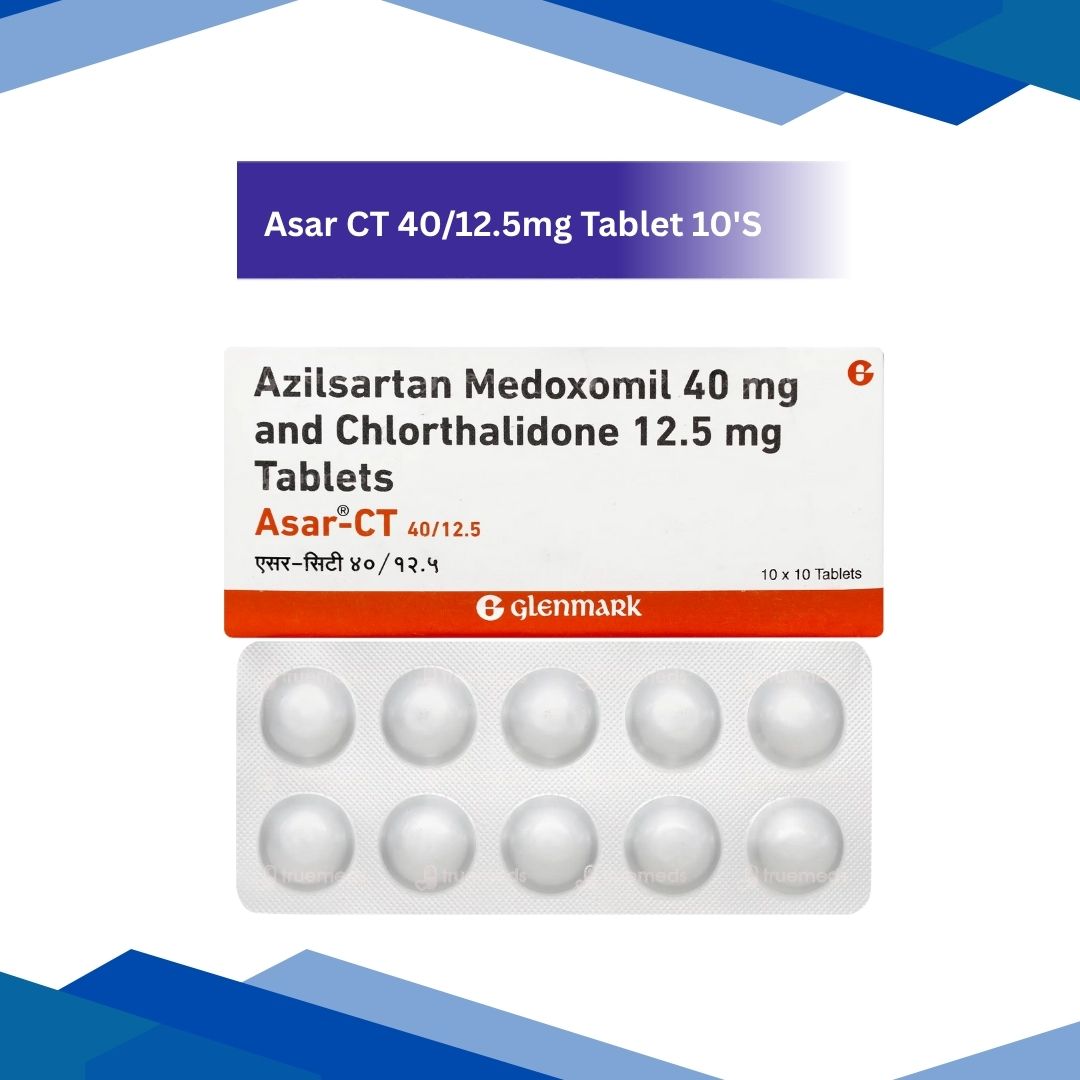
Asar CT 40/12.5 mg Tablet 10’s
No Prescription yet? Don’t worry! Click Here to Get Online Consultation
The Asar-CT 40/12.5 mg Tablet is a combination medication used to manage high blood pressure (hypertension). It combines two active ingredients— Azilsartan Medoxomil (an angiotensin II receptor blocker) and Chlorthalidone (a thiazide-like diuretic)—helping relax blood vessels and eliminate excess fluid from the body, thereby lowering blood pressure. This tablet is typically prescribed when single-drug therapy is insufficient. For more details kindly click on Medicine Salts below:
Azilsartan Medoxomil
Azilsartan medoxomil: Advanced control of high blood pressure
Azilsartan medoxomil is a potent, long-acting prescription medication belonging to the class of Angiotensin II Receptor Blockers (ARBs) and primarily used to manage hypertension, i.e. high blood pressure, in adults. By lowering the effect of the raised blood pressure, it lessens the long-term risk of life-threatening cardiovascular events, such as strokes and heart attacks.
Azilsartan management of blood pressure is its intense agonistic affinity toward the AT1 receptor, allowing for superior, well-developed 24-hour blood pressure control with one dose a day.
Product Highlights
Drug Class: Angiotensin II Receptor Blocker (ARB)
Primary Use: Management of Essential Hypertension
Common Strengths: 40mg and 80mg Tablets
Main Feature: It is highly effective in controlling "early morning" blood pressure surges.
How Azilsartan Works: The Mechanism
The blood pressure is often regulated by a hormone called Angiotensin II, which tightens and narrows blood vessels. Azilsartan does this by blocking the receptors that this hormone will adhere to. By not allowing the Angiotensin II to bind, Azilsartan gives space for the blood vessels to relax and become wider (vasodilation). Thus, smoother blood flow and reduced workload on the heart are achieved.
Key Benefits of Azilsartan
High Efficacy: In several clinical studies, Azilsartan has often been found to be better at decreasing 24-hour systolic blood pressure compared to other ARBs like Valsartan or Olmesartan.
Protection from End Organs: Protects your kidneys and heart from the chronic wear and tear of high blood pressure over the long term.
Real Control: A half-life that longs the entire day and night controls your blood pressure, shielding you from the increased risk just before waking up.
Flexible Dosing: May be taken with or without food, making it easy to incorporate into a daily routine.
Directions for Use in Adults (Including the elderly)
Method of Administration: Swallow the tablets with water. Tablets should not be broken, crushed, or chewed.
Timing of Doses: Should be daily administered unchanged. However, for convenient dosing, take azilsartan at about the same time each day with or without food.
Starting Dose: The usual starting dose is 40 mg once daily. However, based on the efficacy and tolerability, the dose can be increased to a maximum dose of 80 mg daily.
Storage: Keep your aZILSARTAN tablets in an airtight container and at normal room temperature. Azilsartan is photolabile, so it needs to be protected from light.
Warnings and Precautions
AVOID. WARNING FOR WOMEN. Uncertainty exists about the possible risks to a nursing child from taking azilsartan, given the very probable serious risks to the unborn fetus. In emergencies, discontinue therapy. sungajio@gmail.com. Call the medical department for further guidance on azilsartan.
Kidney Function: Impaired renal function necessitates care in dosage reduction; check serum creatinine and potassium levels often in such cases.
Dehydration: Severe vomiting, diarrhea, or sweating can lead to low blood pressure (hypotension).
Potassium Supplements: Avoid potassium supplements or salt-containing substitutes without the prescription of your doctor.
Possible Side Effects
Most people handle Azilsartan well, but some can show side effects:
Dizziness or feeling dizzy when getting up quickly
Tiredness or achy muscles
Some diarrhea
Increased potassium levels in the blood
FAQs
Q: When will Azilsartan start affecting upon my blood pressure?
A: Antihypertensive effects may become manifest during the first 2 weeks of therapy but will take approximately 4 weeks to reach its peak effect.
Q: Can I do intertangling of medicines like Azilsartan with my "Water Pill"?
A: Yes, using Chlorthalidone or Hydrochlorothiazide alongside Azilsartan gives better results than if they're used singly. But this combination may cause dizziness, so you need to monitor closely when starting with small doses.
Q: What should I do if I miss a dose?
A: Take it as soon as you remember. If it is almost time for your next dose, skip the missed one. Do not take a double dose to make up for one skipped dose, as this could result in a dangerous drop in blood pressure.
Q: Will it cause a dry cough, like an ACE inhibitor?
A: No. Unlike ACE inhibitors (such as Enalapril or Lisinopril), ARBs like Azilsartan do not usually cause a persistent cough, making them a sound choice for patients who are sensitive.
Q: Can I drink alcohol while taking this medication?
A: It is best to limit alcohol consumption while taking Azilsartan. Consumption of alcohol can decrease your blood pressure which may lead to experiencing side effects like dizziness, fainting, or headaches.
Chlorthalidone
CHLOROTHIAZIDE TABLETS
Therapeutic Uses
Chlorthalidone is a potent, long-working diuretic (commonly known also as water pills) belonging to the thiazide-like group of drugs and has been ordered mainly for the treatment of Hypertension (elevated blood pressure) and for Edema (fluid retention debris) that has accompanied a series of cardiovascular disorders, having at least a pathologic relationship with this symptom. This compound helps encourage the kidneys to give their waste of salt and water through the urine, taking action to decrease the overload experienced by the heart and avert any long-term sequelae, such as stroke and heart attack.
Key Therapeutic Uses
Hypertension Management: Significantly lowers blood pressure as a stand-alone agent or in conjunction with other antihypertensive drugs.
Reduction of Edema: Reduces the accretion of fluid in ankles, legs, or the belly minus the associated swelling induced by supportive heart failure.
Reduction of Heart Work: Reduces the workload of the heart by reducing the total volume in the body.
Medication to Prevent Calcium Stones: Sometimes Chlorthalidone is given to reduce the excretion of calcium in the urine; this reduces the formation of certain kinds of kidney stones.
How It Works
The mechanism of action of Chlorthalidone targets the distal convoluted tubule in the kidneys. At this anatomical point, sodium chloride reabsorption is obstructed, resulting in greater water flushing from the system. Its unique advantage over other diuretics such as hydrochlorothiazide is a much longer duration of action (as long as 48 to 72 hours), providing continuous control of blood pressure.
Pattern Of Use & Dosage Details
For the best purification from the drug, take it in the morning with breakfast. The possibility of nocturia may affect sleep, so in the later part of the day, avoid taking the medication at all.
Consistency: Keep the same hour on every single day for taking the tablet in order to exempt from fluctuations in plasma levels.
Route of Administration: Swallow the tablet whole with a glass of water. You may take it with or without meals, food usually annuls any irritation on the stomach.
Missing Dose: Take the missed dose as soon as you remember or if it is close to the time for another regular dose. Never "catch up."
Common Side Effects
Most adverse effects are mild and disappear with time as your body learns to adjust to the medication. These consist of:
Increased frequency of urination
Dizziness upon standing up quickly
Headache or fatigue
Mild stomach upset, loss of appetite
Muscle cramps, a condition where electrolyte imbalance may contribute to cramps
Warning: Please consult your physician promptly if you experience symptoms of an electrolyte imbalance, such as excessive thirst, an irregular heartbeat, great weakness, or confusion.
Contraindications/Safety Measures
Alcohol: Avoid alcohol consumption while taking Chlorthalidone, as it could substantially worsen dizziness and low blood pressure.
Sun Sensitivity: Your skin may become more sensitive to sunlight using this medication. During sunlight exposure, use sunscreen and wear protective clothing.
Diabetes: Chlorthalidone may cause changes in your blood sugar levels; you may need to check your blood glucose more rigorously if you have diabetes.
Kidneys/Liver Health: Speak with your doctor if you have a past concerning kidney or liver disease; the dosing schedule may need to be altered during treatment.
Pregnancy: Use of Chlorthalidone is best avoided during pregnancy or while breast-feeding unless the doctor feels strongly about it.
FAQs
Q: How quickly will Chlorthalidone start working?
Increased urination (a sign of the drug's action) may be noticed somewhere between 2–3 hours of the drug being ingested. In the case of blood pressure, it may take from 2–4 weeks of continued use to see peak efficacy of the medicine.
Q: Why do I need to eat more bananas when I take this medicine?
As diuretics, nearly all diuretics may lead to losing potassium in the body; hence, your doctor may suggest eating potassium-rich food (bananas, oranges, spinach) or potassium supplements to help balance your electrolyte levels.
Q: Will Chlorthalidone give me gout?
In a few people, Chlorthalidone can raise the level of uric acid in your blood. If you are experiencing gout, inform your doctor. In certain patients, it could cause an inflammatory response.
Q: Can I drive after taking this pill?
Chlorthalidone may potentially cause dizziness or blurred vision, particularly during early therapy. You must strictly avoid driving or performing any delicate work where full attention is required.
Q: I quit taking the medication after they registered normal pressure. Is it okay to stop it?
No. Untreated hypertension is still "silent," meaning that it doesn't give you any signs. If you abruptly discontinue your medication, your blood pressure might rise significantly, causing complications. Before changing the dose of a drug, always consult your healthcare provider for instructions on how to stop taking it.
Storage
Store in a place free from direct sunlight and any moisture content, keep the container securely closed and out of the reach of children.
Disclaimer: The information given here are mere suggestions and do not give way to any certification; in case of need, we would recommend that any unaware person consult a qualified professional for medically empowered guidance.
At Gem Pharmacy, we make every effort to provide accurate, expert-written, and thoroughly reviewed information related to medicines. However, this information should not be considered a substitute for professional medical advice, diagnosis, or treatment from a qualified doctor.
The purpose of this information is to educate users and improve communication between patients and healthcare professionals. It should not be used to diagnose or treat any condition.
Always consult a certified healthcare professional before taking any medication.


Related products


Telpres CT 40/6.25 mg Tablet 15’s