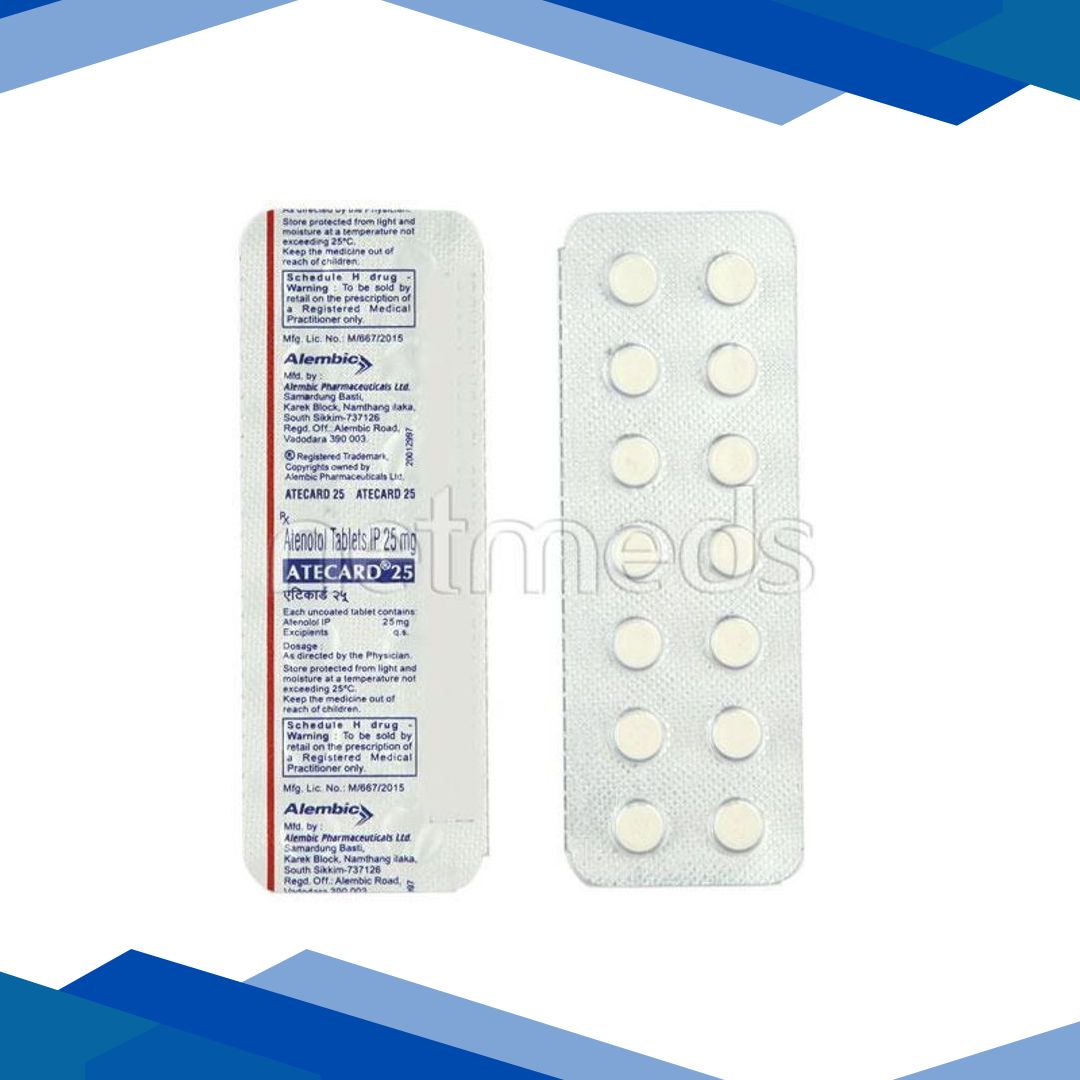
Atecard 25mg Tablet 14’S
Atecard 25mg Tablet is a combination medicine used to help control high blood pressure and, in some cases, chest pain related to the heart. Amlodipine works by relaxing and widening the blood vessels, which makes it easier for blood to flow and lowers pressure on the heart. Atenolol helps slow the heart rate and reduce the heart? workload, allowing the heart to pump more efficiently. Together, these actions can improve blood pressure control and may reduce the risk of complications linked to uncontrolled hypertension. This medicine is commonly prescribed for people who need better blood pressure management under medical supervision. It should be used only as directed by a healthcare professional, as the right treatment depends on each person? condition and overall health.
Description
Atecard 25mg Tablet is a combination medicine used mainly to help control high blood pressure and, in many patients, to reduce the strain placed on the heart and blood vessels. it contains two well-established medicines that work in different but complementary ways. amlodipine belongs to a group of medicines called calcium channel blockers. it helps relax and widen blood vessels, making it easier for blood to flow and lowering the pressure inside the arteries. atenolol is a beta-blocker that slows down the heart rate and reduces the force with which the heart pumps. together, these actions can improve blood pressure control more effectively than using either medicine alone in some patients.
this combination is often prescribed when a single medicine does not adequately control blood pressure, or when a patient may benefit from both improved vessel relaxation and reduced heart workload. by lowering blood pressure, Atecard 25mg Tablet may help reduce the long-term risk of serious complications such as stroke, heart attack, kidney damage, and certain heart-related problems. in some patients, it may also help with symptoms related to angina, which is chest discomfort caused by reduced blood flow to the heart. however, the exact benefit depends on the person? health condition, age, other medicines, and overall cardiovascular risk.
although Atecard 25mg Tablet can be very useful, it must be used carefully because both ingredients can affect the heart and circulation. atenolol may lower pulse rate too much in some people, while amlodipine can sometimes cause swelling in the ankles, flushing, or headache. for this reason, it is important to take it exactly as directed by a healthcare professional and to report dizziness, fainting, unusually slow heartbeat, shortness of breath, or swelling. this medicine is not suitable for everyone, especially people with certain heart rhythm problems, very low blood pressure, or some breathing disorders unless a clinician says it is safe.
Atecard 25mg Tablet is intended for people who need ongoing blood pressure management and, in some cases, additional heart protection. it is not a quick ?escue?medicine for chest pain or sudden blood pressure spikes. instead, it is usually used as part of a broader treatment plan that may include dietary changes, exercise, reduced salt intake, weight management, stress control, smoking cessation, and regular monitoring of blood pressure and heart rate. the best results are usually seen when the medicine is taken consistently over time and combined with healthy lifestyle measures.
ingredients
- amlodipine: amlodipine is a calcium channel blocker that relaxes and widens the blood vessels. this lowers blood pressure and improves blood flow, which reduces the work the heart has to do. it is especially helpful for patients with hypertension and may also help prevent angina symptoms by improving oxygen supply to the heart muscle.
- atenolol: atenolol is a beta-blocker that slows the heart rate and reduces the heart? pumping force. this helps lower blood pressure and can reduce the heart? oxygen demand. it may also be useful in patients who have a fast pulse, certain types of chest pain, or some heart rhythm concerns when prescribed appropriately.
- inactive ingredients: the exact non-medicinal ingredients vary by manufacturer and dosage form. these substances help with tablet stability, absorption, shape, and shelf life but do not provide the therapeutic effect. if you have known allergies or intolerances, check the product label or ask a pharmacist for the full ingredient list.
key uses
- high blood pressure (hypertension): Atecard 25mg Tablet is commonly used to lower elevated blood pressure and help keep it within a healthier range over time. proper blood pressure control can reduce the risk of stroke, heart attack, kidney damage, and other complications.
- angina relief and prevention: in some patients, the combination may help reduce chest discomfort related to reduced blood flow to the heart. amlodipine improves blood flow by relaxing vessels, while atenolol lowers the heart? oxygen demand by slowing the heart rate.
- cardiovascular risk reduction in selected patients: by lowering blood pressure and easing the workload on the heart, the medicine may help reduce strain on the cardiovascular system. it is often part of a long-term plan to protect heart and vessel health.
- adjunct therapy when one medicine is not enough: some people need more than one blood pressure medicine to achieve control. this combination may be used when one drug alone does not provide enough benefit or when a clinician wants a balanced effect on both blood vessels and heart rate.
how to use
Atecard 25mg Tablet should be taken exactly as prescribed by a healthcare professional. it is usually taken once daily or as directed on the label, and it may be taken with or without food. taking it at the same time each day helps maintain steady levels in the body and makes it easier to remember. swallow the tablet whole with water unless your pharmacist or doctor has given different instructions. do not crush, chew, or split the tablet unless it is specifically designed for that purpose.
because this medicine is used for long-term control, it is important to take it regularly even when you feel well. high blood pressure often has no obvious symptoms, so stopping the medicine on your own can allow pressure to rise again and increase risk. if you are also taking other medicines for blood pressure, heart disease, or chest pain, your clinician may monitor your pulse, blood pressure, and overall response more closely. if you miss or change doses, or if you notice lightheadedness, very slow pulse, or swelling, seek medical advice.
do not stop Atecard 25mg Tablet suddenly without speaking to a healthcare professional, especially because atenolol may cause rebound effects such as increased heart rate, chest pain, or rising blood pressure if discontinued abruptly. if a change is needed, a clinician usually advises a gradual adjustment. regular checkups, home blood pressure monitoring, and reporting of symptoms can help ensure safe and effective use.
safety information
- warnings: this medicine can lower both blood pressure and heart rate, so it may cause dizziness, weakness, tiredness, or fainting, especially when you first start treatment or when the dose is changed. be cautious when standing up quickly, driving, or using machinery until you know how it affects you. seek urgent help if you develop chest pain that worsens, severe shortness of breath, fainting, or a very slow heartbeat.
- side effects: common side effects may include headache, dizziness, fatigue, flushed feeling, ankle or foot swelling, nausea, cold hands or feet, and slower pulse. more serious side effects can include marked bradycardia, low blood pressure, worsening heart failure, breathing difficulty in susceptible individuals, severe swelling, irregular heartbeat, or allergic reactions. report persistent or severe symptoms to a healthcare professional promptly.
- precautions: use caution if you have heart failure, slow heartbeat, conduction problems, asthma, chronic obstructive lung disease, diabetes, peripheral circulation problems, liver disease, kidney disease, or a history of fainting. atenolol can mask some signs of low blood sugar such as rapid heartbeat, which is important for people with diabetes. tell your clinician about all current health conditions before starting therapy.
- pregnancy/breastfeeding: this medicine should only be used during pregnancy or breastfeeding if a healthcare professional determines the benefit outweighs potential risk. atenolol and amlodipine may affect fetal or newborn heart rate, blood pressure, or growth in certain situations. if you are pregnant, planning pregnancy, or nursing, consult your doctor before using this medicine.
- interactions: Atecard 25mg Tablet may interact with other blood pressure medicines, certain heart medicines, some antiarrhythmics, digoxin, clonidine, diabetes medicines, and drugs that can further slow heart rate or lower blood pressure. alcohol may increase dizziness or lightheadedness. some medicines used for pain, colds, or mood disorders may also affect blood pressure or heart rate, so always share a full medication list with your doctor or pharmacist.
additional information
- storage: store the medicine in a cool, dry place away from direct sunlight, heat, and moisture. keep it in the original container, tightly closed, and out of reach of children and pets. do not store it in bathrooms unless specifically recommended, because humidity can damage tablets.
- missed dose: if you miss a dose, take it when you remember unless it is almost time for the next dose. if the next dose is near, skip the missed one and return to your regular schedule. do not take extra tablets to make up for a missed dose, as this may increase the risk of low blood pressure or slow heart rate.
- overdose: an overdose may cause severe dizziness, fainting, very slow heartbeat, extreme tiredness, confusion, shortness of breath, or dangerously low blood pressure. in serious cases, it can be life-threatening. if an overdose is suspected, seek emergency medical help immediately or contact a poison control center right away.
- habit forming: no, Atecard 25mg Tablet is not considered habit-forming. however, it should not be stopped suddenly because abrupt discontinuation may worsen blood pressure or heart-related symptoms. consistent use under medical supervision is important for safety and effectiveness.
frequently asked questions
Q: what is Atecard 25mg Tablet used for?
A: Atecard 25mg Tablet is mainly used to treat high blood pressure and may also help with certain chest pain symptoms in appropriate patients. it works by relaxing blood vessels and slowing the heart rate, which reduces the heart? workload and helps improve circulation.
Q: how does Atecard 25mg Tablet work in the body?
A: the amlodipine component relaxes and widens blood vessels, while the atenolol component slows the heart rate and reduces how forcefully the heart pumps. together, these actions lower blood pressure and can reduce strain on the heart.
Q: can Atecard 25mg Tablet cause dizziness?
A: yes, dizziness can occur, especially when starting treatment or after dose changes, because the medicine lowers blood pressure and may slow the pulse. standing up slowly and avoiding sudden position changes may help, but persistent or severe dizziness should be reported to a healthcare professional.
Q: should i take Atecard 25mg Tablet with food?
A: it may usually be taken with or without food, unless your doctor or the product instructions say otherwise. the most important thing is to take it consistently in the same way each day so the effect remains steady.
Q: can i stop Atecard 25mg Tablet if my blood pressure becomes normal?
A: no, you should not stop it on your own just because your blood pressure improves. blood pressure medicines often work only while you are taking them, and stopping suddenly can cause blood pressure to rise again or lead to heart-related symptoms. always ask your doctor before making any change.
Q: is Atecard 25mg Tablet safe for people with asthma?
A: it may not be suitable for some people with asthma or other breathing disorders because atenolol can sometimes worsen breathing symptoms. a healthcare professional must decide whether it is appropriate based on your medical history and current condition.
Q: what side effects should i watch for?
A: common side effects include dizziness, tiredness, headache, swelling of the ankles or feet, and a slower pulse. serious warning signs include fainting, very slow heartbeat, severe shortness of breath, chest pain that worsens, or signs of an allergic reaction such as rash, swelling, or trouble breathing.
Q: can Atecard 25mg Tablet interact with alcohol?
A: yes, alcohol can increase the likelihood of dizziness, lightheadedness, or fainting because this medicine already lowers blood pressure. it is best to ask your doctor whether alcohol is appropriate for you while taking this treatment.
Q: is this medicine used for sudden high blood pressure emergencies?
A: no, Atecard 25mg Tablet is generally used for ongoing blood pressure control rather than rapid emergency treatment. if someone has a severe blood pressure spike or emergency symptoms, they need immediate medical care.
Q: what if i feel my heartbeat is too slow?
A: a very slow heartbeat can happen with this medicine, especially due to atenolol. if you feel faint, weak, unusually tired, or notice an abnormally slow pulse, contact a healthcare professional promptly, and seek urgent care if symptoms are severe.
Q: can i take other blood pressure medicines with Atecard 25mg Tablet?
A: sometimes additional medicines are needed, but combining blood pressure treatments should only be done under medical supervision because the risk of low blood pressure or slow heart rate can increase. your clinician will choose the safest combination for your needs.
Q: does Atecard 25mg Tablet affect diabetes?
A: it can be used in people with diabetes, but atenolol may mask some warning signs of low blood sugar, such as a rapid heartbeat. people with diabetes should monitor their blood sugar carefully and discuss any concerns with their doctor.
Q: can this medicine cause ankle swelling?
A: yes, ankle or foot swelling is a known side effect of amlodipine. mild swelling may be monitored, but worsening swelling, sudden weight gain, or shortness of breath should be evaluated by a healthcare professional.
Q: is it okay to drive after taking Atecard 25mg Tablet?
A: some people may feel dizzy, tired, or lightheaded after taking it, especially at first. until you know how it affects you, use caution when driving or performing tasks that require alertness.
Q: what should i tell my doctor before starting Atecard 25mg Tablet?
A: tell your doctor about any heart disease, slow pulse, breathing problems, diabetes, liver or kidney issues, pregnancy, breastfeeding, allergies, and all medicines or supplements you use. this helps the clinician determine whether the medicine is appropriate and safe for you.
this information is for educational purposes only and should not be considered medical advice. always consult a qualified healthcare professional before use.
At Gem Pharmacy, we make every effort to provide accurate, expert-written, and thoroughly reviewed information related to medicines. However, this information should not be considered a substitute for professional medical advice, diagnosis, or treatment from a qualified doctor.
The purpose of this information is to educate users and improve communication between patients and healthcare professionals. It should not be used to diagnose or treat any condition.
Always consult a certified healthcare professional before taking any medication.

Related products