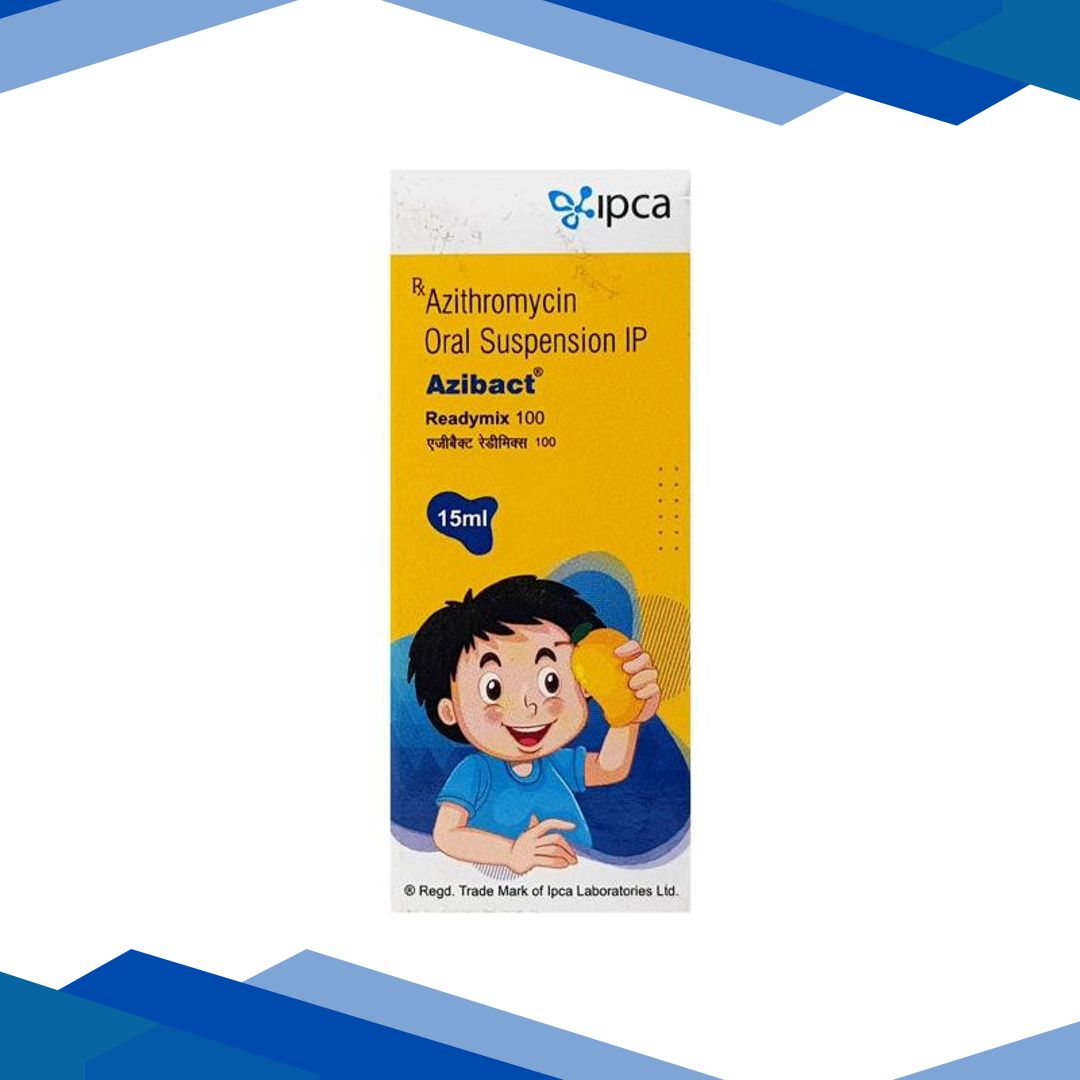
Azibact 100mg Readymix Suspension 15ml
Azibact 100mg Readymix Suspension is a combination antibiotic used to treat a variety of bacterial infections. Ampicillin helps kill susceptible bacteria by stopping them from building strong cell walls, while sulbactam protects ampicillin from being broken down by certain bacteria, helping the antibiotic work better. This makes the medicine useful against infections that may be resistant to ampicillin alone. It is commonly used for infections of the respiratory tract, urinary tract, skin, soft tissues, abdomen, and gynecological areas, as well as some serious hospital-acquired infections. It works only against bacteria, not viruses such as those that cause colds or flu. Azibact 100mg Readymix Suspension should be used under medical supervision to ensure it is appropriate for the type of infection and the bacteria involved.
Description
Azibact 100mg Readymix Suspension is a combination antibiotic medicine used to treat a wide range of bacterial infections caused by susceptible organisms. it combines two active components that work together to improve antibacterial effectiveness: ampicillin, a penicillin-class antibiotic, and sulbactam, a beta-lactamase inhibitor. this combination is especially useful when bacteria produce enzymes called beta-lactamases, which can destroy certain antibiotics and make treatment less effective. by protecting ampicillin from this enzymatic breakdown, sulbactam helps restore and extend its activity against many infection-causing bacteria.
Azibact 100mg Readymix Suspension is generally used in clinical settings where infections may be moderate to severe or where there is a concern for mixed bacterial organisms. it may be given by injection under medical supervision, particularly in hospital or outpatient procedural settings, because precise administration and monitoring may be needed. the medicine does not work against viruses such as the common cold, flu, or most sore throats caused by viral infections, so it should only be used when a healthcare professional believes a bacterial infection is likely or confirmed.
from a mechanism standpoint, ampicillin works by interfering with bacterial cell wall synthesis. bacteria need a strong cell wall to survive, and ampicillin disrupts the enzymes responsible for building that wall, causing the bacteria to weaken and die. sulbactam itself has little antibacterial activity against many infections, but its most important role is to block beta-lactamase enzymes produced by resistant bacteria. this combination therefore broadens the coverage of ampicillin and makes it more effective against certain resistant organisms. it is commonly selected when a clinician needs reliable coverage for organisms involved in respiratory, abdominal, gynecologic, skin, or soft tissue infections.
this medicine is not appropriate for everyone. people with a history of serious allergy to penicillins or certain other beta-lactam antibiotics may be at risk of dangerous hypersensitivity reactions. in addition, because antibiotics can affect the natural balance of bacteria in the body, Azibact 100mg Readymix Suspension may sometimes lead to diarrhea, fungal overgrowth, or other adverse effects. as with all antibiotics, it should be used exactly as directed by a qualified healthcare professional to help ensure safety, treatment success, and reduced risk of antibiotic resistance.
ingredients
- ampicillin: this is the main antibacterial component. it belongs to the penicillin group and works by blocking bacterial cell wall formation, which leads to bacterial death. it is effective against many susceptible gram-positive and gram-negative bacteria, but some bacteria can resist it by producing beta-lactamase enzymes.
- sulbactam: this component is a beta-lactamase inhibitor. its primary role is to protect ampicillin from bacterial enzymes that would otherwise break it down. by preventing this resistance mechanism, sulbactam helps ampicillin remain active against a broader range of organisms.
- inactive ingredients: depending on the formulation, injectable or reconstituted products may contain excipients that support stability, solubility, and delivery. these do not treat infection but help make the medicine usable and effective in its pharmaceutical form.
key uses
- respiratory tract infections: may be used for certain bacterial infections of the lungs or airways when the likely organisms are sensitive. this includes some cases of pneumonia or complicated respiratory infections where broader coverage is needed.
- skin and soft tissue infections: useful for bacterial infections affecting the skin, muscles, or deeper soft tissues, especially when mixed bacteria or beta-lactamase-producing organisms are suspected.
- intra-abdominal infections: often selected for infections inside the abdomen that may involve multiple types of bacteria, including anaerobic organisms, depending on the clinical situation.
- gynecological and pelvic infections: may be prescribed for certain bacterial infections involving the reproductive organs or pelvic tissues, particularly when polymicrobial infection is a concern.
- urinary tract infections: can be used in selected bacterial urinary infections if the organism is susceptible and the infection is clinically appropriate for this antibiotic combination.
- post-surgical or procedure-related infections: sometimes used when bacterial coverage is needed after surgery or during treatment of infected wounds, abscesses, or contaminated sites.
- bone and joint infections: in some cases, clinicians may consider it for susceptible bacterial infections involving deeper tissues, though treatment choice depends on culture results and severity.
how to use
Azibact 100mg Readymix Suspension is typically administered by a healthcare professional, most often as an injection or infusion, rather than taken by mouth. the exact method, frequency, and duration depend on the type and severity of the infection, the patient? kidney function, and the organism involved. it is important to follow the prescribing clinician? instructions carefully and not stop therapy early just because symptoms begin to improve. stopping too soon can allow bacteria to survive and may increase the risk of the infection returning or becoming harder to treat.
if the medicine is being given in a hospital or clinic, a nurse or doctor will prepare and administer it using the proper dilution and timing. if a patient is receiving it as part of an outpatient treatment plan, they should follow all instructions exactly and attend all scheduled follow-up appointments. patients should also let their healthcare provider know if symptoms worsen, if fever persists, or if new reactions such as rash, severe diarrhea, or breathing difficulty occur.
safety information
- warnings: serious allergic reactions can occur, including rash, itching, swelling, wheezing, and anaphylaxis. patients with a known allergy to penicillins or a history of severe reactions to beta-lactam antibiotics should inform their clinician before use. prolonged or repeated use may increase the chance of resistant organisms or fungal overgrowth. in some people, antibiotics may cause severe diarrhea associated with clostridioides difficile, which can occur during treatment or even weeks later.
- side effects: common side effects may include nausea, vomiting, diarrhea, injection-site pain, redness, swelling, mild rash, and temporary changes in liver test results. serious side effects can include severe allergic reaction, marked skin reactions, liver inflammation, seizure risk in susceptible patients, blood count abnormalities, and severe intestinal infection. any unusual or severe symptom should be reported promptly.
- precautions: use caution in people with a history of drug allergies, kidney disease, liver disease, gastrointestinal disease, or previous antibiotic-associated colitis. patients with reduced kidney function may require closer monitoring because the medicine is cleared through the kidneys. tell the healthcare provider about all current illnesses, recent antibiotic use, and any history of antibiotic resistance.
- pregnancy/breastfeeding: this medicine is sometimes used during pregnancy when clearly needed, but the decision should be made by a clinician after weighing benefits and risks. small amounts may pass into breast milk, and breastfeeding infants may occasionally develop diarrhea, thrush, or sensitivity reactions. a healthcare professional should be consulted before use during pregnancy or while breastfeeding.
- interactions: Azibact 100mg Readymix Suspension may interact with other medicines, including probenecid, which can increase antibiotic levels, and certain anticoagulants such as warfarin, where monitoring may be needed due to changes in clotting risk. it may also interact with drugs that affect kidney function or increase the risk of side effects. alcohol does not usually cause a direct dangerous interaction, but it may worsen stomach upset, dehydration, or recovery during infection and is best avoided unless a clinician says otherwise.
additional information
- storage: store according to the product label and pharmacy instructions. many injectable antibiotics require protection from excessive heat, moisture, and light, and some reconstituted solutions have limited stability once mixed. do not freeze unless specifically instructed. keep out of reach of children.
- missed dose: if a dose is missed in a supervised treatment schedule, it should be given as soon as remembered unless it is almost time for the next scheduled dose. do not double up doses. because this medicine is often administered in a clinical setting, patients should contact their healthcare provider or treatment center for guidance if a dose is delayed.
- overdose: an overdose may cause more intense side effects such as nausea, vomiting, diarrhea, confusion, muscle twitching, or seizures, especially in people with kidney impairment. if overdose is suspected, urgent medical help should be sought immediately. treatment is supportive and may involve monitoring, fluids, and symptom management.
- habit forming: no. Azibact 100mg Readymix Suspension is an antibiotic and is not considered habit-forming or addictive. however, it should still be used only when necessary and exactly as prescribed to reduce the risk of antibiotic resistance.
frequently asked questions
Q: what is Azibact 100mg Readymix Suspension used for?
A: Azibact 100mg Readymix Suspension is used to treat susceptible bacterial infections, especially when bacteria may produce beta-lactamase enzymes that reduce the effectiveness of ampicillin. it is commonly used for respiratory, skin, abdominal, pelvic, urinary, and certain post-surgical infections.
Q: is Azibact 100mg Readymix Suspension an antibiotic?
A: yes. it is a combination antibiotic made of ampicillin and sulbactam. ampicillin kills bacteria by stopping cell wall formation, while sulbactam helps protect ampicillin from bacterial resistance enzymes.
Q: can Azibact 100mg Readymix Suspension treat viral infections?
A: no. like other antibiotics, it does not work against viruses. it should not be used for colds, flu, or other viral illnesses unless a bacterial infection is also present and a healthcare professional recommends it.
Q: what are the most common side effects?
A: common side effects may include diarrhea, nausea, vomiting, rash, and pain or irritation at the injection site. most are mild, but severe diarrhea, breathing difficulty, or swelling should be treated as urgent medical issues.
Q: who should avoid this medicine?
A: people with a known allergy to penicillin or a serious previous reaction to beta-lactam antibiotics should avoid it unless specifically advised by a specialist. extra caution is also needed in kidney disease, liver disease, and a history of antibiotic-associated colitis.
Q: can i take it if i am pregnant or breastfeeding?
A: it may sometimes be used during pregnancy or breastfeeding if the healthcare provider believes the benefit outweighs the risk. however, this decision should be individualized, and medical advice is recommended before use.
Q: does this medicine cause resistance?
A: any antibiotic can contribute to resistance if it is used incorrectly, too often, or for non-bacterial illnesses. using Azibact 100mg Readymix Suspension only when prescribed and completing the recommended course helps reduce this risk.
Q: how quickly does Azibact 100mg Readymix Suspension work?
A: some improvement in symptoms may appear within a few days if the infection is sensitive to the medicine, but the exact response depends on the infection type, severity, and overall health. if symptoms do not improve, medical review is important.
Q: can this medicine affect the stomach?
A: yes. it can cause nausea, loose stools, or abdominal discomfort. taking supportive measures recommended by a clinician and staying hydrated may help, but severe or persistent diarrhea should be reported promptly.
Q: what should i do if i develop a rash?
A: a new rash during antibiotic therapy should be reported to a healthcare professional, because it may represent an allergy or another drug reaction. if the rash is accompanied by swelling, wheezing, or breathing trouble, seek emergency care immediately.
Q: is dose adjustment needed in kidney problems?
A: in many cases, yes. because the medicine is eliminated by the kidneys, people with reduced kidney function may require careful monitoring and individualized adjustment by a healthcare professional.
Q: can it be used for severe infections?
A: it can be used for certain moderate to severe bacterial infections when the organisms are likely susceptible, but the choice depends on culture results, infection site, and clinical judgment. severe infections often require close medical supervision.
Q: what if i feel better before finishing treatment?
A: you should not stop treatment on your own just because you feel better. stopping early may allow the infection to return or worsen, and it can also contribute to antibiotic resistance.
Q: does it interact with blood thinners?
A: it may interact with some anticoagulants, including warfarin, so monitoring may be necessary. always tell your healthcare provider about all medicines, supplements, and herbal products you use.
Q: can alcohol be consumed during treatment?
A: there is no major direct interaction in many cases, but alcohol may worsen side effects such as stomach upset or dehydration and may slow recovery. it is generally safer to avoid alcohol unless your clinician says otherwise.
this information is for educational purposes only and should not be considered medical advice. always consult a qualified healthcare professional before use.
At Gem Pharmacy, we make every effort to provide accurate, expert-written, and thoroughly reviewed information related to medicines. However, this information should not be considered a substitute for professional medical advice, diagnosis, or treatment from a qualified doctor.
The purpose of this information is to educate users and improve communication between patients and healthcare professionals. It should not be used to diagnose or treat any condition.
Always consult a certified healthcare professional before taking any medication.


Related products