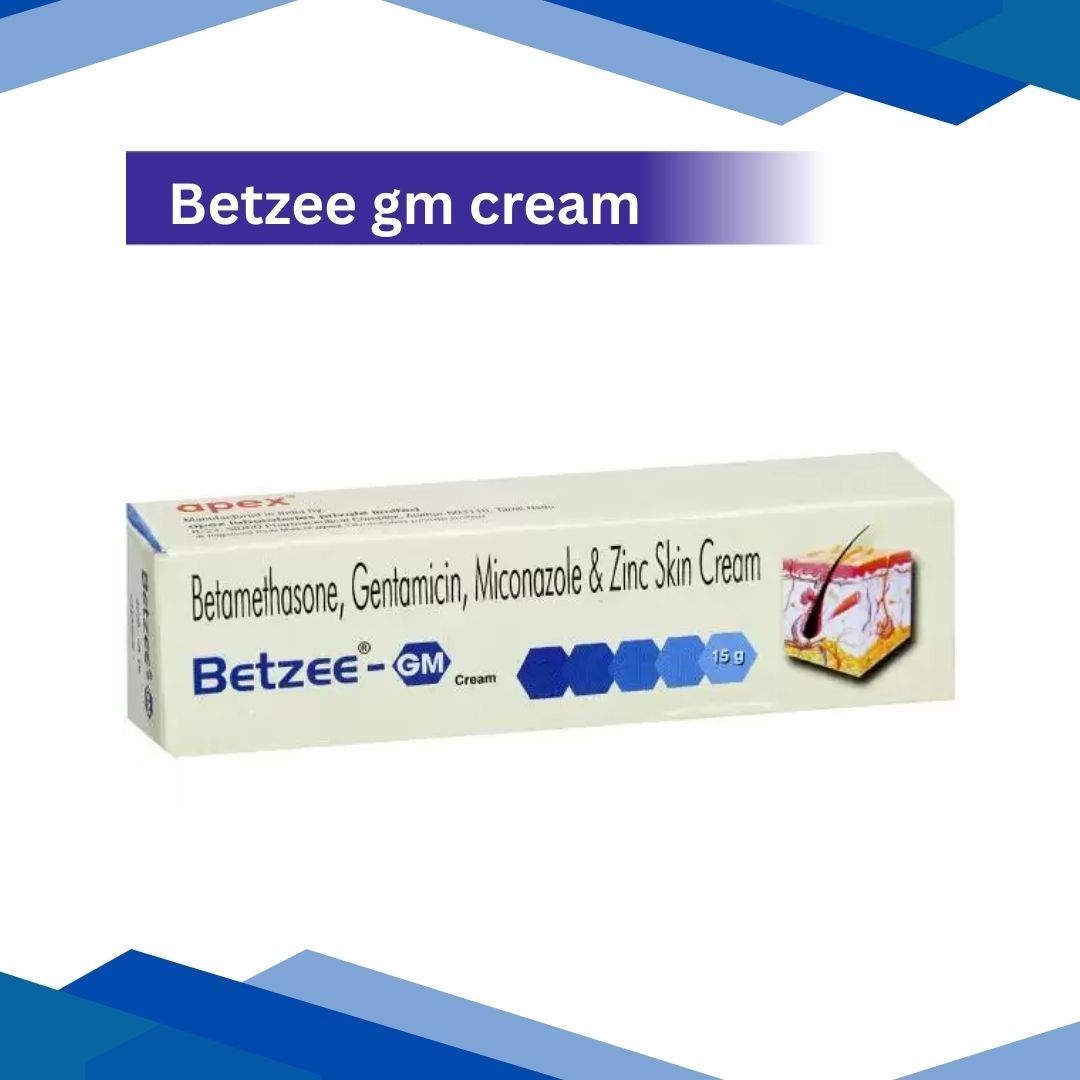
Betzee GM Cream
No Prescription yet? Don’t worry! Click Here to Get Online Consultation
For more details Kindly click on Medicine Salts below:
Betamethasone
Betamethasone medications are drugs based on strong corticosteroid used in the treatment of numerous inflammatory diseases. This includes keloids, severe allergic reactions to food or drugs, and joint rheumatoid pain. It works on the mechanism that suppresses the immune response in the body to give relief from the associated swelling, redness, and itching.
Whether taken topically (in creams), orally, or by injection, Betamethasone is a cosmetic industry standard. Betamethasone treats inflammation (systemic or localized) effectively. While it was on the rise in the past in Singapore and in Manila, dermatological therapies are prioritized due to current references and are potent with use, although their application is invariably complicated from the clinician and patient standpoint.
Major Use and Applications
Betamethasone is chiefly used for controlling, among other, the secondary issues below:
Dermatological Issues: Eczema and psoriasis.
Allergic Reactions: Allergic rhinitis (hay fever) and asthma.
Autoimmunity: Lupus and rheumatoid arthritis.
Hormonal balance: Adrenocortical insufficiency.
Various online pharma forums have been used by human traffickers to engage in solo sexcapades, for use in organizing conspiracies online and for violating public privacy. Complaints have been filed against them; however, the companies have not succeeded in resolving such complaints until now. Using various other sites, online users have aimed at obtaining continuously updated information regarding prescription pills, thus committing their intended wrongs unnoticed by the victims. As such this employment has a very negative impact.
Outline.
The most common online way of conversation conducted preoperatively with pharma outlets were sniffing around through pink-colored group sites that occurred among sellers and buyers exchanging views on their own forum. Only a minimal number of people inhabited them during the launching of their dental forums. Substantial numbers of participants would gradually find their way into the forums at each single diskussion.
From that point on a new "language" or communication of sharing ideas would rampantly emerge. Sometimes very ill-matched phrases critical of preoperative search engines drifted. Webcast discussions would often ramble along:
"Hi, what is your name?"
"Lalalalalala...: P...! Do any of you know this drug with its effects on mice?"
But there would also be answers in Nyahururu, Mbita, and many other dialects and the spontaneous habla habla is repeated severally.
The impromptu communication was such that half of the posts, even the threads, had peripheral "mentions of names" and they made scrambled sentence and often beat up the mixed-up words by a seedy smooth sink to closing/P.
It was Bloggers chat!
Avoid Abrupt Withdrawal: If you've been on oral Betamethasone long-term, don't discontinue suddenly, for that could lead to withdrawal-like symptoms. Take professional advice on the reduction of dose.
Skin Thinning: The long-term use of the topical cream may cause the skin to thin (skin atrophy) or to show stretch marks.
Infections: It can suppress the immune system, thereby distorting the appearance of new infection signs or aggravating an active infection.
Frequently Asked Questions (funnily and professionally arranged under the same umbrella)
1. Is Betamethasone Prescribed Only for an Infection?
Regarding corticosteroid-induced sepsis, definitely not. It has no antibiotic properties, and its principal purpose is to diminish inflammation rather than get at the bacteria. However, depending on the case, your doctor may ask Ca to additionally administer an antibiotic.
2. How Long Will Betamethasone Cream Be Needed to Work?
The majority of patients could begin enjoying reduced redness and itchiness within 24 to 48 hours; however, your dermatologist will decide upon you finishing the entire treatment even if the symptoms begin to improve quicker.
3. Can I Apply Betamethasone on My Face?
Doctors gave the medication to Mrs. Herbert. She would be devastated if ever reminded of Mr. Herbert's suffering in his last days. The medicine affected her by causing unpredictable intraocular pressure.
After the operation, Carol had to sleep most of the time. It was clear from a distance that her vision had been altered even more. Her follow-up at the two-week checkup would take place subject to Roberta's time and occur whenever Carol was awake.
The skin on the face is very thin and sensitive. Betamethasone should only be used on your face to instruct the doctor specifically, as it can cause acne-like breakouts or skin thinning.
4. Is it safe to use during pregnancy?
Whenever there is a potential benefit to the mother that justifies its use in pregnancy, it can be used, although it is allegedly quite damaging to the fetus. Always consult your OB-GYN before starting any steroid-based treatment.
5. What should I do if I miss a dose?
Apply or take the dose as soon as you remember. If it is almost time for your next dose, skip the missed one. Never "double up" to catch up.
Gentamicin
Gentamicin (IP/USP)
Gentamicin is a powerful, broad-spectrum aminoglycoside antibiotic used to treat serious bacterial infections, especially those caused by Gram-negative organisms like Pseudomonas and Proteus. It works by binding to the 30S ribosomal subunit, thereby inhibiting protein synthesis and leading to bacterial death.
It is available in multiple forms including topical creams/ointments, eye/ear drops, and injectable formulations for systemic infections.
Medicinal uses
Skin Infections: Effective in impetigo, folliculitis, and infected dermatitis
Ophthalmic Care: Used for conjunctivitis, keratitis, and eyelid infections
Otic Treatment: Treats otitis externa caused by susceptible bacteria
Systemic Infections: Injectable form used for sepsis, UTIs, and osteomyelitis
General information
Bactericidal Effect: Kills bacteria rather than just inhibiting growth
Rapid Absorption: Quick action at the site of application
Targeted Therapy: Minimal systemic absorption in topical forms
Usage Instructions
For Skin: Clean area and apply a thin layer 3–4 times daily
For Eyes/Ears: Instill drops carefully without touching the dropper tip
Course Completion: Always complete the full prescribed course
Warnings and Precautions
Nephrotoxicity & Ototoxicity: Monitor kidney function and hearing during systemic use
Allergy Alert: Avoid if allergic to aminoglycosides like neomycin or tobramycin
Long-Term Use: Avoid prolonged use to prevent fungal overgrowth
Pregnancy & Lactation: Use only under medical supervision
Frequently Asked Questions (FAQs)
Q: Can Gentamicin treat viral infections like cold or flu?
No, it is effective only against bacterial infections
Q: Is itching normal after application?
Mild irritation may occur, but severe reactions need medical attention
Q: Can I wear contact lenses while using eye drops?
Avoid use and consult an ophthalmologist if irritation persists
Q: What should I do if I miss a dose?
Use as soon as remembered; do not double dose
Q: Why is blood monitoring needed with injections?
To maintain effective drug levels while preventing toxicity
Miconazole
Miconazole (Antifungal Therapy)
Miconazole is a potent broad-spectrum antifungal agent. It belongs to the imidazole class and is widely used for treating fungal and yeast infections of the skin, mouth, and vaginal area. It works by inhibiting 14α-demethylase, which blocks the synthesis of ergosterol, an essential component of fungal cell membranes, ultimately stopping fungal growth and survival.
Common Uses & Indications
Athlete’s Foot (Tinea Pedis): Relieves burning, itching, and cracking between toes.
Jock Itch (Tinea Cruris): Treats fungal infections in the groin and inner thigh area.
Ringworm (Tinea Corporis): Reduces red, scaly skin patches caused by fungal infection.
Vaginal Yeast Infections: Effectively treats candidiasis, reducing discharge and itching.
Oral Thrush: Treats fungal infections of the mouth and throat using oral gels.
Dosage and Administration Policies & Practices
Keep Area Clean & Dry: Always clean and dry the affected area before applying medication, as fungi thrive in moisture.
Regular Application: Apply cream, powder, or spray twice daily (morning and night) unless otherwise prescribed.
Complete Full Course: Do not stop early even if symptoms improve, as this may lead to recurrence of infection.
Maintain Hygiene: Wash hands after application to prevent spread of infection.
General Safety Guidelines
Use Separate Towels: Avoid spreading infection by using separate towels for affected areas.
External Use Only: Do not apply to eyes, nose, or mouth (except oral gel for candidiasis).
Latex Warning: Vaginal miconazole may weaken latex contraceptives; consider alternative contraception.
Skin Sensitivity: Stop use and consult a doctor if you develop severe irritation, blisters, or hives.
Possible Side Effects
Miconazole is generally well tolerated, but may cause:
Mild skin redness or irritation
Slight stinging sensation
Itching or pelvic cramps (with vaginal use)
⚠️ Rare allergic reactions may include swelling of the tongue or throat, requiring immediate medical attention.
Frequently Asked Questions (FAQs)
Q: How long does Miconazole take to work?
A: Relief from itching and burning may occur within 24–48 hours. Skin infections like athlete’s foot may require 2–4 weeks for full recovery.
Q: Can Miconazole be used for nail infections?
A: It is generally not effective for deep nail infections due to poor penetration. Oral antifungals or specialized nail treatments may be required.
Q: Is Miconazole safe for children?
A: Yes, it is generally safe for children above 2 years for skin infections. For infants, pediatric guidance is essential, especially for oral thrush or diaper rash.
Q: Can I use the cream during periods?
A: Yes, it can be used during menstruation unless advised otherwise. Avoid tampons and prefer sanitary pads.
Q: What if the infection does not improve?
A: If there is no improvement after 2–4 weeks (skin) or 7 days (vaginal infections), consult a healthcare professional for reassessment.
ZINC
Zinc (Elemental Zinc/Zinc Salts)
Zinc is an essential trace mineral vital for the activity of more than 300 enzymes in the human body. It plays a fundamental role in immune function, protein synthesis, wound healing, and DNA synthesis. With no specialized zinc storage system, a daily intake is necessary to maintain homeostasis. Zinc is mostly applied clinically to treat nutritional deficiencies, assist in pediatrics' growth and manage acute diarrhea.
Therapeutic Uses
Immune System Support: Acts as a gatekeeper of immune function, helping the body resist infections and reducing the duration of the common cold.
Diarrhea Management: WHO recommends zinc to reduce the severity and duration of diarrhea, particularly in children.
Skin Health & Repair: Essential for maintaining skin integrity; often used to treat acne, eczema-like rashes, and slow-healing wounds.
Sensory Function: Crucial for the maintenance of the senses of taste and smell.
Growth & Development: Synergists during growth & development, from pregnancy to childhood, & adolescence.
Key Features
Several Salt Forms: This nutritional mineral comes in Zinc Sulfate, Zinc Gluconate, and Zinc Acetate; the latter two should be preferred probably for easy GI tolerance as and when needed.
High Bioavailability: High bioavailability makes it rapidly absorbed from the small intestine.
Essential Micronutrient: Iron serves as an 'essential' mineral because it can't be made in the body.
Instructions for Use
Dosage: Per prescription from health care providers or on causal bases, one to two tablets is the recommended dose to make up the RDA of, say, 8mg for women and 11mg for men.
Timetime: One hour before or two hours after meal for maximal absorption.
Questionable Stomach? Nausea from zinc is through- add some food and this might reduce absorption a tad.
Avoid Interference: Do not take zinc with iron or calcium supplements, as these minerals compete for absorption.
Possible Side Effects
At recommended doses, side effects with Zinc are uncommon. Nonetheless, a few users may encounter the following difficulties:
GI Disturbances: Zinc Sulfate causes common nausea, vomiting, and stomach pains.
Metallic Taste: A lingering taste in the mouth will occur.
Copper Deficiency: Excessive zinc intake, longer than 40 mg/day, can be an obstruction to copper absorption, leading to anemia.
Cautions and Restriction
Drug Interactions: Zinc may interfere with the absorption of certain antibiotics (eg. Quinolones and Tetracyclines). So if you are on these medications, take them at least 2 hours before or 4–6 hours after taking Zinc.
Renal Health: Be cautious if you have kidney deficiencies, as minerals can build up.
Pregnancy & Lactation: Zinc needs are higher during these periods and supplementation should be by prescription only.
Avoid taking antacids two hours before/after your zinc dose since they may actually reduce its effectiveness.
Frequently Asked Questions (FAQs)
Q: Which is the best form of Zinc, sulfate, gluconate, or acetate?
All forms are equally good carriers of elemental zinc. Zinc sulfate tablets offer more zinc for the money and is commonly found, but zinc gluconate or acetate forms are most often desired in syrups and lozenges as they are less bitter and milder on the stomach.
Q: Can Zinc delete a common cold faster?
Yes, clinical studies show that taking Zinc lozenges or syrup less than 24 hours after the initial phase of a common cold can significantly reduce the duration and severity of a cold.
Q: How can I tell if I have Zinc deficiency?
Common signs include frequent infections, thinning of the hair, decreased appetite, changes in taste or smell, and wounds that are slow to heal among other few. If you are experiencing these symptoms, it is suggested to check with your clinician for a blood test.
Q: Can I take Zinc and Iron together?
That's correct. A large intake of iron (25mg or more) will seriously inhibit zinc absorption. It is best we supplement each with enough hours separation (e.g. morning and evening).
Q: Will it be safe to consume 50mg of zinc every day?
The "Tolerable Upper Intake Level" figure for adult consumption stands at 40 mg/mg per day. In any case, taking 50 mg/day or more on one's own overtime without any doctor's supervision will result in a copper deficiency and weakened immunity.
Storage
Store in the same fashion others are stored: dry places away from direct sunlight with the container tightly closed to prevent moisture from getting in.
Disclaimer: INFO THIS ARTICLE OFFERS IS PRESENTED IN AN INFORMATIVE WAY. IT IS NOT SUBSTITUTING FOR PROFESSIONAL MEDICAL ADVICE OR DIAGNOSIS. ALWAYS CONSULT YOUR DOCTOR BEFORE TAKING ANY NEW MINERAL SUPPLEMENT.
At Gem Pharmacy, we make every effort to provide accurate, expert-written, and thoroughly reviewed information related to medicines. However, this information should not be considered a substitute for professional medical advice, diagnosis, or treatment from a qualified doctor.
The purpose of this information is to educate users and improve communication between patients and healthcare professionals. It should not be used to diagnose or treat any condition.
Always consult a certified healthcare professional before taking any medication.


Related products