
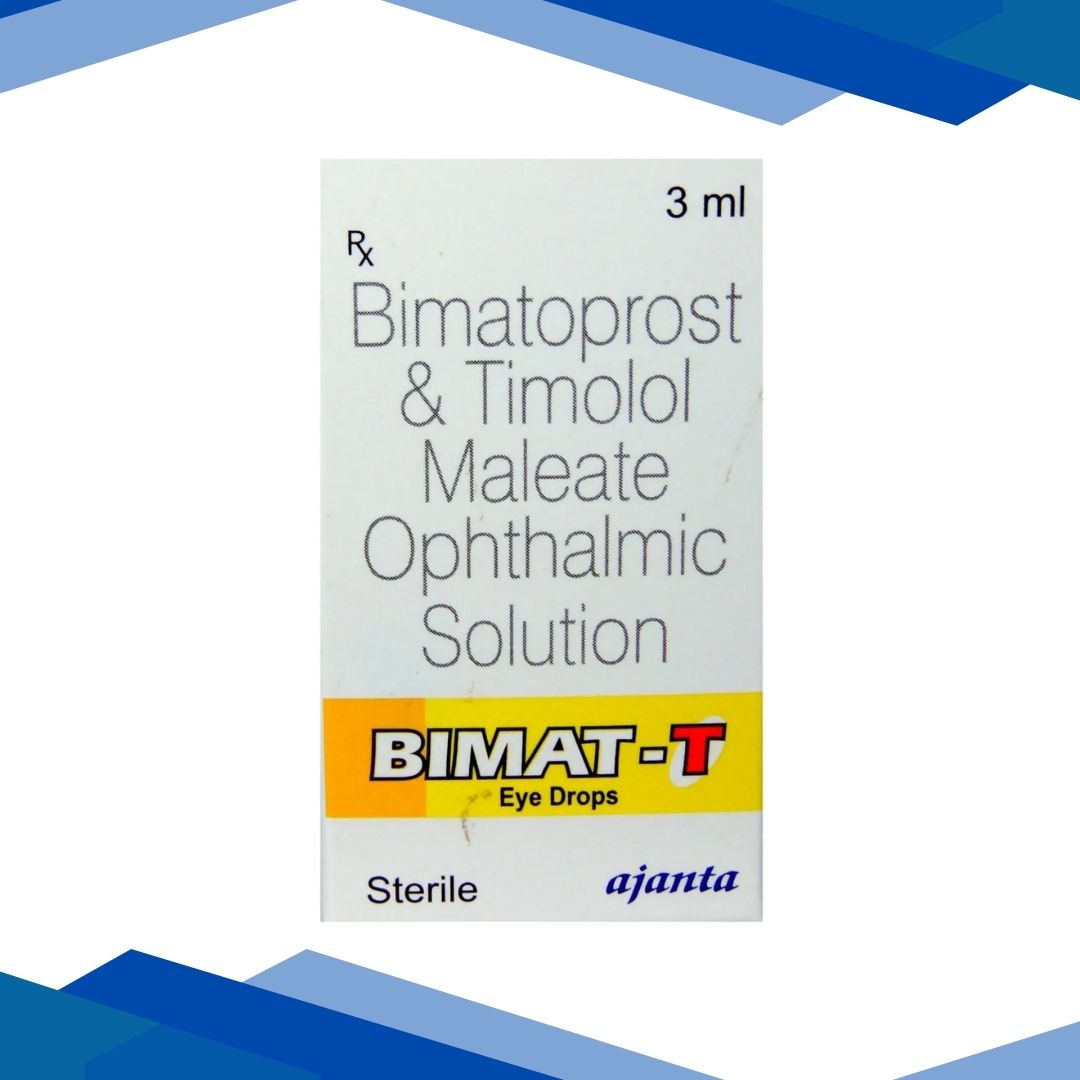
Bimat T Eye Drops 3ml
No Prescription yet? Don’t worry! Click Here to Get Online Consultation
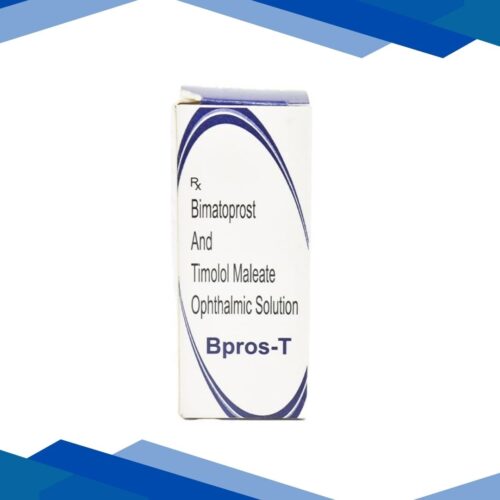
Bimatoprost and Timolol, which are both classified as beta-blockers and prostaglandin analogs, respectively, make up BIMAT T EYE DROPS. It is used to treat ocular hypertension and glaucoma.
bimatoprost
Bimatoprost eye drops ($0.01% / 0.03%$) are synthetic prostamide with a strong antiglaucoma activity. This means that it belongs to the class of prostaglandin analogues. It is primarily prescribed to treat conditions associated with elevated IOP, its most effective results are seen in Open-Angle Glaucoma and Ocular Hypertension. By this mechanism, bimatoprost facilitates the escape of non-natural (aqueous) humor out and thus lowers IOP, thereby preventing damage from happening to the optic fiber. With an FDA-approved specific concentration, Bimatoprost is used to treat Eyelash Hypotrichosis, which helps achieve elongated, thicker, and darker eyelashes. The Key Therapeutic Uses Management of Glaucoma: Reduction of high inside-eye pressure towards preventing loss of vision and blindness. Ocular Hypertension: Successfully reduces the higher eye pressure before the damage occurs to the nerve. Eyelash Enhancement: It results in brighter hairs by pushing the folic acid follicles of hair while they are in the growth phase (anagen). The Way It Works Bimatoprost allows more outflow of fluid out of the eye either through the Trebecular meshwork or the Uveoscleral path. It drains for dual-action which results in reduced intraocular eye pressure. When put for cooperation for the eyelashes, the drug prolongs the duration of the growth cycle and, increased incrementally the count of hairs provided for. A Guide to the Delivery For Eye Pressure: Administer through the given route with one drop daily, preferably in the evening. The everyday administration of the preparation could affect its technique due to lesser efficiency. For Eyelash Growth: Put a single drop over the sterile applicator provided, dragging it on the skin near the upper eyelid margin at the base of the lashes. Accuracy and Safety When well received, some side effects may present: Blepharitis (inflammation of the eyelash area), redness of the eye, or grittiness. Pigmentation Changes: There can be a gradual increase in pigmentation above the iris (colored part of the eye), which is mostly permanent. Skin Darkening: The skin around the eyelids might darken; this could be reversible upon cessation of the medication. Eyelash Changes: Some increase in length and thickness (may be aimed for, but could be unsatisfactory if applied on one eye only). Precautions Contact Lenses: Benzalkonium chloride is in bimatoprost, which may be absorbed by soft lenses. Remove lenses during treatment and replace them at least 15 minutes later. Existing Medications: Wait at least 5–10 minutes between different-medication applications to keep the first drop from being washed away with other drops from any other eye drops. Medical History: Your eye doctor should be informed of any history of certain eye disorders (uveitis) and macular edema or previous eye surgery. FAQ: How soon can we see results for eyelash growth? A noticeable difference in eyelash length is most likely visible in patients after around 8 weeks. Full results, in a similar context, ought to be achieved by 16 weeks. Understanding that consistency is key for success. Q: What happens if I stop using Bimatoprost? Specifically for glaucoma, eye pressures will increase again, perhaps causing some damage to vision. While specifically on eyelashes, they will gradually return to their prior appearance over weeks or months. Q: Can I apply it to my lower lashes? No. Specifically it is designed for the margin of the upper lashes; blinking naturally should deliver a minute amount to the lower lashes. Direct application to the lower lid increases the risk of hyperpigmentation and hair growth occurring in unwanted areas. Q: Will my eye color change revert? Not usually. In general, a deeper shade of brown in the iris (colored part of the eye) is a permanent change. However, darkening of the eyelid skin should resolve once the medication is no longer applied. Q: Can I drive after applying drops? You may encounter temporary blurred vision in the moments after instilling the drops. It is advised that you wait until your vision becomes clear before driving or operating heavy machinery.
Timolol
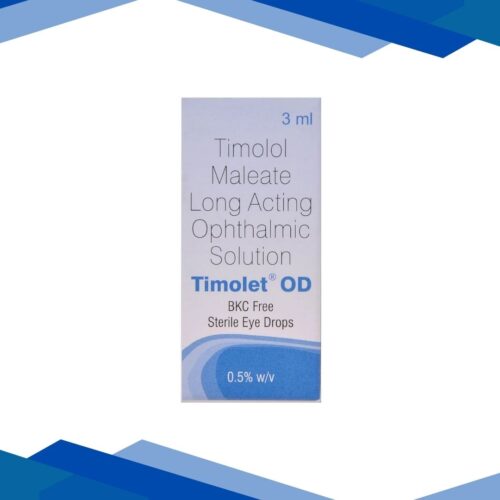
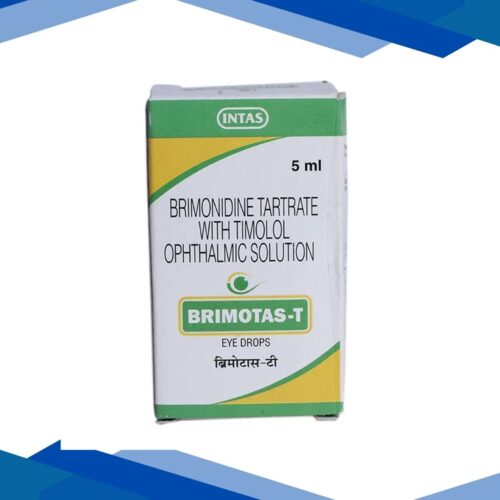
Timolol maleate ophthalmic solution Lowering of eye pressure, thus preserving vision Timolol is one of the most trusted drugs among prescription medications used primarily for high intraocular pressure, as indicated in open-angle glaucoma. The drug has been pretty successful in treating ocular hypertension (raised intraocular pressure) where response is not adequately toged by the use of beta-blockers. Timolol, thereby, has, in preventing eventual damage to the optic nerve (which may cause vision loss if left uncontrolled long enough), ended up saving many clients.
Mechanism of Action Timolol is a beta-adrenergic receptor-blocking drug. The drug works by decreasing the production of fluid (aqueous humor) inside the eye when administered as eye drops. It decreases intraocular pressure (eye pressure) by reducing the amount of fluid that is being made.
Benefits 1. Control of Pressure: Helps to maintain healthful eye pressures throughout the day. 2. Onset of Vision: Helps decrease the risk of permanent damage to the optic nerve and subsequent blindness. Timolol reaches full effect in 1–2 hours, but the majority of patients experience symptoms in 30 minutes. Timolol can be dosed once or twice daily and is based on the healthcare provider's prescription.
Timolol: A Quick Guide for Use Ready: Wash your hands. Tip: Gently tilt your head back and slightly pull down on your lower eyelid, forming a pocket. Drop: Hold the dropper above the eye and squeeze one drop into the pocket. Do not touch the eye or allow the tip to touch any other surface. Press: Close the eye and gently press the inside edge (toward the nose) for 1–2 minutes. This helps Pomalyst eye drops stay in the eye, preventing any of it from being absorbed into other tissues of your body. Wait: If you are using other eye drops, wait at least 5–10 minutes before using another one.
Possible Side Effects Timolol is generally pretty well tolerated by most people but you might experience: Temporary burning or stinging after instillation. Blurred vision (which usually goes away quickly). Dry eyes or sensation of "something in the eye." Pain in the head or mild dizziness. When to call the doctor? If they are short of breath, have a very slow heart rate, swelling in their ankles, or have any severe allergic reaction (itching/rash), they need to see a doctor immediately.
Frequently Asked Questions (FAQs) Q. Can I wear contact lenses while using Timolol? A. It is the best idea to remove soft contact lenses before using these drops given their tendency to discolor lenses, as Phosphate Buffered Timolol Solution often contains a preservative. Take your contact lenses off for at least 15 minutes afterward. Q. What do I do if I forget to take the dose? A. Use it when you remember if the time is closer to the next scheduled dose; if it is more than halfway through, take the next scheduled dose, for the previous dose is then postponed and not rescheduled. Q. Is Timolol a steroid? A. No, Timolol is classified as a beta-blocker, not a steroid. Q: If my eye pressure is back to normal, should I stop using the drops? A: No. Glaucoma is, among others, a silent disorder. If the administration of the treatment, Timolol eye drops be stopped, the pressure in the eyes may raise rapidly, resulting in permanent loss of vision. So one should not discontinue Timolol eye drops unless authorized by an ophthalmologist. Consultation with the doctor is necessary. Q: Does Timolol interact with other medicines? A: Timolol can interact with oral beta-blockers, certain heart medications, and diabetes medications. Your doctor needs to be informed about all your current medicines.
Safety notes: Not for use in those with a history of asthma, severe COPD, or certain serious heart conditions, such as a markedly decreased heart rate or heart failure. Timolol should be used with the help of an ophthalmologist.
At Gem Pharmacy, we make every effort to provide accurate, expert-written, and thoroughly reviewed information related to medicines. However, this information should not be considered a substitute for professional medical advice, diagnosis, or treatment from a qualified doctor.
The purpose of this information is to educate users and improve communication between patients and healthcare professionals. It should not be used to diagnose or treat any condition.
Always consult a certified healthcare professional before taking any medication.


Related products