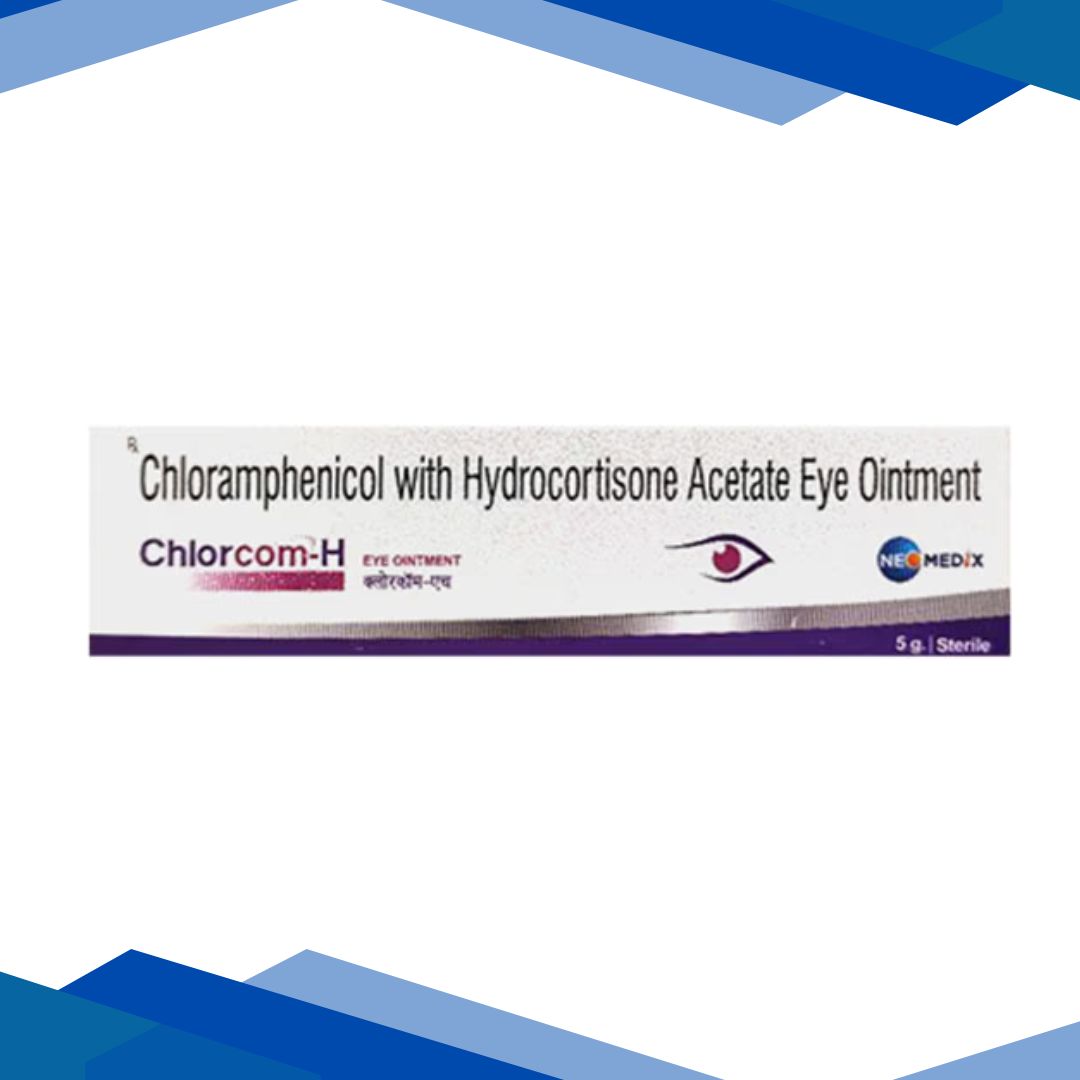
CHLORCOM H Eye Ointment 5g
No Prescription yet? Don’t worry! Click Here to Get Online Consultation
Chlorocol H Eye Ointment is a medicine used to treat bacterial eye infections. It kills and prevents the growth of infection-causing bacteria in the eyes. This way it relieves the symptoms and speeds up the healing process.
Chloramphenicol
Chloramphenicol (USP/IP)
Chloramphenicol is a potent, broad-spectrum antibiotic used for treating serious bacterial infections. Originally derived from Streptomyces venezuelae, it works by inhibiting bacterial protein synthesis, thereby stopping bacterial growth. Due to its strength and risk profile, it is reserved for severe infections where other antibiotics are ineffective.
Therapeutic Uses
Chloramphenicol is available in forms like eye/ear drops, capsules, and injections, and is used for:
Bacterial Conjunctivitis (“pink eye”)
Otitis Externa (outer ear infections)
Typhoid Fever (in resistant or severe cases)
Meningitis (specific bacterial infections)
Serious Anaerobic Infections
Important Aspects
Penetration: Crosses the blood-brain barrier effectively.
Activity: Active against a wide range of organisms like H. influenzae and Salmonella.
Action: Shows a rapid reduction in bacterial load.
A Guide on How to Utilize
Eye/Ear Drops: Wash hands, tilt head, and apply drops. Avoid touching the dropper tip.
Oral Capsules: Take on an empty stomach (1 hour before or 2 hours after meals) with water.
Duration: Complete the full prescribed course to prevent resistance.
Contraindications
Warning: Use is restricted due to risk of serious blood disorders like aplastic anemia. Monitoring may be required during prolonged therapy.
Common side effects include:
Nausea and vomiting
Blurred vision (eye drops)
Diarrhea
Weakness or fatigue
Metallic taste
Seek immediate medical help if symptoms like fever, sore throat, unusual bruising, or pale skin occur.
Precautions & Contradictions
Pregnancy & Nursing: Avoid in late pregnancy and breastfeeding due to risk of Gray Baby Syndrome.
Liver & Kidney Issues: May require dose adjustments.
Immunization: May interfere with vaccine response.
Alcohol: Avoid due to increased gastrointestinal side effects.
Frequently Asked Questions (FAQs)
Q: Can it treat viral infections?
No. It is effective only against bacterial infections.
Q: Why are blood tests needed?
To monitor for bone marrow suppression affecting RBCs, WBCs, and platelets.
Q: What if I miss a dose?
Take it when remembered unless close to the next dose. Do not double dose.
Q: How should eye drops be stored?
Typically at 2°C to 8°C (check product instructions).
Q: Can I wear contact lenses?
Avoid until infection resolves; preservatives may damage lenses.
Hydrocortisone Acetate
Hydrocortisone Acetate (0.1%/1% w/w)
Hydrocortisone acetate is a slight corticosteroid (steroid) used topically to increase relief from rash, redness, and pruritus, which are the interactive component of many skin conditions. It does this by inhibiting the formation or release of mediators from endogenous chemical inflammation based on the tone of prostaglandins and histamines. This is usually given for eczema, dermatitis, allergies, or insect stings.
Therapeutic Uses
in Dermatitis: Decreases redness and inflammation due to contact dermatitis or atopic dermatitis.
Insect Bites and Rashes: It is nicely redundant to use this for reducing redness and persistent itching in a localized allergic reaction to insect bites.
Anal/Rectal relief: It comprises the so-called formulas capable of lessening the discomfort with itching and inflammation, seen while coming from piles (hemorrhoids).
Managing Psoriasis: Seen more than useful in handling moderate carcinoma psoriasis of particularly vulnerable areas.
Key Product Information
Anti-inflammatory: This rapidly reduces inflammation, redness, and heat.
Anti-pruritic: It brings itch to a stop right away. Again, it generally targets the "itch-scratch" cycle.
Weaker Potency: Thus probably safe for short-term use on a large body area under careful observation by a doctor.
How to Use
Preparation: Clean and dry your hands and the region of the skin you want to apply cream or ointment to.
Application: Thin yet judiciously applied directly onto the inflicted skin.
Massage: Rub gently until the cream is blended nicely on the skin.
Frequency: Must be applied 2–4 times daily, w.r.t. the extent of impairment and the prompt advice of a doctor, in agreement with said above.
Hygiene: Remember to wash your hands soon after applying unless, of course, the treatment is on your hands.
Common Side Effects
While very few patients show signs:
Stinging
Bright-red or brown streaks ("tertiary telangiectasia") through the skin
Temporary thinning of the skin (after very long-term use)
Changes in skin color toward a lighter shade (hypopigmentation)
Folliculitis (inflammation of hair follicles)
Do not apply on the face, groin, or underarms, as higher absorption occurs in these regions, unless instructed to do so by your physician.
Points for Prescriptions & Safety
Infections: No need to apply once the skin is broken, infected, or bearing active viral (herpes) or fungal infections.
Duration: Consult a doctor if the medication is to be used for a period of longer than 7 days because the extended period of use can increase systemic absorption.
Occlusive Dressing: Avoid wrapping bandages over the treated area in any occasion except when advised so by the doctor, as it increases the absorption strength and side effects.
Pediatric Use: Exercise extreme caution in children; consult a pediatrician for proper dosage and duration.
Frequently Asked Questions (FAQs)
Q: Will Hydrocortisone Acetate work on acne or pimples?
No. This should definitely be avoided because steroids can worsen acne or cause "steroid-induced acne." This is meant for inflammatory and allergic conditions, but not for bacterial infections.
Q: Is it safe to use while pregnant?
The utilization of topical steroids during pregnancy is advised only if the potential benefit justifies the possible risk to the fetus. It is always better if you consult your OB-GYN before using it.
Q: What does Hydrocortisone differ from Hydrocortisone Acetate?
Hydrocortisone acetate is the salt form of hydrocortisone, which is slightly more lipophilic (fat-soluble) and may be better absorbed into the skin or have an extended duration of action in some formulations.
Q: Can I use this for diaper rash on my baby?
No. Unless otherwise specified by a doctor, using steroids under a diaper that works as an occlusive dressing could lead to the excellent systemic absorption of medicine into the baby's system.
Q: Is it the cure for my skin disorder?
Hydrocortisone acetate treats the symptoms (inflammation and pruritus) and cannot cure the cause. If your condition persists even after one week of treatment, seeing a specialist dermatologist is an essential next step.
Storage
Store in a cool, dry place convivial to a mediate range of temperatures below 25°C. Ensure the tube is tightly closed to prevent medication from drying out and shop out of reach of children.
Disclaimer: The information provided above is for awareness at a very general level. Seek the advice of a medical professional. The prescribed form of Hydrocortisone should be used under doctor's orders.
At Gem Pharmacy, we make every effort to provide accurate, expert-written, and thoroughly reviewed information related to medicines. However, this information should not be considered a substitute for professional medical advice, diagnosis, or treatment from a qualified doctor.
The purpose of this information is to educate users and improve communication between patients and healthcare professionals. It should not be used to diagnose or treat any condition.
Always consult a certified healthcare professional before taking any medication.


Related products

CHLORODEX D Eye/Ear Drops 10ml