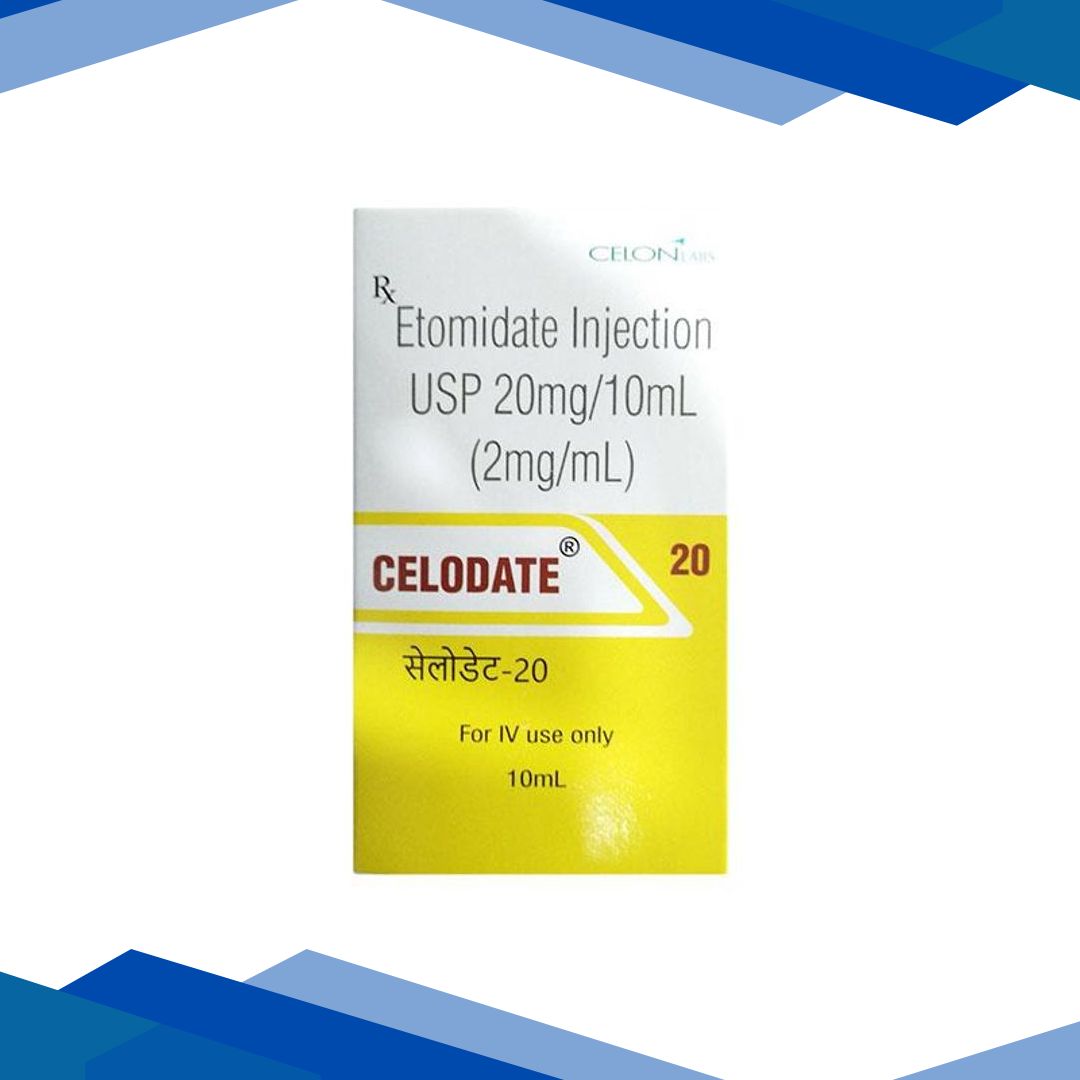
CELODATE 20 Injection 10ml
❌ Due to high demand, this product is currently out of stock. New stock will be available shortly.
👉 Click here to Buy Same Salt medicine
CELODATE 20 Injection is a short-acting intravenous anesthetic used to help induce general anesthesia quickly before a surgical procedure or other medical intervention. It works by slowing brain activity, which produces a rapid, controlled loss of consciousness. Because it acts fast and wears off relatively soon, CELODATE 20 Injection is commonly chosen when a prompt anesthetic effect is needed under medical supervision. It is mainly used to start anesthesia in hospitals and emergency settings, especially when maintaining stable blood pressure is important. CELODATE 20 Injection does not provide pain relief, so it is usually given as part of a broader anesthesia plan. Its use is carefully monitored by trained healthcare professionals to ensure safety and comfort during treatment.
Description
CELODATE 20 Injection is a short-acting intravenous anesthetic medicine used mainly to produce rapid unconsciousness for medical procedures that require brief control of the airway or a very quick transition into anesthesia. it is commonly chosen in emergency and operating-room settings because it works quickly, has a short duration of action, and can be especially useful when a clinician needs to secure the airway or perform a procedure without causing prolonged sedation. unlike pain medicines, CELODATE 20 Injection does not provide analgesia, so it is typically used with other appropriate medications when pain control is needed.
this medicine acts on the central nervous system by enhancing the effect of the body’s inhibitory neurotransmitter gamma-aminobutyric acid, or gaba. by increasing gaba activity, CELODATE 20 Injection slows brain activity and causes a rapid loss of awareness. because of this mechanism, it is often used for induction of anesthesia in patients who may not tolerate large changes in blood pressure as well as with some other anesthetic agents. it is valued in critical care and emergency medicine for its predictability and fast onset, but it must be administered by trained healthcare professionals with equipment for monitoring and airway management.
CELODATE 20 Injection is not a medicine for self-use, home use, or routine pain relief. it is reserved for hospital, emergency department, surgical, or intensive care environments where continuous monitoring is available. it may be appropriate for adults or certain pediatric patients depending on clinical judgment, the procedure, and the patient’s overall condition. because it can suppress breathing and affect the adrenal glands, careful patient selection and monitoring are essential.
in practice, CELODATE 20 Injection is used when a rapid, controlled anesthetic effect is needed and when maintaining hemodynamic stability is important. health professionals choose it for its fast onset and short recovery profile, while also balancing its known risks such as temporary muscle movements, nausea, and suppression of cortisol production after repeated or prolonged exposure. if you have been told this medicine will be used for you, your care team will explain why it is being selected and what monitoring will be done before, during, and after administration.
ingredients
- CELODATE 20 Injection: this is the active ingredient responsible for producing anesthesia. it works by depressing the central nervous system through gaba-related activity, which leads to rapid sedation and unconsciousness. its main benefit is a quick, reliable anesthetic effect that is useful for induction and certain emergency procedures.
- formulation excipients: depending on the product, the injection may contain solvents and stabilizing ingredients needed to keep CELODATE 20 Injection in a usable liquid form. these inactive components help with storage, delivery, and administration, but they do not provide therapeutic anesthesia themselves.
- carrier/base solution: the injectable preparation is designed for intravenous use only. the carrier helps deliver the medicine into the bloodstream efficiently so that onset is rapid and clinically predictable under professional supervision.
key uses
- induction of general anesthesia: CELODATE 20 Injection is commonly used to make a patient unconscious before a surgical or diagnostic procedure. it is chosen when rapid onset is important and when a short-acting anesthetic is preferred.
- rapid sequence intubation: in emergency airway management, CELODATE 20 Injection may be used to quickly sedate a patient so a breathing tube can be placed safely. its rapid action helps clinicians secure the airway without unnecessary delay.
- procedures requiring brief deep sedation: in carefully selected hospital settings, it may be used for short procedures where temporary loss of consciousness is needed under close monitoring. it is not a routine sedative for long-term use.
- patients needing hemodynamic stability: CELODATE 20 Injection may be preferred when clinicians want to minimize drops in blood pressure during anesthesia induction, especially in patients who are critically ill or fragile. this does not mean it is risk-free, only that it can be useful in specific circumstances.
how to use
CELODATE 20 Injection should only be administered by a trained healthcare professional, usually by intravenous injection in a hospital, emergency department, operating room, or intensive care unit. the medicine is given directly into a vein, and the patient’s breathing, blood pressure, oxygen levels, and heart activity are monitored continuously during and after administration. because CELODATE 20 Injection can cause rapid unconsciousness, it is never meant for self-administration or routine outpatient use.
the exact amount and timing depend on the patient’s age, weight, overall health, and the purpose of use. it may be used alone for induction or alongside other medicines such as pain relievers, muscle relaxants, or additional anesthetic agents, depending on the procedure. before administration, the medical team may review allergies, current medications, liver or adrenal problems, and any history of unusual reactions to anesthesia.
after CELODATE 20 Injection is given, the patient may lose awareness within moments, and recovery can also be relatively quick once the medicine is discontinued. even so, close observation remains necessary because breathing problems, blood pressure changes, nausea, or involuntary movements may still occur. patients should follow all instructions from the care team regarding fasting before surgery, medication adjustments, and post-procedure monitoring.
safety information
- warnings: CELODATE 20 Injection can cause temporary respiratory depression, apnea, and a drop in oxygen levels, especially if used with other sedatives or opioids. it may also cause involuntary muscle movements, hiccups, nausea, vomiting, and pain or burning at the injection site. one of the most important safety concerns is suppression of adrenal steroid production, especially with repeated doses or prolonged infusions, which is why it is generally not used for continuous sedation. emergency equipment and trained staff must be available whenever it is administered.
- side effects: common side effects include nausea, vomiting, mild pain during injection, brief muscle twitching or myoclonus, hiccups, and light-headedness during recovery. serious side effects can include breathing difficulty, severe allergic reaction, low blood pressure in susceptible patients, abnormal heart rhythms, prolonged sedation, and adrenal suppression. any unusual breathing pattern, chest symptoms, rash, swelling, or severe weakness after use needs urgent medical attention.
- precautions: extra caution is needed in patients with adrenal disease, severe infection, critical illness, seizure disorders, or a history of significant sensitivity to anesthetics. people with unstable breathing, severe heart disease, or compromised circulation require close monitoring. CELODATE 20 Injection is not appropriate for unsupervised use, and it should only be given by professionals able to manage airway emergencies. patients should tell their clinician about all medical conditions and recent medications before receiving it.
- pregnancy/breastfeeding: CELODATE 20 Injection should be used in pregnancy only when clearly needed and when a qualified clinician determines the benefits outweigh the risks. because it is used in controlled hospital settings, the decision is individualized. it is not known to be a routine medicine for breastfeeding mothers, and the care team should advise whether temporary interruption of breastfeeding is needed after administration based on the clinical situation and the total anesthetic plan.
- interactions: CELODATE 20 Injection can have stronger sedative and breathing-suppressing effects when combined with alcohol, opioids, benzodiazepines, sleeping pills, other anesthetics, or certain psychiatric medicines that affect the central nervous system. using multiple sedating agents together increases the risk of low oxygen, slow breathing, and prolonged recovery. patients should inform the medical team about all prescribed drugs, over-the-counter medicines, herbal products, and alcohol use before receiving CELODATE 20 Injection.
additional information
- storage: CELODATE 20 Injection injection should be stored according to the manufacturer’s instructions, typically in a controlled environment away from excessive heat, freezing, and direct light. hospital staff are responsible for proper handling, checking expiration dates, and using the product only when it is clear, intact, and appropriate for administration.
- missed dose: this medicine is not taken on a regular home schedule, so the concept of a missed dose usually does not apply. if a planned procedure is delayed or canceled, the healthcare team will decide whether the medicine is still needed or whether a new plan should be made. patients should not attempt to use it on their own.
- overdose: too much CELODATE 20 Injection may lead to prolonged unconsciousness, severe breathing suppression, very low blood pressure, or cardiovascular instability. because it is administered in monitored clinical settings, overdose is managed immediately by trained professionals with airway support, oxygen, and other emergency measures as needed. if an overdose is suspected, emergency treatment is required right away.
- habit forming: no. CELODATE 20 Injection is not considered habit forming or addictive in the usual sense. it is a short-acting anesthetic used for specific medical procedures under professional supervision, not a medicine intended for repeated self-use or dependence-producing therapy.
frequently asked questions
Q: what is CELODATE 20 Injection used for?
A: CELODATE 20 Injection is used in hospitals and emergency settings to induce anesthesia quickly, especially for procedures such as rapid sequence intubation or brief surgical anesthesia. it works fast and is given only by trained healthcare professionals.
Q: does CELODATE 20 Injection relieve pain?
A: no. CELODATE 20 Injection causes unconsciousness and sedation, but it does not provide pain relief. if pain control is needed, the care team usually gives additional medicines along with it.
Q: how fast does CELODATE 20 Injection work?
A: CELODATE 20 Injection works very quickly after intravenous administration, which is one reason it is useful in emergency and operating-room settings. the exact timing depends on the patient and clinical circumstances.
Q: can CELODATE 20 Injection be used at home?
A: no. CELODATE 20 Injection is not a home-use medicine. it must be administered by trained professionals in a setting where breathing, oxygen levels, and heart function can be monitored continuously.
Q: what are the most common side effects?
A: common side effects include nausea, vomiting, pain at the injection site, hiccups, and brief involuntary muscle movements. more serious reactions, including breathing problems or allergic responses, can also occur and require urgent care.
Q: why do doctors sometimes choose CELODATE 20 Injection instead of another anesthetic?
A: clinicians may choose CELODATE 20 Injection when rapid onset and short duration are important, especially if they want to avoid large changes in blood pressure during anesthesia induction. the final choice depends on the patient’s condition and the procedure.
Q: is CELODATE 20 Injection safe for everyone?
A: no medicine is safe for everyone. CELODATE 20 Injection requires caution in people with adrenal problems, breathing difficulties, unstable heart disease, or certain critical illnesses. a healthcare professional must decide whether it is appropriate.
Q: can CELODATE 20 Injection affect the adrenal glands?
A: yes. CELODATE 20 Injection can suppress adrenal steroid production, particularly with repeated doses or prolonged exposure. because of this, it is usually used for short procedures and not for continuous sedation.
Q: what should i tell my doctor before receiving CELODATE 20 Injection?
A: tell your doctor about allergies, heart or lung disease, adrenal disorders, pregnancy or breastfeeding, and all medicines, including alcohol, sleep aids, opioids, and anxiety medicines. this helps the team reduce risk and plan safe monitoring.
Q: what happens after CELODATE 20 Injection is given?
A: the patient is monitored closely for breathing, blood pressure, oxygen levels, and recovery from anesthesia. some people wake up quickly, while others may need longer observation depending on the overall anesthetic plan and their medical condition.
this information is for educational purposes only and should not be considered medical advice. always consult a qualified healthcare professional before use.
At Gem Pharmacy, we make every effort to provide accurate, expert-written, and thoroughly reviewed information related to medicines. However, this information should not be considered a substitute for professional medical advice, diagnosis, or treatment from a qualified doctor.
The purpose of this information is to educate users and improve communication between patients and healthcare professionals. It should not be used to diagnose or treat any condition.
Always consult a certified healthcare professional before taking any medication.


Related products