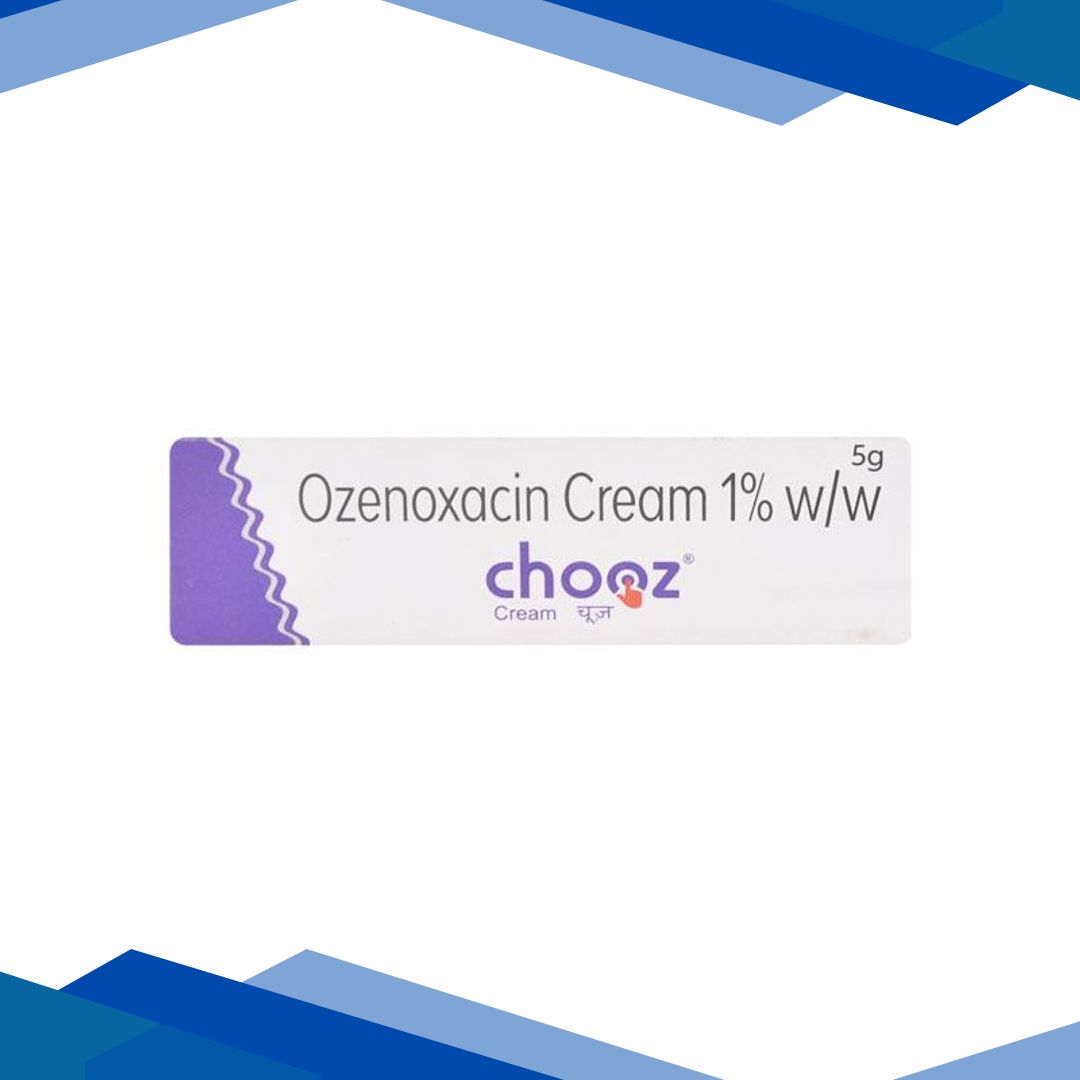
CHOOZ 1% Cream 5gm
❌ Due to high demand, this product is currently out of stock. New stock will be available shortly.
👉 Click here to Buy Same Salt medicine
CHOOZ 1% Cream is a topical antifungal medicine used to treat certain fungal skin infections. Oxiconazole helps stop the growth of fungi by interfering with their cell membrane, while benzoic acid helps create an environment that makes it harder for fungi to survive and spread. Together, they may help relieve common symptoms such as itching, redness, scaling, and irritation caused by infections like ringworm, athlete’s foot, and jock itch. This medicine is usually applied directly to the affected skin and works locally to control the infection. It is intended for external use only and should be used as directed by a healthcare professional to ensure safe and effective treatment.
Description
CHOOZ 1% Cream is a topical antifungal medicine combination used to treat certain fungal skin infections. it is designed for external use on the skin and is commonly recommended when the infection is caused by dermatophytes or other fungus-related organisms that affect the outer layers of the body. the combination works by targeting the fungus directly at the site of infection, helping reduce the spread of the organism and easing symptoms such as itching, redness, scaling, irritation, and discomfort. because it is applied locally, it is generally intended to act where the infection is present rather than affecting the whole body.
oxiconazole is an antifungal agent that helps stop the growth of fungi by interfering with the structure and function of the fungal cell membrane. the cell membrane is essential for the fungus to survive, and when it is damaged or weakened, the fungal cells cannot grow properly and eventually die or stop multiplying. this makes oxiconazole useful in managing infections such as tinea, which may appear on the feet, groin, body, or other skin areas depending on the formulation and direction of use.
benzoic acid has antifungal and keratolytic properties, which means it can help inhibit fungal growth and soften the outer, thickened layer of skin. in some skin conditions, fungal infections are made worse by dryness, scaling, or thick skin buildup, and benzoic acid can help improve penetration of the antifungal component while also creating an environment that is less favorable for fungal survival. together, these two ingredients provide a dual approach: one ingredient helps stop fungal growth, and the other supports removal of the outer skin buildup and may enhance overall treatment effectiveness.
this medicine is typically intended for people who have confirmed or strongly suspected superficial fungal infections of the skin. it may be used in adults and sometimes in adolescents depending on the product labeling and clinical judgment. it is important to use it only for the condition it is meant to treat, because applying antifungal medicines to non-fungal rashes can delay proper diagnosis and treatment. if the skin problem is not improving, is spreading, or seems unusual, medical evaluation is important to confirm the cause and rule out eczema, psoriasis, bacterial infection, or other conditions that can resemble fungal disease.
ingredients
- oxiconazole: this is the main antifungal component. it works by inhibiting fungal growth and helping destroy fungi that cause superficial skin infections. it is especially useful for reducing symptoms such as itching, burning, scaling, and redness that are commonly seen with fungal skin problems.
- benzoic acid: this ingredient supports treatment by creating an environment that is less favorable for fungal growth. it also helps loosen thick, scaly skin, which may allow the antifungal ingredient to work more effectively on the affected area. its role is often both protective and supportive in topical antifungal therapy.
key uses
- fungal skin infections: commonly used for superficial fungal infections affecting the skin, including ring-shaped, itchy, scaly rashes caused by dermatophytes. it helps control the infection and reduce visible symptoms over time.
- athlete’s foot-type infections: may be used for fungal infections on the feet, especially when there is itching, peeling, cracking, or scaling between the toes or on the sole. keeping the area dry and clean improves results.
- jock itch or groin fungal rash: can help treat fungal infections in warm, moist body areas such as the groin where fungi tend to multiply more easily. regular use as directed may relieve irritation and discomfort.
- fungal infection of the body skin: useful for infections on the trunk, arms, legs, or other exposed skin surfaces caused by susceptible fungi. it helps slow the infection and supports healing of the affected skin.
- scaly, thickened fungal areas: the benzoic acid component may be helpful where there is notable scaling or thickened skin, as it can soften the outer layer and improve penetration of the antifungal medicine.
how to use
CHOOZ 1% Cream is generally used as a topical medicine, meaning it is applied directly to the skin. before application, the affected area should be gently washed and completely dried, because fungi often thrive in moist conditions. a thin layer is usually applied to the infected skin and a small surrounding margin, since fungal infections can extend slightly beyond the visibly affected area. the medicine should be used exactly as directed on the product label or by a healthcare professional.
for best results, the medication should be used consistently and for the full recommended duration, even if symptoms improve earlier. fungal infections can appear to get better before the fungus is fully cleared, and stopping too soon may allow the infection to return. hands should be washed before and after use unless the hands themselves are the area being treated. avoid applying the medicine to eyes, mouth, inside the nose, or broken skin unless specifically advised by a clinician. if the infection is in a skin fold or a place that stays damp, keeping the area dry, wearing breathable clothing, and changing socks or undergarments regularly may improve outcomes.
safety information
- warnings: this medicine is for external use only and should not be swallowed. avoid contact with the eyes, lips, mouth, genital mucosa, or other sensitive areas unless a healthcare provider has instructed otherwise. do not use it on large areas of broken or severely irritated skin without medical advice. if the rash becomes worse, develops pus, becomes very painful, or does not improve after reasonable use, seek medical evaluation because the condition may not be fungal or may need different treatment.
- side effects: common side effects may include mild burning, stinging, itching, dryness, redness, or temporary irritation at the application site. these effects are often mild and may lessen as the skin adapts. less common but more serious reactions can include swelling, blistering, severe redness, rash spreading beyond the treated area, or signs of allergic reaction such as hives or difficulty breathing. stop using the product and seek medical help if severe symptoms occur.
- precautions: use with caution in people with a history of skin allergy or sensitivity to antifungal products or acids. those with very sensitive skin, eczema, or damaged skin may be more likely to experience irritation. it should not be used for conditions that are clearly not fungal, such as acne, viral warts, or undiagnosed rashes, unless a professional confirms it is appropriate. if the infection is recurrent, widespread, or affecting nails or scalp, a different treatment may be required.
- pregnancy/breastfeeding: topical antifungal medicines are often used with caution during pregnancy and breastfeeding, but safety depends on the exact product, the amount applied, and the area treated. because systemic absorption from skin application is usually low, risk may be limited, but it is still important to consult a doctor or pharmacist before use. during breastfeeding, avoid applying it to areas that may come into direct contact with the infant’s mouth, and wash hands carefully after use.
- interactions: because this is a topical medicine, significant drug interactions are less common than with oral medicines. however, using multiple skin products at the same site, especially products containing alcohol, strong acids, steroids, retinoids, or other irritating agents, may increase dryness or irritation. if another prescription cream, medicated ointment, or antiseptic is being used, ask a healthcare professional whether it is safe to combine them. alcohol does not usually interact directly with a skin-applied antifungal, but drinking heavily may worsen skin health or affect adherence to treatment.
additional information
- storage: store in a cool, dry place away from direct heat, moisture, and sunlight. keep the container tightly closed when not in use. do not freeze unless the package specifically says it is safe to do so. keep out of reach of children and pets.
- missed dose: if a dose is missed, apply it as soon as remembered unless it is nearly time for the next scheduled application. do not apply extra medicine to make up for a missed dose. returning to the regular schedule is usually the best approach for consistent treatment.
- overdose: overuse on the skin may cause increased irritation, redness, burning, dryness, or peeling. accidental swallowing should be treated as a medical concern, especially in children, and poison control or emergency services should be contacted right away. if a large amount is applied and causes marked skin reaction, wash the area gently and seek advice from a healthcare professional.
- habit forming: no. CHOOZ 1% Cream is not habit forming and does not cause dependence. it is used to treat a medical condition rather than to produce a pleasurable effect or withdrawal pattern.
frequently asked questions
Q: what is CHOOZ 1% Cream used for?
A: CHOOZ 1% Cream is used for superficial fungal infections of the skin. it helps reduce fungal growth and relieve symptoms such as itching, scaling, redness, and irritation when applied as directed.
Q: how does CHOOZ 1% Cream work on fungal infections?
A: oxiconazole works by disrupting the fungal cell membrane, which weakens and stops the fungus from growing. benzoic acid helps make the skin surface less favorable for fungal survival and may improve penetration of the antifungal ingredient.
Q: can i use CHOOZ 1% Cream on any rash?
A: no. it should only be used when the rash is known or suspected to be fungal. many skin conditions can look similar to fungal infections, and using the wrong product may delay proper treatment.
Q: how should i apply CHOOZ 1% Cream?
A: it is usually applied as a thin layer to clean, dry, affected skin and a small area around it. follow the instructions on the product label or your healthcare provider’s directions, and avoid using more than recommended.
Q: how long does it take to work?
A: some symptoms such as itching or redness may start improving gradually, but full clearing of fungal infections can take time. it is important to continue treatment for the full recommended period, even if the skin looks better sooner.
Q: what if my skin becomes irritated after using it?
A: mild burning or dryness can happen, but if irritation is severe, persistent, or worsening, stop using the product and consult a healthcare professional. you may be having a sensitivity or allergic reaction.
Q: can i use moisturizer with CHOOZ 1% Cream?
A: sometimes a moisturizer may be helpful if dryness occurs, but it should be used only if it does not interfere with the medicine and is approved by a pharmacist or doctor. apply medicines as directed and avoid layering multiple products without guidance.
Q: is CHOOZ 1% Cream safe for children?
A: safety in children depends on the exact formulation, age, and condition being treated. always check with a pediatrician or pharmacist before use in children, because skin sensitivity and dosing considerations may differ.
Q: can i stop using it once the rash looks better?
A: it is usually better to continue for the full duration recommended by the healthcare provider or package instructions. stopping early can leave some fungus behind and increase the chance of recurrence.
Q: should i cover the area after applying it?
A: only cover the area if a healthcare professional tells you to do so. tight or non-breathable coverings can trap moisture, which may worsen fungal growth in some cases.
Q: what hygiene steps help this medicine work better?
A: keeping the area clean and dry, changing socks and underwear regularly, avoiding shared towels, and wearing loose breathable clothing can support treatment and help prevent reinfection.
Q: can this medicine treat nail fungus or scalp fungus?
A: topical skin medicines are usually not enough for nail infections and may not be suitable for scalp infections. those conditions often need different or stronger treatment, so medical advice is important.
this information is for educational purposes only and should not be considered medical advice. always consult a qualified healthcare professional before use.
At Gem Pharmacy, we make every effort to provide accurate, expert-written, and thoroughly reviewed information related to medicines. However, this information should not be considered a substitute for professional medical advice, diagnosis, or treatment from a qualified doctor.
The purpose of this information is to educate users and improve communication between patients and healthcare professionals. It should not be used to diagnose or treat any condition.
Always consult a certified healthcare professional before taking any medication.


Related products