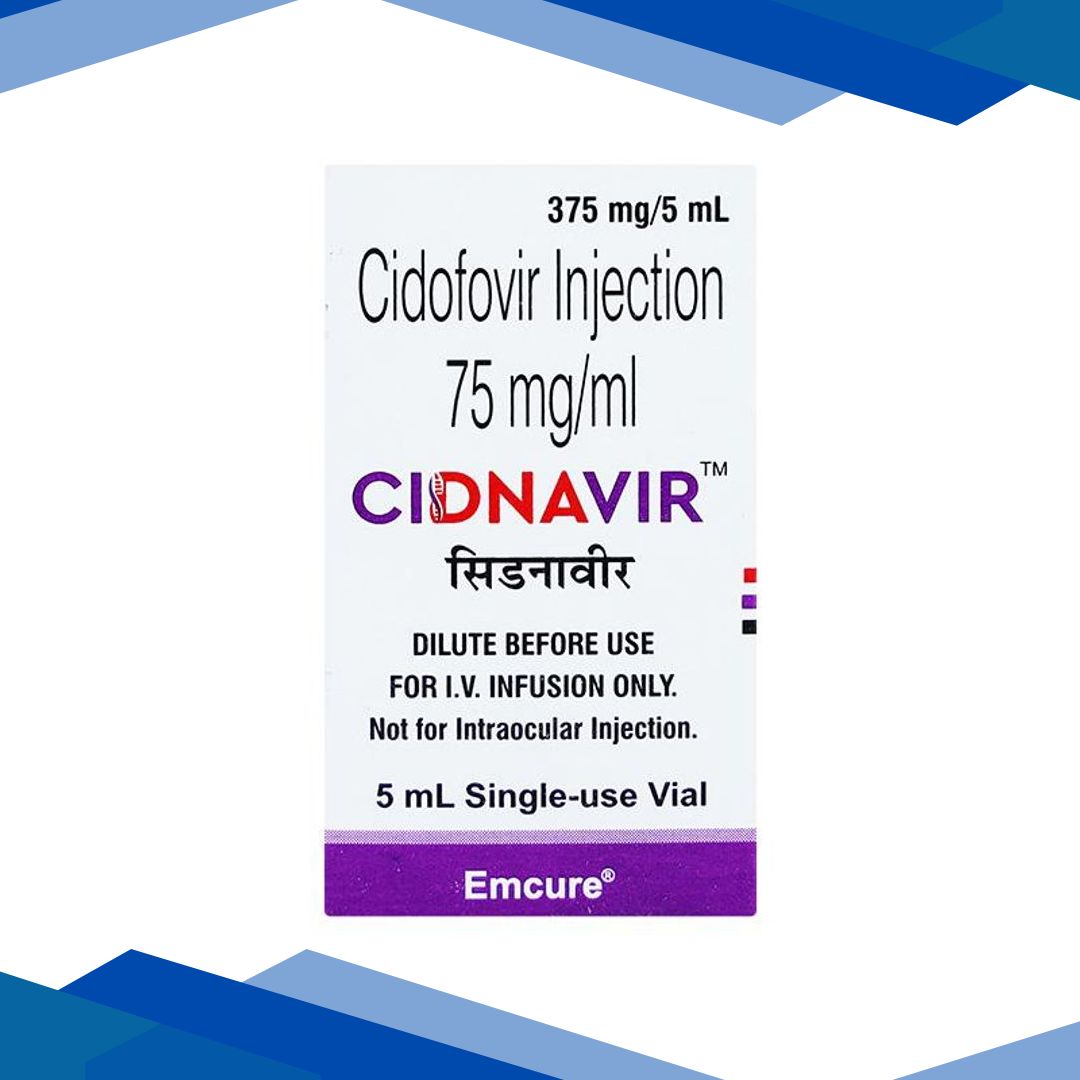
CIDNAVIR Injection 5ml
❌ Due to high demand, this product is currently out of stock. New stock will be available shortly.
👉 Click here to Buy Same Salt medicine
CIDNAVIR Injection is an antiviral medicine used to treat certain serious viral infections, especially cytomegalovirus (CMV) retinitis in people with weakened immune systems, such as those with advanced HIV infection. It works by blocking a viral enzyme needed for the virus to make copies of its genetic material, which helps slow down the spread of the infection in the body. CIDNAVIR Injection does not cure viral disease, but it can help control it and reduce the risk of further damage, particularly to the eyes. Because it can affect the kidneys and cause other side effects, it is usually given under close medical supervision with careful monitoring. This medicine is reserved for specific infections and should be used only when prescribed by a qualified healthcare professional.
Description
CIDNAVIR Injection is an antiviral medicine used in specific, serious viral infections, most notably cytomegalovirus (cmv) retinitis in people with acquired immunodeficiency syndrome (aids). it belongs to a class of medicines known as nucleotide analog antiviral agents. these medicines work by interfering with viral replication, which helps slow the spread of the virus in the body. CIDNAVIR Injection is not a cure for viral infections, but it can help control them when used under careful medical supervision.
this medicine is generally reserved for situations where the infection is severe or where other treatments may not be suitable. it is especially important in patients with weakened immune systems, because their bodies may not be able to control viral infections effectively on their own. CIDNAVIR Injection works by targeting the virus’s ability to copy its genetic material, which is necessary for the virus to multiply. by interrupting this process, it reduces viral activity and helps protect the affected tissue from further damage.
CIDNAVIR Injection must be used with caution because it can affect the kidneys and other body systems. for this reason, healthcare professionals usually monitor kidney function and other laboratory tests before and during treatment. the medicine is not meant for self-treatment or casual use, and it should only be used when a clinician determines that the expected benefit outweighs the potential risks. people receiving this medicine should understand the importance of hydration, follow-up testing, and prompt reporting of any side effects.
because CIDNAVIR Injection is a potent antiviral medication with significant safety considerations, it is important for patients and caregivers to know how it works, who it is intended for, and what precautions are needed. its use is typically limited to specialist care settings, especially when managing complex viral infections in immunocompromised individuals. careful medical oversight helps maximize benefit while reducing the chance of serious complications.
ingredients
- CIDNAVIR Injection: the active medicinal ingredient. it is the antiviral agent responsible for blocking viral dna replication. its main role is to suppress the growth and spread of susceptible viruses, particularly cmv, in patients who need treatment for severe infections.
- formulation ingredients: depending on the product presentation, CIDNAVIR Injection may be supplied as a sterile injectable preparation with additional excipients used to maintain stability, ph, and solubility. these supporting ingredients do not provide antiviral activity but help ensure the medicine can be safely manufactured, stored, and administered.
- diluent or preparation components: in clinical use, CIDNAVIR Injection may require dilution and administration according to specific hospital protocols. any accompanying sterile solutions or preparation materials are intended to support safe infusion practices and do not act as therapeutic ingredients themselves.
key uses
- cmv retinitis in patients with aids: CIDNAVIR Injection is primarily used to treat cytomegalovirus retinitis, a serious eye infection that can lead to vision loss if not controlled. it helps reduce viral activity in the retina and may slow progression of disease.
- severe cmv disease in immunocompromised patients: in selected cases, healthcare specialists may consider CIDNAVIR Injection when cmv infection is clinically significant and requires antiviral therapy. this is especially relevant in people with very weak immune defenses.
- specialist-directed antiviral therapy: CIDNAVIR Injection may be used when other treatments are ineffective, unsuitable, or not tolerated, but only under expert supervision because of its safety profile.
how to use
CIDNAVIR Injection is administered by a healthcare professional, usually in a medical setting, because it requires careful preparation, infusion, and monitoring. it is not a medicine to be taken casually at home without guidance. before each treatment, your clinician will usually assess kidney function and may order additional tests to determine whether it is safe to proceed. adequate hydration is often important, and the care team may provide specific instructions to lower the risk of kidney-related complications.
the medicine is typically given at scheduled intervals according to the treatment plan chosen by the prescriber. the exact timing, infusion method, and follow-up tests depend on the condition being treated, your overall health, and how well your body tolerates the medicine. patients should not change the schedule, skip visits, or request extra doses without medical advice. because the treatment can affect the kidneys and other organs, regular monitoring is a key part of safe use.
if you are receiving CIDNAVIR Injection, inform your healthcare provider about all other medicines you use, including over-the-counter products, herbal supplements, and vitamins. it is also important to report any symptoms such as decreased urination, unusual fatigue, eye pain, changes in vision, or signs of infection. follow the instructions of your clinician closely, and attend all laboratory and follow-up appointments as recommended.
safety information
- warnings: CIDNAVIR Injection can cause serious kidney toxicity, which is one of its most important safety concerns. kidney damage may occur even when the medicine is used correctly, so kidney function tests are essential. it may also cause low white blood cell counts, eye problems, or inflammation at the infusion site. the medicine should be used only when clearly needed and under specialist supervision.
- side effects: common side effects may include nausea, vomiting, fever, weakness, headache, rash, and reduced appetite. serious side effects can include kidney impairment, increased creatinine, protein in the urine, low neutrophil counts, severe dehydration, allergic reactions, and vision-related issues. seek urgent medical help if you notice decreased urination, swelling, severe fatigue, shortness of breath, or sudden changes in eyesight.
- precautions: CIDNAVIR Injection should be used carefully in people with kidney disease, dehydration, diabetes, low blood counts, or a history of kidney injury. it is generally unsuitable for patients who cannot be closely monitored. extra caution is needed if you are taking other medicines that may affect the kidneys. your clinician may decide that the risks outweigh the benefits in some individuals.
- pregnancy/breastfeeding: CIDNAVIR Injection may pose risks during pregnancy, and it is generally avoided unless the benefit is clearly justified by the clinical situation. its effects during breastfeeding are not fully established, and because of the potential for serious adverse effects, a healthcare professional should be consulted before use in pregnancy or while nursing.
- interactions: medicines that can harm the kidneys may increase the risk of kidney toxicity when combined with CIDNAVIR Injection. this includes certain antibiotics, antiviral agents, and other nephrotoxic drugs. alcohol may worsen dehydration and may not be advisable, especially if it interferes with hydration or overall health. always tell your doctor about all medicines and supplements you are taking before starting treatment.
additional information
- storage: store CIDNAVIR Injection exactly as directed on the product label or by the hospital pharmacy. it should generally be kept in a secure place away from excessive heat, moisture, and light. do not freeze unless the manufacturer specifically instructs otherwise. because this is often a hospital-administered medicine, storage is usually managed by healthcare professionals.
- missed dose: if a scheduled treatment is missed, contact your healthcare provider as soon as possible. do not try to compensate by taking extra medicine or rescheduling on your own. because CIDNAVIR Injection is administered under clinical supervision, the prescriber will decide the safest way to continue treatment.
- overdose: an overdose may increase the risk of severe kidney damage, electrolyte disturbances, or other toxic effects. if too much medicine is given or suspected, urgent medical assessment is necessary. treatment is supportive and may require laboratory monitoring, hydration, and specialist care. immediate communication with a poison center or emergency services may be needed.
- habit forming: no. CIDNAVIR Injection is not known to be habit forming or addictive. it does not produce dependence, craving, or withdrawal in the way habit-forming medicines can. however, it must still be used carefully because of its significant medical risks.
frequently asked questions
this information is for educational purposes only and should not be considered medical advice. always consult a qualified healthcare professional before use.
At Gem Pharmacy, we make every effort to provide accurate, expert-written, and thoroughly reviewed information related to medicines. However, this information should not be considered a substitute for professional medical advice, diagnosis, or treatment from a qualified doctor.
The purpose of this information is to educate users and improve communication between patients and healthcare professionals. It should not be used to diagnose or treat any condition.
Always consult a certified healthcare professional before taking any medication.


Related products