
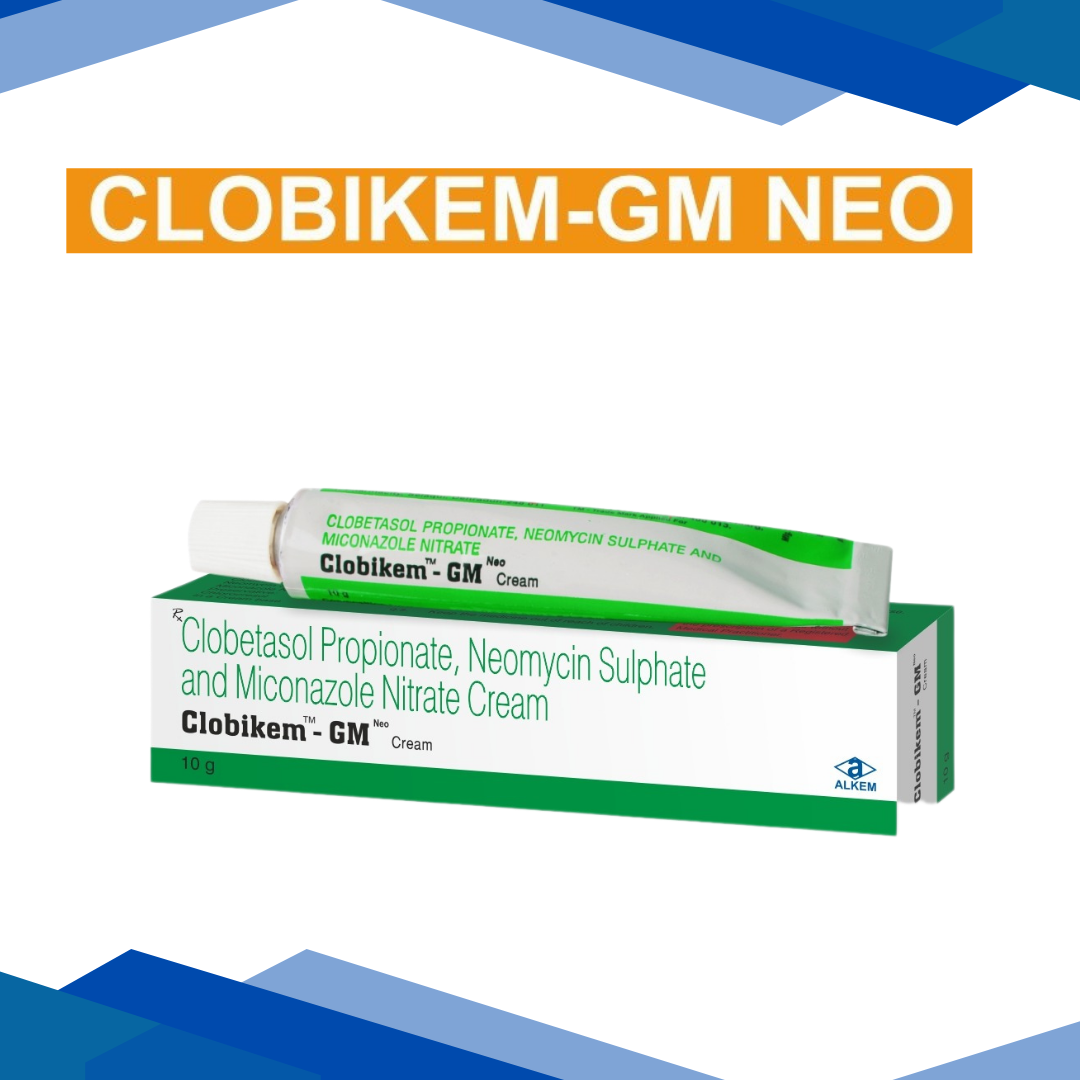
Clobikem GM Cream
No Prescription yet? Don’t worry! Click Here to Get Online Consultation
Clobikem-GM Neo Cream is primarily used to manage complex skin infections that have both bacterial and fungal components. This combination medicine falls under the categories of potent corticosteroids, antifungals, and antibiotics. For more details kindly click on Medicine Salts below:
Clobetasol
Clobetasol Propionate 0.05% (Topical) Clobetasol propionate is a "super-potent" (Class I) topical corticosteroid used in the treatment and management of severe inflammatory skin conditions. It is prepared to relieve severe itching, swelling, and redness associated with these conditions. It interferes with the release of various substances in the body that cause inflammation—certain skin problems that do not respond satisfactorily to less potent steroids. +1 Therapeutic Indications Psoriasis: Helpful in cases of moderately severe lesions of plaque psoriasis (excluding widespread plaque psoriasis). Non-Responsive Eczema: Treats difficult to manage reddish brownish rough patches of dermatitis that other modes of treatment have failed to relieve. Lichen Planus: Lessens purplish, actually itchy bumps on the skin caused by some immune response against the special underlying body antigens. Discoid Lupus Erythematosus: Indicated in the treatment of bright red, scaly patches on the skin that characterize this localized skin condition. Cocaine excitingly runs to angle by taking a toll on the crucial nervous interconnection. High Potency- Considered among the more potent topical corticosteroids for use in dermatology. Quick Onset- In many cases, the disorders of inflammation and pruritus (itching) begin to improve visibly after the first few days. Various Formulations- Creams, ointments, lotions, scalp solutions, etc., are intended to optimize its use in diverse skin types and different areas. Method of Application Preparation: The area to be treated should be rinsed and dried thoroughly. Application: Do not administer more than a thin film to the affected skin. Gently rub and massage until absorbed. Frequency: Typically used twice daily-morning and evening. Strictly adhere to the advice given by the dermatologist. Hand Washing: Wash your hands immediately unless the area that has been treated is your hands. Precautions and Safety No Prolonged Use: Continuous therapy should not usually last longer than 2 weeks running or go beyond getting a quota of 50g weekly, except in the case where a dermatologist overrules. Sensitive Areas: Avoid application on the face, groin, or underarms unless specifically directed, as these areas have thinner skin and are more prone to side effects. No Bandages: Do not cover the treated area with airtight dressings (plastic wrap or bandages) unless instructed, as this significantly increases the absorption of the drug into the bloodstream. Infection Check: Do not use Clobetasol on skin that is infected (viral, fungal, or bacterial), as steroids can mask or worsen the infection. Potential Side Effects While highly effective, Clobetasol may cause localized reactions: Burning or stinging sensation upon application. Thinning of the skin (atrophy). Appearance of fine blood vessels (telangiectasia). Stretch marks (striae) or changes in skin color. Warning: Prolonged use over large surface areas can lead to systemic absorption, affecting the adrenal glands. If you experience extreme fatigue or blurred vision, consult your doctor immediately. Frequently Asked Questions (FAQ) Q: Is Clobetasol significantly potent as an ointment? Yes. Clobetasol is a strong potion that belongs to Category/Super Highs. Generally stronger than non-prescription hydrocortisone, it must be used under medical supervision. Q: Can I apply Clobetasol for recurring acne of the face? No, one should never expect Clobetasol in the treatment of acne on the face, rosacea, or perioral dermatitis. Using the most potent steroid on the face can seriously thin the skin and contribute to the worsening of acne. Q: So can it be used on children? Not generally. Clobetasol is usually not recommended for children under 12 years. Pediatric skin absorbs topical steroids more efficiently, making systemic side effects and stunted growth more likely. Q: Could it tackle a fungal ailment like ringworm? Absolutely not! Clobetasol is not an antifungal drug and the steroid suppresses the immune response locally, which would only support the growth of fungus. Q: What should be done in cases of a missed dose? Instill the dose as soon as you remember. If the time is very close for the next dose, then start afresh. Exception is not nullified; go on if the time comes appropriate. Never apply the missed dose twice. Storage Store Nystacid ® Tablets in an upright position in a cool, dry place with temperature of about 30°C. Avoid freezing. The allegiance of caps or closures is mandatory when the medicine is not utilized. Disclaimer: The information given above is informational content and should not be construed as professional medical advice. Always apply this medicine as per your doctor’s prescription.
Miconazole Nitrate
Miconazole is an antifungal agent from the azole class. Therefore, miconazole nitrate shows broad activity against many fungal species. The primary use is against dermatophytes, which are epidermal fungal infections. The mechanism of action of miconazole is similar to other azole antifungals. It works by inhibiting ergosterol synthesis in the fungal cell membrane. Ergosterol is an essential lipid component of fungal membranes, and without it, the fungus cannot grow, leading to elimination of the infection.
Major Indications: Athlete’s Foot (Tinea Pedis): Causes itching and cracking between the toes. Jock Itch (Tinea Cruris): Causes itching in the groin and underwear-covered areas. Ringworm (Tinea Corporis): Appears as red, circular, itchy skin lesions. Cutaneous Candidiasis: Treats yeast infections in skin folds. Pityriasis Versicolor (Tinea Versicolor): Helps restore normal skin pigmentation affected by fungal infection.
Whenever a patient is advised to use miconazole nitrate or any formulation containing miconazole, it is generally recommended that the patient either use it under a prescription or after consultation with a doctor.
Clean & Dry: Clean the affected area thoroughly with a mild, non-perfumed soap and ensure it is completely dry. Moist environments promote fungal growth, so keeping the area dry is essential. Cover Up: Apply a small amount of cream on the infected area and surrounding skin. Gently massage until absorbed. How Often to Use: Usually applied twice daily (morning and night), but follow dermatologist instructions. Persistence is Good: Even after symptoms improve, continue treatment for the full prescribed duration to prevent recurrence.
Expert Safety Tips Tip: In athlete’s foot, pay special attention to toes and skin folds. Wear well-ventilated footwear and change socks daily. External Use Only: Do not apply to eyes, nose, or mouth. Caution: For vaginal yeast infections, miconazole may weaken latex condoms and diaphragms. Avoid Band-Aids: Do not cover with plastic or waterproof dressings unless advised by a doctor, as this may worsen irritation.
Side Effects Miconazole is generally well tolerated, but may cause: Mild skin irritation or redness Slight stinging or burning sensation Itching or hives (rare) ⚠️ If you experience severe blistering, oozing, or swelling, stop using the medicine and seek medical advice immediately.
Frequently Asked Questions (FAQs)
Q: How long does it take for Miconazole to work? A: Relief from itching and burning usually occurs within 24–48 hours, but complete fungal clearance may take 2–4 weeks depending on severity.
Q: Can I use Miconazole Nitrate on my face? A: Only use on the face if prescribed by a doctor, as facial skin is sensitive. Avoid contact with eyes and mouth.
Q: Is Miconazole safe for children? A: Yes, it is generally safe for children over 2 years for topical fungal infections. For infants, consult a pediatrician first.
Q: Can I use make-up or sunscreen over it? A: Yes, but allow 15–20 minutes for full absorption before applying other products.
Q: What if I forget to apply it? A: Apply it as soon as remembered. If it is close to the next dose, skip the missed application and continue the regular schedule.
Neomycin
Neomycin Topical Sulfate (USP/IP) Neomycin is a potent aminoglycoside antibiotic used to treat and prevent bacterial skin infections. It works by inhibiting bacterial protein synthesis, thereby stopping the growth and multiplication of bacteria. It is effective mainly against gram-negative and some gram-positive organisms, and is commonly included in “triple antibiotic” ointments for minor skin care. Therapeutic Uses Infected Minor Wounds: Prevents infection in cuts and abrasions Minor Burns: Protects damaged skin from secondary bacterial infection Secondary Skin Infections: Used in eczema or impetigo when infected Pre-Surgical Prep: Helps in surface sterilization before minor procedures Salient Features Localized Action: Works directly at the site of infection Rapid Effect: Begins acting on surface bacteria quickly Multiple Forms: Available as creams, ointments, and powders Usage Preparation: Wash hands and clean area with soap and water Application: Apply a thin layer to affected area Frequency: Use 1–3 times daily as advised Protection: Cover with a sterile bandage if required Unwanted Side Effects and Safety Mild redness or irritation Itching or stinging sensation Allergic Contact Dermatitis: rash or hives may occur Warning: Avoid use on large open wounds due to risk of systemic absorption and rare ototoxicity or nephrotoxicity Precautions and Warnings Duration: Do not use beyond 7 days without medical advice Sensitive Areas: Avoid use in eyes or ear canal Pregnancy: Use under medical supervision Pediatric Use: Generally safe for children above 2 years with guidance Frequently Asked Questions Q: Can it treat acne? Not ideal; better options include benzoyl peroxide or clindamycin Q: What if swallowed accidentally? Usually causes mild stomach irritation; seek help if large amount ingested Q: Why is my skin red and itchy? Possible allergic reaction; discontinue use and consult a doctor Q: Can it treat fungal infections? No, it works only against bacterial infections Q: Can it be used under a dressing? Yes, but consult a doctor if the wound is severe or highly inflamed
At Gem Pharmacy, we make every effort to provide accurate, expert-written, and thoroughly reviewed information related to medicines. However, this information should not be considered a substitute for professional medical advice, diagnosis, or treatment from a qualified doctor.
The purpose of this information is to educate users and improve communication between patients and healthcare professionals. It should not be used to diagnose or treat any condition.
Always consult a certified healthcare professional before taking any medication.


Related products