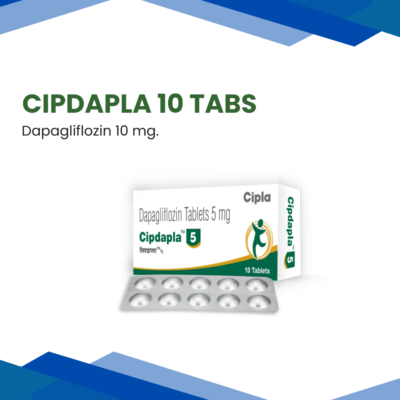
DAPIXA 10 Tablet 10’s
No Prescription yet? Don’t worry! Click Here to Get Online Consultation
DAPIXA 10 Tablet is an oral anticoagulant (blood thinner) used to prevent and treat harmful blood clots in the body. It works by directly inhibiting thrombin, an essential enzyme in the clotting process, thereby reducing the formation of fibrin and preventing clots from developing or growing larger. DAPIXA 10 Tablet is commonly prescribed to lower the risk of stroke in patients with non-valvular atrial fibrillation, as well as for the treatment and prevention of deep vein thrombosis (DVT) and pulmonary embolism (PE). It offers a more predictable effect compared to traditional anticoagulants and generally does not require routine blood monitoring; however, it must be used carefully under medical supervision due to the risk of bleeding complications.
Description
DAPIXA 10 Tablet is an oral anticoagulant (commonly referred to as a “blood thinner”) used to reduce the risk of harmful blood clots forming within the body. it belongs to a class of medications known as direct thrombin inhibitors, which work by specifically targeting thrombin, a key enzyme involved in the blood clotting process. by inhibiting thrombin, DAPIXA 10 Tablet prevents the formation of fibrin—a protein that stabilizes blood clots—thereby reducing the likelihood of clot development. this mechanism makes it particularly valuable in conditions where abnormal clotting poses a significant health risk.
unlike traditional anticoagulants such as warfarin, DAPIXA 10 Tablet offers a more predictable anticoagulant effect and does not usually require routine blood monitoring for dose adjustments. it is commonly prescribed for patients with non-valvular atrial fibrillation to lower the risk of stroke and systemic embolism. additionally, it is used in the prevention and treatment of deep vein thrombosis (dvt) and pulmonary embolism (pe), which are potentially life-threatening conditions caused by blood clots in the veins or lungs.
DAPIXA 10 Tablet is typically formulated as an oral capsule and is designed to be taken regularly as prescribed by a healthcare provider. its onset of action is relatively rapid compared to older anticoagulants, making it an effective option for both short-term and long-term anticoagulation therapy. however, due to its potent blood-thinning properties, it must be used with caution, as improper use can increase the risk of bleeding complications. patients prescribed DAPIXA 10 Tablet are usually those who require consistent anticoagulation but prefer a therapy with fewer dietary restrictions and monitoring requirements.
overall, DAPIXA 10 Tablet is intended for adults at risk of thromboembolic events, including individuals with irregular heart rhythms, recent orthopedic surgery, or a history of clotting disorders. while it provides significant clinical benefits in preventing strokes and other complications, it must always be used under medical supervision to ensure safety and effectiveness.
ingredients
- DAPIXA 10 Tablet etexilate mesylate: this is the active prodrug form of DAPIXA 10 Tablet. once ingested, it is converted in the body to its active form, DAPIXA 10 Tablet, which directly inhibits thrombin. this prevents the conversion of fibrinogen to fibrin, thereby reducing clot formation and improving blood flow.
- tartaric acid: helps maintain an acidic environment in the stomach to enhance the absorption of DAPIXA 10 Tablet, ensuring consistent therapeutic effects.
- hypromellose: a polymer used in capsule formulation that aids in controlled release and stability of the medication.
- dimethicone: included as an excipient to improve the manufacturing process and consistency of the capsule contents.
- gelatin (capsule shell): forms the outer covering of the capsule, allowing for easy oral administration and protection of the active ingredient.
- coloring agents and titanium dioxide: used to give the capsule its identifiable color and ensure product stability and appearance.
key uses
- prevention of stroke in atrial fibrillation: reduces the risk of stroke and systemic embolism in patients with non-valvular atrial fibrillation by preventing clot formation in the heart.
- treatment of deep vein thrombosis (dvt): helps dissolve existing clots and prevents new ones from forming in the deep veins, typically in the legs.
- treatment of pulmonary embolism (pe): used to manage blood clots in the lungs, improving blood flow and reducing life-threatening complications.
- prevention of recurrent dvt and pe: provides long-term protection in patients with a history of clotting disorders.
- post-surgical thromboprophylaxis: may be used after certain orthopedic surgeries (such as hip replacement) to prevent clot formation during recovery.
how to use
DAPIXA 10 Tablet should be taken exactly as prescribed by a qualified healthcare professional. it is usually administered orally in capsule form, with or without food, at consistent times each day to maintain stable blood levels. the capsules should be swallowed whole with a full glass of water and should not be broken, crushed, or chewed, as this may alter the drug’s absorption and effectiveness. maintaining adherence to the dosing schedule is crucial, as missing doses can increase the risk of clot formation.
patients should not discontinue DAPIXA 10 Tablet abruptly without consulting their doctor, as doing so may increase the risk of stroke or other thrombotic events. regular follow-up appointments may be recommended to monitor overall health and ensure the medication is working effectively. although routine blood clotting tests are not typically required, doctors may still assess kidney function and overall response to therapy periodically.
safety information
- warnings: DAPIXA 10 Tablet significantly increases the risk of bleeding, which can be serious or even life-threatening. patients should be cautious if they have a history of bleeding disorders, gastrointestinal ulcers, or recent surgery. emergency medical attention is required if unusual bleeding, bruising, or symptoms like severe headache or weakness occur.
- side effects: common side effects include indigestion, stomach discomfort, nausea, and minor bleeding such as nosebleeds or easy bruising. serious side effects may include gastrointestinal bleeding, intracranial hemorrhage, or severe allergic reactions characterized by swelling, rash, or difficulty breathing.
- precautions: individuals with kidney impairment, liver disease, or those undergoing spinal or epidural procedures should use DAPIXA 10 Tablet with caution. elderly patients may have an increased risk of bleeding and require closer monitoring.
- pregnancy/breastfeeding: the safety of DAPIXA 10 Tablet during pregnancy is not well established, and it is generally not recommended unless clearly needed. it may pass into breast milk; therefore, breastfeeding mothers should consult their healthcare provider before use.
- interactions: DAPIXA 10 Tablet may interact with other medications such as antiplatelet drugs (e.g., aspirin), nsaids, other anticoagulants, and certain antifungal or antiviral drugs. alcohol consumption may increase the risk of stomach bleeding and should be limited. always inform your doctor about all medications and supplements being taken.
additional information
- storage: store DAPIXA 10 Tablet capsules in their original packaging at room temperature, away from moisture and heat. keep the container tightly closed to protect the medication from humidity.
- missed dose: if a dose is missed, it should be taken as soon as remembered unless it is close to the time of the next dose. do not double the dose to make up for a missed one.
- overdose: an overdose of DAPIXA 10 Tablet can lead to excessive bleeding. symptoms may include severe bruising, prolonged bleeding, or blood in urine or stool. immediate medical attention is required in such cases.
- habit forming: no, DAPIXA 10 Tablet is not habit-forming. it does not cause dependence or addiction but should be used strictly as prescribed for medical effectiveness.
frequently asked questions
Q: what is DAPIXA 10 Tablet used for?
A: DAPIXA 10 Tablet is primarily used to prevent and treat blood clots, including reducing the risk of stroke in patients with atrial fibrillation and managing conditions like deep vein thrombosis and pulmonary embolism.
Q: does DAPIXA 10 Tablet require regular blood monitoring?
A: unlike traditional anticoagulants such as warfarin, DAPIXA 10 Tablet usually does not require routine blood tests to monitor clotting levels, although periodic health checks may still be necessary.
Q: can i stop taking DAPIXA 10 Tablet if i feel better?
A: no, you should not stop taking DAPIXA 10 Tablet without consulting your doctor, as stopping suddenly can increase the risk of serious clotting events such as stroke.
Q: what should i avoid while taking DAPIXA 10 Tablet?
A: avoid activities that increase the risk of injury or bleeding, limit alcohol intake, and consult your doctor before taking other medications like nsaids or herbal supplements.
Q: is DAPIXA 10 Tablet safe for elderly patients?
A: DAPIXA 10 Tablet can be used in elderly patients, but they may have a higher risk of bleeding, so careful monitoring and dose adjustments may be required.
Q: can DAPIXA 10 Tablet be taken with food?
A: yes, DAPIXA 10 Tablet can be taken with or without food, but it should be taken consistently in the same manner each day.
Q: what are the signs of serious bleeding?
A: signs include unusual bruising, prolonged bleeding, blood in urine or stools, severe headaches, dizziness, or coughing up blood. seek immediate medical help if these occur.
Q: is there an antidote for DAPIXA 10 Tablet overdose?
A: yes, a specific reversal agent called idarucizumab may be used in emergency situations to reverse the effects of DAPIXA 10 Tablet.
Q: can DAPIXA 10 Tablet be used after surgery?
A: yes, it may be prescribed after certain surgeries to prevent clot formation, but only under strict medical supervision.
Q: does DAPIXA 10 Tablet interact with herbal supplements?
A: some herbal supplements, such as ginkgo biloba or st. john's wort, may increase bleeding risk or affect drug levels, so always consult your doctor before use.
this information is for educational purposes only and should not be considered medical advice. always consult a qualified healthcare professional before use.
At Gem Pharmacy, we make every effort to provide accurate, expert-written, and thoroughly reviewed information related to medicines. However, this information should not be considered a substitute for professional medical advice, diagnosis, or treatment from a qualified doctor.
The purpose of this information is to educate users and improve communication between patients and healthcare professionals. It should not be used to diagnose or treat any condition.
Always consult a certified healthcare professional before taking any medication.


Related products
Justoza-M 10/1000 Tablet 10’s