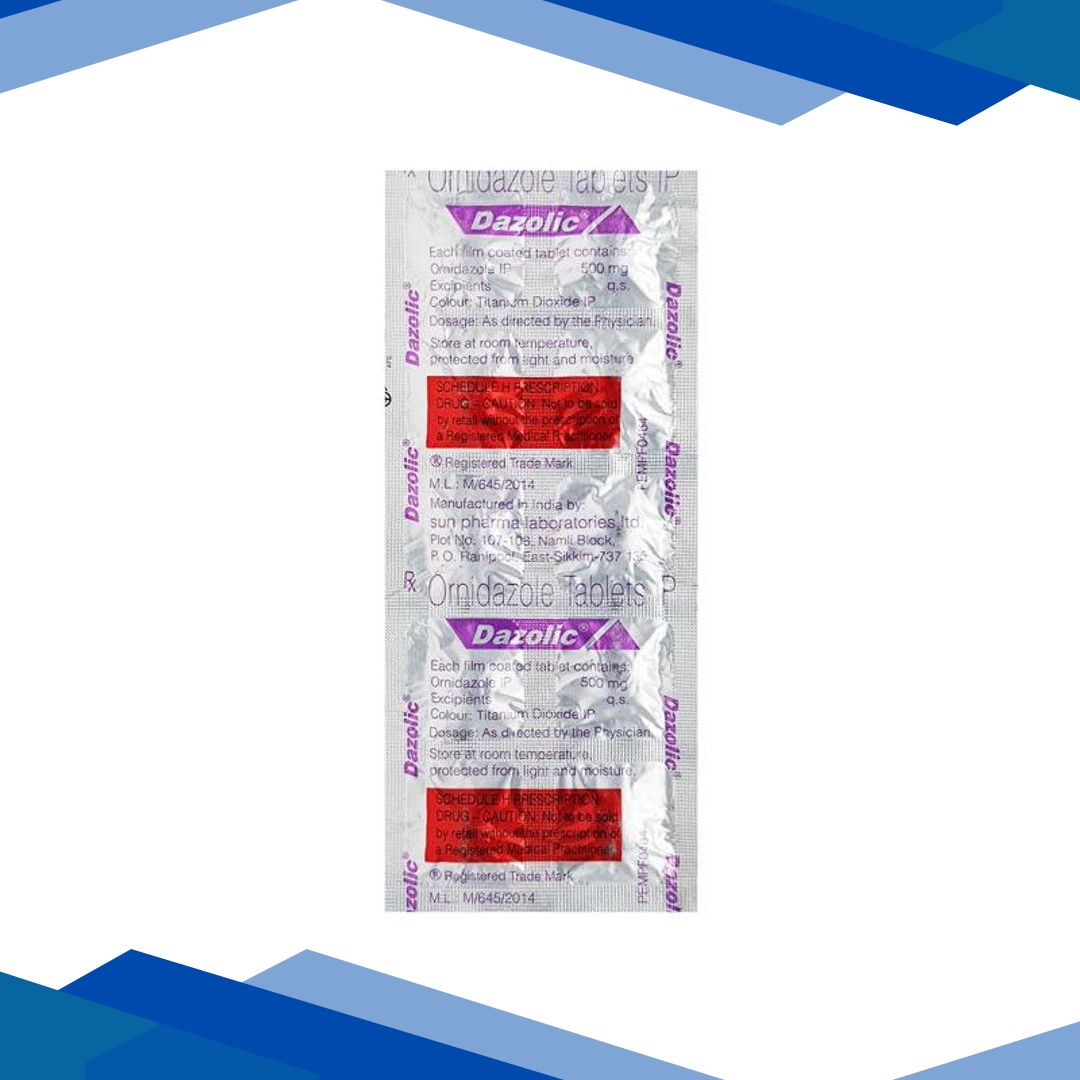
Dazolic 500mg Tablet 10’S
Dazolic 500mg Tablet is a combination medicine used mainly for eye infections and inflammation, as prescribed by a doctor. AMIKACIN is an antibiotic that helps kill or stop the growth of certain bacteria causing the infection. DEXAMETHASONE is a corticosteroid that reduces redness, swelling, and irritation in the eye. HYDROXYPROPYL METHYLCELLULOSE acts as a lubricating and soothing agent, helping keep the eye moist and improving comfort. Together, this medicine helps treat bacterial eye infections while easing inflammation and dryness-related discomfort. It is commonly used when both infection control and relief from eye irritation are needed. Because it contains a steroid and an antibiotic, it should be used under medical supervision to ensure safe and appropriate treatment.
Description
Dazolic 500mg Tablet is a combination medicine designed for use in the eye, most commonly as an ophthalmic preparation. it brings together an antibiotic, an anti-inflammatory corticosteroid, and a lubricant-like thickening agent to address eye conditions where infection, inflammation, and surface irritation may occur together. in practical terms, this type of medicine may be prescribed when the eye is red, painful, irritated, swollen, or at risk of bacterial infection, especially in situations where a healthcare professional believes both antimicrobial and anti-inflammatory support are needed.
amikacin is an aminoglycoside antibiotic that helps kill susceptible bacteria by interfering with bacterial protein synthesis. it is useful against certain bacterial infections and is valued in eye care because it can act locally at the site of infection. dexamethasone is a corticosteroid that reduces inflammation, swelling, redness, and immune-mediated tissue irritation. in the eye, it can help ease discomfort and limit inflammatory damage when used appropriately and under supervision. hydroxypropyl methylcellulose is a cellulose derivative that acts as a viscosity-enhancing and lubricating agent. it helps the formulation stay on the eye surface longer, improves comfort, and may reduce friction and dryness.
this combination is typically intended for short-term, targeted use under medical guidance, especially when the eye condition involves inflammation alongside a suspected or confirmed bacterial component. it is not meant to replace proper diagnosis, and it is not appropriate for all types of eye redness or irritation. because dexamethasone can mask worsening infection or increase pressure in the eye if misused, careful monitoring is important. for that reason, this medicine is generally used only when prescribed by an eye-care professional who can assess the balance of benefit and risk.
people who may receive this medicine include those recovering from certain eye infections, post-procedure inflammation, or inflammatory eye conditions in which the prescriber wants both antibiotic coverage and swelling control. however, it should only be used when the likely benefits outweigh the risks. viral, fungal, or untreated parasitic eye infections require different treatment, and steroid-containing eye medicines may worsen those conditions if used inappropriately.
ingredients
- amikacin: a broad-spectrum aminoglycoside antibiotic that helps treat or prevent bacterial infection in the eye. it works by binding to bacterial ribosomes and stopping bacteria from making essential proteins, which leads to bacterial death. it is especially helpful when bacterial contamination or infection is suspected and local treatment is needed.
- dexamethasone: a potent corticosteroid that decreases inflammation, swelling, redness, itching, and tissue irritation in the eye. it works by suppressing the release of inflammatory substances and calming the immune response. this can improve comfort and reduce inflammatory damage when used carefully and for the right indication.
- hydroxypropyl methylcellulose: a lubricating, thickening, and stabilizing agent that improves the retention of the medicine on the eye surface. it helps the eye feel more comfortable, reduces dryness and friction, and can make the drops or preparation stay in contact with the ocular surface longer for better local effect.
key uses
- bacterial eye infections with inflammation: may be used when a bacterial infection is present or suspected and the eye is also red, swollen, or irritated. the antibiotic targets bacteria while dexamethasone helps reduce inflammatory symptoms.
- post-procedure eye inflammation: sometimes prescribed after certain eye procedures or surgery when inflammation is expected and infection prevention is important. the combination supports healing by reducing swelling and controlling bacterial growth.
- inflammatory eye conditions with bacterial risk: may be used in select cases where inflammation is significant and the prescriber wants to lower the chance of bacterial overgrowth or secondary infection.
- ocular surface irritation and discomfort: hydroxypropyl methylcellulose helps soothe the eye surface, improving comfort and reducing the gritty, dry, or scratchy feeling that can accompany eye irritation.
how to use
Dazolic 500mg Tablet should be used exactly as directed by a qualified healthcare professional, usually an eye specialist or physician. it is generally applied to the affected eye in the form of drops or another ophthalmic formulation, depending on the product prescribed. before using it, wash your hands thoroughly and avoid touching the tip of the container to the eye, eyelids, fingers, or any surface to prevent contamination. if contact lenses are being used, ask the prescriber whether they should be removed before application, because some eye medicines may not be suitable with lenses in place.
when using eye drops, tilt the head back, gently pull down the lower eyelid to create a small pocket, and apply the medicine as instructed. after application, gently close the eye for a short time without blinking hard or rubbing. in some cases, pressing lightly on the inner corner of the eye may help reduce drainage into the nose and keep the medicine on the eye surface longer. if more than one eye medicine is prescribed, they are often separated by several minutes to avoid washing one product out with another. because dexamethasone is a corticosteroid, it should not be continued longer than recommended, even if symptoms improve, unless a clinician advises it.
safety information
- warnings: this medicine should be used only when bacterial infection or bacterial risk with inflammation has been assessed by a healthcare professional. dexamethasone can mask or worsen untreated viral, fungal, or parasitic eye infections. prolonged or unsupervised use may increase eye pressure, contribute to glaucoma, delay wound healing, or raise the risk of cataract formation. any worsening pain, vision changes, marked redness, discharge, or light sensitivity should be reported promptly.
- side effects: common side effects may include temporary stinging, burning, mild eye irritation, blurred vision after application, watery eyes, or a temporary unpleasant taste in the mouth. less common but serious effects may include increased intraocular pressure, eye infection that worsens or is masked, allergic reaction, corneal damage, delayed healing, or optic nerve complications if used improperly or for too long.
- precautions: people with glaucoma, a history of elevated eye pressure, corneal thinning, herpes simplex eye infection, fungal eye infection, viral conjunctivitis, recent eye surgery, or allergy to aminoglycosides or corticosteroids need extra caution. it should be used carefully in older adults, children, and individuals using multiple eye medications. do not use it without medical evaluation if the cause of eye redness is uncertain.
- pregnancy/breastfeeding: use during pregnancy or breastfeeding should be discussed with a healthcare professional. although eye medicines may have limited systemic absorption, amikacin and dexamethasone can still require caution depending on the clinical situation. the prescriber will judge whether the expected benefit outweighs any possible risk.
- interactions: inform the healthcare professional about all eye drops, ointments, and systemic medicines being used. other corticosteroids may increase the risk of steroid-related adverse effects, while concurrent use of multiple eye products may alter absorption or effectiveness. alcohol is not usually a direct issue with eye preparations, but excessive alcohol can worsen dehydration and may indirectly affect healing and compliance with treatment.
additional information
- storage: store as directed on the package or by the pharmacist, usually in a cool, dry place away from direct sunlight and moisture. keep the container tightly closed and out of reach of children. do not freeze unless the label specifically allows it. discard the product if it changes color, becomes contaminated, or reaches the expiry date.
- missed dose: if a dose is missed, apply it as soon as you remember unless it is nearly time for the next dose. if that happens, skip the missed dose and continue with the regular schedule. do not use extra medicine to make up for the missed application unless advised by a healthcare professional.
- overdose: an eye-product overdose usually means using too much in the eye or applying it too often. this may cause increased irritation, blurred vision, unwanted medication runoff, or a higher risk of steroid-related side effects if repeated excessively. if accidental swallowing or severe symptoms occur, seek medical advice promptly and contact poison control or emergency services if needed.
- habit forming: no. this medicine is not considered habit forming or addictive. however, overuse can still be harmful because the corticosteroid component may cause serious eye complications if used without supervision.
frequently asked questions
Q: what is Dazolic 500mg Tablet used for?
A: it is commonly used for selected eye conditions where bacterial infection or bacterial risk is present along with inflammation or irritation. it may also be used after certain eye procedures to help control swelling and support healing, but only when prescribed by a healthcare professional.
Q: can i use this medicine for simple eye redness or allergies?
A: not usually. eye redness can happen for many reasons, including allergy, dryness, viral infection, or injury. because this medicine contains a steroid and an antibiotic, it should not be used casually for unexplained redness. a clinician should confirm that it is appropriate.
Q: does this medicine treat viral eye infections?
A: no. amikacin is an antibiotic and does not treat viruses. in fact, the dexamethasone component may make some viral eye infections worse if the medicine is used incorrectly. medical evaluation is important before use.
Q: what side effects should i watch for?
A: mild burning, stinging, temporary blurred vision, or irritation can occur. seek medical help if you notice worsening pain, increased redness, eye discharge, light sensitivity, vision changes, or signs of an allergic reaction.
Q: can it raise eye pressure?
A: yes. dexamethasone can increase intraocular pressure in some people, especially with prolonged use or in those with glaucoma or a family history of glaucoma. this is one reason follow-up monitoring may be needed.
Q: can i wear contact lenses while using it?
A: this depends on the product and the reason for treatment. contact lenses may need to be removed before use and avoided during active eye infection or irritation. follow the advice of your eye specialist or pharmacist.
Q: how soon does it work?
A: some comfort improvements, such as reduced irritation, may be noticed fairly quickly, but the full effect depends on the underlying condition. infection control and inflammation reduction can take time, and treatment should be continued exactly as prescribed.
Q: is it safe to stop once symptoms improve?
A: not always. stopping too early may allow infection or inflammation to return. because the steroid and antibiotic components serve different purposes, follow the prescribed course and consult the prescriber before making changes.
Q: can children use this medicine?
A: children may use it only when prescribed and monitored by a healthcare professional. steroid-containing eye medicines require extra caution in pediatric patients because of the risk of increased eye pressure and other complications.
Q: what if i get blurred vision after applying it?
A: temporary blurred vision can happen after eye drops or similar preparations and usually passes soon. avoid driving or operating machinery until your vision clears. if the blurring is severe or persistent, contact a healthcare professional.
Q: why is hydroxypropyl methylcellulose included?
A: it helps lubricate the eye surface, improve comfort, and keep the medicine in contact with the eye longer. this can reduce dryness and improve the overall tolerability of the preparation.
Q: should i use it longer if the eye still feels irritated?
A: no, not without medical advice. persistent irritation may mean the diagnosis is wrong, the infection is not responding, or another problem is present. continued steroid use without supervision may be risky.
Q: can it be used after eye surgery?
A: sometimes, yes, if prescribed by the surgeon or eye specialist. it may help control inflammation and reduce bacterial risk after selected procedures, but the exact use depends on the surgery and recovery plan.
Q: what should i do if the bottle tip touches my eye?
A: avoid contamination as much as possible. if the tip touches the eye or another surface, wipe it carefully if appropriate and ask a pharmacist whether the product is still safe to use. if contamination is suspected, replacement may be needed.
Q: can i use other eye drops with this medicine?
A: possibly, but spacing between different eye medications is often important. ask your healthcare professional how to time them so one product does not wash out the other or interfere with absorption.
this information is for educational purposes only and should not be considered medical advice. always consult a qualified healthcare professional before use.
At Gem Pharmacy, we make every effort to provide accurate, expert-written, and thoroughly reviewed information related to medicines. However, this information should not be considered a substitute for professional medical advice, diagnosis, or treatment from a qualified doctor.
The purpose of this information is to educate users and improve communication between patients and healthcare professionals. It should not be used to diagnose or treat any condition.
Always consult a certified healthcare professional before taking any medication.


Related products