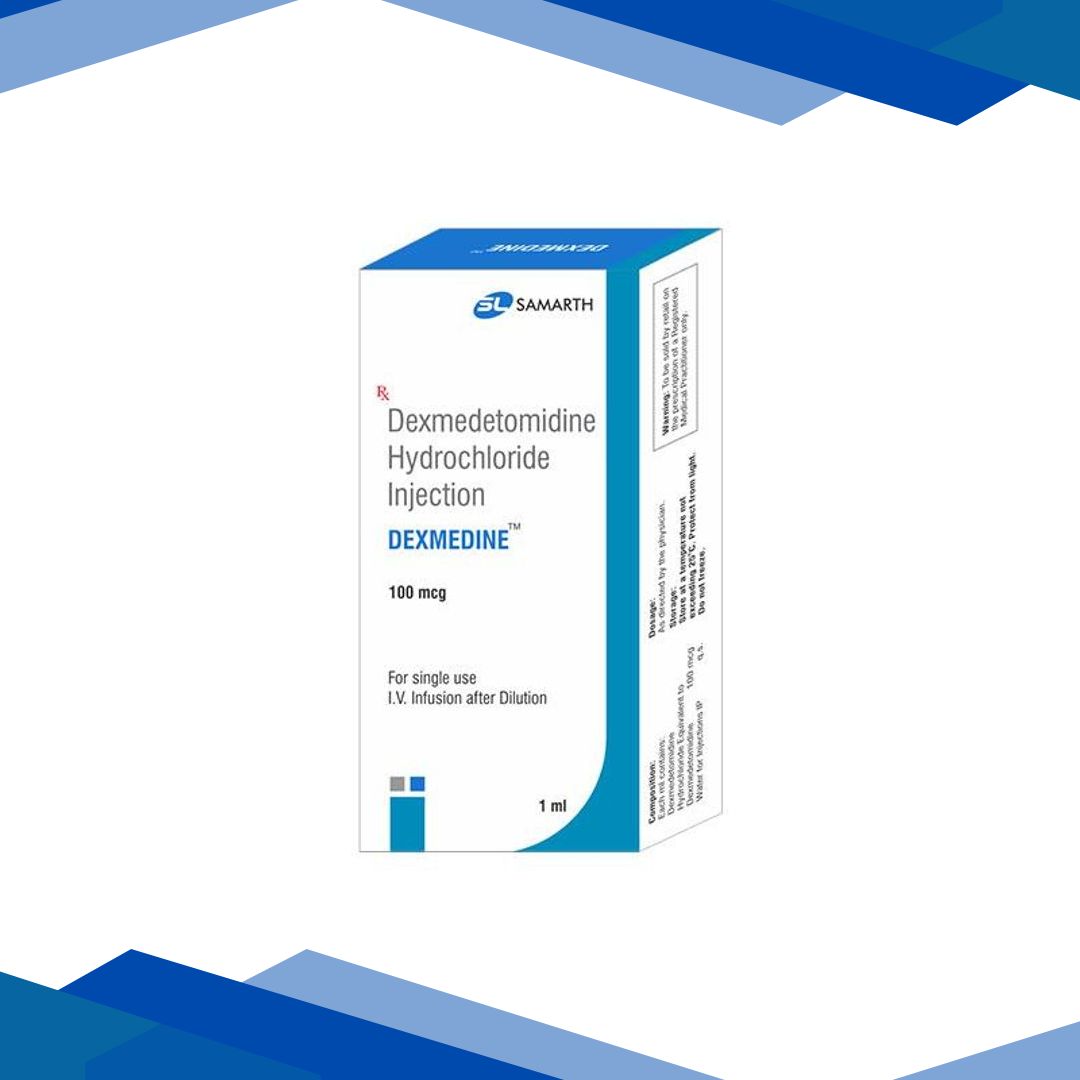
Dexem 100mg Injection 2ml
❌ Due to high demand, this product is currently out of stock. New stock will be available shortly.
👉 Click here to Buy Same Salt medicine
Dexem 100mg Injection is a prescription medicine used mainly for sedation in medical settings. It helps calm patients, reduce anxiety, and make procedures or intensive care treatment more comfortable. It works by acting on certain receptors in the brain and nervous system to slow down activity, which produces a relaxed, sleepy state without causing deep anesthesia. Doctors commonly use Dexem 100mg Injection for patients who need short-term sedation during surgery, mechanical ventilation, or other monitored procedures. It is valued because it can provide sedation while allowing easier communication and less breathing suppression than some other sedatives. This medicine should only be given under close medical supervision, as its effects need careful monitoring to ensure safe and appropriate use.
Description
Dexem 100mg Injection is a prescription medicine used in monitored medical settings to produce sedation and reduce anxiety, agitation, and the stress response in patients who need close clinical supervision. it belongs to a class of medicines called alpha-2 adrenergic agonists. unlike many sedatives that mainly depress the brain in a broad, non-specific way, Dexem 100mg Injection works more selectively on receptors in the central nervous system, especially in the brainstem, where it decreases the release of norepinephrine. this results in a calming effect, reduced sympathetic nervous system activity, and a type of sedation that is often described as “cooperative sedation,” meaning the patient may be sleepy but can still be roused more easily compared with deeper sedatives.
this medicine is commonly used in intensive care or procedural settings where continuous monitoring of blood pressure, heart rate, oxygenation, and overall respiratory status is available. one of its important clinical advantages is that it can provide sedation with less respiratory depression than some other sedatives, although serious breathing problems can still occur, especially when combined with other medicines or in vulnerable patients. because it can lower heart rate and blood pressure, its use requires careful titration and supervision by trained healthcare professionals.
Dexem 100mg Injection is not intended for casual use, home use, or self-medication. it is generally given in settings where clinicians can adjust the infusion or administration based on the patient’s response and monitor for adverse effects. it may be chosen when a calm, arousable state is desired, such as during mechanical ventilation, postoperative care, or certain procedures. the exact formulation and method of administration depend on the hospital protocol and the condition being treated.
in simple terms, Dexem 100mg Injection helps the body “turn down” excessive stress signals while allowing sedation that may be more natural-looking than some alternative agents. it is a valuable medicine for selected patients, but because of its cardiovascular effects and need for monitoring, it should only be used under professional medical care. if you are a patient, caregiver, or healthcare consumer, the most important point is that the benefits and risks must be evaluated by a clinician familiar with sedation medicine.
ingredients
- Dexem 100mg Injection: this is the active medicinal ingredient. it acts on alpha-2 receptors in the brain and spinal cord to decrease sympathetic outflow, which helps calm the patient, reduce anxiety, and produce sedation. it may also help blunt stress-related increases in heart rate and blood pressure, but this same effect can sometimes lead to bradycardia or hypotension, so monitoring is essential.
- inactive ingredients / excipients: the exact non-active components depend on the specific manufacturer and formulation. these may include solvents, stabilizers, ph-adjusting agents, or preservatives. their role is to maintain product stability, deliver the medicine properly, and support safe administration. because formulations can differ, the package insert or hospital pharmacy record should be checked for the exact composition.
- vehicle for administration: in many clinical settings, Dexem 100mg Injection is supplied in a form suitable for intravenous infusion. the diluent or infusion fluid used is selected by the healthcare team to ensure safe delivery and compatibility with the treatment plan.
key uses
- sedation in intensive care: used to help calm critically ill patients who need ongoing monitoring, especially when light to moderate sedation is preferred and regular assessment of wakefulness is important.
- procedural sedation: may be used during certain diagnostic or therapeutic procedures to reduce anxiety and improve patient comfort while allowing close observation by trained staff.
- agitation management: can help control severe agitation in monitored hospital settings, particularly when agitation may interfere with treatment, ventilation, or safety.
- adjunct to anesthesia: in some situations, it is used alongside other anesthetic medicines to reduce the amount of additional sedatives or pain medicines needed and to smooth the overall sedation process.
- reduction of sympathetic stress response: because it lowers norepinephrine release, it may help reduce tachycardia and other stress-related physiologic responses under supervision, though this effect can also contribute to low pulse or low blood pressure.
how to use
Dexem 100mg Injection should only be used exactly as directed by a qualified healthcare professional in a monitored medical environment. it is typically administered by healthcare staff, often as an intravenous infusion, and the dose is individualized based on the patient’s age, overall health, response to therapy, and the reason for sedation. the medicine is not meant to be started, stopped, or adjusted by the patient. because its effects can change quickly, clinicians watch the patient closely and may adjust the infusion rate to maintain the desired level of sedation while minimizing unwanted effects.
patients receiving Dexem 100mg Injection are usually monitored for blood pressure, heart rate, oxygen levels, breathing pattern, and level of alertness. the medicine may be given before, during, or after procedures depending on the clinical need. if you are a patient or family member, do not try to change the infusion, disconnect equipment, or ask for extra doses unless instructed by the medical team. if the medicine is being used in a hospital or surgical setting, the team will decide the appropriate timing and duration based on safety and treatment goals.
since Dexem 100mg Injection can cause drowsiness, slow heart rate, and low blood pressure, the patient should be under continuous supervision when receiving it. alcohol and other sedating medicines may intensify its effects and are generally avoided unless specifically managed by the treating team. if there is any concern about excessive sleepiness, difficulty breathing, fainting, chest discomfort, or unusual behavior, urgent medical attention is needed.
safety information
- warnings: Dexem 100mg Injection can cause significant bradycardia, hypotension, and, in some cases, transient hypertension depending on how it is given and the patient’s condition. it must be used with continuous monitoring in settings equipped to manage airway, breathing, and cardiovascular complications. patients with certain heart rhythm problems or severe cardiac disease may be at higher risk of adverse effects. it should not be used casually or without professional supervision.
- side effects: common side effects may include drowsiness, dry mouth, low blood pressure, slow heart rate, nausea, and sometimes temporary discomfort at the infusion site. more serious side effects can include severe bradycardia, profound hypotension, breathing problems, fainting, and rare allergic reactions. in some patients, especially if the medicine is stopped abruptly after prolonged use, agitation or rebound symptoms may occur.
- precautions: extra caution is needed in people with heart block, very low blood pressure, dehydration, advanced age, liver impairment, or conditions that make low blood pressure or low heart rate dangerous. patients who are taking other medicines that slow the heart or lower blood pressure may need closer monitoring. those with a history of sensitivity to sedatives should discuss this with their healthcare professional before receiving the medicine.
- pregnancy/breastfeeding: safety data are limited, and use during pregnancy or breastfeeding should be considered only when the expected benefit clearly outweighs the potential risk. a clinician should evaluate the need carefully, especially because the medicine is generally used in hospital settings and may affect maternal blood pressure and heart rate. if you are pregnant, planning pregnancy, or breastfeeding, inform your healthcare team before treatment.
- interactions: Dexem 100mg Injection may interact with alcohol, opioids, benzodiazepines, anesthetic agents, sleep medicines, certain antidepressants, and other drugs that lower blood pressure or heart rate. these combinations can increase sedation, dizziness, breathing suppression, and cardiovascular instability. tell the healthcare team about all prescription medicines, over-the-counter products, supplements, and herbal remedies being used.
additional information
- storage: store according to the manufacturer’s instructions, usually in a controlled room temperature environment away from excessive heat, moisture, and direct light. hospital stock should be kept in a secure area and checked for expiration, discoloration, or contamination before use. do not freeze unless specifically indicated on the product label.
- missed dose: because Dexem 100mg Injection is administered by healthcare professionals in a monitored setting, missed doses are handled by the clinical team rather than the patient. if a scheduled administration is delayed or omitted, the prescriber or nurse will decide whether to give it later or adjust the treatment plan based on the patient’s current condition.
- overdose: too much Dexem 100mg Injection can cause marked sleepiness, dangerously slow heart rate, low blood pressure, and potentially serious cardiovascular collapse. overdose is a medical emergency and requires immediate treatment by trained professionals. supportive care, close monitoring, and interventions to stabilize blood pressure, heart rate, and breathing may be needed.
- habit forming: no, Dexem 100mg Injection is not considered habit forming in the way many controlled sedatives or opioids can be. however, physical dependence or withdrawal-like symptoms may be possible after prolonged use in critically ill patients, especially if it is stopped suddenly. for that reason, clinicians may taper it or monitor carefully when discontinuing therapy.
frequently asked questions
Q: what is Dexem 100mg Injection used for?
A: Dexem 100mg Injection is used in monitored medical settings to provide sedation, help control agitation, and support procedures or intensive care treatment where close observation is available. it is not a home-use medicine and should only be given by trained healthcare professionals.
Q: does Dexem 100mg Injection affect breathing?
A: it generally causes less respiratory depression than some other sedatives, but it can still affect breathing, especially when combined with other sedating medicines or in patients with serious illness. continuous monitoring is important.
Q: can Dexem 100mg Injection lower blood pressure or heart rate?
A: yes. low blood pressure and slow heart rate are among the most important safety concerns with this medicine. that is why it is used in settings where pulse, blood pressure, and oxygen levels can be monitored closely.
Q: is Dexem 100mg Injection the same as a regular sleeping pill?
A: no. it is a specialized sedative used mainly in hospitals and procedural settings, not a routine sleep medicine. it works differently from standard sleeping tablets and requires professional monitoring.
Q: can patients receive Dexem 100mg Injection at home?
A: generally no. because of the need for close cardiovascular and respiratory monitoring, it is typically administered only in clinical environments such as hospitals, intensive care units, or procedural suites.
Q: what side effects should be reported immediately?
A: seek urgent medical help if there is very slow heart rate, fainting, severe dizziness, trouble breathing, chest pain, extreme weakness, or signs of an allergic reaction such as swelling, rash, or difficulty breathing.
Q: can alcohol be taken with Dexem 100mg Injection?
A: alcohol should generally be avoided because it can increase sedation and worsen dizziness, impaired alertness, and breathing or blood pressure problems. in clinical settings, the healthcare team should be informed about any alcohol use.
Q: who should be especially cautious with this medicine?
A: people with heart rhythm problems, low blood pressure, dehydration, liver impairment, older adults, and those taking other medicines that slow the heart or cause sedation should be monitored very carefully.
Q: does Dexem 100mg Injection cause dependency?
A: it is not considered habit forming in the usual sense, but prolonged use may lead to withdrawal symptoms if stopped suddenly. healthcare professionals may adjust it gradually in longer treatments.
Q: what should i tell my doctor before receiving Dexem 100mg Injection?
A: tell your doctor about heart disease, low blood pressure, liver problems, pregnancy or breastfeeding status, allergies, all medicines you take, and any prior bad reaction to sedatives or anesthesia.
Q: can Dexem 100mg Injection be used with pain medicine?
A: yes, it is sometimes used alongside pain medicines in monitored settings, but the combination can increase sedation and other side effects. the medical team will decide the safest approach.
Q: why is monitoring so important with Dexem 100mg Injection?
A: monitoring is crucial because the medicine can change blood pressure, heart rate, and level of sedation quickly. close observation helps clinicians balance comfort and safety and respond promptly to adverse effects.
Q: is Dexem 100mg Injection suitable for all patients needing sedation?
A: no. the best sedative depends on the patient’s condition, the reason for sedation, and the presence of other health problems. a healthcare professional chooses the most appropriate option after evaluating risks and benefits.
Q: what happens if the medicine is stopped suddenly after prolonged use?
A: some patients may develop agitation, increased heart rate, or other rebound symptoms after abrupt discontinuation, especially after longer treatment. clinicians usually monitor for this and may taper the medicine when appropriate.
Q: should i worry about dry mouth with Dexem 100mg Injection?
A: dry mouth can occur and is usually not dangerous, but it may be uncomfortable. tell the healthcare team if it is severe or if there are other concerning symptoms such as trouble swallowing or unusual swelling.
this information is for educational purposes only and should not be considered medical advice. always consult a qualified healthcare professional before use.
At Gem Pharmacy, we make every effort to provide accurate, expert-written, and thoroughly reviewed information related to medicines. However, this information should not be considered a substitute for professional medical advice, diagnosis, or treatment from a qualified doctor.
The purpose of this information is to educate users and improve communication between patients and healthcare professionals. It should not be used to diagnose or treat any condition.
Always consult a certified healthcare professional before taking any medication.


Related products