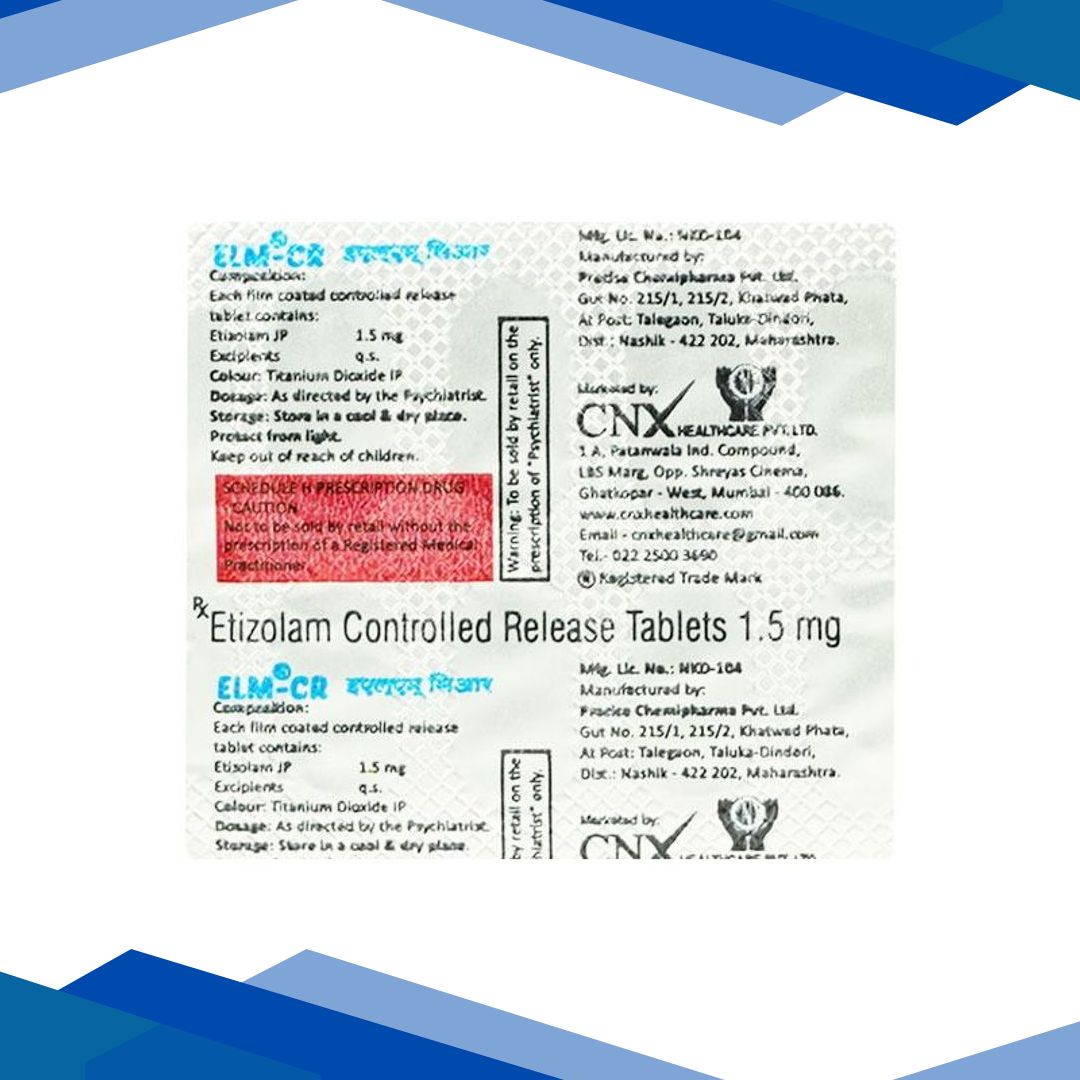
ELM CR 1.5 Tablet 10’s
ELM CR 1.5 Tablet is a combination medicine used to help manage anxiety symptoms, especially when anxiety is linked with low mood or depression. ETIZOLAM is a short-acting anti-anxiety medicine that helps calm the nervous system and may reduce excessive worry, restlessness, and panic-like symptoms. ESCITALOPRAM is an antidepressant that works by increasing serotonin activity in the brain, which can improve mood, ease anxiety, and support emotional balance over time. Together, this medicine may be prescribed for conditions such as generalized anxiety disorder, mixed anxiety and depression, or related emotional distress. It should be used only under medical supervision, as it may cause drowsiness, dizziness, or dependence with improper use.
Description
ELM CR 1.5 Tablet is a combination medicine that brings together two drugs with different but complementary actions in the brain. escitalopram is a selective serotonin reuptake inhibitor, or ssri, which helps increase serotonin activity. serotonin is a chemical messenger that plays an important role in mood, anxiety, sleep, and emotional balance. by improving serotonin signaling over time, escitalopram can help reduce persistent anxiety symptoms and improve overall mood.
etizolam is a medicine that acts on gamma-aminobutyric acid, or gaba, the brain’s main calming neurotransmitter. it has anxiolytic and sedative properties, which means it can help reduce excessive nervousness, restlessness, tension, and short-term anxiety-related distress. in combination with escitalopram, etizolam may provide quicker relief of acute anxiety symptoms while escitalopram works more gradually for longer-term control. because of this, the combination is often considered when a person has significant anxiety symptoms that need both immediate calming and sustained management.
this medicine is generally used for conditions where anxiety is a major concern, sometimes alongside depressed mood or panic symptoms, depending on a clinician’s judgment. it may be suitable for adults who need symptom relief while a longer-acting antidepressant effect develops. however, it must be used carefully because etizolam can cause drowsiness, dependence, and tolerance, while escitalopram may cause side effects related to serotonin activity and should not be stopped or started casually without guidance. the overall benefit and safety depend on the person’s medical history, other medicines, age, and risk factors.
ELM CR 1.5 Tablet should be taken only under medical supervision, since the combination may not be appropriate for everyone. it is not a quick “cure” for anxiety, and it does not replace counseling, sleep hygiene, stress management, or treatment of the underlying cause when present. for many patients, the best results come from a combined approach that includes medication, lifestyle changes, and mental health support.
ingredients
- etizolam: etizolam is an anti-anxiety medicine from the thienodiazepine class. it enhances the calming effect of gaba in the brain, helping reduce excessive worry, tension, irritability, and physical symptoms of anxiety such as restlessness or muscle tightness. it may also help promote short-term relaxation and sleepiness, which can be useful when anxiety is severe, but this sedating effect also increases the risk of impaired alertness and dependence.
- escitalopram: escitalopram is an ssri antidepressant used to improve anxiety and mood symptoms. it works by blocking the reuptake of serotonin so that more serotonin remains available in the brain. this can help reduce persistent worry, panic symptoms, low mood, and emotional instability over time. its benefits usually build gradually and may take several weeks to become more noticeable.
key uses
- generalized anxiety symptoms: may help reduce ongoing worry, nervousness, muscle tension, and inner restlessness in people whose anxiety affects daily functioning.
- panic-related symptoms: can be used where sudden episodes of intense fear or physical anxiety symptoms are present, although treatment should be individualized and monitored carefully.
- anxiety with low mood: helpful when anxiety and depressive symptoms occur together, since escitalopram can support mood while etizolam may provide short-term calming.
- short-term control of severe distress: etizolam may provide early symptom relief while escitalopram takes time to reach its full effect, especially during the initial phase of treatment.
- functional impairment due to anxiety: may be considered when anxiety interferes with sleep, concentration, work, social interaction, or daily tasks.
how to use
ELM CR 1.5 Tablet should be used exactly as prescribed by a healthcare professional. it is usually taken by mouth, and the timing may depend on whether it causes sleepiness or, less commonly, restlessness. some people are advised to take it at a consistent time each day to maintain stable effects and reduce the chance of missed doses. if the medicine makes you drowsy, taking it in the evening may be suggested; if it causes insomnia or activation, your clinician may advise a different schedule. never change the timing, amount, or frequency on your own.
the medicine may be taken with or without food, unless your prescriber gives specific instructions. swallow the tablet with water and avoid crushing or altering it unless a healthcare professional confirms it is safe to do so. it is important to remember that escitalopram usually needs time to work, so symptom improvement may be gradual. etizolam may provide quicker relief, but it should generally be used carefully and for the shortest duration necessary because ongoing use can lead to tolerance and dependence. if your symptoms do not improve, worsen, or become hard to manage, contact your doctor rather than adjusting the medicine yourself.
safety information
- warnings: this combination can cause significant drowsiness, slowed reaction time, impaired concentration, and reduced coordination. avoid driving, operating machinery, or doing tasks that require alertness until you know how it affects you. etizolam may be habit-forming, especially if used regularly or in higher-than-needed amounts. escitalopram can sometimes worsen anxiety at the start of treatment in some people, so close follow-up may be needed. do not stop either medicine suddenly without medical advice, as withdrawal symptoms or return of symptoms can occur.
- side effects: common side effects may include sleepiness, dizziness, fatigue, dry mouth, headache, nausea, constipation, lightheadedness, and mild confusion or slowed thinking. etizolam may also cause next-day grogginess. escitalopram may cause sexual side effects, sweating, tremor, appetite changes, or sleep disturbances. serious side effects can include severe allergic reactions, suicidal thoughts or unusual behavior changes, serotonin syndrome, severe sedation, breathing problems when combined with other depressants, dependence, and withdrawal symptoms if stopped abruptly.
- precautions: use extra caution in older adults, people with liver disease, kidney problems, seizure disorders, a history of substance misuse, depression with suicidal thoughts, breathing disorders, sleep apnea, glaucoma, or a history of mania or bipolar disorder. this combination may not be suitable if you have previously had unusual reactions to benzodiazepine-like medicines or antidepressants. a healthcare professional should review all current medicines and health conditions before starting treatment.
- pregnancy/breastfeeding: this medicine should be used during pregnancy only if the potential benefit clearly outweighs the risk, because both components may affect the baby. benzodiazepine-like medicines may cause sedation or withdrawal symptoms in newborns if used near delivery, and ssris may also be associated with certain neonatal effects. breastfeeding safety should be discussed with a clinician, as both medicines can pass into breast milk and may cause drowsiness or feeding difficulties in the infant.
- interactions: avoid alcohol because it can greatly increase sedation, dizziness, and the risk of accidents or breathing problems. other central nervous system depressants, including sleep medicines, opioid pain medicines, antihistamines that cause drowsiness, muscle relaxants, and some antipsychotic drugs, can also intensify sedation. escitalopram may interact with other serotonergic medicines, raising the risk of serotonin syndrome. certain medicines that affect liver enzymes may alter etizolam levels, and some heart rhythm medicines may increase the risk of qt-related concerns. always inform your doctor about all prescription drugs, over-the-counter medicines, and supplements you use.
additional information
- storage: store in a cool, dry place away from direct sunlight, moisture, and excessive heat. keep the medicine in its original packaging and out of reach of children and pets. do not store it in a bathroom or near a kitchen sink where humidity may be high.
- missed dose: if you miss a dose, take it when you remember unless it is almost time for the next scheduled dose. if the next dose is near, skip the missed dose and continue your regular schedule. do not double the dose to make up for a missed one, as this increases the risk of side effects and excessive sedation.
- overdose: an overdose may cause extreme sleepiness, confusion, poor coordination, slowed breathing, fainting, low blood pressure, or, in severe cases, coma. overdose risk becomes more serious when alcohol or other sedatives are involved. if an overdose is suspected, seek emergency medical help immediately or contact poison control right away.
- habit forming: yes. etizolam can cause dependence, tolerance, and withdrawal symptoms if used for too long or stopped suddenly. this is why the medicine should be used only as directed and reviewed regularly by a healthcare professional. escitalopram is not habit-forming in the same way, but stopping it abruptly may still cause discontinuation symptoms.
frequently asked questions
this information is for educational purposes only and should not be considered medical advice. always consult a qualified healthcare professional before use.
At Gem Pharmacy, we make every effort to provide accurate, expert-written, and thoroughly reviewed information related to medicines. However, this information should not be considered a substitute for professional medical advice, diagnosis, or treatment from a qualified doctor.
The purpose of this information is to educate users and improve communication between patients and healthcare professionals. It should not be used to diagnose or treat any condition.
Always consult a certified healthcare professional before taking any medication.


Related products