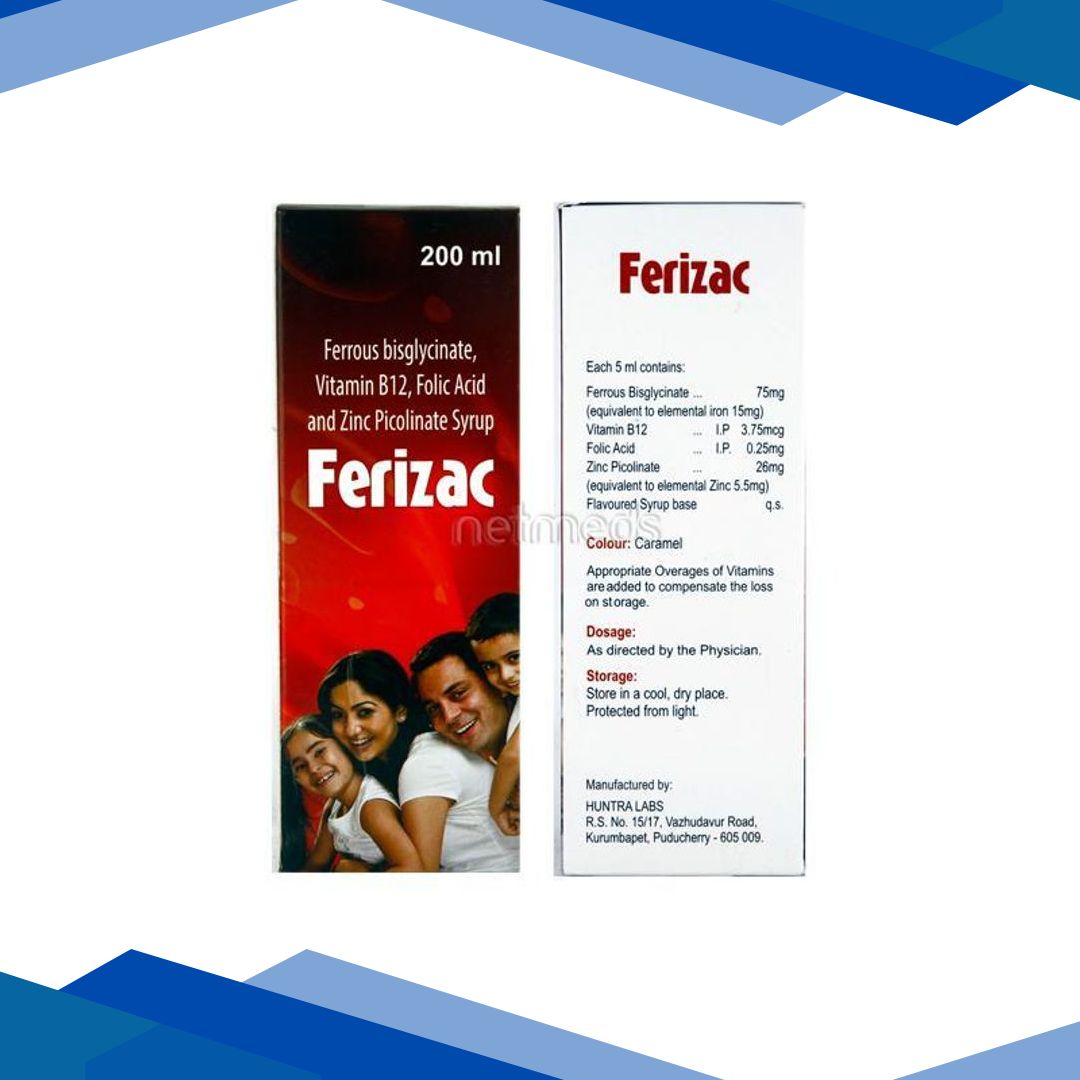
Ferizac Syrup 200ml
❌ Due to high demand, this product is currently out of stock. New stock will be available shortly.
👉 Click here to Buy Same Salt medicine
Ferizac Syrup is a nutritional supplement used to help prevent and treat certain types of anemia and vitamin deficiencies. It combines iron, which supports the production of healthy red blood cells, with folic acid and vitamin B12, which are needed for normal blood cell formation and proper nerve function. Ascorbic acid, also known as vitamin C, helps improve iron absorption in the body. This medicine is commonly used in people with low iron levels, poor diet, increased nutritional needs, or weakness related to anemia. It may also be recommended during pregnancy or recovery when the body needs extra support for blood and overall nutrition. Use it only as advised by a healthcare professional.
Description
Ferizac Syrup is a nutritional and hematinic combination commonly used to help prevent or treat deficiencies of iron, folate, vitamin b12, and vitamin c, especially when these deficiencies contribute to anemia, weakness, poor appetite, or general fatigue. it is designed to support healthy red blood cell production, proper oxygen transport, normal nerve function, and overall metabolic health. in many people, these nutrients are given together because they work in a complementary way: iron is essential for hemoglobin formation, folic acid and vitamin b12 are required for red blood cell maturation and dna synthesis, and ascorbic acid helps improve iron absorption and supports antioxidant defenses.
this combination is often recommended when dietary intake is inadequate, when nutritional needs are increased, or when blood tests suggest a deficiency. it may be used during periods of recovery from illness, in pregnancy or lactation when nutrient demands are higher, or in people with certain chronic conditions that can affect absorption or intake of vitamins and minerals. it is not a cure for every type of anemia, and it should be used based on the cause of the deficiency. for example, anemia caused by blood loss, chronic disease, inherited disorders, or major vitamin absorption problems may need additional evaluation and treatment.
the mechanism of this medicine is based on replacing key nutrients the body needs to make healthy blood cells and maintain energy production. iron helps form hemoglobin, the protein in red blood cells that carries oxygen. folic acid and vitamin b12 support the development and division of red blood cell precursors in the bone marrow, helping prevent megaloblastic changes. ascorbic acid enhances the absorption of non-heme iron from the gastrointestinal tract and also acts as an antioxidant, helping protect cells from oxidative damage. because these ingredients act together, the combination may improve laboratory values and symptoms related to deficiency over time when used appropriately.
who it is for depends on the clinical situation. it may be suitable for people with nutritional anemia, low iron stores, folate deficiency, or mixed deficiency states, as well as for those who have increased requirements due to growth, pregnancy, or certain medical conditions. however, it should not be taken casually without considering the underlying cause of anemia. a healthcare professional may advise blood tests, dietary review, and sometimes other investigations before or during treatment to ensure the medicine is truly needed and to monitor response safely.
ingredients
- ascorbic acid: also known as vitamin c, this ingredient helps increase the absorption of iron from the intestine, making the iron component more effective. it also supports immune function, collagen formation, wound healing, and antioxidant protection. in deficiency states, vitamin c can contribute to fatigue, poor healing, and weakened defenses.
- folic acid: this is the synthetic form of folate, an essential b vitamin needed for dna synthesis, cell division, and the formation of healthy red blood cells. low folate levels can lead to megaloblastic anemia, weakness, and, in pregnancy, a higher risk of neural tube defects in the baby if deficiency is present early in gestation.
- iron: iron is a central component of hemoglobin and myoglobin. it is required for oxygen transport, energy metabolism, and many enzyme systems. iron deficiency is one of the most common causes of anemia and may produce symptoms such as tiredness, pale skin, reduced exercise tolerance, and brittle nails.
- vitamin b12: vitamin b12 is necessary for normal red blood cell formation, neurological function, and dna synthesis. a deficiency can cause megaloblastic anemia, numbness or tingling, balance problems, memory issues, and fatigue. adequate b12 is especially important because untreated deficiency can lead to potentially irreversible nerve damage.
key uses
- prevention and treatment of nutritional anemia: this combination is commonly used when anemia is linked to low iron, folate, or vitamin b12 intake or absorption. it helps restore the nutrients needed for healthy red blood cell production.
- correction of mixed nutrient deficiencies: some people have more than one deficiency at the same time, especially those with poor diet, increased nutrient needs, or gastrointestinal issues. the combination addresses multiple gaps together rather than treating only one cause.
- support during pregnancy and lactation: nutrient demands rise significantly during pregnancy and breastfeeding. folic acid, iron, and vitamin b12 are important for maternal blood health and fetal development, while vitamin c supports iron absorption.
- recovery from illness or blood loss: after illness, surgery, or blood loss, the body may need extra iron and vitamins to rebuild blood stores and support recovery, depending on medical advice.
- support in poor dietary intake or malnutrition: people with limited diets, reduced appetite, or nutritional risk may benefit from this supplement when a clinician identifies or suspects deficiency.
how to use
use this medicine exactly as directed by a healthcare professional or according to the product label. it is usually taken by mouth, and many people tolerate it better when taken after food, which can reduce stomach upset and nausea from the iron content. swallow the tablet or capsule with water, and do not crush or chew it unless the formulation specifically allows it. because iron can interfere with the absorption of certain foods and medicines, it is often best taken at a consistent time each day to support routine and improve adherence.
if stomach irritation occurs, taking it with a light meal may help, although food can sometimes slightly reduce iron absorption. avoid taking it together with tea, coffee, milk, calcium supplements, or antacid products unless a clinician has advised otherwise, because these can reduce iron absorption. if you also take other medicines, especially antibiotics, thyroid medicines, or medications for bone health, timing matters and spacing may be necessary. for best results, follow individualized instructions from a pharmacist or doctor, especially if you have anemia, digestive disease, kidney disease, or are pregnant.
safety information
- warnings: this product should be used carefully in people with a history of iron overload, such as hemochromatosis, hemosiderosis, or repeated blood transfusions, because excess iron can be harmful. it should also be used cautiously in those with unexplained anemia, since treating without identifying the cause may delay proper diagnosis. vitamin b12 deficiency can sometimes be masked by folic acid, so both deficiency patterns should be assessed appropriately when symptoms suggest anemia or nerve involvement.
- side effects: common side effects include nausea, stomach discomfort, constipation, diarrhea, dark stools, bloating, or a metallic taste. the iron component is often responsible for digestive upset and stool discoloration. less commonly, some people may experience vomiting or reduced appetite. serious side effects are uncommon but can include allergic reactions, severe abdominal pain, persistent vomiting, signs of iron overload, or neurologic symptoms if an underlying b12 deficiency is not properly treated.
- precautions: use caution if you have peptic ulcer disease, inflammatory bowel disease, liver disorders, kidney disease, anemia of chronic disease, thalassemia, sickle cell disease, or a history of gastrointestinal sensitivity to iron. children should only use iron-containing products under medical guidance because accidental overdose can be dangerous. people with known b12 malabsorption, such as pernicious anemia, may need additional evaluation or different treatment forms.
- pregnancy/breastfeeding: this combination is commonly used in pregnancy or breastfeeding when a healthcare professional recommends it, because nutrient needs are increased. however, it should still be used in the correct amount and only when appropriate. excessive or unnecessary supplementation is not advised, so pregnant or breastfeeding individuals should follow professional guidance rather than self-medicating.
- interactions: iron can interact with several medicines, reducing absorption of some antibiotics such as tetracyclines and fluoroquinolones, thyroid hormone replacement, bisphosphonates, and some medications for parkinson’s disease. antacids, calcium, magnesium, zinc, tea, coffee, and dairy products may also reduce iron absorption. alcohol does not directly interact with all ingredients but may worsen nutritional deficiencies, stomach irritation, or adherence problems, so limiting alcohol is generally wise. always check for interactions if you take multiple prescription or over-the-counter products.
additional information
- storage: store in a cool, dry place away from direct sunlight, heat, and moisture. keep the container tightly closed and out of reach of children. do not store in the bathroom if humidity is high. check the expiration date before use and discard expired products safely.
- missed dose: if a dose is missed, take it when you remember unless it is almost time for the next scheduled dose. do not double the dose to make up for a missed one, as that may increase the risk of side effects or accidental overdose. if you often forget doses, using a routine reminder may help.
- overdose: too much iron can be dangerous, especially in children, and can cause vomiting, abdominal pain, diarrhea, drowsiness, weakness, or more severe complications in serious cases. an overdose of vitamins is less likely at usual amounts but still should not be ignored if large quantities are taken. if an overdose is suspected, seek emergency medical help immediately or contact poison control right away.
- habit forming: no, this medicine is not habit forming. it is a nutritional supplement and hematinic preparation, not a medicine that causes dependence. however, it should still be used only when needed and under appropriate guidance.
frequently asked questions
Q: what is Ferizac Syrup used for?
A: it is mainly used to help prevent or treat anemia and nutritional deficiencies involving iron, folate, vitamin b12, and vitamin c. it supports red blood cell formation and overall blood health when these nutrients are low.
Q: can this medicine improve tiredness and weakness?
A: if tiredness and weakness are caused by one or more nutrient deficiencies covered by this product, it may help over time. if symptoms are due to another condition such as thyroid disease, infection, bleeding, or chronic illness, a healthcare professional should evaluate the cause.
Q: how long does it take to work?
A: the response depends on the severity and cause of the deficiency. some people begin to feel better gradually over days to weeks, but replenishing iron stores and correcting anemia can take longer. blood tests may be needed to monitor improvement.
Q: should it be taken with food or on an empty stomach?
A: it is often better tolerated with food, though iron absorption may be slightly reduced. if stomach upset occurs, taking it after meals may be more comfortable. follow the advice of your healthcare professional for the best balance between absorption and tolerability.
Q: why do my stools look dark after taking this medicine?
A: dark or blackish stools are a common effect of oral iron and usually are not harmful. however, if stools are tarry, accompanied by severe pain, vomiting, or weakness, medical evaluation is important because gastrointestinal bleeding can sometimes look similar.
Q: can i take it with milk, tea, or coffee?
A: it is generally better to avoid taking iron with milk, tea, or coffee because these can reduce absorption. calcium-containing foods and supplements may also interfere. water is usually the preferred choice unless otherwise advised.
Q: is this safe for people with vitamin b12 deficiency?
A: it can contain vitamin b12 and may be helpful in some deficiency states, but true b12 deficiency sometimes requires a specific treatment plan. if nerve symptoms, severe anemia, or absorption problems are present, a healthcare professional should guide therapy.
Q: can children use this product?
A: children should use iron-containing products only under medical supervision because iron overdose can be very dangerous. a clinician should confirm that the product and amount are appropriate for the child's age and condition.
Q: what if i have constipation from this medicine?
A: constipation is a common iron-related side effect. drinking enough fluids, eating fiber-rich foods, and staying active may help. if constipation is severe or persistent, ask a healthcare professional whether a different formulation or approach is needed.
Q: can i take it with other vitamins or multivitamins?
A: sometimes, but not always. additional supplements may cause unnecessary overlap, especially with iron or folic acid. it is best to review all supplements with a pharmacist or doctor to avoid excessive intake or interactions.
Q: why is folic acid included with iron?
A: folic acid is included because red blood cell production requires both iron and folate. when either is low, anemia can occur, and combining them may support more complete correction when both deficiencies contribute.
Q: does vitamin c really help iron absorption?
A: yes. ascorbic acid can improve the absorption of non-heme iron from the digestive tract. that is one reason vitamin c is often paired with iron in supplements.
Q: can this medicine replace a healthy diet?
A: no. it is meant to supplement the diet, not replace it. balanced meals with iron-rich foods, folate sources, vitamin b12-containing foods, and vitamin c-rich fruits and vegetables are still important.
Q: what should i do if i feel nauseous after taking it?
A: nausea can happen, especially because of iron. taking it with food, avoiding taking it on an empty stomach, and spacing it away from irritating beverages may help. if nausea is severe or persistent, seek medical advice.
Q: when should i consult a doctor before using this product?
A: you should consult a doctor before use if you have unexplained anemia, stomach ulcers, kidney disease, liver disease, a history of iron overload, pregnancy, breastfeeding, or if you are taking multiple medicines that may interact with iron.
this information is for educational purposes only and should not be considered medical advice. always consult a qualified healthcare professional before use.
At Gem Pharmacy, we make every effort to provide accurate, expert-written, and thoroughly reviewed information related to medicines. However, this information should not be considered a substitute for professional medical advice, diagnosis, or treatment from a qualified doctor.
The purpose of this information is to educate users and improve communication between patients and healthcare professionals. It should not be used to diagnose or treat any condition.
Always consult a certified healthcare professional before taking any medication.


Related products