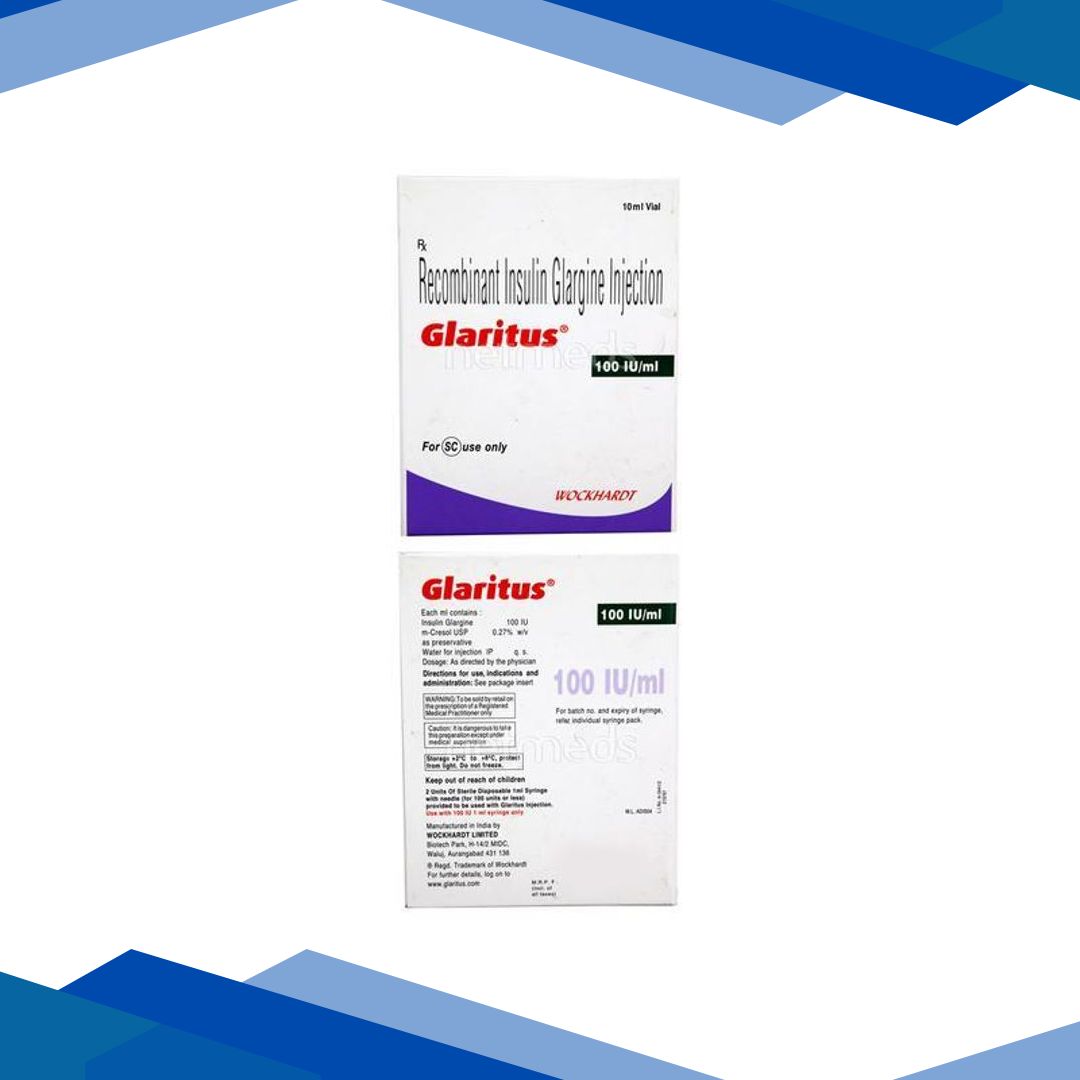
Glaritus 100IU Injection 1X10ml
❌ Due to high demand, this product is currently out of stock. New stock will be available shortly.
👉 Click here to Buy Same Salt medicine
Glaritus 100IU Injection is a prescription medicine used to help control blood sugar levels in adults with type 2 diabetes. It combines two medicines that work in different ways. Insulin glargine is a long-acting insulin that helps lower blood sugar steadily over time, while lixisenatide helps the body release insulin after meals and reduces the amount of sugar released from the liver. Together, they can improve overall glucose control throughout the day. This medicine is mainly used when diet, exercise, and other diabetes medicines are not enough to manage blood sugar well. It is not used for type 1 diabetes or diabetic ketoacidosis. Regular medical supervision is important to monitor blood sugar and adjust treatment safely.
Description
Glaritus 100IU Injection is a combination medicine used to improve blood sugar control in adults with type 2 diabetes when diet, exercise, and a single diabetes medicine are not enough. it combines two different medicines that work in complementary ways: insulin glargine, which provides long-acting basal insulin coverage over many hours, and lixisenatide, which helps the body lower blood sugar after meals and supports overall glucose control. because these medicines act through different mechanisms, the combination can help reduce both fasting blood sugar and post-meal spikes.
insulin glargine is a long-acting insulin analog. it is designed to release slowly after injection, helping maintain a more stable background level of insulin throughout the day and night. this is especially important in type 2 diabetes, where the body either does not produce enough insulin or does not use insulin properly. by replacing or supplementing insulin, it helps glucose move from the bloodstream into the body’s cells for energy and helps reduce excessive glucose production by the liver.
lixisenatide is a glp-1 receptor agonist, which means it mimics the action of a natural hormone involved in blood sugar regulation. it stimulates insulin release when blood sugar is elevated, reduces glucagon secretion, and slows stomach emptying, which helps blunt the rise in blood sugar after meals. it may also reduce appetite in some people, which can support weight-related benefits for certain patients. however, this medicine is not intended for type 1 diabetes or diabetic ketoacidosis, and it should be used only under the guidance of a healthcare professional.
this combination is generally prescribed for adults with type 2 diabetes who need stronger glucose-lowering treatment than lifestyle changes alone or who are not adequately controlled on oral medicines or basal insulin alone. it is often considered when both fasting and post-meal glucose need improvement. because it contains insulin, there is a risk of hypoglycemia, and because it contains a glp-1 receptor agonist, gastrointestinal side effects are common, especially when starting treatment or increasing therapy. careful monitoring is important to use it safely and effectively.
ingredients
- insulin glargine: a long-acting insulin that provides steady basal insulin coverage. it helps lower fasting and between-meal blood sugar by supporting glucose uptake into cells and reducing glucose production by the liver. its prolonged action allows once-daily use in many treatment plans, helping maintain more stable blood glucose control over time.
- lixisenatide: a glp-1 receptor agonist that improves blood sugar control after meals and in the fasting state. it enhances glucose-dependent insulin secretion, lowers glucagon levels when blood sugar is high, and slows gastric emptying, which helps reduce post-meal glucose surges. it may also contribute to a feeling of fullness.
- inactive ingredients: the exact excipients may vary by brand or formulation. these components help stabilize the medicine, maintain sterility, and support proper delivery through injection. patients with allergies or sensitivities should review the product label and consult a pharmacist or clinician if needed.
key uses
- type 2 diabetes mellitus: used to improve blood sugar control in adults with type 2 diabetes when a single medication is not enough. it helps address both fasting and meal-related glucose elevations.
- combination therapy when multiple mechanisms are needed: helpful for patients who may benefit from both basal insulin action and glp-1 receptor agonist effects in one treatment approach, potentially reducing the need for separate injections.
- when blood sugar remains uncontrolled on existing therapy: may be prescribed if diet, exercise, and oral medications or basal insulin alone do not adequately control glucose levels. it is intended to support overall glycemic management, not to cure diabetes.
how to use
Glaritus 100IU Injection is given as a subcutaneous injection, meaning it is injected under the skin, not into a vein or muscle. it is usually administered once daily at about the same time each day, following the instructions provided by the prescribing clinician. the injection is typically given in the abdomen, thigh, or upper arm, and the injection site should be rotated to reduce the risk of skin irritation, thickening, or lumps under the skin. the medicine should be used exactly as prescribed, and patients should not change the timing, amount, or frequency without medical advice.
it is important to learn the correct injection technique from a healthcare professional before using this medicine at home. the pen or device should be checked carefully, and the solution should be inspected according to product instructions. general diabetes care also matters: regular blood sugar monitoring, following a meal plan, staying physically active as advised, and attending follow-up appointments are all important. because the medicine can lower blood sugar, meals should not be skipped unless specifically advised by a clinician. if other diabetes medicines, especially insulin or sulfonylureas, are used together, the risk of low blood sugar may be higher and may require monitoring or adjustment by the prescriber.
safety information
- warnings: this medicine can cause low blood sugar, especially if meals are delayed or skipped, alcohol is consumed, exercise is increased unexpectedly, or other glucose-lowering medicines are used together. severe hypoglycemia can be dangerous and may cause confusion, fainting, seizures, or loss of consciousness. it should not be used to treat type 1 diabetes or diabetic ketoacidosis. pancreatitis has been reported with glp-1 receptor agonists, so persistent severe abdominal pain, with or without vomiting, needs urgent medical evaluation. dehydration can occur if nausea, vomiting, or diarrhea is significant.
- side effects: common effects include nausea, vomiting, diarrhea, decreased appetite, stomach discomfort, constipation, injection-site reactions, and low blood sugar. some people may experience weight loss, headache, dizziness, or mild swelling. serious side effects may include severe hypoglycemia, pancreatitis, allergic reactions, gallbladder problems, kidney function worsening, and, rarely, severe gastrointestinal symptoms that lead to dehydration.
- precautions: use caution in people with a history of pancreatitis, kidney disease, severe gastrointestinal disease, or frequent hypoglycemia. it may not be suitable for those with a personal or family history of medullary thyroid carcinoma or multiple endocrine neoplasia syndrome type 2, depending on product labeling and clinical judgment. extra care is needed in older adults, people with irregular eating patterns, and those who have trouble recognizing hypoglycemia.
- pregnancy/breastfeeding: blood sugar control is very important during pregnancy, but the safety of this combination during pregnancy may be limited and should be assessed by a clinician. breastfeeding safety should also be discussed with a healthcare professional, as treatment needs may differ during lactation. do not use during pregnancy or breastfeeding without medical guidance.
- interactions: other insulin products, sulfonylureas, and some diabetes medicines can increase the risk of low blood sugar. alcohol can also increase hypoglycemia risk and may make blood sugar harder to predict. medicines that affect stomach emptying or gastrointestinal function may alter absorption of oral medications. always tell the healthcare provider about all prescription drugs, over-the-counter products, supplements, and alcohol use.
additional information
- storage: store according to the product label, usually in a refrigerator before first use and protected from freezing and excessive heat. do not freeze the medicine, and do not use it if it has been frozen. after opening or first use, some products may be kept at room temperature for a limited time as directed by the manufacturer. keep the pen or container capped and out of direct light. always follow the specific storage instructions for the exact product.
- missed dose: if a dose is missed, follow the instructions given by the prescribing clinician or the product labeling. in general, it should not be doubled to make up for a missed dose. blood sugar should be monitored, and advice should be sought if there is uncertainty about timing or if multiple doses have been missed.
- overdose: an overdose can cause severe hypoglycemia, which may lead to sweating, shakiness, rapid heartbeat, hunger, confusion, blurred vision, weakness, or loss of consciousness. severe nausea, vomiting, and dehydration may also occur. if overdose is suspected, seek emergency medical help immediately. fast-acting sugar may be needed if the person is conscious, but severe cases may require urgent medical treatment and monitoring.
- habit forming: no. Glaritus 100IU Injection is not habit-forming and does not cause dependence. however, it must be used regularly and only as prescribed to maintain blood sugar control safely.
frequently asked questions
Q: what is Glaritus 100IU Injection used for?
A: it is used to improve blood sugar control in adults with type 2 diabetes, especially when one medicine and lifestyle measures are not enough to manage glucose levels adequately.
Q: how does this medicine work?
A: it combines long-acting insulin glargine, which provides steady background insulin, with lixisenatide, which helps lower post-meal blood sugar by improving insulin release, reducing glucagon, and slowing stomach emptying.
Q: can it cause low blood sugar?
A: yes. because it contains insulin, it can cause hypoglycemia, particularly if meals are missed, alcohol is consumed, or other diabetes medicines are used. patients should know the symptoms and how to treat low blood sugar.
Q: does it cause weight gain or weight loss?
A: effects vary. insulin may sometimes be associated with weight gain, while lixisenatide may reduce appetite and contribute to modest weight loss in some people. the overall effect differs from person to person.
Q: can it be used for type 1 diabetes?
A: no. this medicine is not used for type 1 diabetes or diabetic ketoacidosis. it is intended for adults with type 2 diabetes only, unless a healthcare professional specifically advises otherwise based on medical judgment.
Q: what are the most common side effects?
A: common side effects include nausea, vomiting, diarrhea, constipation, decreased appetite, and low blood sugar. injection-site reactions may also occur.
Q: what should i do if i feel symptoms of hypoglycemia?
A: check blood sugar if possible and consume a fast-acting source of sugar if low blood sugar is suspected, following your healthcare provider's instructions. seek urgent help if symptoms are severe, recurrent, or if the person becomes confused or unconscious.
Q: why is nausea common with this medicine?
A: lixisenatide slows stomach emptying and acts on pathways that can affect appetite and digestion. these effects can cause nausea, especially when starting treatment, but symptoms may improve over time.
Q: can i drink alcohol while using this medicine?
A: alcohol can increase the risk of low blood sugar and can make glucose levels harder to manage. if you drink alcohol, do so only after discussing safe limits with your healthcare provider.
Q: how should i inject this medicine?
A: it is injected under the skin as directed by a healthcare professional, usually once daily. common injection sites include the abdomen, thigh, or upper arm, and the site should be rotated to reduce skin problems.
Q: what if i have vomiting or severe stomach pain?
A: persistent vomiting or severe abdominal pain should be taken seriously because it may indicate pancreatitis, dehydration, or another medical problem. contact a healthcare professional promptly or seek emergency care if symptoms are severe.
Q: can this medicine be used during pregnancy?
A: pregnancy use should only be decided by a clinician, because diabetes management in pregnancy requires careful individualized treatment. do not start or continue it during pregnancy without medical guidance.
Q: will this medicine affect my kidneys?
A: it usually does not directly damage the kidneys, but dehydration from vomiting or diarrhea can worsen kidney function, especially in people with pre-existing kidney disease. monitoring may be needed in at-risk patients.
Q: how soon does it start working?
A: some glucose-lowering effects begin after use, but full benefit depends on regular daily treatment and dose adjustment by the prescriber. blood sugar improvement is usually assessed over time using glucose monitoring and follow-up visits.
Q: should i stop other diabetes medicines when starting this one?
A: not necessarily. your healthcare provider may continue, adjust, or stop other medicines depending on your blood sugar levels and risk of hypoglycemia. never change your treatment plan without medical advice.
Q: does it require blood sugar monitoring?
A: yes. regular glucose monitoring is important to assess effectiveness, detect hypoglycemia, and guide treatment decisions. your provider may also recommend periodic hba1c testing.
Q: what if i miss a meal after taking it?
A: missing a meal can increase the chance of low blood sugar, especially because the medicine contains insulin. monitor for symptoms and follow your clinician’s instructions if you are unable to eat.
Q: can it be used with other insulin products?
A: sometimes it may be combined with other diabetes medicines, but this should only be done under medical supervision because the risk of hypoglycemia can increase. treatment plans are individualized.
Q: is this medicine the same as a cure for diabetes?
A: no. it helps manage blood sugar but does not cure diabetes. ongoing lifestyle management, monitoring, and follow-up care remain essential.
Q: when should i call a doctor immediately?
A: seek urgent medical help for severe low blood sugar, signs of allergic reaction, severe abdominal pain, persistent vomiting, trouble breathing, or any sudden worsening of your condition.
this information is for educational purposes only and should not be considered medical advice. always consult a qualified healthcare professional before use.
At Gem Pharmacy, we make every effort to provide accurate, expert-written, and thoroughly reviewed information related to medicines. However, this information should not be considered a substitute for professional medical advice, diagnosis, or treatment from a qualified doctor.
The purpose of this information is to educate users and improve communication between patients and healthcare professionals. It should not be used to diagnose or treat any condition.
Always consult a certified healthcare professional before taking any medication.


Related products
Toujeo Solostar 300IU Injection 1’S