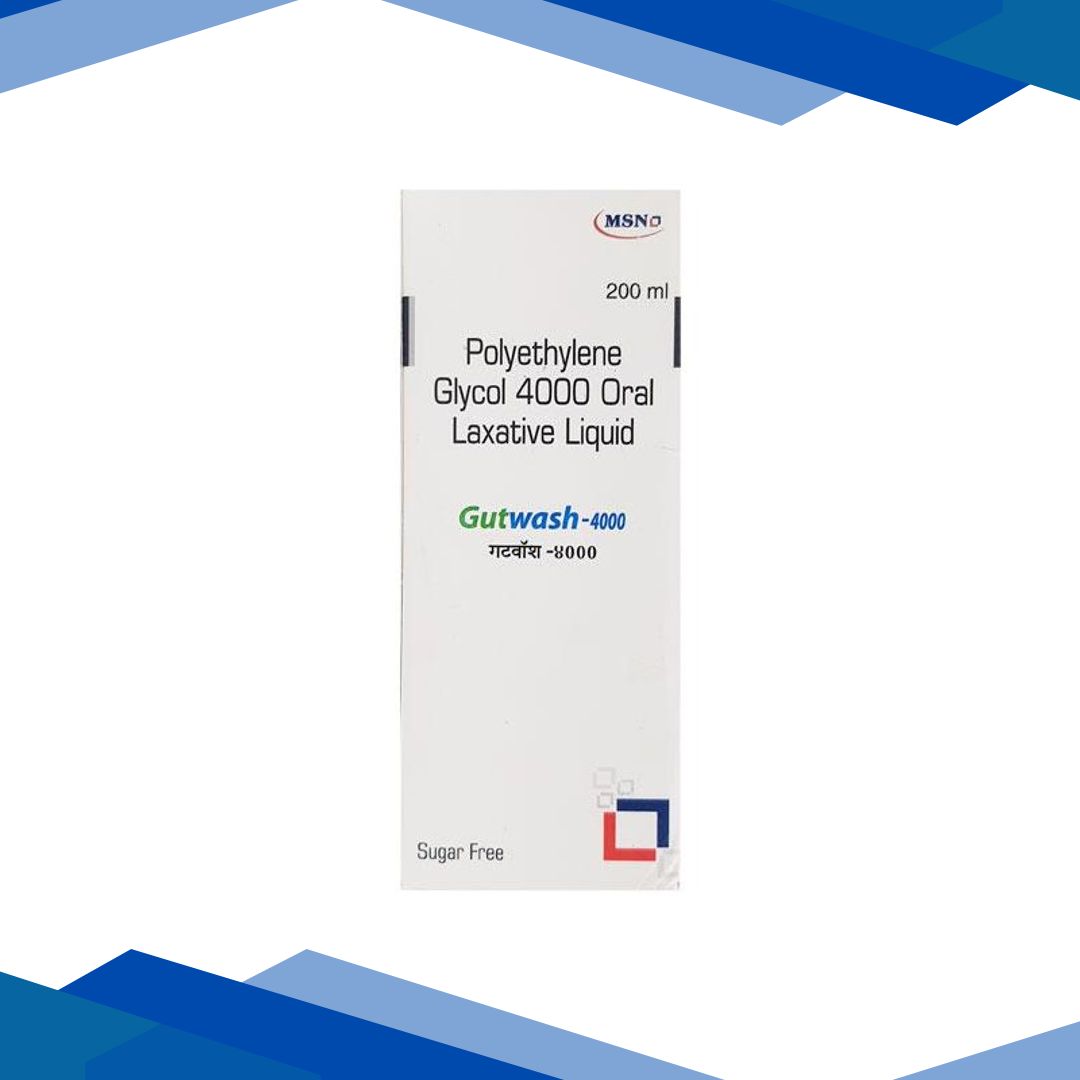
GUTWASH 4000 Sugar Free Liquid 200ml
GUTWASH 4000 Sugar Free Liquid is a combination medicine used to relieve constipation and help keep bowel movements regular. POLYETHYLENE GLYCOL works by holding water in the stool, which makes it softer and easier to pass. ISPAGHULA HUSK is a natural fiber that absorbs water and adds bulk to the stool, helping the intestines move waste more smoothly. Together, they support gentle and effective relief from hard, infrequent stools and may also be used when a softer bowel movement is needed. This medicine is commonly recommended for people with occasional constipation, irregular bowel habits, or difficulty passing stool. It should be used as advised by a healthcare professional, especially if symptoms continue or constipation is long-lasting.
Description
GUTWASH 4000 Sugar Free Liquid is a combination medicine commonly used to relieve constipation and support smoother bowel movements. it brings together two well-known types of laxative ingredients that work in different but complementary ways. polyethylene glycol helps hold water in the stool, while ispaghula husk adds bulk and absorbs fluid in the intestine. together, they can make stools softer, easier to pass, and more regular without forcing the bowel to empty in an abrupt or harsh way.
this medicine is often suitable for people who have occasional constipation, chronic constipation, or constipation related to low fiber intake, reduced physical activity, travel, lifestyle changes, or certain medications. because it works by improving stool consistency and intestinal transit rather than stimulating the bowel forcefully, it is generally considered a gentler option for many patients. however, as with all laxative products, correct use, adequate fluid intake, and attention to warning signs are important for safe and effective results.
GUTWASH 4000 Sugar Free Liquid is not a quick “instant relief” product for everyone. it may take some time to show benefit, especially when constipation is severe or long-standing. the medicine is intended to support natural bowel function and should be used as part of an overall approach that may include drinking enough fluids, eating a balanced diet with fiber, staying physically active, and identifying any underlying cause of constipation when symptoms persist. if constipation is accompanied by abdominal pain, vomiting, blood in the stool, unexplained weight loss, or a sudden change in bowel habits, medical evaluation is important.
ingredients
- polyethylene glycol: polyethylene glycol is an osmotic laxative. it works by attracting and retaining water in the bowel, which softens hard stools and increases stool volume. this helps stimulate a more natural bowel movement and reduces straining. it is widely used because it is generally effective and does not usually cause harsh bowel stimulation when used appropriately.
- ispaghula husk: ispaghula husk is a soluble fiber derived from plant seed husks. it absorbs water and forms a soft, gel-like mass in the intestine. this bulk-forming action increases stool size, helps trigger bowel movement reflexes, and supports regularity. it can also be useful for people who need to increase dietary fiber intake under medical guidance.
key uses
- constipation relief: this medicine is used to ease infrequent, hard, or difficult-to-pass stools. by softening stool and increasing bulk, it can reduce straining and discomfort during bowel movements.
- improving bowel regularity: it may help people who struggle with irregular bowel habits by supporting more predictable stool passage over time. this is especially helpful when low fiber intake or reduced fluid intake contributes to constipation.
- constipation associated with lifestyle factors: it can be useful when constipation occurs due to travel, sedentary habits, dietary changes, or temporary routine disruptions. it helps restore more normal bowel function while underlying habits are addressed.
- support in chronic constipation management: in some people with long-term constipation, it may be used as part of a broader bowel management plan. ongoing constipation should still be evaluated if symptoms do not improve or if other warning signs are present.
how to use
GUTWASH 4000 Sugar Free Liquid is generally taken by mouth as directed by a healthcare professional or according to the product label. it is usually mixed with water or another suitable liquid before swallowing, because both ingredients need fluid to work properly. drinking enough water is especially important with ispaghula husk, since insufficient fluid intake can make stools harder and may increase the risk of choking or intestinal blockage in susceptible individuals.
this medicine is commonly used once or as directed on a regular schedule, depending on the reason for use and the severity of constipation. many people notice improvement after some time, but the response can vary from person to person. it is best not to take it immediately before lying down and not to use it dry. after taking the medicine, continuing to drink fluids during the day may support its effect. if constipation does not improve after a reasonable period, or if it becomes worse, medical advice should be sought rather than increasing use on your own.
for best results, try to take it consistently at about the same time if it has been recommended for ongoing use. do not combine it with other laxatives unless advised by a healthcare professional. if you are taking other medicines, it may be helpful to separate them in time from GUTWASH 4000 Sugar Free Liquid because fiber-containing products can sometimes affect absorption of certain oral medicines. when in doubt, ask a pharmacist or doctor for individualized instructions.
safety information
- warnings: use with adequate fluids, because dehydration can reduce effectiveness and increase the chance of side effects. stop use and seek medical attention if severe abdominal pain, vomiting, rectal bleeding, fever, or signs of bowel obstruction occur. do not use for a long period without medical supervision, especially if constipation is persistent or unexplained. if symptoms suddenly change, a healthcare professional should evaluate the cause rather than relying only on laxatives.
- side effects: common side effects may include bloating, gas, abdominal fullness, mild cramps, nausea, and a feeling of urgency. some people may experience loose stools or diarrhea if the product is not tolerated well. less commonly, excessive gas or abdominal discomfort may occur as the bowel adjusts. serious side effects are uncommon but may include allergic reactions, severe diarrhea with dehydration, swallowing difficulty, or intestinal blockage, particularly if the medicine is taken without enough liquid or in people with certain bowel conditions.
- precautions: people with bowel obstruction, severe abdominal pain of unknown cause, swallowing problems, significant nausea or vomiting, or a history of intestinal narrowing should avoid use unless specifically directed by a clinician. caution is also needed in people with inflammatory bowel conditions, severe dehydration, or electrolyte imbalance. older adults, frail patients, and those with reduced fluid intake may be more sensitive to the effects and should use it carefully.
- pregnancy/breastfeeding: this medicine is often considered to have a low risk of systemic absorption because both ingredients mainly act within the digestive tract. however, pregnancy and breastfeeding require individualized assessment. constipation is common during pregnancy, but it is still important to confirm suitability with a doctor or pharmacist before use, especially if symptoms are severe, persistent, or associated with pain.
- interactions: GUTWASH 4000 Sugar Free Liquid may reduce or delay absorption of some oral medicines if taken at the same time. this can matter for drugs that need reliable absorption, such as certain thyroid medicines, iron supplements, some diabetes treatments, and other prescription products. it is also wise to avoid taking it too close to other medicines unless a healthcare professional advises otherwise. alcohol does not directly interact with the ingredients, but dehydration from alcohol intake can worsen constipation and reduce the benefit of treatment.
additional information
- storage: store the medicine in a cool, dry place away from direct sunlight, excessive heat, and moisture. keep the container tightly closed and out of reach of children. do not use it if the product looks contaminated, has changed in appearance, or has passed its expiration date.
- missed dose: if a dose is missed, take it when remembered if it is still appropriate to do so. if it is nearly time for the next dose, skip the missed dose and continue with the regular schedule. do not take extra amounts to make up for a missed dose unless a healthcare professional specifically instructs you to do so.
- overdose: taking too much may lead to diarrhea, abdominal cramping, bloating, nausea, and dehydration. in severe cases, overuse may cause weakness, dizziness, or electrolyte disturbances. if an overdose is suspected, stop taking the medicine, drink fluids if appropriate, and seek medical advice promptly. emergency help may be needed if there is severe vomiting, confusion, fainting, severe pain, or inability to pass stool or gas.
- habit forming: no. this medicine is not considered habit forming. however, long-term reliance on laxatives without addressing the underlying cause of constipation is not ideal. persistent symptoms should be evaluated by a healthcare professional to rule out medical conditions that may need different treatment.
frequently asked questions
Q: what is GUTWASH 4000 Sugar Free Liquid used for?
A: it is mainly used to relieve constipation and help make stools softer, bulkier, and easier to pass. it may also help improve regular bowel habits when constipation is related to low fiber intake, lifestyle factors, or similar temporary causes.
Q: how does GUTWASH 4000 Sugar Free Liquid work?
A: polyethylene glycol draws water into the bowel to soften stool, while ispaghula husk absorbs liquid and increases stool bulk. together, they help stimulate natural bowel movements and reduce straining.
Q: how long does it take to work?
A: the time to benefit can vary. some people notice improvement after some time, while others may need consistent use as directed. it is not meant to be a harsh stimulant laxative and may work more gradually.
Q: do i need to drink water with this medicine?
A: yes. adequate fluid intake is very important, especially because ispaghula husk needs water to swell properly. not drinking enough fluids may reduce effectiveness and can increase the risk of choking or blockage.
Q: can i take it every day?
A: some people may use it regularly under medical guidance, especially for ongoing constipation. however, long-term use should be supervised if symptoms persist, because chronic constipation may need evaluation for an underlying cause.
Q: what are the common side effects?
A: common side effects include bloating, gas, abdominal fullness, mild cramps, nausea, and sometimes loose stools. these effects are usually mild, but if they are severe or persistent, medical advice should be sought.
Q: who should not use this medicine?
A: people with bowel obstruction, severe unexplained abdominal pain, swallowing problems, or severe dehydration should avoid it unless a clinician says otherwise. caution is also needed in people with certain intestinal disorders.
Q: can it be taken with other medicines?
A: it may affect the absorption of some oral medicines, so spacing it apart from other drugs is often recommended. ask a pharmacist or doctor for guidance if you take regular prescription medicines, vitamins, or supplements.
Q: is it safe during pregnancy?
A: it is often considered a low-systemic-absorption option, but pregnancy should always be discussed with a healthcare professional before use. constipation in pregnancy is common, and the best option depends on your symptoms and medical history.
Q: is this medicine habit forming?
A: no, it is not habit forming. still, using laxatives too often without addressing diet, fluids, activity, or other causes of constipation is not recommended.
Q: what should i do if i get diarrhea after taking it?
A: if diarrhea occurs, stop taking the product and increase fluid intake if appropriate. if diarrhea is severe, persistent, or accompanied by weakness, dizziness, or signs of dehydration, seek medical advice promptly.
Q: can this medicine cause stomach pain?
A: mild bloating or cramping can happen, especially when starting treatment. severe or worsening abdominal pain is not normal and should be evaluated by a healthcare professional.
this information is for educational purposes only and should not be considered medical advice. always consult a qualified healthcare professional before use.
At Gem Pharmacy, we make every effort to provide accurate, expert-written, and thoroughly reviewed information related to medicines. However, this information should not be considered a substitute for professional medical advice, diagnosis, or treatment from a qualified doctor.
The purpose of this information is to educate users and improve communication between patients and healthcare professionals. It should not be used to diagnose or treat any condition.
Always consult a certified healthcare professional before taking any medication.


Related products

Normo Tears Eye Drops 10ml

SYSTANE HYDRATION PF LUBRICANT Eye Drops 10ml