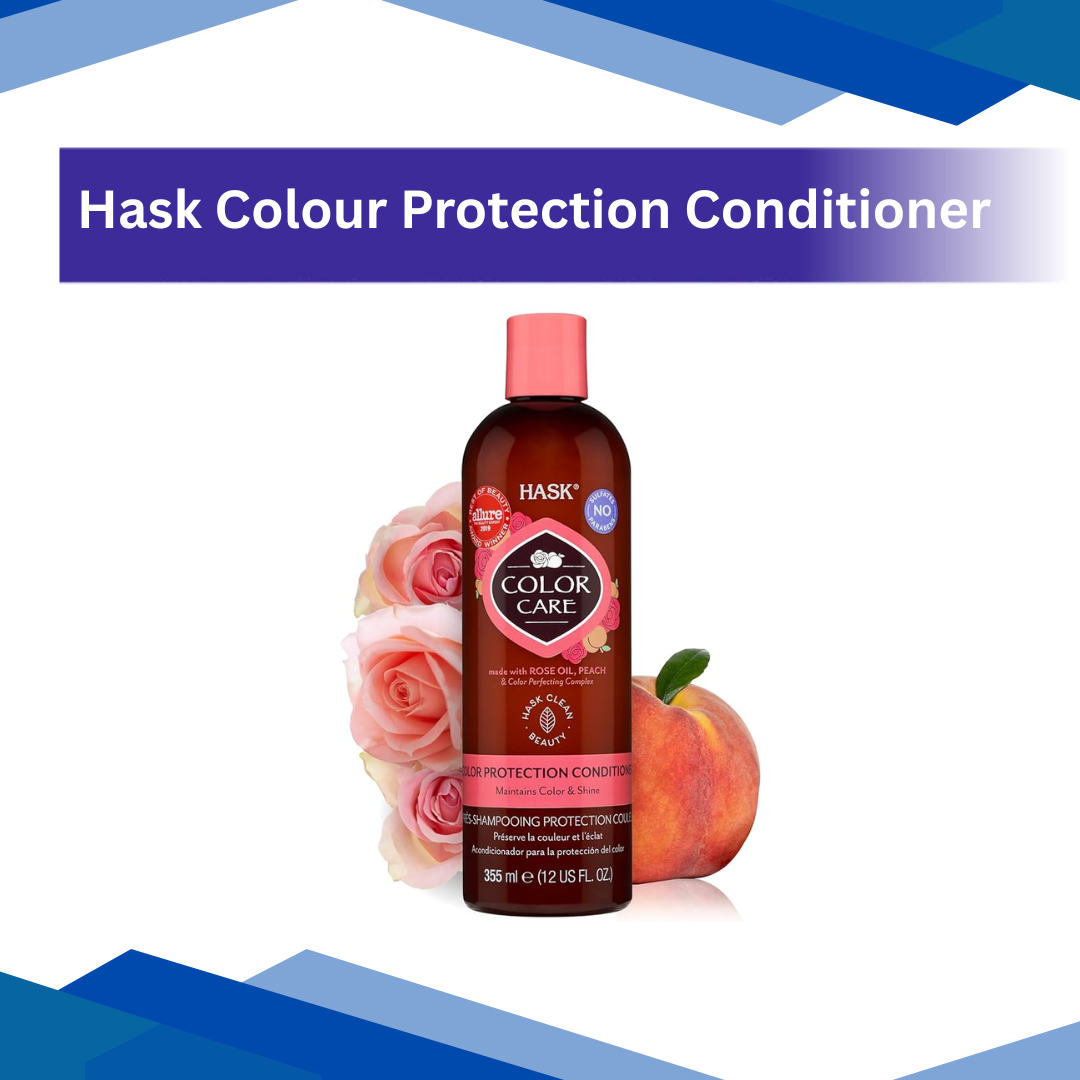
Hask Colour Protection Conditioner
Hask Color Protection Conditioner is designed to nourish and protect color-treated hair. Infused with organic rose oil and juicy peach, it hydrates and smooths hair, helping to prevent dryness and fading, ensuring your color stays vibrant. Formulated with a Color Perfecting Complex, it includes hydrolyzed quinoa to help fight color fade and seal in shine. This conditioner is free from sulfates, parabens, phthalates, gluten, drying alcohol, and artificial colors. For more details kindly click on Medicine Salts below:
Hydrolyzed Quinoa
Hydrolyzed Quinoa Protein
Hydrolyzed quinoa protein is a natural, multifunctional protein known for its repair, protection, and conditioning properties. Unlike standard proteins, it is broken down through hydrolysis into tiny peptide chains and amino acids, allowing it to penetrate deeply into the hair shaft and skin layers.
Often called the “Mother Grain” of the Andes, quinoa is a complete protein containing all essential amino acids, making it a powerful restorative ingredient.
Benefits
Deep Repair: Penetrates the hair cortex, strengthening from within and helping reduce hair breakage.
Color Retention: Acts as a natural scaffold, helping to lock in hair color and protect it from UV exposure and frequent washing.
Intense Moisture: Forms a protective film that helps retain moisture, ideal for dry or damaged hair and skin.
Increased Shine: Smooths the hair cuticle, creating a high-gloss shine without the heaviness of synthetic silicones.
How to Use
In Hair Care: Commonly used in shampoos, conditioners, and leave-in serums at 1–10% concentration. Apply mainly to the mid-lengths and ends, where damage is most prominent.
In Skin Care: Found in anti-aging creams and hydrating lotions. Apply on clean, damp skin to enhance moisture binding.
A Note of Caution: This is a topical ingredient. Do not ingest concentrated liquid forms unless specifically formulated as a food-grade supplement.
Comparatively: Why Quinoa?
Feature: Hydrolyzed Quinoa | Standard Wheat Protein
Amino Acid Profile: Complete (all essential amino acids) | Incomplete
Gluten Status: 100% Gluten-Free | Contains Gluten
Primary Action: Deep Penetration + Protection | Surface Coating
Best For: Color-treated & Damaged Hair | General Volume
Safety & Precautions
Clinical Note: Generally considered safe, even for sensitive skin. However, individuals with allergies to quinoa or saponins should perform a patch test before full application.
Frequently Asked Questions (FAQs)
Q: Is Hydrolyzed Quinoa better than keratin?
A: Keratin is typically animal-derived, whereas hydrolyzed quinoa protein is plant-based. While both provide strengthening benefits, quinoa also offers enhanced color retention and hydration.
Q: Can I use it on curly hair?
A: Yes. Curly hair tends to be more porous and prone to dryness. Quinoa protein helps fill structural gaps, improving curl definition and reducing frizz.
Q: Does it weigh down the hair?
A: No. It is a lightweight ingredient that adds volume and body without causing greasy buildup.
Q: Are there any side effects?
A: Generally non-irritating. If you experience redness or itching, it may be due to other ingredients such as Benzyl Alcohol or Sodium Benzoate.
Q: How often should I use it?
A: For damaged hair, use 2–3 times per week. Overuse of protein treatments may lead to stiffness or brittleness, so balance with a moisturizing conditioner.
Peach Extract
Peach Extract (Prunus persica) is a fruit concentrate dense in natural minerals, widely popular in the cosmetic world and historically recognized in traditional medicine. Its soothing and emollient properties are primarily attributed to key nutrients like Vitamins A, C, and E along with beneficial flavonoids.
Whether applied through skincare formulations or consumed orally, Peach Extract supports the skin’s ability to repair itself, strengthens the barrier, and promotes natural cellular turnover.
Main Therapeutic Effects
High-Grade Hydration: The extract is rich in polysaccharides that act as humectants, drawing moisture deep into the skin to prevent dryness and sagging.
Brightens Complexion: Its Vitamin C content helps suppress melanin production, reducing dark spots and promoting an even, radiant “glass skin” appearance.
Antioxidative Defense Against Photoaging: Potent antioxidants like lutein and zeaxanthine help protect skin cells from UV damage and environmental pollutants.
Dyspepsia & Metabolic Support: When taken as a supplement, it may aid gentle detoxification and support fat metabolism.
How to Use Peach Extract
For Skincare: Use Peach Extract in concentrations of 2%–5% within serums or moisturizers. Apply after cleansing, morning and evening, to maintain hydration and skin health.
As a Supplement: Typical dosage ranges between 250 mg to 500 mg, usually taken with meals to enhance absorption of fat-soluble vitamins.
Expert Tip: To create a radiance-enhancing blend, mix 2–3 drops of Peach Extract into your night cream. Its natural Alpha Hydroxy Acids (AHAs) provide gentle overnight exfoliation.
Frequently Asked Questions (FAQs)
1. Is Peach Extract suitable for acne-prone skin?
Yes. Its lightweight, non-greasy nature helps maintain hydration without clogging pores, while antioxidants support skin healing and balance.
2. Is Peach Extract effective for wrinkles?
Yes. It helps stimulate collagen production, improve elasticity, and reduce the appearance of fine lines and wrinkles over time.
3. Is Vitamin C better than Peach Extract?
Both have unique benefits. Vitamin C is a powerful brightening agent, while Peach Extract offers a combination of hydration, mild exfoliation, and antioxidant protection. They can work synergistically when used together.
4. How should I use Peach Extract?
It can be applied topically in skincare or taken as a dietary supplement (under professional guidance). For best results, follow product-specific instructions.
5. Is Peach Extract safe to use?
Yes, it is generally safe for topical use. However, oral supplementation should be undertaken with advice from a healthcare professional, especially if you have underlying conditions.
Rose Oil
At Gem Pharmacy, we make every effort to provide accurate, expert-written, and thoroughly reviewed information related to medicines. However, this information should not be considered a substitute for professional medical advice, diagnosis, or treatment from a qualified doctor.
The purpose of this information is to educate users and improve communication between patients and healthcare professionals. It should not be used to diagnose or treat any condition.
Always consult a certified healthcare professional before taking any medication.