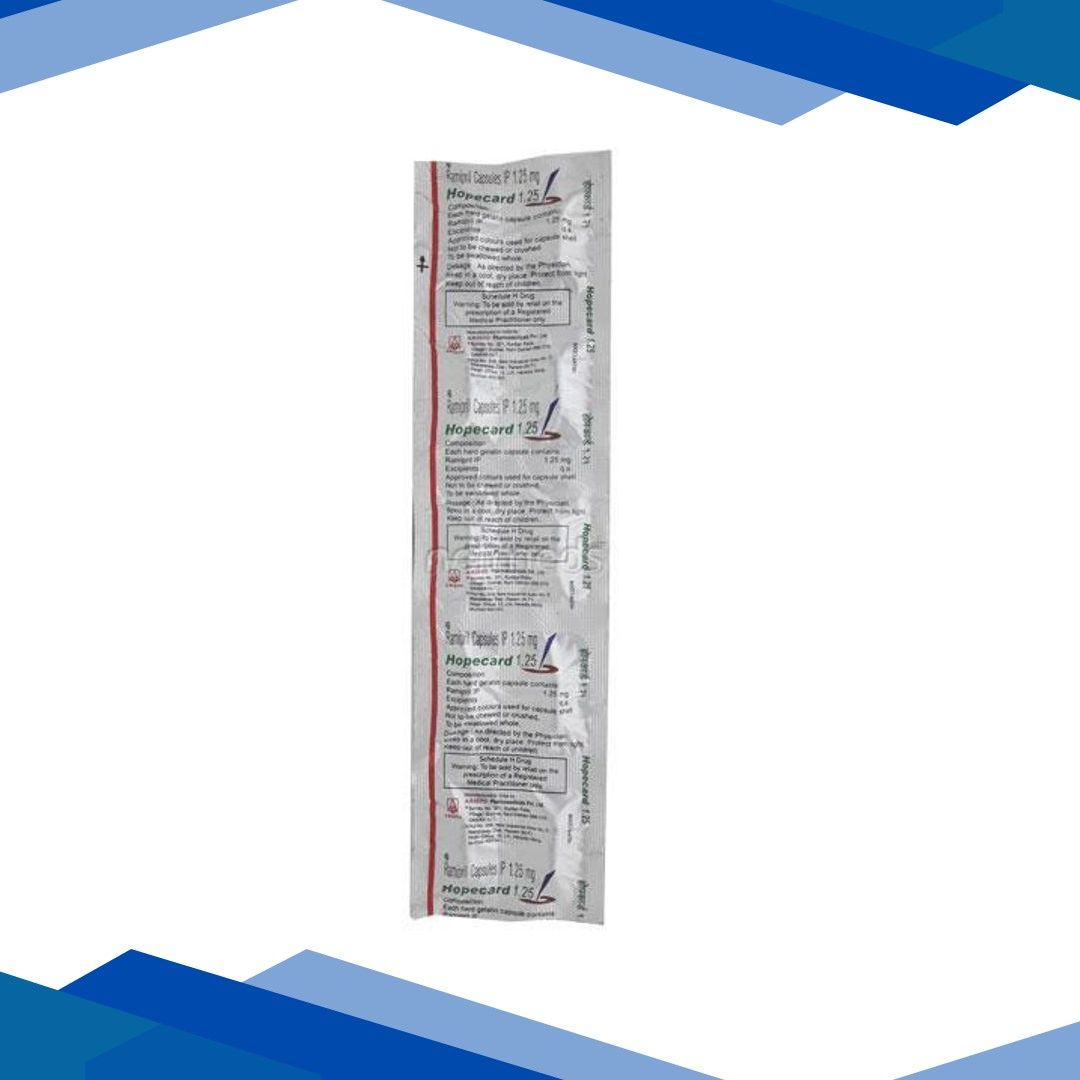
Hopecard 1.25mg Capsule 10’S
❌ Due to high demand, this product is currently out of stock. New stock will be available shortly.
👉 Click here to Buy Same Salt medicine
Hopecard 1.25mg Capsule is a medicine used to help manage high blood pressure and to protect the heart and blood vessels. It belongs to a group of medicines that relax and widen blood vessels, which makes it easier for blood to flow and helps lower blood pressure. By reducing strain on the heart, Hopecard 1.25mg Capsule can also be useful in people with heart failure and in some patients recovering after a heart attack. It is also prescribed to help lower the risk of certain heart and kidney problems in people who are at higher risk. Hopecard 1.25mg Capsule works best when used as part of a treatment plan guided by a healthcare professional, along with regular monitoring of blood pressure and overall health.
Description
Hopecard 1.25mg Capsule is a widely used prescription medicine that belongs to a group called angiotensin-converting enzyme inhibitors, often shortened to ace inhibitors. it is commonly prescribed to help lower high blood pressure, reduce strain on the heart, and protect the cardiovascular system. by improving blood vessel relaxation and reducing the heart’s workload, Hopecard 1.25mg Capsule can help lower the risk of serious complications such as stroke, heart attack, heart failure worsening, and kidney damage in certain patients. it is a medicine that is often chosen when long-term blood pressure control and heart protection are important clinical goals.
Hopecard 1.25mg Capsule works by blocking the angiotensin-converting enzyme, which plays a key role in the body’s blood pressure regulation system. when this enzyme is blocked, the body produces less angiotensin ii, a substance that normally tightens blood vessels and raises blood pressure. with less angiotensin ii available, blood vessels relax and widen, allowing blood to flow more easily. this can reduce blood pressure and decrease the effort the heart must make to pump blood throughout the body. over time, this effect may also help protect blood vessels and organs from damage caused by persistently high pressure.
in addition to treating hypertension, Hopecard 1.25mg Capsule is also used in certain patients after a heart attack, in people with heart failure, and in some individuals at higher cardiovascular risk to lower the chance of future events. it may also be used in selected patients with diabetic kidney disease or other kidney-related conditions where lowering pressure inside the kidneys is beneficial. because it affects body systems that regulate fluid balance and blood vessel tone, Hopecard 1.25mg Capsule should be used under medical supervision, with monitoring of blood pressure, kidney function, and electrolytes when appropriate.
Hopecard 1.25mg Capsule is for adults and, in some specific circumstances, selected pediatric patients when prescribed by a healthcare professional. it is especially useful for people whose blood pressure is not adequately controlled by lifestyle changes alone, or for those who need an additional protective effect for the heart and kidneys. while many people tolerate it well, Hopecard 1.25mg Capsule is not suitable for everyone, and its safety depends on age, kidney function, other medicines being taken, pregnancy status, and medical history.
ingredients
- Hopecard 1.25mg Capsule: the active ingredient responsible for the medicine’s blood pressure-lowering and heart-protective effects. it works by inhibiting ace, which helps relax blood vessels, reduce vascular resistance, and lower the pressure against which the heart must pump. its main benefits include controlling hypertension, reducing cardiovascular risk in appropriate patients, supporting recovery after a heart attack, and helping certain patients with heart failure or kidney involvement from high blood pressure or diabetes.
- inactive ingredients: depending on the brand and dosage form, Hopecard 1.25mg Capsule tablets may contain excipients such as fillers, binders, disintegrants, and coating materials that help form the tablet, maintain stability, and support proper absorption. these ingredients do not provide the therapeutic effect, but they are important for the medicine’s manufacturing quality, shelf stability, and swallowing characteristics. people with known allergies or sensitivities should review the product label or ask a pharmacist about the specific formulation.
key uses
- high blood pressure: Hopecard 1.25mg Capsule is commonly used to lower elevated blood pressure and reduce the long-term strain that hypertension places on the heart, brain, and kidneys. good blood pressure control helps reduce the risk of stroke, heart attack, and other complications.
- heart failure: in people with heart failure, Hopecard 1.25mg Capsule can help reduce the heart’s workload and improve symptoms or disease progression in suitable patients. it may be part of a broader treatment plan that includes other medicines and lifestyle changes.
- after heart attack: Hopecard 1.25mg Capsule may be prescribed after a myocardial infarction to support the heart’s recovery and lower the risk of future cardiac events in selected patients. it can be especially helpful when the heart muscle has been weakened.
- cardiovascular risk reduction: in some people at high risk for heart or blood vessel disease, Hopecard 1.25mg Capsule may be used to reduce the chance of serious cardiovascular outcomes. this is typically considered when there is a history of vascular disease, diabetes, or multiple risk factors.
- kidney protection in selected patients: Hopecard 1.25mg Capsule may help protect kidney function in certain patients, especially those with diabetes or high blood pressure affecting the kidneys. by lowering pressure within the kidney’s filtering system, it may slow the progression of damage in appropriate cases.
how to use
Hopecard 1.25mg Capsule should be taken exactly as directed by a healthcare professional. it is usually taken by mouth once daily, though the schedule can vary depending on the condition being treated and the individual patient’s response. it may be taken with or without food, but it is important to take it the same way each day to help maintain consistent absorption and steady blood pressure control. swallow the tablet with water and do not change the dose or stop the medicine suddenly without medical advice.
for best results, Hopecard 1.25mg Capsule is often taken at the same time every day. some people may be advised to take it in the evening if that better suits their blood pressure pattern or helps reduce dizziness, but this should be based on professional guidance. because Hopecard 1.25mg Capsule can lower blood pressure, especially when starting treatment or after a dose increase, standing up slowly from sitting or lying positions can help reduce the chance of lightheadedness. if you are also taking diuretics or other blood pressure medicines, your healthcare provider may monitor you more closely at the beginning of therapy.
if you are unsure how to take Hopecard 1.25mg Capsule, or if you miss doses frequently, speak with a pharmacist or doctor for individualized instructions. routine blood pressure monitoring is important, and some patients may need periodic blood tests to check kidney function and potassium levels. always inform your healthcare provider about all medicines and supplements you use, including over-the-counter products, to reduce the risk of harmful interactions.
safety information
- warnings: Hopecard 1.25mg Capsule can cause a significant drop in blood pressure, especially in people who are dehydrated, salt-depleted, taking diuretics, or starting therapy for the first time. it may also affect kidney function and raise potassium levels. rare but serious reactions include angioedema, which is swelling of the face, lips, tongue, or throat and can become life-threatening. seek emergency care immediately if this occurs. persistent cough can also happen with ace inhibitors and may require reassessment.
- side effects: common side effects may include dizziness, fatigue, headache, cough, nausea, or mild low blood pressure. some people may notice lightheadedness, especially when standing up quickly. more serious effects can include severe hypotension, kidney function changes, elevated potassium, fainting, allergic swelling, or symptoms of liver problems such as yellowing of the skin or eyes. any severe or unusual reaction should be reported promptly.
- precautions: Hopecard 1.25mg Capsule should be used carefully in people with kidney disease, dehydration, low blood pressure, heart valve disease, or a history of angioedema. it may not be suitable for people with certain kidney artery conditions or those who have previously had allergic swelling from ace inhibitors. extra caution is needed in older adults and in patients taking multiple medicines that lower blood pressure or affect kidney function.
- pregnancy/breastfeeding: Hopecard 1.25mg Capsule should generally not be used during pregnancy because medicines in this class can harm the developing baby, especially in the second and third trimesters. if pregnancy occurs while taking Hopecard 1.25mg Capsule, a healthcare professional should be contacted immediately. breastfeeding safety depends on the specific situation and medical guidance; an alternative may be preferred, especially for newborns or premature infants.
- interactions: Hopecard 1.25mg Capsule may interact with diuretics, other blood pressure medicines, potassium supplements, potassium-sparing diuretics, salt substitutes containing potassium, nsaids, lithium, and certain diabetes medicines. combining it with other agents that lower blood pressure can increase dizziness or fainting. alcohol may also worsen blood pressure-lowering effects and increase the chance of lightheadedness. always share a full medication list with your healthcare provider.
additional information
- storage: store Hopecard 1.25mg Capsule at room temperature in a dry place, away from excess heat, moisture, and direct light. keep the container tightly closed and out of reach of children. do not store it in the bathroom unless the product label specifically allows it, as humidity can reduce stability.
- missed dose: if a dose is missed, take it when remembered unless it is almost time for the next dose. if the next scheduled dose is close, skip the missed dose and continue with the regular schedule. do not take two doses at once to make up for a missed one, as this may cause excessive blood pressure lowering.
- overdose: an overdose may cause severe dizziness, fainting, extreme low blood pressure, weakness, or shock-like symptoms. it can also affect kidney function and electrolyte balance. if an overdose is suspected, seek emergency medical help immediately or contact poison control right away. do not wait for symptoms to worsen.
- habit forming: no. Hopecard 1.25mg Capsule is not considered habit forming and does not cause dependence. however, it should not be stopped abruptly without medical advice, because blood pressure or heart-related conditions may worsen if treatment is interrupted.
frequently asked questions
Q: what is Hopecard 1.25mg Capsule used for?
A: Hopecard 1.25mg Capsule is used to treat high blood pressure and may also be prescribed for heart failure, after a heart attack, and for cardiovascular risk reduction in selected patients. in some cases, it may also help protect kidney function when medically appropriate.
Q: how does Hopecard 1.25mg Capsule work?
A: Hopecard 1.25mg Capsule blocks an enzyme involved in producing angiotensin ii, a substance that narrows blood vessels. by reducing angiotensin ii, blood vessels relax, blood pressure drops, and the heart does not have to work as hard.
Q: can Hopecard 1.25mg Capsule cause a cough?
A: yes. a dry, persistent cough is a known side effect of ace inhibitors, including Hopecard 1.25mg Capsule. if the cough becomes troublesome, a healthcare professional may need to review the treatment.
Q: can i take Hopecard 1.25mg Capsule with food?
A: Hopecard 1.25mg Capsule can usually be taken with or without food. the most important thing is to take it consistently in the same way each day unless your doctor or pharmacist advises otherwise.
Q: what should i do if i feel dizzy after taking Hopecard 1.25mg Capsule?
A: dizziness can happen, especially when starting treatment or after a dose change. sit or lie down until it passes, rise slowly from sitting, and contact a healthcare professional if it is frequent, severe, or associated with fainting.
Q: is Hopecard 1.25mg Capsule safe during pregnancy?
A: no, Hopecard 1.25mg Capsule is generally not safe during pregnancy and may harm the unborn baby. if you are pregnant or planning pregnancy, contact your healthcare provider promptly for an alternative treatment plan.
Q: can Hopecard 1.25mg Capsule affect kidney function?
A: yes. Hopecard 1.25mg Capsule can change kidney function, and while it may protect the kidneys in some patients, it can also worsen kidney function in others. monitoring is often needed, especially in people with existing kidney disease or dehydration.
Q: does Hopecard 1.25mg Capsule raise potassium?
A: it can. Hopecard 1.25mg Capsule may increase potassium levels in the blood, particularly if taken with potassium supplements, salt substitutes, or certain other medicines. high potassium can be dangerous, so monitoring may be required.
Q: can i stop Hopecard 1.25mg Capsule if my blood pressure becomes normal?
A: not without medical advice. blood pressure may improve because the medicine is working, and stopping it suddenly can cause your condition to worsen. any change should be guided by a healthcare professional.
Q: is Hopecard 1.25mg Capsule the same for everyone?
A: no. the right use, monitoring, and suitability of Hopecard 1.25mg Capsule depend on the person’s age, medical history, kidney function, other medicines, and treatment goals. individualized medical guidance is important.
this information is for educational purposes only and should not be considered medical advice. always consult a qualified healthcare professional before use.
At Gem Pharmacy, we make every effort to provide accurate, expert-written, and thoroughly reviewed information related to medicines. However, this information should not be considered a substitute for professional medical advice, diagnosis, or treatment from a qualified doctor.
The purpose of this information is to educate users and improve communication between patients and healthcare professionals. It should not be used to diagnose or treat any condition.
Always consult a certified healthcare professional before taking any medication.


Related products