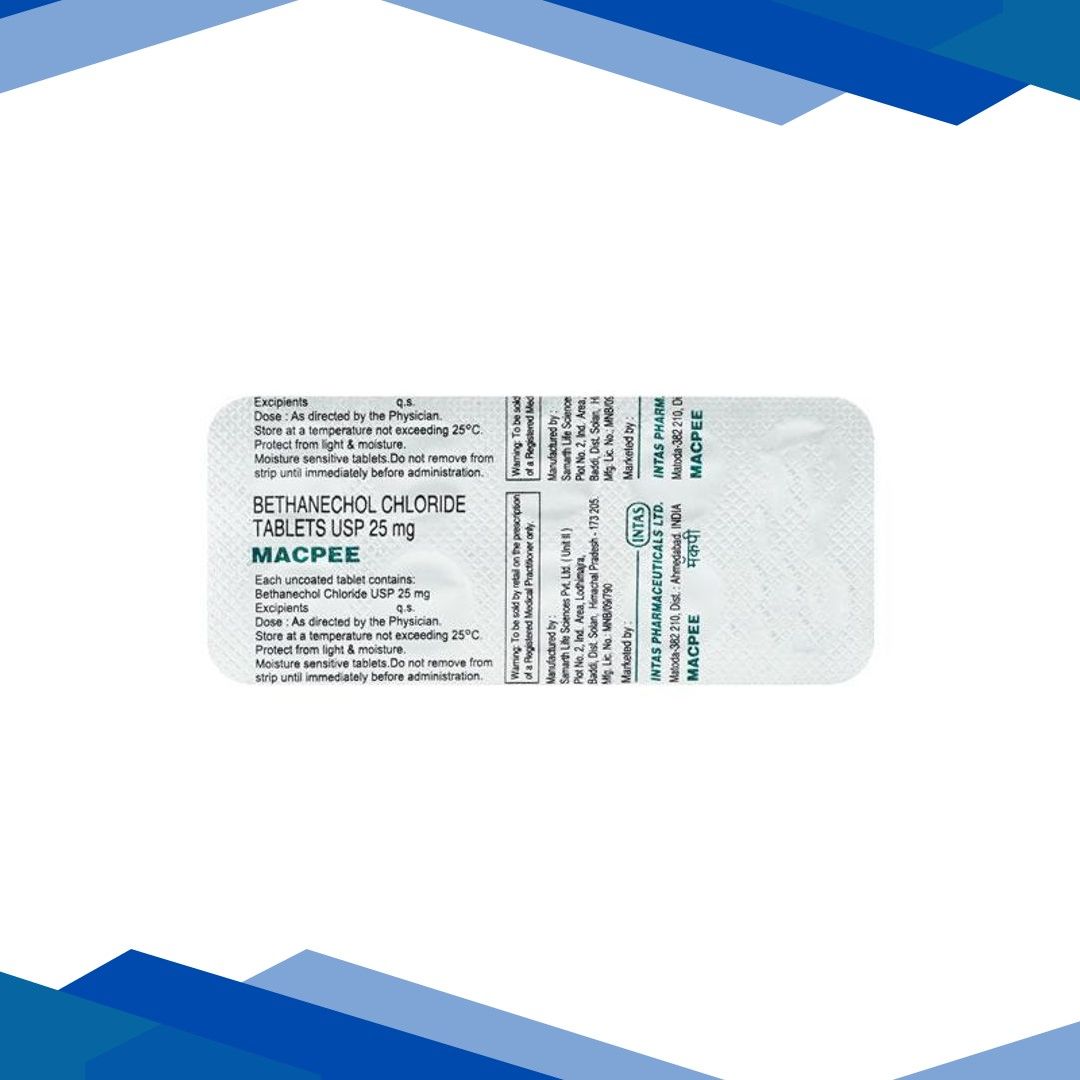
Macpee Tablet 10’S
Macpee Tablet is a medicine that helps the bladder and digestive tract work better when they are not moving properly. It acts like a natural chemical in the body called acetylcholine, which stimulates certain muscles to contract. By doing this, Macpee Tablet can increase bladder emptying and improve movement in the stomach and intestines. It is mainly used for urinary retention, especially when the bladder has difficulty emptying after surgery, childbirth, or certain medical conditions. It may also be used in some cases of reduced bowel movement. Because it affects body muscles and nerves, it should be used under medical supervision. Macpee Tablet does not treat the underlying cause of the problem, but it can help restore normal function in selected patients.
Description
Macpee Tablet is a prescription medicine used to help stimulate the bladder and digestive tract when these organs are not working properly. it belongs to a group of medicines that act like acetylcholine, a natural chemical messenger in the body that helps control the muscles responsible for urination and bowel movement. by mimicking this messenger, Macpee Tablet can increase muscle contractions in the bladder and gastrointestinal tract, making it useful in certain cases of urinary retention and slowed bowel function.
this medicine is most often considered when a person has difficulty emptying the bladder after surgery, childbirth, or due to nerve-related bladder problems. it may also be used in some situations where the stomach or intestines are moving too slowly. Macpee Tablet does not cure the underlying condition causing the problem; rather, it helps improve muscle activity temporarily so the body can function more normally.
the way Macpee Tablet works is by activating muscarinic receptors, which are part of the parasympathetic nervous system. this stimulation increases smooth muscle tone in the bladder wall and can relax the urinary sphincter, helping urine pass more easily. it may also increase movement in the stomach and intestines. because it affects several body systems, its use must be carefully selected and monitored by a healthcare professional to make sure the benefits outweigh the risks.
Macpee Tablet is not appropriate for all types of urinary or digestive problems. it is generally used when the problem is related to poor muscle activity rather than blockage. for example, it is not suitable if the bladder cannot empty because of a physical obstruction such as an enlarged prostate causing severe blockage or a blocked urinary tract. a doctor should evaluate the cause of symptoms before this medicine is started.
ingredients
- ingredient name: Macpee Tablet — this is the active ingredient responsible for the medicine’s therapeutic effect. it stimulates muscarinic receptors in the bladder and digestive tract, helping improve bladder emptying and increasing movement of the intestines. it is used to support urine flow in certain cases of urinary retention and to promote gastrointestinal motility when recommended by a clinician.
- inactive ingredients: depending on the manufacturer and formulation, Macpee Tablet tablets or oral forms may also contain inactive ingredients such as fillers, binders, disintegrants, colorants, or coating materials. these ingredients do not provide the medicinal effect but help with tablet formation, stability, absorption, and appearance. because inactive ingredients vary by product, patients with allergies or sensitivities should check the specific product label or ask a pharmacist.
key uses
- urinary retention: Macpee Tablet is used to help the bladder contract more effectively when a person cannot empty the bladder fully, especially after surgery or childbirth. it may reduce the feeling of incomplete emptying when the cause is weak bladder muscle function.
- non-obstructive bladder emptying problems: it may be prescribed for certain bladder conditions where the bladder is underactive, such as detrusor atony, provided there is no blockage in the urinary tract. this can help improve urine flow and reduce retention-related complications.
- postoperative or postpartum urinary difficulty: after surgery or delivery, some people have temporary difficulty urinating due to reduced bladder muscle activity or nervous system effects. Macpee Tablet may be used in selected patients to support bladder function in these situations.
- gastrointestinal motility support: in some cases, it may be used to help stimulate movement of the stomach or intestines when motility is reduced. this use is less common and should only be done under specialist supervision because it is not suitable for all digestive conditions.
how to use
Macpee Tablet should be taken exactly as directed by the prescribing healthcare professional. it is typically taken by mouth, and timing may be important because food can affect how the medicine is tolerated. in many cases, it is recommended to take the medicine on an empty stomach or at a consistent time relative to meals, but the specific instructions should always come from the prescriber or pharmacist. swallow the tablet with water and do not crush or chew it unless a healthcare professional specifically tells you to do so.
the dose and schedule vary depending on the condition being treated, the severity of symptoms, age, and response to therapy. this is not a medicine that should be started or adjusted on your own. because Macpee Tablet can cause strong effects on the bladder and stomach, a healthcare provider may monitor your response and adjust treatment based on how well you are urinating and whether you develop side effects such as abdominal cramping, sweating, or dizziness.
if your doctor has instructed you to take it before meals or at another specific time, follow that plan carefully. do not take extra doses to “catch up” if symptoms do not improve quickly. Macpee Tablet works only while it is active in the body, so its effects may be temporary. if symptoms persist or worsen, medical reassessment is important to rule out blockage, infection, dehydration, or another underlying cause that needs different treatment.
safety information
- warnings: Macpee Tablet can affect the heart, lungs, intestines, and urinary system. it may cause a drop in blood pressure, slow heart rate, sweating, salivation, nausea, or abdominal cramping. it should not be used when urinary retention is caused by a mechanical obstruction, as forcing the bladder to contract against a blockage may be harmful. people with asthma, slow heart rate, recent surgery, stomach ulcer disease, seizure disorders, low blood pressure, or heart disease need careful medical review before using this medicine.
- side effects: common side effects include stomach upset, nausea, vomiting, abdominal cramps, increased salivation, flushing, sweating, dizziness, headache, and a sense of urgency to urinate. more serious side effects can include fainting, wheezing, chest discomfort, severe diarrhea, marked drop in blood pressure, slow pulse, trouble breathing, or worsening urinary symptoms. seek urgent medical attention if severe symptoms occur.
- precautions: Macpee Tablet should be avoided or used with great caution in people with urinary tract obstruction, bowel obstruction, severe asthma, uncontrolled hyperthyroidism, low blood pressure, parkinson’s disease with significant autonomic symptoms, active peptic ulcer disease, or certain heart rhythm problems. older adults may be more sensitive to side effects and may need closer monitoring.
- pregnancy/breastfeeding: the medicine should only be used during pregnancy if the potential benefit clearly outweighs the potential risk and if prescribed by a clinician. if breastfeeding, ask a healthcare professional before use, as the safety profile depends on the individual situation and the potential for effects in the infant should be considered. do not assume it is safe without professional guidance.
- interactions: Macpee Tablet may interact with other medicines that affect the parasympathetic nervous system or heart rate. anticholinergic medicines can reduce its effect, while drugs that slow the heart or lower blood pressure may increase certain risks. it may also interact with medicines used for asthma, some eye drops, and other cholinergic agents. alcohol may worsen dizziness, lightheadedness, or stomach upset and should be used cautiously or avoided if advised by a healthcare professional.
additional information
- storage: store Macpee Tablet at room temperature in a dry place, away from excess heat, moisture, and direct sunlight. keep it in its original container, tightly closed, and out of reach of children and pets. do not store it in the bathroom unless the product label specifically allows it.
- missed dose: if you miss a dose, take it when you remember unless it is almost time for the next dose. if the next dose is close, skip the missed one and continue with the regular schedule. do not double the dose to make up for a missed dose unless your doctor or pharmacist specifically tells you to do so.
- overdose: taking too much Macpee Tablet can cause excessive cholinergic effects such as severe abdominal cramps, vomiting, diarrhea, excessive sweating, salivation, slow heart rate, low blood pressure, breathing difficulty, or fainting. this is a medical emergency. if overdose is suspected, seek immediate emergency help or contact poison control right away.
- habit forming: no, Macpee Tablet is not considered habit-forming. it does not produce dependence or cravings. however, it should still only be used under medical supervision because the effects on the bladder, bowel, and cardiovascular system can be significant.
frequently asked questions
Q: what is Macpee Tablet used for?
A: Macpee Tablet is used to help stimulate bladder contractions and improve urine flow in certain types of urinary retention. in selected cases, it may also be used to support gastrointestinal motility when prescribed by a healthcare professional.
Q: how does Macpee Tablet work in the body?
A: it works by activating muscarinic receptors, which are part of the parasympathetic nervous system. this increases smooth muscle activity in the bladder and sometimes the digestive tract, helping the body move urine or contents more effectively.
Q: can Macpee Tablet be used if there is a urinary blockage?
A: no. it should not be used if urinary retention is caused by a physical blockage in the urinary tract. in that situation, forcing the bladder to contract can be harmful, and the blockage must be evaluated and treated separately.
Q: what are the most common side effects of Macpee Tablet?
A: common side effects include nausea, abdominal cramps, sweating, flushing, dizziness, increased salivation, and headache. some people may also feel lightheaded or develop an urgent need to urinate.
Q: does Macpee Tablet work immediately?
A: the medicine may begin working relatively soon after taking it, but the timing and degree of response vary. it does not work the same way for everyone, and your healthcare provider may need to monitor whether it is helping enough.
Q: should Macpee Tablet be taken with food?
A: this depends on the specific instructions provided by your healthcare professional. some people are told to take it on an empty stomach to improve effectiveness, while others may need a different approach if stomach upset occurs. follow the directions given for your product.
Q: can Macpee Tablet cause dizziness?
A: yes. dizziness can happen because the medicine may lower blood pressure or slow the heart rate in some people. stand up slowly and avoid driving or unsafe activities until you know how it affects you.
Q: is Macpee Tablet safe for older adults?
A: it can be used in older adults when prescribed, but extra caution is needed because they may be more sensitive to side effects such as low blood pressure, weakness, or urinary urgency. monitoring by a healthcare professional is important.
Q: can i drink alcohol while taking Macpee Tablet?
A: alcohol may increase dizziness, lightheadedness, or stomach upset. it is best to ask your healthcare professional whether alcohol should be avoided entirely or limited while taking this medicine.
Q: what should i do if i feel severe stomach cramps after taking Macpee Tablet?
A: severe abdominal pain or cramping should be reported to a healthcare professional promptly, especially if it is intense, persistent, or accompanied by vomiting, diarrhea, fainting, or breathing difficulty. do not ignore these symptoms.
Q: can Macpee Tablet be used during pregnancy?
A: it should only be used in pregnancy if a clinician determines that the potential benefit is greater than the potential risk. always discuss pregnancy with your doctor before starting or continuing this medicine.
Q: is Macpee Tablet the same as an antibiotic or painkiller?
A: no. Macpee Tablet is neither an antibiotic nor a painkiller. it is a cholinergic medicine used mainly to stimulate bladder and sometimes bowel muscle activity.
Q: what happens if i take too much Macpee Tablet?
A: an overdose may cause excessive sweating, salivation, vomiting, diarrhea, severe cramping, slow heart rate, low blood pressure, and breathing problems. emergency medical attention is needed right away if overdose is suspected.
Q: can Macpee Tablet be used for all bladder problems?
A: no. it is only useful for certain bladder problems, especially when the bladder muscle is weak and there is no obstruction. a doctor must determine the cause of the problem before prescribing it.
Q: do i need a prescription for Macpee Tablet?
A: yes, Macpee Tablet is a prescription medicine and should be used only under medical supervision because it can cause significant effects on the heart, lungs, and digestive system.
this information is for educational purposes only and should not be considered medical advice. always consult a qualified healthcare professional before use.
At Gem Pharmacy, we make every effort to provide accurate, expert-written, and thoroughly reviewed information related to medicines. However, this information should not be considered a substitute for professional medical advice, diagnosis, or treatment from a qualified doctor.
The purpose of this information is to educate users and improve communication between patients and healthcare professionals. It should not be used to diagnose or treat any condition.
Always consult a certified healthcare professional before taking any medication.


Related products


UROTONE SR 75mg Tablet 10’s